Hall and Woodford win 2026 Nobel economics prize for work on stabilisation policy
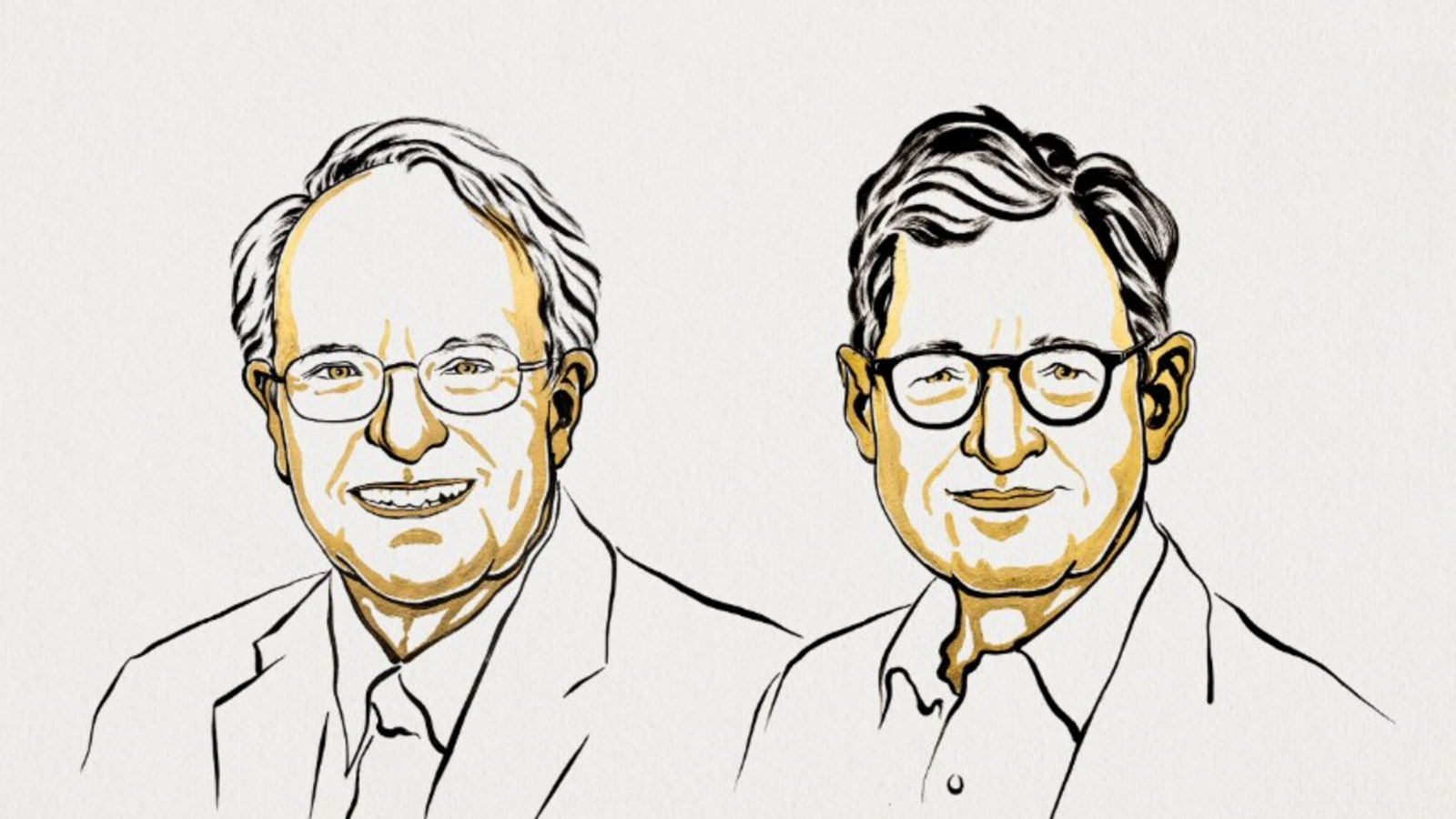
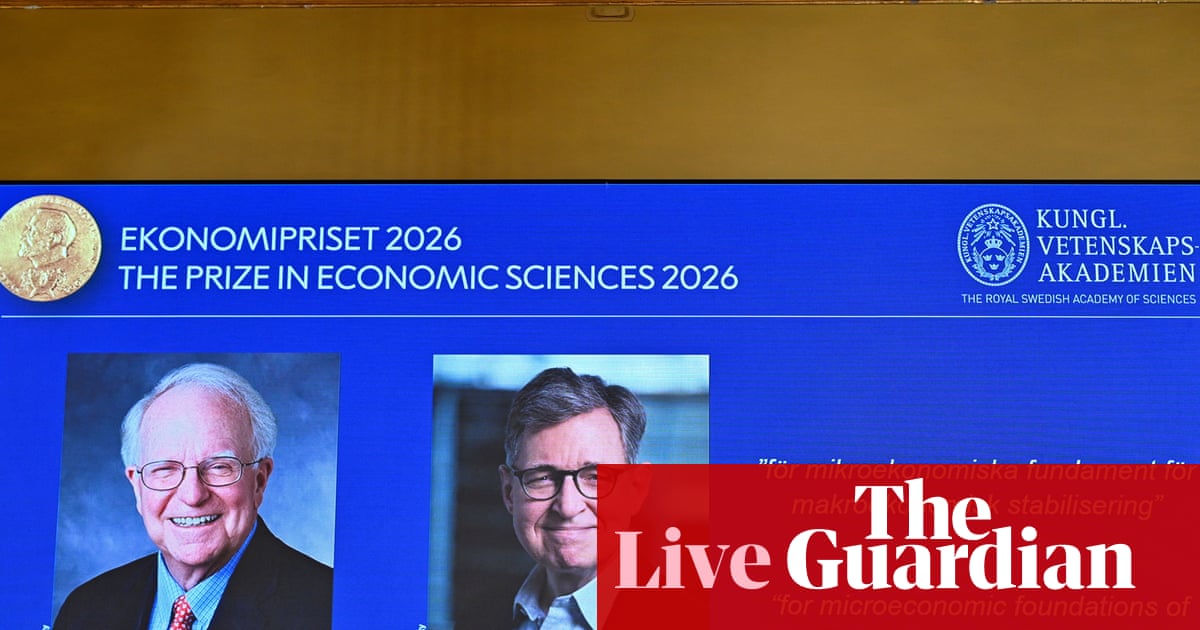
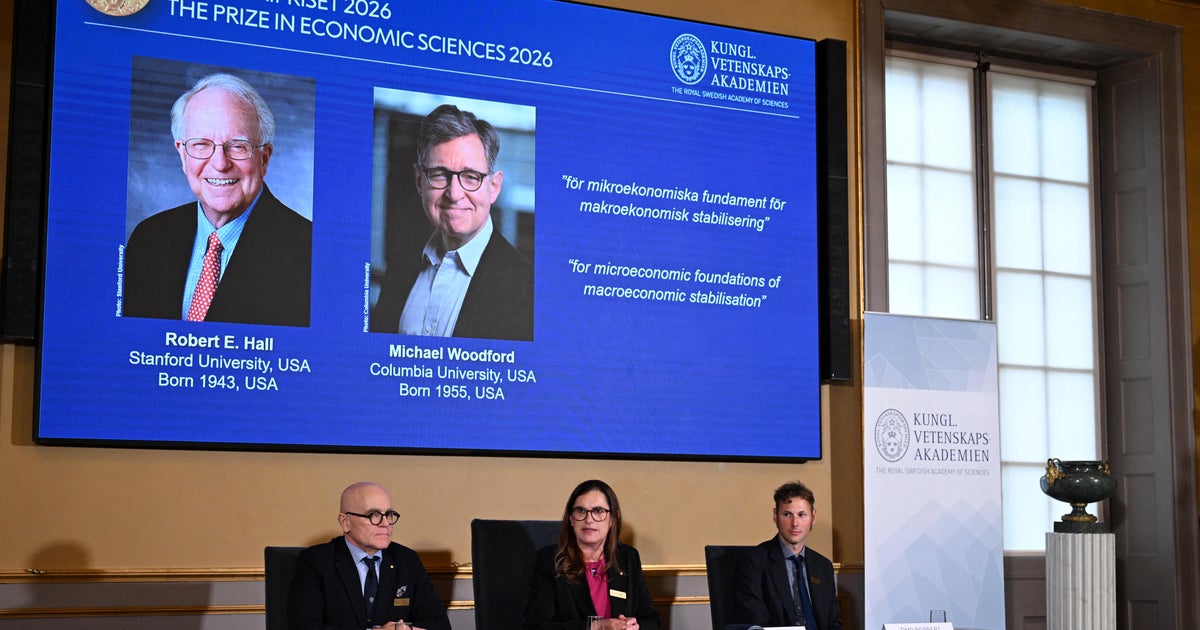
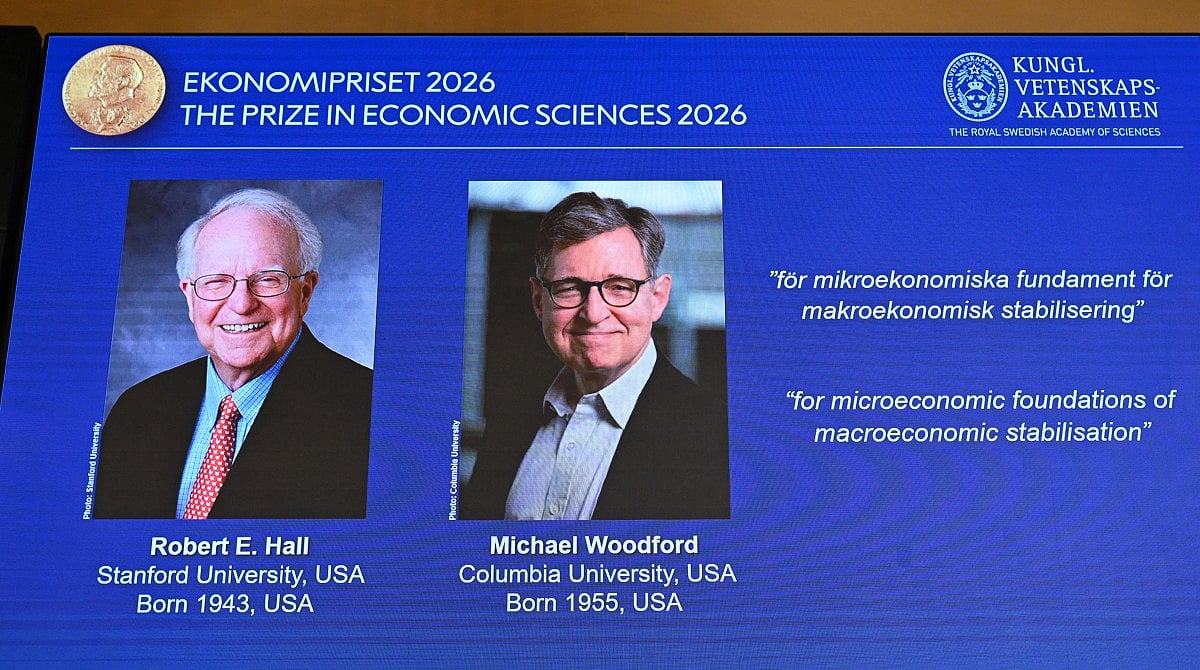
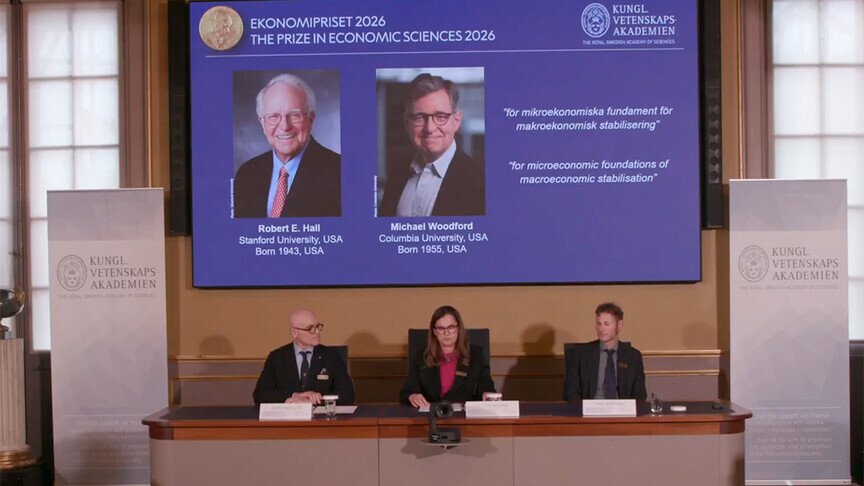
The Royal Swedish Academy of Sciences awarded the 2026 economics prize to Americans Robert E. Hall and Michael Woodford for "microeconomic foundations of macroeconomic stabilisation". It is the last Nobel announced this year.
Updated (version 2). New coverage since the last version from CBC News, IJR, The Independent.



1 / 8
The story, neutrally told
Mixed · 2The Royal Swedish Academy of Sciences announced in Stockholm on 12 October 2026 that Robert E. Hall and Michael Woodford had won the Nobel memorial prize in economics "for microeconomic foundations of macroeconomic stabilisation". The Straits TimesRC “US academics Robert Hall and Michael Woodford won the 2026 Nobel economics prize for "for microeconomic foundations of macroeconomic stabilisation"” Read at The Straits Times ↗ Deutsche WelleN “The 2026 Nobel Prize in Economic Sciences was awarded to Robert E. Hall and Michael Woodford” Read at Deutsche Welle ↗ Left · 2Hall is affiliated with Stanford University in California and Woodford with Columbia University in New York. CBS NewsLC “Hall is affiliated with Stanford University in California, and Woodford with Columbia University in New York.” Read at CBS News ↗ The HinduLC “Robert E. Hall of Stanford University and Michael Woodford of Columbia University” Read at The Hindu ↗ Left · 2The Academy said the pair developed new macroeconomic models that improved the ability to carry out stabilisation policy, so that well-timed fiscal and monetary measures can reduce the economy's peaks and troughs. CBS NewsLC “"The laureates have helped us smooth out the economy's peaks and troughs,"” Read at CBS News ↗ The HinduLC “have developed new macroeconomic models that have significantly improved our ability to implement effective stabilisation policy.” Read at The Hindu ↗
Mixed · 2John Hassler, chair of the Committee for the Prize in Economic Sciences, said the work gave a stable theoretical foundation for models now used by central banks and governments, leaving them better equipped for shocks such as energy crises or sudden changes in household consumption. The Straits TimesRC “"With them, we are better equipped to deal with shocks in the economy, such as energy crises or sudden changes in how much households consume."” Read at The Straits Times ↗ ABC News (Australia)LC “"The laureates' work has provided us with a stable theoretical foundation for the models that are now used by central banks and governments around the world,"” Read at ABC News (Australia) ↗ Left · 2Timo Boppart of the prize committee said governments long followed Keynes's prescription of lower taxes and higher spending in a downturn: "This is the Keynesian recipe and it worked well – until it didn't." The 1970s "stagflation", with high inflation and high unemployment together, showed the older tradeoffs were too simple, and Hall and Woodford, in separate contributions, set out to improve the model by reflecting how households and businesses actually decide whether to spend and invest. The IndependentLC ““This is the Keynesian recipe and it worked well – until it didn’t,’’ said Timo Boppart of the Nobel economics prize committee.” Read at The Independent ↗ CBC NewsLC “Hall and Woodford set about coming up with an improved model that took into account how consumers and businesses actually made decisions about whether to invest and spend.” Read at CBC News ↗ Left · 1The committee said that basing models on millions of micro-level decisions, rather than a bird's-eye macro view, "has generated a paradigm shift in the theory of stabilization policy"; Woodford added that a goal was a framework that lets governments explain their actions to the public. The IndependentLC “Hall’s and Woodford’s research has generated a paradigm shift in the theory of stabilization policy.’’”“creating a framework that allows governments to talk to the public about what they’re doing, I think is also important.” Read at The Independent ↗
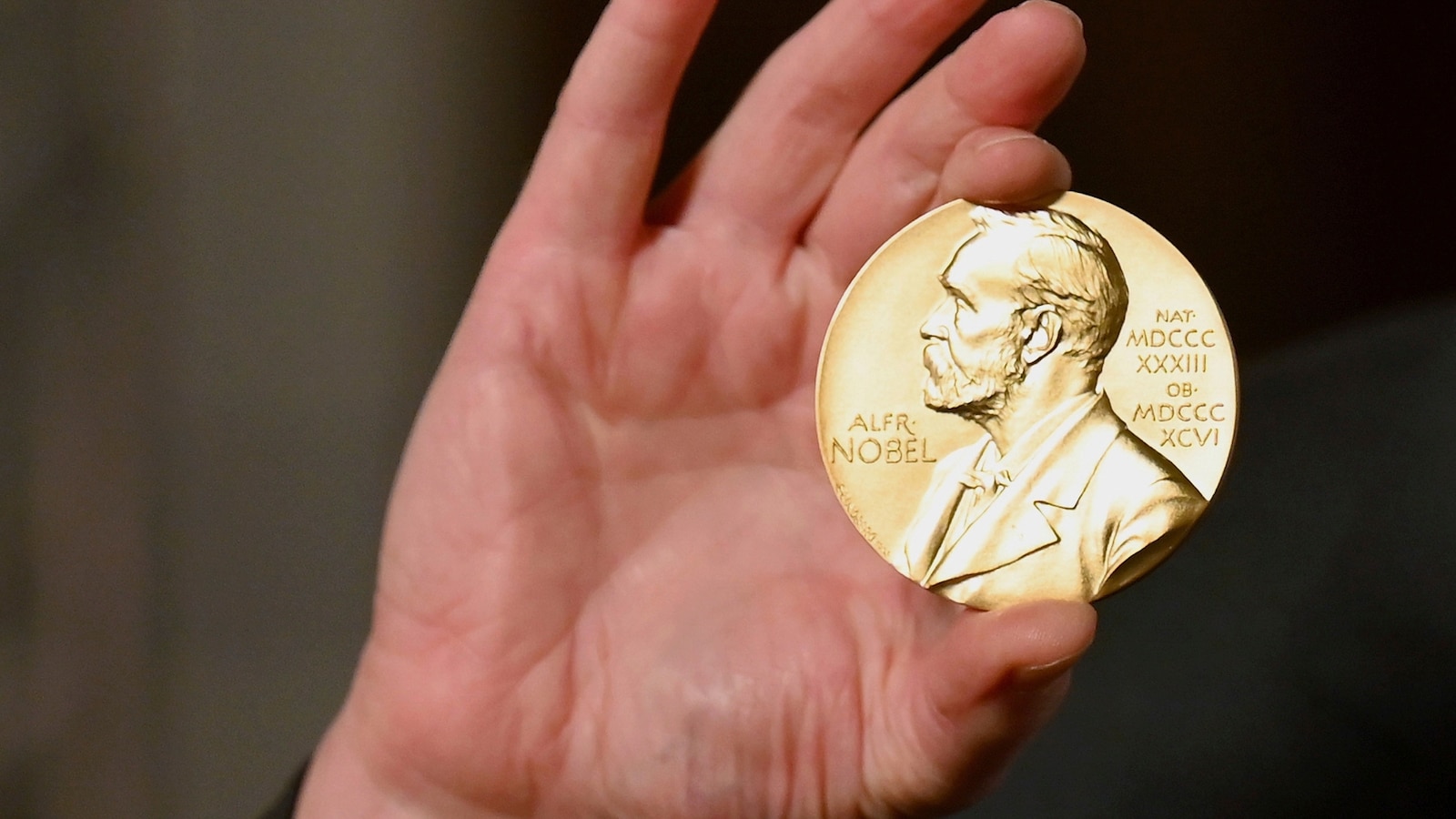
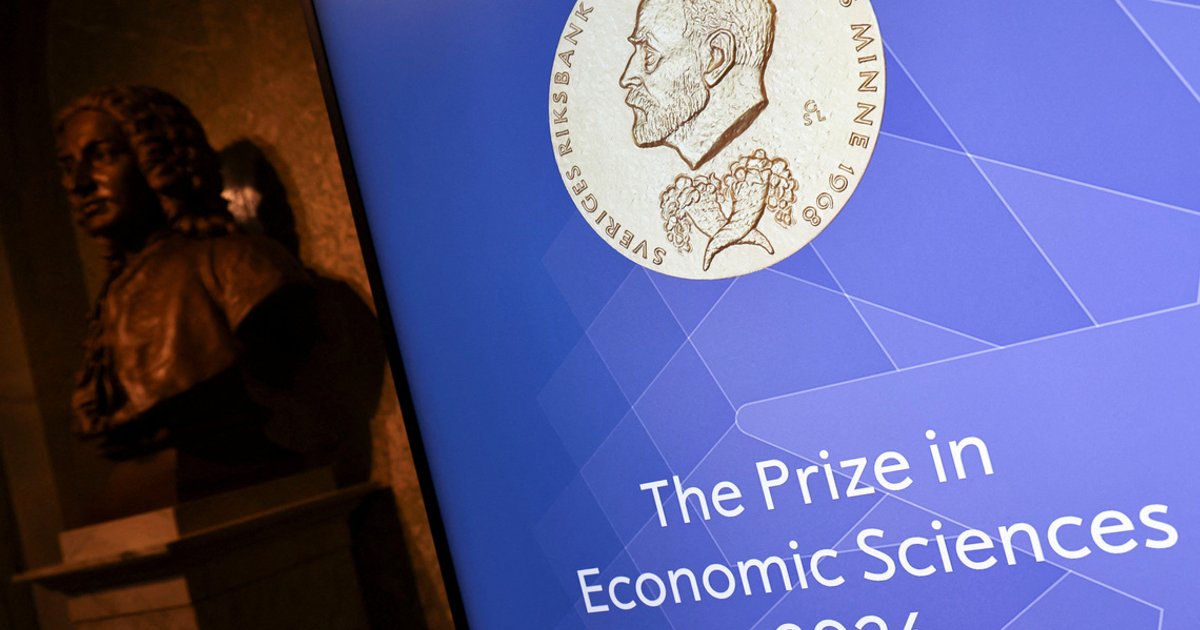
Left · 1CBS News reported that Woodford spoke to the committee by phone from New York, calling the prize "a tremendous honor, it's a surprise." CBS NewsLC “Woodford spoke to the committee by phone Monday from New York, saying: "It's a tremendous honor, it's a surprise."” Read at CBS News ↗ Mixed · 2The prize is worth 12 million Swedish crowns, about $1.2 million according to Reuters and DW; it is the last of this year's Nobel announcements, after medicine, physics, chemistry, literature and peace the previous week. The Straits TimesRC “is the final prize to be given out this year and is worth 12 million Swedish crowns ($1.2 million)” Read at The Straits Times ↗ Deutsche WelleN “Nobel honors were announced last week in medicine, physics, chemistry, literature and peace.” Read at Deutsche Welle ↗ Mixed · 2The economics prize, first awarded in 1969, was not among the five prizes in Alfred Nobel's 1895 will but was established by Sweden's central bank; some purists say it is technically not a Nobel Prize, though it is presented with the others on 10 December. The Straits TimesRC “is not one of the original five awards created in the 1895 will of industrialist and dynamite inventor Alfred Nobel, but was established by Sweden's central bank” Read at The Straits Times ↗ ABC News (Australia)LC “Nobel purists stress that the economics prize is technically not a Nobel prize, but it is always presented together with the others on December 10” Read at ABC News (Australia) ↗
Mixed · 2Outlets differ on the prize's start date: most give 1968 for its founding by the central bank, while others date the first award to 1969, a discrepancy IJR flagged. The IndependentLC “The central bank established it in 1968 as a memorial to Nobel” Read at The Independent ↗ IJRRC “Sources differ slightly on origin: one ties first award to 1969; another says Sweden’s central bank created it in 1968.” Read at IJR ↗ Right · 1Reuters noted that most previous laureates have been from the United States and that only three women have won, most recently Claudia Goldin in 2023; last year's prize went to Joel Mokyr, Philippe Aghion and Peter Howitt for work on innovation-driven growth. The Straits TimesRC “The majority of previous laureates have been from the United States. Only three women have ever won, most recently Claudia Goldin in 2023”“Last year's winners, Joel Mokyr, Philippe Aghion and Peter Howitt, won for work on "creative destruction"” Read at The Straits Times ↗ Centre · 1Hindustan Times reported, citing Reuters, that a Clarivate analysis had pointed to monetary policy, the economics of information technology and evolutionary economic theory as likely areas for the 2026 prize. Hindustan TimesN “An analysis by the Institute for Scientific Information, part of Clarivate, had identified researchers working on monetary policy, the economics of information technology and evolutionary economic theory as possible recipients of the 2026 prize.” Read at Hindustan Times ↗
Every sentence links to the reporting it rests on. The pill in front of each says where its sources sit: Left, Centre or Right when one side supplies at least half of them, Mixed when they are evenly split. The number is how many outlets it cites.
Left8 outlets
- Framing
- Straightforward announcement stories stressing the American winners and their universities; CBS adds Woodford's reaction and The Hindu adds the season's other laureates.
- Emphasis
- Winners' nationality and affiliations, the Academy's explanation, the prize's contested 'Nobel' status.
- Leaves out or plays down
- Little on analyst expectations or past-laureate demographics, which Reuters includes.
- Charged language
- “a false Nobel”“Nobel purists”
Centre6 outlets
- Framing
- Neutral, brief announcements of the winners and citation, with background on the prize's origin.
- Emphasis
- The citation and the prize's central-bank origin.
- Leaves out or plays down
- Few details of the research itself or laureate reactions.
- For example
-
“The pair got the Nobel for their work in microeconomic foundations of macroeconomic stabilization.” — Deutsche Welle
“The 2026 Nobel economics prize has been awarded to US economists” — France 24
Right3 outlets
- Framing
- Reuters copy carried by The Straits Times gives the winners plus context on past laureates and forecasts.
- Emphasis
- US dominance among laureates, few women winners, Clarivate predictions.
- Leaves out or plays down
- No laureate reaction.
- For example
-
“The majority of previous laureates have been from the United States.” — The Straits Times
What every side reports
- Robert E. Hall and Michael Woodford won the 2026 economics Nobel.
- The citation is for microeconomic foundations of macroeconomic stabilisation.
- The prize is worth 12 million Swedish crowns and is the last Nobel announced this year.
- The economics prize was established by Sweden's central bank, not in Alfred Nobel's will.
Where accounts differ
-
Dollar value of the prize
- Left
- ABC News (Australia) gives about $1.8 million; The Hindu and CBS give about $1.2 million.
- Centre
- DW gives about $1.2 million (€1.07 million).
- Right
- Reuters via The Straits Times gives $1.2 million.
-
Robert Hall and Michael Woodford won the 2026 economics Nobel for microeconomic foundations of macroeconomic stabilisation.
Supported- Supports 9
- ABC News (Australia), CBC News, CBS News, The Hindu, The Independent, Deutsche Welle, Hindustan Times, IJR, The Straits Times
-
The economics prize is not one of the original Nobel prizes but was established by Sweden's central bank.
Reported- Reports 8
- ABC News (Australia), CBC News, CBS News, The Hindu, The Independent, Deutsche Welle, IJR, The Straits Times
-
The 2026 economics prize is worth 12 million Swedish kronor.
Reported- Reports 4
- CBC News, The Independent, Hindustan Times, IJR
Left9 articles
-
ABC NewsLC · · via AP
Nobel memorial prize in economics to be awarded in Stockholm
Neutral AP preview noting this is the last Nobel announced this year.
-
NPRLC ·
Two Americans win Nobel Prize in Economics for work on boom-bust cycles
Neutral NPR headline frames the win as work on smoothing boom-bust cycles to limit unemployment and inflation.
-
Neutral Business live blog linking the win to New Keynesian models.
-
Americans Robert E. Hall, Michael Woodford win Economics Nobel 2026
Neutral Announcement with the season's other laureates and notes that critics call the prize 'a false Nobel'.
Show 5 moreShow fewer
-
Nobel prize in economics goes to 2 Americans
Neutral Announcement with Woodford's phone reaction and the Nobel-status caveat.
-
Breaking: Americans Hall and Woodford win Nobel economics prize for work on stabilisation
Neutral Breaking-news report stressing the winners' American ties and committee quote.
-
Nobel memorial prize in economics awarded to Robert E. Hall and Michael Woodford
Neutral Explains the Keynesian and stagflation backdrop, Woodford's reaction and the prize's contested Nobel status.
-
Nobel prize awarded to US economists for work in shock management
Neutral AP-style explainer with the Keynesian history, committee quotes and Woodford on public communication.
-

Centre7 articles
-
Michael Woodford and Robert E Hall win 2026 Sveriges Riksbank Prize in Economic Sciences
Neutral Short announcement stating the winners and citation.
-
Neutral Short announcement with background on the prize's origin.
-
🔴 Americans Robert E. Hall and Michael Woodford win Nobel Prize in Economics
Neutral Live-style brief naming the US winners and the Academy.
-
Gulf NewsN · · via AP
Robert E. Hall and Michael Woodford win Nobel prize in economics
Neutral AP copy carried by Gulf News giving winners and citation.
Show 3 moreShow fewer
-
South China Morning PostN · · via AFP
Robert Hall, Michael Woodford win 2026 Nobel Prize in economics
Neutral AFP copy carried by the South China Morning Post with winners and citation.
-
US economists Hall, Woodford win 2026 Nobel Prize in Economics
Neutral Stresses the approach of building models on microeconomic foundations rather than statistical links.
-
Neutral Explainer on the laureates and how monetary and fiscal policy relate to their work, drawing on Reuters.
Right3 articles
-
The Straits TimesRC · · via Reuters
Americans Hall and Woodford win Nobel economics prize for work on stabilisation
Neutral Reuters wire copy with committee quote and context on past laureates.
-
IJRRC ·
Hall, Woodford Win 2026 Nobel Economics Prize
Neutral Compact summary that flags a source discrepancy on 1968/1969 and adds unrelated Nobel and ICC items.
-
Nobel Memorial Prize in economics awarded to two American academics
Neutral Announcement noting it is the final award in the Nobel cycle.
- 12 Oct 08:58 First ABC NewsLC Nobel memorial prize in economics to be awarded in Stockholm via AP
- 12 Oct 09:35 +37m NPRLC Two Americans win Nobel Prize in Economics for work on boom-bust cycles
- 12 Oct 10:49 +1h 51m Hindustan TimesN Michael Woodford and Robert E Hall win 2026 Sveriges Riksbank Prize in Economic Sciences
- 12 Oct 10:55 +1h 56m Deutsche WelleN Nobel Prize in Economics goes to Robert E. Hall and Michael Woodford for their microeconomic focus on stabilization policy
- 12 Oct 10:55 +1h 57m France 24N 🔴 Americans Robert E. Hall and Michael Woodford win Nobel Prize in Economics
- 12 Oct 10:58 +2h Gulf NewsN Robert E. Hall and Michael Woodford win Nobel prize in economics via AP
- 12 Oct 11:00 +2h 2m The Straits TimesRC Americans Hall and Woodford win Nobel economics prize for work on stabilisation via Reuters
- 12 Oct 11:00 +2h 2m The GuardianLC Nobel prize for economics awarded to two Americans, Hall and Woodford, for work on New Keynesian models – business live
- 12 Oct 11:04 +2h 6m IJRRC Hall, Woodford Win 2026 Nobel Economics Prize
- 12 Oct 11:05 +2h 7m South China Morning PostN Robert Hall, Michael Woodford win 2026 Nobel Prize in economics via AFP
- 12 Oct 11:07 +2h 9m The HinduLC Americans Robert E. Hall, Michael Woodford win Economics Nobel 2026
- 12 Oct 11:18 +2h 19m CBS NewsLC Nobel prize in economics goes to 2 Americans
- 12 Oct 11:19 +2h 21m Anadolu AgencyN US economists Hall, Woodford win 2026 Nobel Prize in Economics
- 12 Oct 11:25 +2h 26m Irish IndependentRC Nobel Memorial Prize in economics awarded to two American academics
- 12 Oct 11:39 +2h 41m ABC News (Australia)LC Breaking: Americans Hall and Woodford win Nobel economics prize for work on stabilisation
- 12 Oct 12:06 +3h 8m CBC NewsLC Nobel memorial prize in economics awarded to Robert E. Hall and Michael Woodford
- 12 Oct 12:12 +3h 14m Hindustan TimesN Nobel Economics Prize 2026: Who are Robert Hall and Michael Woodford, and how can they help control economic shocks?
- 12 Oct 12:14 +3h 16m The IndependentLC Nobel prize awarded to US economists for work in shock management
- 12 Oct 13:29 +4h 31m The IndependentLC Meet Robert E. Hall and Michael Woodford: The Nobel Prize-winning economists
Times are when each article was published, or when we first saw it if the outlet gave no time.