Henri Kagan and Kenso Soai win 2026 Nobel Prize in Chemistry
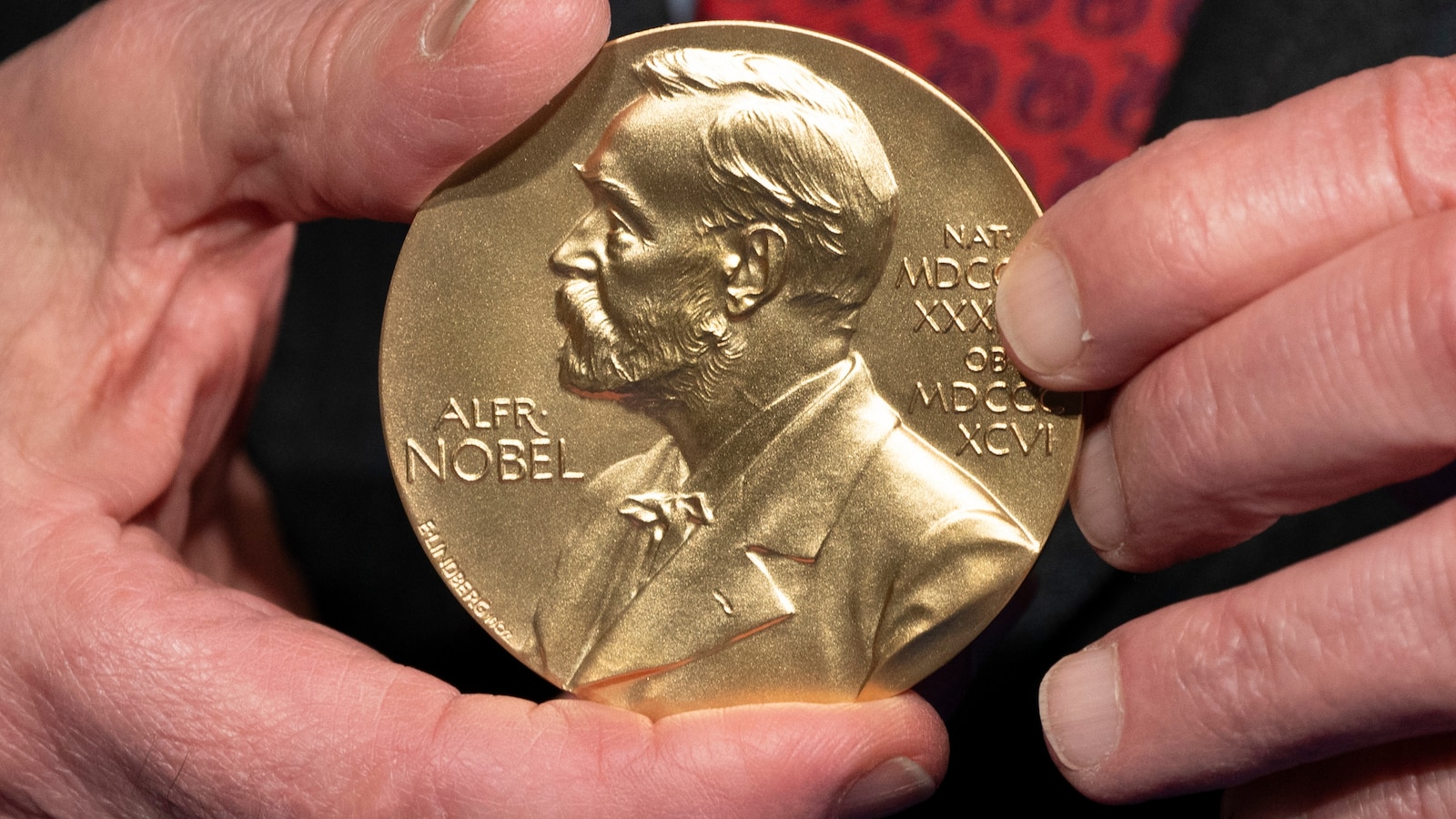
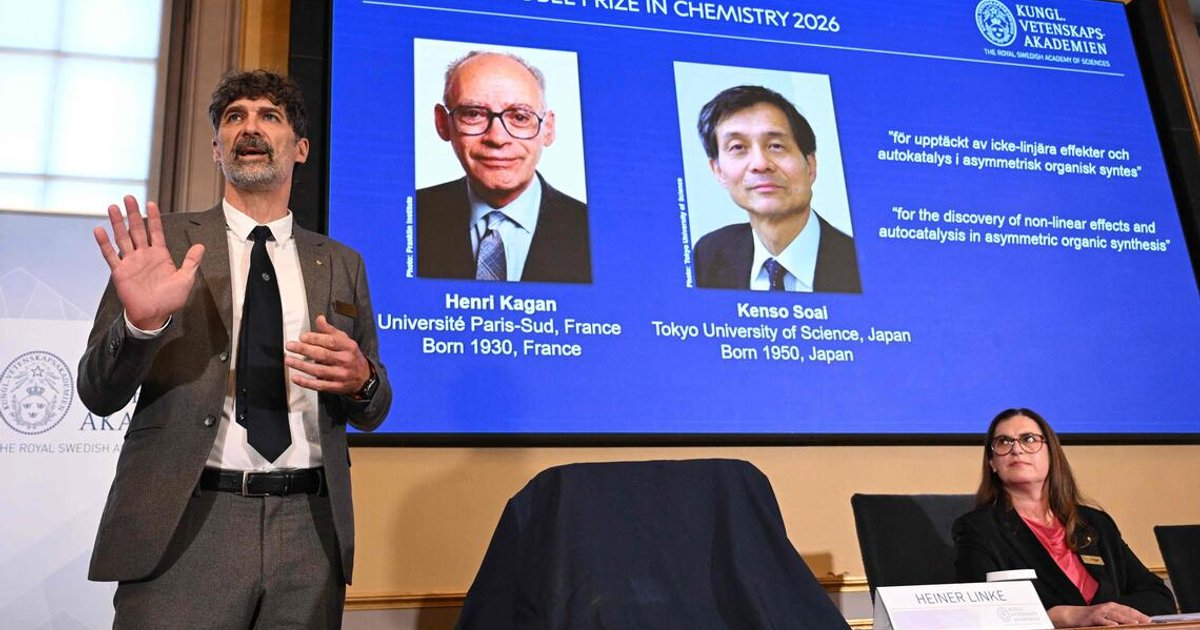
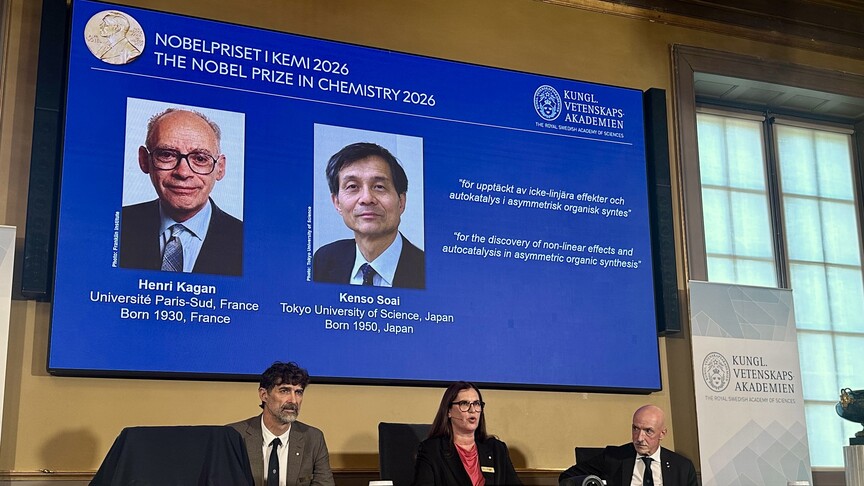
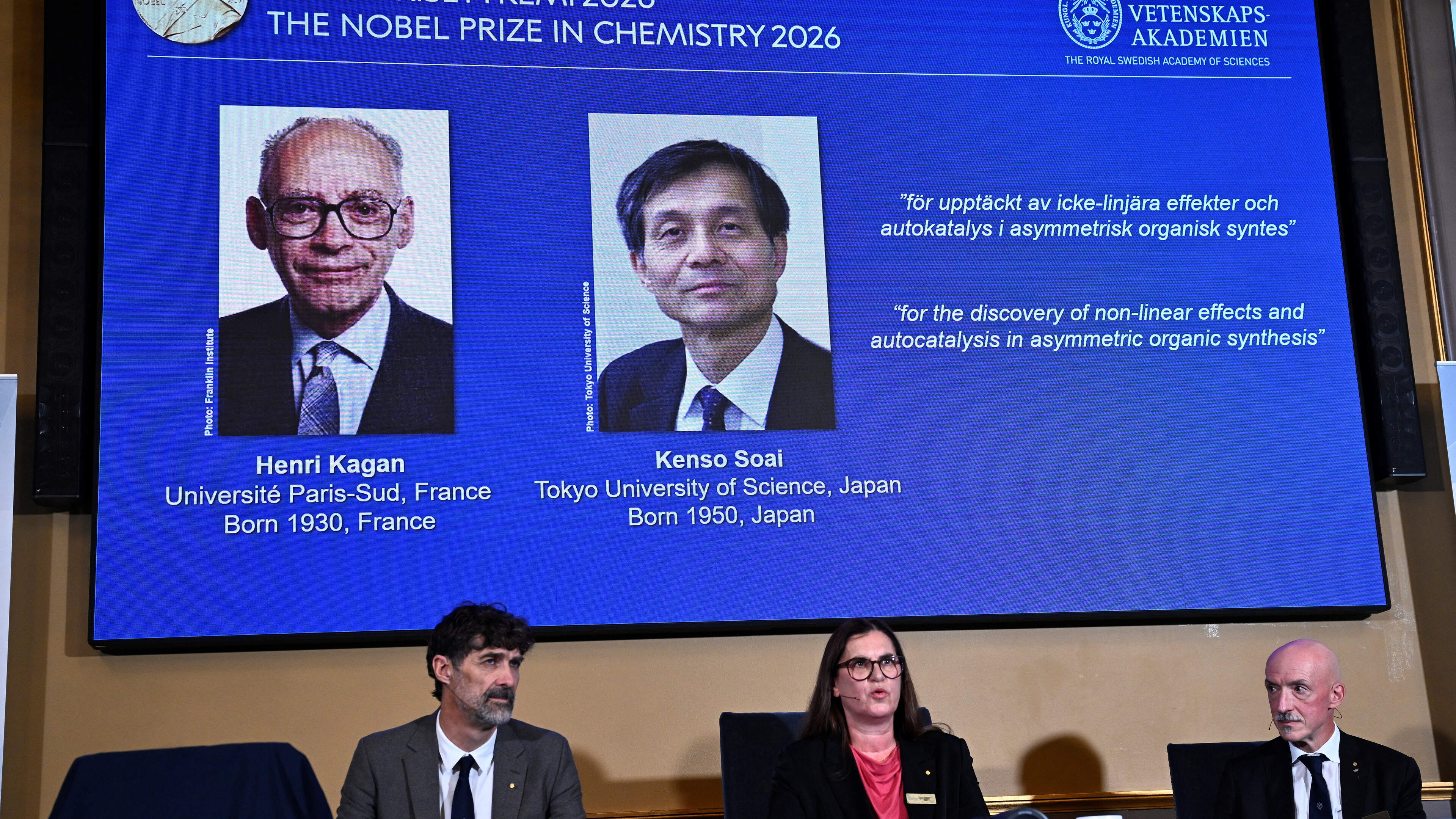
The Royal Swedish Academy of Sciences awarded the 2026 Nobel Prize in Chemistry to France's Henri B. Kagan and Japan's Kenso Soai for work on non-linear effects and autocatalysis in asymmetric organic synthesis, which addresses why life favours one mirror-image form of molecules.

1 / 8
The story, neutrally told
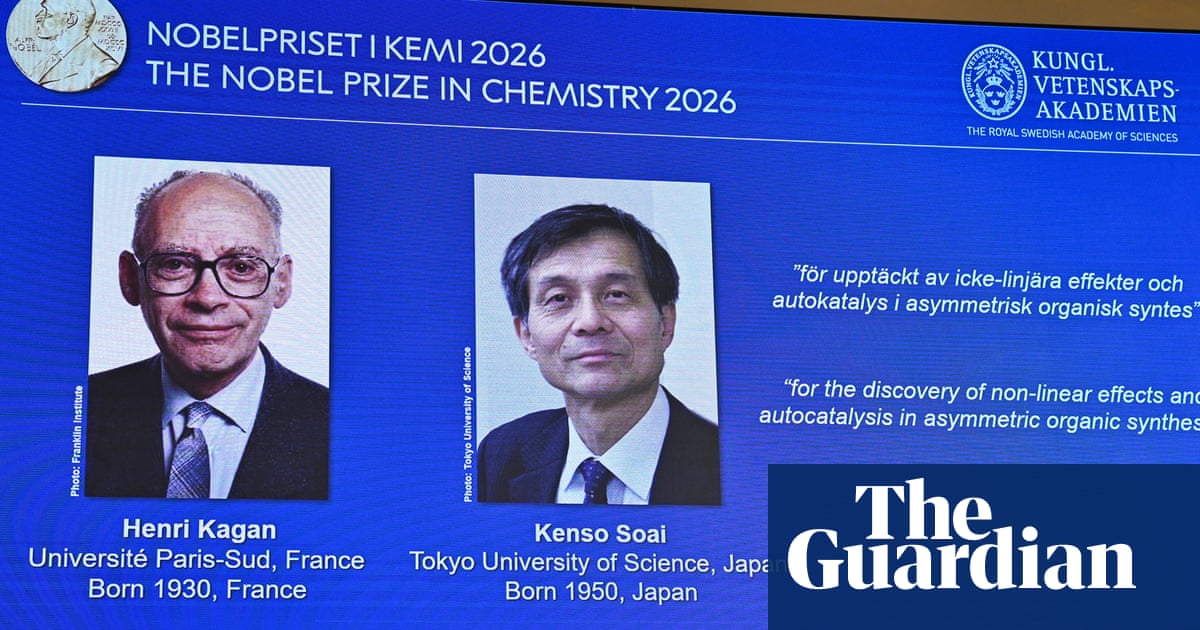
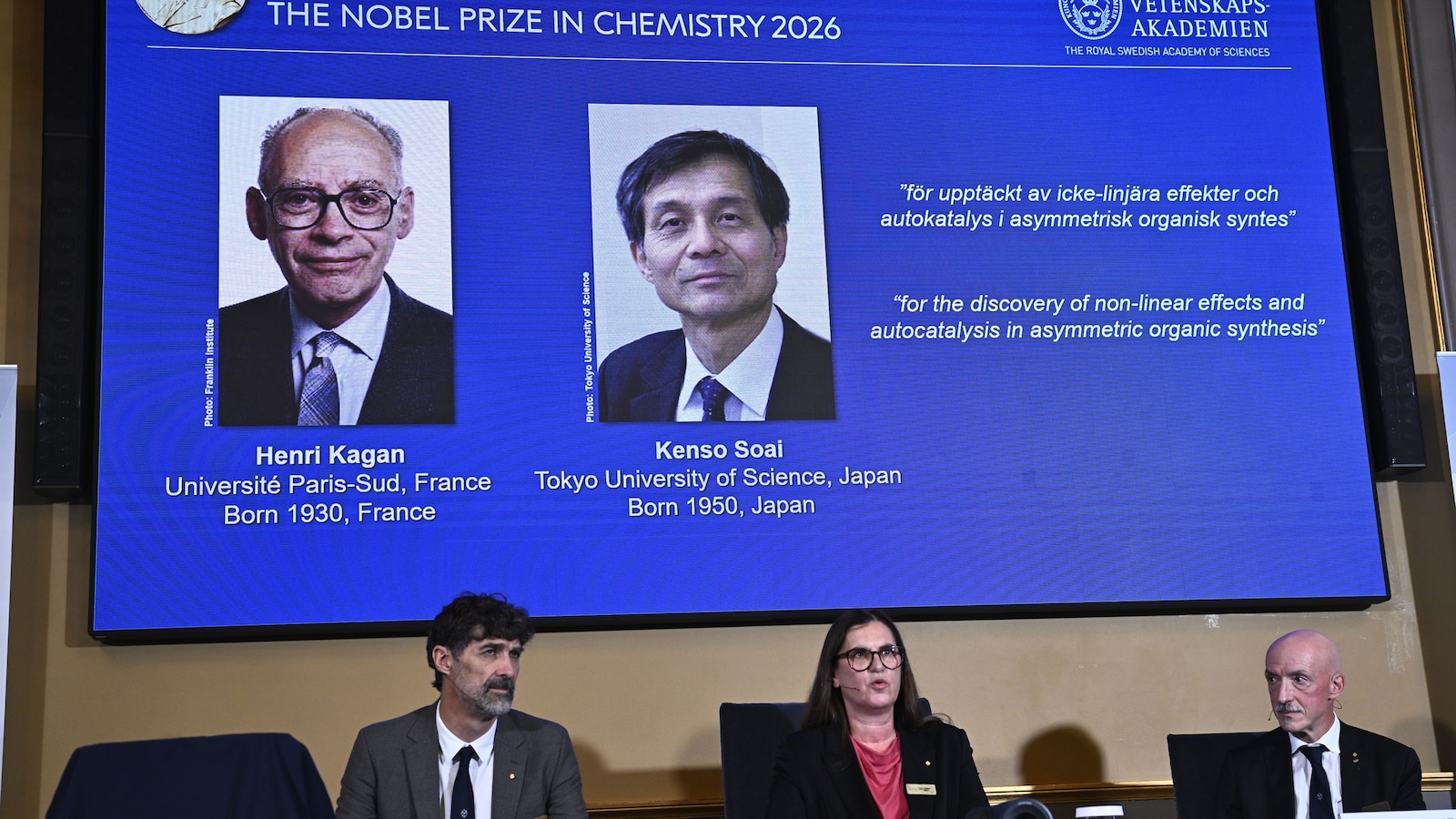
Mixed · 2The Royal Swedish Academy of Sciences announced in Stockholm on Wednesday 7 October 2026 that the Nobel Prize in Chemistry goes to Henri B. Kagan and Kenso Soai "for the discovery of non-linear effects and autocatalysis in asymmetric organic synthesis". NBC NewsLC “awarded the Nobel Prize in chemistry to Henri B. Kagan and Kenso Soai “for the discovery of non-linear effects and autocatalysis in asymmetric organic synthesis.”” Read at NBC News ↗ South China Morning PostN “The award, announced by the Royal Swedish Academy of Sciences in Stockholm” Read at South China Morning Post ↗ Mixed · 2Kagan is French and affiliated with a university in Orsay, France; Soai is Japanese and works at the Tokyo University of Science. Hindustan TimesN “Soai was born in Japan and is affiliated with the Tokyo University of Science.” Read at Hindustan Times ↗ CBC NewsLC “Kagan, 95, and born in France” Read at CBC News ↗ Centre · 3Most outlets give Kagan's age as 95 and Soai's as 76 (born 1950), but France 24 attaches the age 95 to Soai. The outlets also differ on Kagan's institution, naming Université Paris-Sud (Hindustan Times, SCMP, France 24) or Université Paris-Saclay (CBC), in Orsay. South China Morning PostN “The 76-year-old Soai, born in Japan, is with the Tokyo University of Science.” Read at South China Morning Post ↗ France 24N “Kagan is affiliated with Université Paris-Sud in Orsay, France, and Soai, 95, with the Tokyo University of Science.” Read at France 24 ↗ CBC NewsLC “affiliated with Université Paris-Saclay in Orsay, France” Read at CBC News ↗
Mixed · 2Heiner Linke, chair of the Nobel Committee for Chemistry, said the two "have provided a solution to a chemical mystery that is over a century old: how homochirality can emerge spontaneously" and called their reactions "spectacular". CBC NewsLC “have provided a solution to a chemical mystery that is over a century old: how homochirality can emerge spontaneously” Read at CBC News ↗ France 24N ““The chemical reactions they have developed are spectacular.”” Read at France 24 ↗ Centre · 3Linke explained that many molecules occur in two mirror-image versions, called chiral from the Greek word for hand; living organisms use only one mirror-image form of amino acids, and the pair's work addresses why life favours one form. South China Morning PostN “Such molecules are called chiral, from the Greek word for hand” Read at South China Morning Post ↗ Anadolu AgencyN “In proteins, however, living organisms use only one mirror-image form of amino acids.” Read at Anadolu Agency ↗ BBC NewsN “The two scientists answered the question of why life favours one of these mirror image molecules over the other.” Read at BBC News ↗ Centre · 1According to the academy as relayed by Anadolu, Kagan made a breakthrough in 1986 by finding a way to produce a greater excess of one mirror-image form than previously thought possible. Soai designed a reaction in 1995 with the potential to produce only one form and demonstrated it in 2003. Anadolu AgencyN “Kagan made a decisive breakthrough in 1986, discovering a way to manipulate chemical reactions to produce a greater excess of one mirror-image form than previously thought possible.”“In 2003, he succeeded in demonstrating such a reaction, according to the academy.” Read at Anadolu Agency ↗
Centre · 2Coverage notes the discoveries matter for designing reactions that make pharmaceuticals, because different mirror-image forms of a molecule can act differently in the body. Anadolu AgencyN “different mirror-image forms of a molecule can have different effects in the body” Read at Anadolu Agency ↗ France 24N “research into molecules' mirror images, decisive for the development of pharmaceuticals” Read at France 24 ↗ Centre · 1Hindustan Times reported that Soai was shopping near his home when the Nobel committee reached him. Hindustan TimesN “Soai was shopping near his home when the Nobel committee reached out to him to tell him about the award.” Read at Hindustan Times ↗ Mixed · 2The prize is worth 12 million Swedish kronor (about $1.2 million), the same whether it goes to one person, a small group or an organisation. Laureates receive their prizes on 10 December, the anniversary of Alfred Nobel's death. France 24N “The prize money this year is 12 million Swedish kronor (about $1.2 million), whether for an individual, a small group of laureates or an organisation.” Read at France 24 ↗ CBC NewsLC “The Nobel prizes are presented to the laureates on Dec. 10, the anniversary of Alfred Nobel's death.” Read at CBC News ↗
Centre · 2It is the third prize announced this year, after medicine (Peter Hegemann, Georg Nagel and Karl Deisseroth, for optogenetics) and physics (Francis Halzen). Literature follows on Thursday, peace on Friday and economics on Monday. Last year's chemistry prize went to Susumu Kitagawa, Richard Robson and Omar Yaghi for metal-organic frameworks. South China Morning PostN “Earlier this week, German researchers Peter Hegemann and Georg Nagel, together with American Karl Deisseroth, were awarded the Nobel Prize in Physiology or Medicine.”“Susumu Kitagawa from Japan, Richard Robson from Australia, and Omar Yaghi from the United States received the Chemistry Prize” Read at South China Morning Post ↗ Hindustan TimesN “The Literature Nobel will be announced on Thursday, followed by the Nobel Peace Prize on Friday.” Read at Hindustan Times ↗
Every sentence links to the reporting it rests on. The pill in front of each says where its sources sit: Left, Centre or Right when one side supplies at least half of them, Mixed when they are evenly split. The number is how many outlets it cites.
Left7 outlets
- Framing
- Mostly AP and CBC copy: a brief announcement of the winners, the citation, the prize money and the schedule of the remaining Nobels. The Guardian's headline stresses "mirror-image molecules".
- Emphasis
- The announcement itself, the Nobel committee quote (CBC), and the prize calendar.
- Leaves out or plays down
- AP copy gives little on what the work is; the explanatory detail appears in centre outlets.
- Charged language
- “spectacular”
- For example
-
“The prize money this year is 12 million Swedish kronor (about $1.2 million)” — NBC News
“The chemical reactions they have developed are spectacular.” — CBC News
“Nobel prize in chemistry awarded for work on mirror-image molecules” — The Guardian
Centre9 outlets
- Framing
- Science-explainer angle: what chirality and mirror-image molecules are, why life uses one form, and why this matters for drug making.
- Emphasis
- Homochirality, the 1986/1995/2003 milestones, pharmaceutical relevance, and human detail such as Soai being told while shopping.
- Leaves out or plays down
- Few note the discrepancies over ages and Kagan's university; France 24 mislabels Soai as 95.
- Charged language
- “mirror image”“spectacular”“solving mystery of life's asymmetry”
- For example
-
“Understanding how this asymmetry emerges has also been crucial to pharmaceutical development” — Anadolu Agency
“Chemistry Nobel awarded for solving mystery of life's asymmetry” — BBC News
““They made chemistry choose a mirror image,”” — Hindustan Times
Right3 outlets
- Framing
- The Irish Independent's headline presents the award as unravelling "the mystery of molecules".
- Emphasis
- A general-audience headline on the mystery of molecules, from Stockholm reporters.
- Leaves out or plays down
- No further detail is available beyond the headline.
- Charged language
- “mystery of molecules”
- For example
-
“Two scientists win Nobel chemistry prize for unravelling the mystery of molecules” — Irish Independent
What every side reports
- Henri B. Kagan and Kenso Soai won the 2026 Nobel Prize in Chemistry.
- The Royal Swedish Academy of Sciences announced it in Stockholm on 7 October 2026.
- The citation is for non-linear effects and autocatalysis in asymmetric organic synthesis.
- The prize is 12 million Swedish kronor (about $1.2 million).
Where accounts differ
-
Which laureate is 95
- Left
- CBC reports Kagan is 95 and Soai was born in 1950.
- Centre
- Hindustan Times and SCMP say Kagan is 95 (SCMP gives Soai as 76); France 24 says Soai is 95.
- Right
- No text available on this point.
-
Kagan's university
- Left
- CBC names Université Paris-Saclay in Orsay.
- Centre
- Hindustan Times, SCMP and France 24 name Université Paris-Sud in Orsay.
- Right
- Not stated.
-
The 2026 Nobel Prize in Chemistry was awarded to Henri B. Kagan and Kenso Soai for the discovery of non-linear effects and autocatalysis in asymmetric organic synthesis.
Supported- Supports 7
- CBC News, NBC News, Anadolu Agency, BBC News, France 24, Hindustan Times, South China Morning Post
-
Henri Kagan, not Kenso Soai, is the 95-year-old laureate.
Supported- Supports 3
- CBC News, Hindustan Times, South China Morning Post
- Disputes 1
- France 24
-
The prize is worth 12 million Swedish kronor (about $1.2 million).
Reported- Reports 4
- NBC News, France 24, Hindustan Times, South China Morning Post
-
Kagan and Soai solved a century-old chemical mystery of how homochirality can emerge spontaneously.
Reported- Reports 5
- CBC News, Anadolu Agency, France 24, Hindustan Times, South China Morning Post
Royal Swedish Academy of Sciences organisation
Announced the prize in Stockholm for non-linear effects and autocatalysis in asymmetric organic synthesis; its chemistry committee chair Heiner Linke says the laureates solved a century-old mystery of how homochirality can emerge spontaneously.
“The Royal Swedish Academy of Sciences announced the winners in Stockholm.” — CBC News
“He described the chemical reactions developed by the two scientists as “spectacular”.” — Hindustan Times
Henri B. Kagan person
Honoured for a 1986 breakthrough in producing a greater excess of one mirror-image form; no statement from Kagan appears in the coverage.
“Kagan made a decisive breakthrough in 1986” — Anadolu Agency
Kenso Soai person
Honoured for designing a reaction in 1995 and demonstrating it in 2003; Hindustan Times says he was shopping near his home when told.
“Soai advanced the work in 1995 by designing a reaction with the potential to produce only one mirror-image form.” — Anadolu Agency
“Soai was shopping near his home when the Nobel committee reached out to him” — Hindustan Times
Left8 articles
-
ABC NewsLC · · via AP
Nobel Prize in chemistry set to be awarded in Stockholm
Neutral AP pre-announcement copy: the academy will award the prize.
-
-
NBC NewsLC · · via AP
Nobel Prize in chemistry awarded to Henri Kagan and Kenso Soai
Neutral AP copy carried by NBC News: brief announcement with prize money and schedule.
-
NPRLC ·
Henri B. Kagan and Kenso Soai win Nobel Prize in chemistry
Neutral Plain headline naming the winners and the citation.
Show 4 moreShow fewer
-
Nobel prize in chemistry awarded for work on mirror-image molecules
Neutral Headline highlights work on mirror-image molecules.
-
French, Japanese scientists share Nobel Prize in Chemistry
Neutral Straight announcement with committee quote and Nobel ceremony background.
-
-
Centre10 articles
-
Henri Kagan, Kenso Soai win Nobel for 'making chemistry choose a mirror image'
Neutral Announcement with Linke quote, laureate details and a roundup of this year's prizes.
-
Nobel Prize in Chemistry goes to Henri B. Kagan and Kenso Soai
Neutral Plain headline naming the winners.
-
🔴Nobel Prize in chemistry awarded to France's Henri Kagan, Japan's Kenso Soai
Neutral Emphasises the France-Japan pairing and pharmaceutical relevance; mislabels Soai as 95.
-
Nobel Chemistry Prize awarded to Henri B. Kagan and Kenso Soai
Neutral Explains chirality via Linke's hands analogy and lists other 2026 winners.
Show 6 moreShow fewer
-
Nobel prize in chemistry awarded for work on mirror molecules
Neutral Headline presents the work as making molecules form the correct mirror images.

-
Chemistry Nobel awarded for solving mystery of life's asymmetry
Neutral Frames the award as solving the mystery of life's asymmetry.

-
France's Henri Kagan, Japan's Kenri Soai win 2026 Nobel Prize in Chemistry
Neutral Most detailed explainer, with 1986, 1995 and 2003 milestones and pharmaceutical relevance.
-

-
STATN ·

Right3 articles
-
-
The Straits TimesRC · · via Reuters
Scientists Henri Kagan and Kenso Soai win 2026 Nobel chemistry prize
-
Two scientists win Nobel chemistry prize for unravelling the mystery of molecules
Neutral Headline presents the prize as unravelling the mystery of molecules.
- 7 Oct 08:46 First ABC NewsLC Nobel Prize in chemistry set to be awarded in Stockholm via AP
- 7 Oct 10:45 +1h 59m Scientific AmericanLC 2026 Nobel Prize in Chemistry is award to Henri Kagan and Kenso Soai for their work in 'mirror' chemistry
- 7 Oct 10:45 +1h 59m NBC NewsLC Nobel Prize in chemistry awarded to Henri Kagan and Kenso Soai via AP
- 7 Oct 10:49 +2h 4m Hindustan TimesN Henri Kagan, Kenso Soai win Nobel for 'making chemistry choose a mirror image'
- 7 Oct 10:51 +2h 5m Deutsche WelleN Nobel Prize in Chemistry goes to Henri B. Kagan and Kenso Soai
- 7 Oct 10:54 +2h 8m France 24N 🔴Nobel Prize in chemistry awarded to France's Henri Kagan, Japan's Kenso Soai
- 7 Oct 10:55 +2h 9m South China Morning PostN Nobel Chemistry Prize awarded to Henri B. Kagan and Kenso Soai
- 7 Oct 10:56 +2h 10m IJRRC Kagan, Soai Win Chemistry Nobel for Autocatalysis
- 7 Oct 10:58 +2h 12m New ScientistN Nobel prize in chemistry awarded for work on mirror molecules
- 7 Oct 10:59 +2h 13m The Straits TimesRC Scientists Henri Kagan and Kenso Soai win 2026 Nobel chemistry prize via Reuters
- 7 Oct 11:05 +2h 19m NPRLC Henri B. Kagan and Kenso Soai win Nobel Prize in chemistry
- 7 Oct 11:09 +2h 24m BBC NewsN Chemistry Nobel awarded for solving mystery of life's asymmetry
- 7 Oct 11:14 +2h 28m The GuardianLC Nobel prize in chemistry awarded for work on mirror-image molecules
- 7 Oct 11:14 +2h 28m CBC NewsLC French, Japanese scientists share Nobel Prize in Chemistry
- 7 Oct 11:20 +2h 34m Irish IndependentRC Two scientists win Nobel chemistry prize for unravelling the mystery of molecules
- 7 Oct 11:25 +2h 39m Anadolu AgencyN France's Henri Kagan, Japan's Kenri Soai win 2026 Nobel Prize in Chemistry
- 7 Oct 11:25 +2h 39m Gulf NewsN Nobel Prize in Chemistry goes to Henri Kagan and Kenso Soai via AFP
- 7 Oct 11:42 +2h 56m STATN 2026 Nobel Prize in chemistry awarded for ‘mirror image’ molecule research, with impact on pharmacology
- 7 Oct 11:44 +2h 58m ABC News (Australia)LC Nobel Prize in Chemistry awarded to duo for 'spectacular' chemical reaction
- 7 Oct 11:50 +3h 4m ABC NewsLC Nobel Prize in chemistry awarded for research solving 'mirror image' mystery via AP
- 7 Oct 11:55 +3h 9m Hindustan TimesN Nobel Prize in Chemistry 2026: How Kagan and Soai helped explain ‘one-handed’ molecules
Times are when each article was published, or when we first saw it if the outlet gave no time.