Northern lights possible across US and Canada on October 8-9 after solar flare and CME
NOAA has issued a geomagnetic storm watch for October 9 as a coronal mass ejection linked to an M1.4 solar flare nears Earth, raising the chance of auroras in the northern US and Canada.
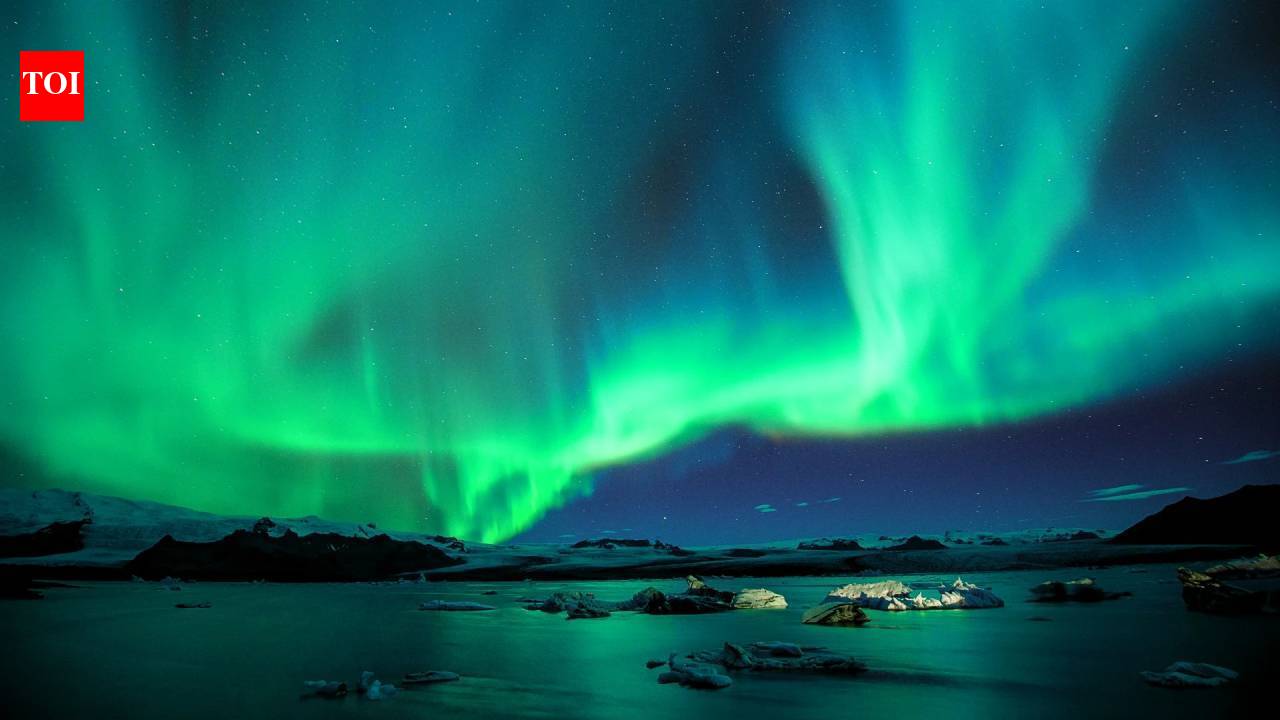
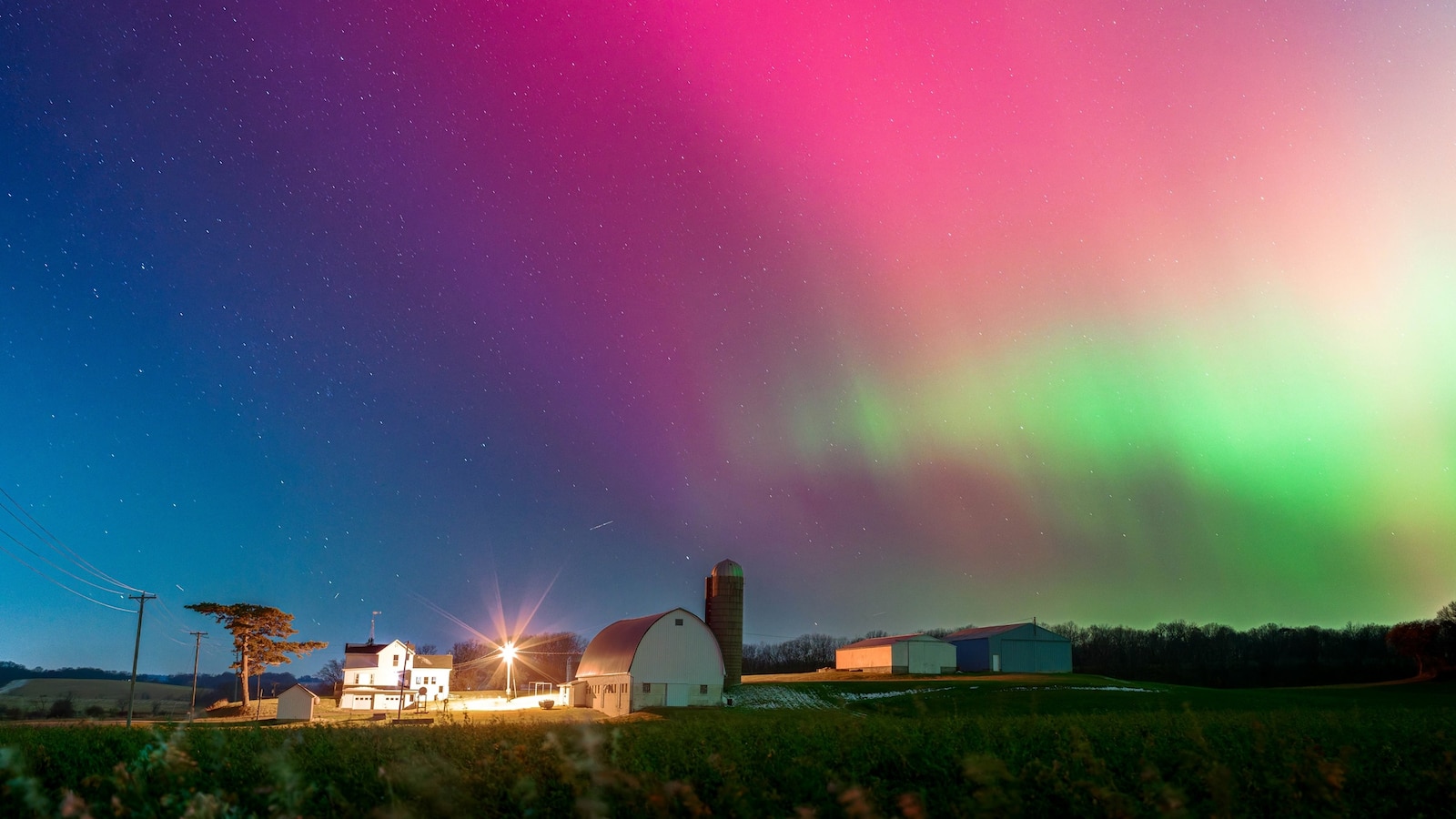
1 / 2
The story, neutrally told
Mixed · 2NOAA's Space Weather Prediction Center has issued a G2 (moderate) geomagnetic storm watch for October 9, forecasting G1 (minor) to G2 conditions as a coronal mass ejection (CME) reaches Earth. The Times of IndiaN “NOAA’s Space Weather Prediction Center has issued a G2 (moderate) geomagnetic storm watch for October 9, forecasting G1 (minor) to G2 conditions as the CME reaches Earth.” Read at The Times of India ↗ ABC NewsLC “has issued a moderate Geomagnetic Storm Watch beginning Thursday evening into Friday, as a result of the CME.” Read at ABC News ↗ Mixed · 2The CME is linked to a long-duration M1.4-class solar flare from active region AR4549 on October 6, which was accompanied by a Type II radio sweep. The Times of IndiaN “The solar activity began with a long-duration M1.4-class flare from AR4549 on October 6.” Read at The Times of India ↗ ABC NewsLC “On Tuesday, a coronal mass ejection (CME), a massive burst of charged particles embedded in a magnetic field, departed the sun bound for Earth.” Read at ABC News ↗ Centre · 1The Solar Influences Data Analysis Center described the CME as a faint, almost full-halo eruption with a projected speed of about 560 km/s and an Earth-directed component, with arrival expected on October 9. The Times of IndiaN “estimated its projected speed at about 560 kilometres per second” Read at The Times of India ↗
Mixed · 2The best viewing window is overnight Thursday, October 8, into Friday, October 9; the Times of India reports NOAA's forecast has activity rising around 11 p.m. ET Thursday and possibly reaching G2 around 5 a.m. ET Friday. The Times of IndiaN “NOAA's forecast indicates geomagnetic activity could begin increasing around 11 p.m. ET Thursday, with conditions potentially reaching G2 levels around 5 a.m. ET Friday.” Read at The Times of India ↗ ABC NewsLC “enhanced solar activity Thursday night into Friday morning, Oct. 9.” Read at ABC News ↗ Mixed · 2Under G1 conditions the best chances are in Alaska, Canada and the northern tier of the US; at G2 the aurora could extend to states such as Oregon, Nebraska, Iowa, Illinois, Ohio, Pennsylvania and New York. ABC News quotes SWPC saying aurora may be seen "as low as New York to Wisconsin to Washington state". The Times of IndiaN “If geomagnetic activity reaches G2 levels, the aurora could potentially become visible farther south” Read at The Times of India ↗ ABC NewsLC “"Aurora may be seen as low as New York to Wisconsin to Washington state," SWPC said in its alert.” Read at ABC News ↗ Left · 1ABC News says NOAA expects much of the activity to be minor with periods of moderate storming, that the UK Met Office sees a slight chance of strong G3 levels, and that impacts on technology should be minor and "mainly manageable". ABC NewsLC “The UK Met Office says there's even a slight chance of strong G3 levels.”“mainly manageable.” Read at ABC News ↗
Left · 1ABC News also reports a second CME, tied to a smaller flare, is expected to deliver only a "glancing blow" over the weekend, according to the UK Met Office. ABC NewsLC “is also headed toward Earth but is only expected to deliver a "glancing blow" over the weekend” Read at ABC News ↗ Mixed · 2Both outlets caution that visibility is uncertain: it depends on the exact CME arrival time, cloud cover and darkness, and ABC adds the orientation of the CME's magnetic field. The Times of IndiaN “visibility will depend on the strength and timing of the storm, local weather and darkness.” Read at The Times of India ↗ ABC NewsLC “the cloud cover and the magnetic orientation of the CME's magnetic field.” Read at ABC News ↗ Centre · 1The Times of India adds viewing and photography advice: find a dark site with a clear northern horizon, and use a smartphone's Night Mode on a stable surface. The Times of IndiaN “A smartphone's Night Mode can sometimes capture colours that are difficult to distinguish with the naked eye” Read at The Times of India ↗
Every sentence links to the reporting it rests on. The pill in front of each says where its sources sit: Left, Centre or Right when one side supplies at least half of them, Mixed when they are evenly split. The number is how many outlets it cites.
Left1 outlet
- Framing
- Short news explainer on a busy week for the sun, with the chance of auroras in northern and upper Midwest states.
- Emphasis
- Multiple CMEs, UK Met Office outlook including slight G3 chance, manageable infrastructure impacts.
- Leaves out or plays down
- No flare class, active region, CME speed or hour-by-hour timings.
- For example
-
“It's been a busy week for the sun” — ABC News
Centre1 outlet
- Framing
- Service-style guide on where and when to watch the aurora, with technical forecast detail.
- Emphasis
- Flare class, CME speed, state lists by storm level, science of auroras, photography tips.
- Leaves out or plays down
- Does not mention the second CME or the possible G3 level.
- For example
-
“The forecast could give skywatchers another opportunity to see the aurora borealis” — The Times of India
Right0 outlets
No right outlet in our sources has covered this story yet.
What every side reports
- NOAA's SWPC issued a geomagnetic storm watch tied to a CME from a moderate solar flare.
- The best aurora chances are overnight Thursday October 8 into Friday October 9 in the northern US and Canada.
- Whether the aurora is visible depends on CME timing, cloud cover and darkness.
Where accounts differ
-
Likely storm strength
- Left
- ABC News: mostly minor with moderate periods; UK Met Office sees a slight chance of G3.
- Centre
- Times of India: G1 to G2 conditions likely on October 9.
NOAA organisation
NOAA's SWPC has issued a moderate geomagnetic storm watch, saying aurora may be seen as far south as New York, Wisconsin and Washington state, with manageable technological impacts.
“"Aurora may be seen as low as New York to Wisconsin to Washington state," SWPC said in its alert.” — ABC News
“NOAA subsequently issued its G2 storm watch” — The Times of India
Left1 article
-
Solar eruptions moving toward earth could cause auroras over US tonight
Neutral Brief news report stressing multiple eruptions and uncertainty, with minor infrastructure impacts.
Centre1 article
-
Northern lights may return to US, Canada October 8-9: Where and when to watch the aurora show
Neutral Detailed viewing guide with forecast caveats.
Right0 articles
No coverage yet.
- 7 Oct 23:46 First The Times of IndiaN Northern lights may return to US, Canada October 8-9: Where and when to watch the aurora show
- 8 Oct 19:39 +19h 54m ABC NewsLC Solar eruptions moving toward earth could cause auroras over US tonight
Times are when each article was published, or when we first saw it if the outlet gave no time.