NTSB: Amazon-contracted 767 pilots flagged excess speed before fatal Miami runway overrun
The NTSB's preliminary report on the 6 September Miami crash of a 21 Air Boeing 767 flying for Amazon says the first officer warned repeatedly of excess speed, braking systems went unused and the controller gave no wind information. It reaches no conclusion on cause.
Updated (version 2). New coverage since the last version from BNO News, New York Post.


1 / 4
The story, neutrally told
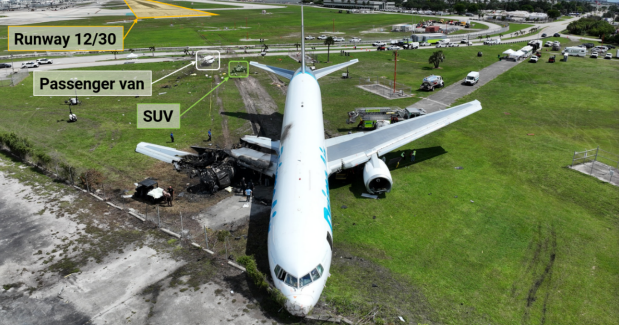
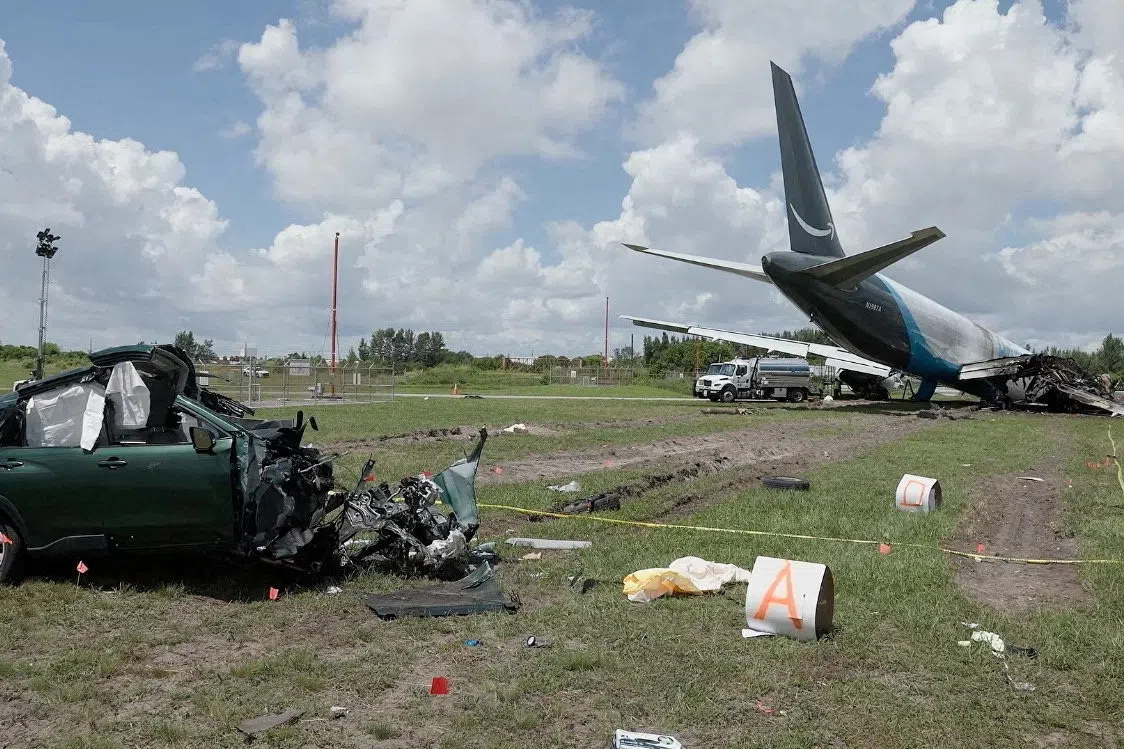
Mixed · 2The National Transportation Safety Board said in a preliminary report on Thursday 1 October that the first officer of an Amazon-contracted cargo plane warned the captain several times that the aircraft was coming in too fast before it overran a runway at Miami International Airport. CBS NewsLC “warned several times that the plane was coming in too fast during its approach” Read at CBS News ↗ The Straits TimesRC “the first officer cautioned the captain they were flying "too fast" just over a minute before touching down” Read at The Straits Times ↗ Left · 121 Air Flight 7598, a Boeing 767-33A freighter flying for Amazon from San Juan, Puerto Rico, landed on Runway 30 at 1:53 p.m. local time on 6 September, overran it, hit a perimeter fence, crossed a street and stopped about 1,200 feet beyond the pavement, according to CBS News's account of the report. CBS NewsLC “landed on Runway 30 from San Juan, Puerto Rico, at 1:53 p.m. local time on Sept. 6 and overran it”“came to rest about 1,200 feet from the end of the pavement” Read at CBS News ↗ Left · 1The plane struck a Ford Econoline van on an airport perimeter road, killing five of its seven occupants and seriously injuring the other two, and then hit an SUV on Northwest 67th Avenue whose only occupant was seriously injured; the two pilots, the only people aboard, had minor injuries. CBS NewsLC “Five of the seven people in the van were killed, and the other two were seriously injured.”“The captain and first officer, the only two people aboard, escaped with minor injuries.” Read at CBS News ↗
Centre · 1The captain escaped through a cabin door and the first officer through the right cockpit window. BNO NewsN “the captain through a cabin door and the first officer through the right cockpit window” Read at BNO News ↗ Mixed · 2The NTSB said the captain did not verbally acknowledge all of the first officer's comments about speed, and CBS reported that more than 10 electronic warnings, including "sink rate" and "too low terrain" alerts, were captured on the flight recorder. The Straits TimesRC “The NTSB said the captain did not verbally acknowledge all of the first officer's comments about speed.” Read at The Straits Times ↗ CBS NewsLC “More than 10 electronic warnings were captured on the flight recorder.” Read at CBS News ↗ Mixed · 2The plane touched down about 3,750 feet past the start of the runway at about 184 mph (160 knots); CBS added that it crossed the threshold at about 204 mph. The Straits TimesRC “The airplane touched down about 3,750 feet (1143 meter) past the start of the runway at a groundspeed of 160 knots (184mph).” Read at The Straits Times ↗ CBS NewsLC “going at about 204 miles per hour, and landed about 3,750 feet past the threshold at a speed of about 184 mph” Read at CBS News ↗
Centre · 1BNO News, citing the report, said the first officer first cautioned that the plane was too fast about 1 minute 42 seconds before the cockpit recording ended, that the plane crossed the threshold about 105 feet above the ground at 177 knots (about 204 mph), and that it left the runway end at 113 knots (about 130 mph), striking approach-lighting equipment before reaching grass. BNO NewsN “about a minute and 42 seconds before the recording ended”“crossed the runway’s landing threshold about 105 feet above the ground at 177 knots”“The plane crossed the runway’s end at 113 knots, or about 130 mph” Read at BNO News ↗ Mixed · 2Neither the speed brakes nor the thrust reversers were deployed. The Straits TimesRC “the speed brakes remained stowed and the thrust reversers did not deploy during the landing” Read at The Straits Times ↗ CBS NewsLC “neither the speed brakes nor the thrust reversers” Read at CBS News ↗ Centre · 1A landing-gear sensor alternated between air and ground for about seven seconds, and investigators found the flap lever at 25 degrees after the crash, though the captain had called for 30 degrees shortly before touchdown; brake wear measurements showed remaining service life on all eight wheels. BNO NewsN “alternated between indicating that the plane was airborne and on the ground for about seven seconds”“investigators found the flap lever at 25 degrees”“Brake wear measurements showed remaining service life on all eight wheels.” Read at BNO News ↗
Mixed · 3According to CBS, the captain called for a go-around about 15 seconds after touchdown, when only about 415 feet of runway remained; BNO News, citing flight data, said the wheel brakes were released and engines went to go-around settings with about 930 feet left, and four seconds later the engines returned to idle and braking resumed with about 415 feet left. Reuters described this as the captain considering aborting the landing after touchdown. CBS NewsLC “The captain was heard calling for a go-around about 15 seconds after the plane had already touched down” Read at CBS News ↗ BNO NewsN “the wheel brakes were released and the engine controls increased to go-around settings with only about 930 feet of runway remaining” Read at BNO News ↗ The Straits TimesRC “considered aborting the landing after the aircraft touched down” Read at The Straits Times ↗ Right · 1The NTSB said an FAA air traffic controller cleared the flight to land without giving wind information, which FAA rules require; about four minutes earlier the controller had given another flight winds from 190° at 19 knots gusting to 22, but the 21 Air flight was not on that frequency. The Straits TimesRC “did not provide information on the wind as required by the FAA”“The 21 Air flight was not on the radio frequency at the time, the NTSB said.” Read at The Straits Times ↗ Left · 1Thunderstorms were reported at the airport with gusts of 17 to 26 knots, and no crushable-concrete overrun safety system was installed at the end of Runway 30. CBS NewsLC “No crushable-concrete overrun safety system was installed at the end of Runway 30.”“wind gusting between 17 and 26 knots” Read at CBS News ↗
Mixed · 2It was the first day the captain (about 7,267 flight hours) and first officer (about 2,800 hours) had flown together; the flight was their second of the day after Miami–San Juan, and Reuters said it was the plane's third flight that day, following Cincinnati–Miami. CBS NewsLC “It was the first time they had flown together.” Read at CBS News ↗ The Straits TimesRC “It had flown from Cincinnati to Miami and from Miami to San Juan earlier before the crash.” Read at The Straits Times ↗ Left · 1The aircraft was a 1994-built 767 converted from passenger service to a freighter in 2016; it was substantially damaged, with a post-crash fire and the right engine and part of the right wing separating. CBS NewsLC “The 767 was built in June 1994 as a passenger plane and converted to a freighter in June 2016.”“Part of the right wing and the right engine separated from the aircraft after impact” Read at CBS News ↗ Left · 1The 12-page report states no conclusion on why the crash happened, and a final report is expected in one to two years. CBS NewsLC “The 12-page report did not state a conclusion as to why the crash occurred.”“The NTSB's final report will likely take between one and two years to release.” Read at CBS News ↗
Right · 1Amazon has paused its use of 21 Air and says it remains committed to supporting the investigation; 21 Air said it is reviewing the report and will "take all appropriate action to improve our safety based on the facts as they are established." The FAA did not immediately comment. The Straits TimesRC “Amazon has since paused use of 21 Air.”“will take all appropriate action to improve our safety based on the facts as they are established”“The FAA did not immediately comment.” Read at The Straits Times ↗ Left · 1Pablo Rojas, an attorney for a surviving van occupant, said the report does not answer all questions about the airline's broader operations and that he will examine them independently. CBS NewsLC “this information does not answer all the questions we have about the broader airline operations” Read at CBS News ↗
Every sentence links to the reporting it rests on. The pill in front of each says where its sources sit: Left, Centre or Right when one side supplies at least half of them, Mixed when they are evenly split. The number is how many outlets it cites.
Left1 outlet
- Framing
- CBS News leads with the first officer's repeated warnings about excess speed, then gives a detailed human and technical account of the crash, the pilots' backgrounds and the victims.
- Emphasis
- Crew communication, flight recorder warnings, pilots' first day flying together, casualties, the lack of an overrun safety system and a survivor's lawyer's call for broader scrutiny of airline operations.
- Leaves out or plays down
- Does not mention that Amazon has paused use of 21 Air.
- For example
-
“warned several times that the plane was coming in too fast during its approach” — CBS News
Centre1 outlet
- Framing
- BNO News leads with the co-pilot's repeated speed warnings and gives a compact, data-heavy account of the approach, landing and rollout.
- Emphasis
- Flight-data timings and speeds, the go-around attempt, wreckage findings (flap lever, brake wear) and the controller's missing wind information.
- Leaves out or plays down
- Leaves out Amazon's pause of 21 Air, company statements and the survivor's attorney.
- For example
-
“repeatedly warned that the aircraft was flying too fast before it ran off a runway in Miami” — BNO News
Right2 outlets
- Framing
- The Straits Times carries Reuters copy that leads with the pilots' lack of wind information and presents the report as pointing to a series of likely failures, including the controller's omission.
- Emphasis
- Air traffic control's missing wind information, unused braking systems, Amazon pausing 21 Air, and company statements.
- Leaves out or plays down
- Omits the go-around call timing, the pilots' flight hours, the first-day pairing, the victims' details and the absence of an overrun safety system.
- For example
-
“points to a series of likely failures” — The Straits Times
What every side reports
- The NTSB preliminary report was released on 1 October 2026 on the 6 September crash at Miami International Airport that killed five people.
- The first officer warned of excessive speed and the captain did not verbally acknowledge all the comments.
- Speed brakes and thrust reversers were not deployed; touchdown was about 3,750 feet past the threshold at about 184 mph.
- The controller did not give wind information with the landing clearance as FAA rules require.
- 21 Air said it would act on the facts as established.
Where accounts differ
-
What the captain did after touchdown
- Left
- CBS says the captain called for a go-around about 15 seconds after touchdown, with about 415 feet of runway left.
- Right
- Reuters (via The Straits Times) says the captain considered aborting the landing after touchdown, citing flight data recorder evidence.
-
Which finding leads the story
- Left
- CBS leads with the first officer's repeated speed warnings.
- Right
- Reuters leads with the pilots being unaware of wind conditions and the controller's missing wind information.
-
The first officer warned the captain several times that the plane was too fast on approach.
Reported- Reports 3
- CBS News, BNO News, The Straits Times
-
The air traffic controller cleared the flight to land without giving required wind information.
Reported- Reports 3
- CBS News, BNO News, The Straits Times
-
Neither speed brakes nor thrust reversers were deployed during the landing.
Reported- Reports 3
- CBS News, BNO News, The Straits Times
National Transportation Safety Board organisation
In its preliminary report, the NTSB set out the speed warnings, unused braking systems and missing wind information, but drew no conclusion on cause; the final report is expected in one to two years.
“The 12-page report did not state a conclusion as to why the crash occurred.” — CBS News
“did not provide information on the wind as required by the FAA” — The Straits Times
Amazon organisation
Amazon says it remains committed to supporting the NTSB investigation and has paused its use of 21 Air.
“Amazon said it remains committed to supporting the NTSB’s ongoing investigation.” — The Straits Times
“Amazon has since paused use of 21 Air.” — The Straits Times
Left1 article
-
First officer warned that Amazon plane was coming in too fast before deadly crash
Neutral Detailed report-based account led by the first officer's speed warnings, with company and lawyer reaction.
Centre1 article
-
Co-pilot warned of excessive speed before deadly Amazon plane crash in Miami
Neutral Factual, detail-led summary of the preliminary report's flight-data findings, framed around the co-pilot's warnings.
Right2 articles
-
The Straits TimesRC · · via Reuters
Pilots of crashed Amazon cargo plane were unaware of wind conditions
Neutral Reuters wire copy led by the pilots' unawareness of wind and the controller's omission, framing the report as pointing to multiple failures.
-
New York PostR · · via AP
Federal report says pilots weren’t warned about wind before Amazon cargo plane crashed in Miami
- 1 Oct 23:40 First CBS NewsLC First officer warned that Amazon plane was coming in too fast before deadly crash
- 1 Oct 23:53 +13m The Straits TimesRC Pilots of crashed Amazon cargo plane were unaware of wind conditions via Reuters
- 2 Oct 01:55 +2h 16m BNO NewsN Co-pilot warned of excessive speed before deadly Amazon plane crash in Miami
- 2 Oct 07:59 +8h 20m New York PostR Federal report says pilots weren’t warned about wind before Amazon cargo plane crashed in Miami via AP
Times are when each article was published, or when we first saw it if the outlet gave no time.
Ask about this story
Loading…