Teams in Vienna and Beijing build first working nuclear clocks
Two research teams, one in Vienna and one in Beijing, have built the first working nuclear clocks, described in two Nature papers. They do not yet beat the best atomic clocks, but the researchers expect rapid improvement.
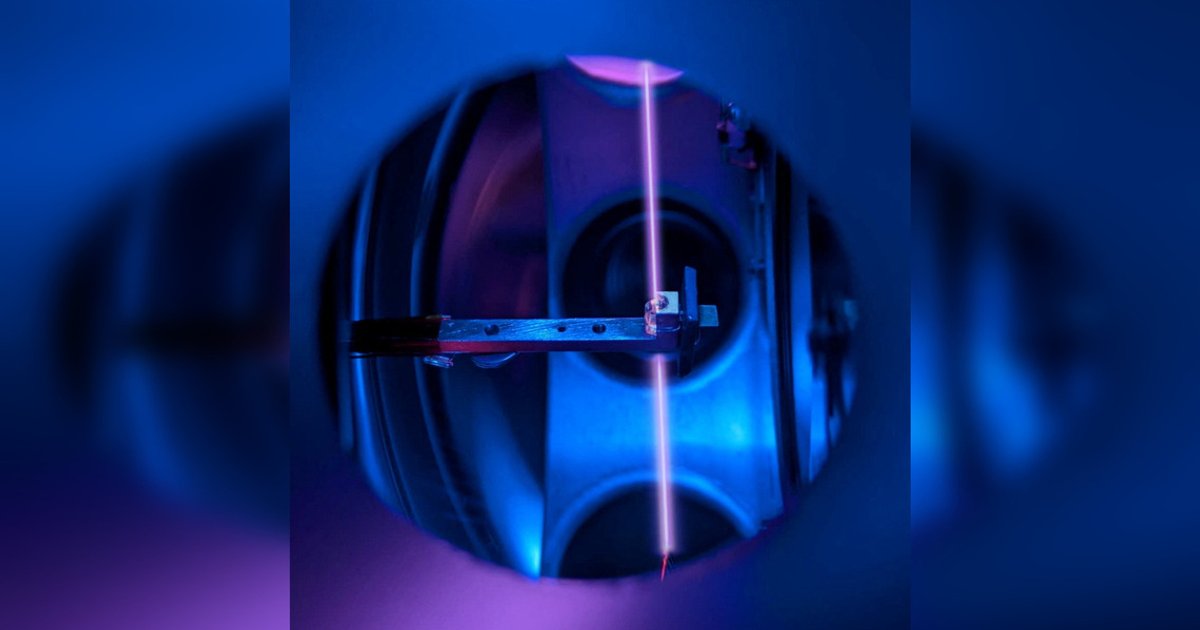
1 / 2
The story, neutrally told
Mixed · 2Two teams of scientists working separately, one at TU Wien (Vienna University of Technology) in Austria and one in Beijing, have built the world's first two working nuclear clocks, according to two papers published in the journal Nature on 7 October. The Straits TimesRC “Scientific teams working separately in Vienna and Beijing have developed the world’s first two operating nuclear clocks” Read at The Straits Times ↗ ABC News (Australia)LC “The researchers have published their work in two papers in the journal Nature.” Read at ABC News (Australia) ↗ Mixed · 2Nuclear clocks keep time by tracking transitions inside an atom's nucleus rather than the electron transitions used in atomic clocks. They are not powered by nuclear fission or fusion. The Straits TimesRC “They are called nuclear clocks not because they are powered by nuclear fusion or fission” Read at The Straits Times ↗ ABC News (Australia)LC “Two teams of scientists have made the world's first "nuclear clocks", which keep time by tracking tiny changes in the centre of atoms.” Read at ABC News (Australia) ↗ Mixed · 2Both clocks use thorium-229 in crystals, with lasers probing the nuclei. AFP says the crystals are solid-state calcium fluoride. The Straits TimesRC “The nuclear clocks both are based on a form, or isotope, of the element thorium, called thorium-229, trapped in solid-state calcium fluoride crystals.” Read at The Straits Times ↗ ABC News (Australia)LC “Both teams grew crystals containing thorium-229, then suspended them under ultra-precise lasers” Read at ABC News (Australia) ↗
Mixed · 2The idea is that a nucleus is far smaller than the electron shell around it, so tracking its transitions could allow greater accuracy than current atomic clocks. Those clocks use elements such as caesium or strontium, and ABC reports they are approaching a physical limit on accuracy. The Straits TimesRC “tracking these transitions inside the atomic nucleus might attain even higher levels of accuracy than tracking them in electrons because an atomic nucleus is much smaller” Read at The Straits Times ↗ ABC News (Australia)LC “But these clocks are approaching a point where it is physically impossible to make them more accurate.” Read at ABC News (Australia) ↗ Mixed · 2The new clocks do not yet outperform the best atomic clocks. Thorsten Schumm of TU Wien, who helped lead the Vienna team, said the clock is still "far from its target performance". The Straits TimesRC “nuclear clocks have the potential to outperform the best conventional atomic clocks, but do not do so yet.”“Schumm said the nuclear clock is still “far from its target performance,”” Read at The Straits Times ↗ ABC News (Australia)LC “This accuracy does not surpass the best clocks in operation right now” Read at ABC News (Australia) ↗ Mixed · 2ABC reports that both clocks are accurate to about one second in 30 million years. AFP says the best conventional atomic clocks lose or gain only one second over billions of years. ABC News (Australia)LC “Both clocks are so accurate that if they ran for 30 million years, they would only be off by a second.” Read at ABC News (Australia) ↗ The Straits TimesRC “The best conventional atomic clocks can go billions of years losing or gaining only one second.” Read at The Straits Times ↗
Right · 1Shiqian Ding of Tsinghua University, who helped lead the Beijing team, said the two teams reached working clocks at the same time using different approaches, which shows the concept is robust. Schumm said the Vienna clock has better thorium crystals and the Beijing team a stronger laser, so combining them could give a significantly better clock. The Straits TimesRC “The two teams worked independently and reached operating thorium-229 nuclear clocks at the same time, using different experimental approaches.”“the Vienna clock has slightly better thorium crystals – higher concentration, better optical properties – while the Beijing team has a stronger laser.” Read at The Straits Times ↗ Mixed · 2Schumm says his team has worked towards a nuclear clock since 2008. ABC says a turning point came in early 2024, when the team used a laser to produce the predicted nuclear change, and Ding said no single step suddenly made the clock possible. The Straits TimesRC “In my team, we have been working towards this goal since 2008,”” Read at The Straits Times ↗ ABC News (Australia)LC “In early 2024 the team used a laser to produce the predicted change in an atomic nucleus that would allow time to be measured.”“"There was no single step that suddenly made the clock possible," Dr Ding said.” Read at ABC News (Australia) ↗ Mixed · 2Proposed uses include satellite navigation, data-transfer synchronisation, surveying and metrology. ABC adds mining exploration, earthquake prediction and testing fundamental physics. Schumm envisions a chip-scale device, and AFP says nuclear clocks might be less bulky and delicate than atomic clocks. ABC News (Australia)LC “"We envision a chip-scale device," he said.”“The clocks could be used in navigation, mining, earthquake prediction, and potentially discovering new areas of physics.” Read at ABC News (Australia) ↗ The Straits TimesRC “satellite-based navigation, synchronisation of data transfer, surveying and metrology” Read at The Straits Times ↗
Left · 1Victor Flambaum of the University of New South Wales, who was not involved in the studies, said nuclear clocks could become the "most accurate instrument humans have ever built" and that a "race" among other groups could soon produce one that beats atomic clocks. ABC News (Australia)LC “nuclear clocks had the potential to become the "most accurate instrument humans have ever built".”“there was a "race" among several other groups to make practical nuclear clocks” Read at ABC News (Australia) ↗ Mixed · 2The Vienna team used its clock in a proof-of-concept dark matter search. AFP says the experiment did not detect dark matter but the clock performed at the level of the best atomic clocks. ABC says the team used the clock to detect evidence of dark matter, so the two accounts differ. Schumm plans a second clock in Innsbruck within a year. The Straits TimesRC “The experiment did not, in fact, detect dark matter but the nuclear clock performed at the level of the best atomic clocks.” Read at The Straits Times ↗ ABC News (Australia)LC “Professor Schumm's team has already used their nuclear clock to detect evidence of dark matter, as proof of concept.”“He is planning to install a second nuclear clock in Innsbruck within a year” Read at ABC News (Australia) ↗
Every sentence links to the reporting it rests on. The pill in front of each says where its sources sit: Left, Centre or Right when one side supplies at least half of them, Mixed when they are evenly split. The number is how many outlets it cites.
Left1 outlet
- Framing
- ABC Australia presents an explainer on the promise of nuclear clocks, with a lede on 30 million years per second of accuracy, and leans on an outside expert.
- Emphasis
- Practical and scientific uses (GPS, mining, earthquake prediction, dark matter), the 'race' among research groups, and quotes from Flambaum, Schumm and Ding.
- Leaves out or plays down
- Does not say that the Vienna dark matter experiment found no dark matter, and does not give the accuracy of the best atomic clocks.
- Charged language
- “most accurate instrument humans have ever built”
- For example
-
“Two teams of scientists have built the first working "nuclear clocks", which could become the world's most accurate timekeepers.” — ABC News (Australia)
“Professor Flambaum said there was a "race" among several other groups” — ABC News (Australia)
Centre0 outlets
No centre outlet in our sources has covered this story yet.
Right1 outlet
- Framing
- The Straits Times runs AFP's wire report as a straight news story about the two teams' achievement, with caveats on current performance.
- Emphasis
- The two teams' independent success, how nuclear clocks differ from atomic clocks, the fact that they are not yet better than atomic clocks, and the null dark matter result.
- Leaves out or plays down
- Omits mining and earthquake uses, the 2024 breakthrough and the Innsbruck plan.
- For example
-
“Scientific teams working separately in Vienna and Beijing have developed the world’s first two operating nuclear clocks” — The Straits Times
“The experiment did not, in fact, detect dark matter” — The Straits Times
What every side reports
- Teams in Vienna and Beijing built the first working nuclear clocks, published in two Nature papers.
- Both clocks use thorium-229 crystals probed by lasers.
- The clocks do not yet outperform the best atomic clocks, but researchers expect them to improve.
- Navigation and fundamental physics, including dark matter, are named as potential uses.
Where accounts differ
-
Whether the Vienna team's dark matter experiment found anything
- Left
- ABC says Schumm's team used the clock to detect evidence of dark matter as proof of concept.
- Right
- AFP, carried by the Straits Times, says the experiment did not detect dark matter, though the clock performed at the level of the best atomic clocks.
Nuclear clocks topic
Researchers describe nuclear clocks as a robust, rapidly improving technology with potential to outperform atomic clocks. They say current performance is well short of target.
“it shows that the concept is robust and not dependent on one particular technical implementation” — The Straits Times
“Both clocks are in their experimental stages, but researchers say they will be rapidly improved.” — ABC News (Australia)
Oceania1 outlet
ABC Australia stresses applications and quotes an Australian physicist, Flambaum, who was not involved in the studies.
“University of New South Wales physicist Victor Flambaum said nuclear clocks had the potential” — ABC News (Australia)
ABC News (Australia)
East and Southeast Asia1 outlet
The Straits Times runs AFP's account, which focuses on the Vienna and Beijing teams and the technical caveats.
“Scientists in Vienna and Beijing create world’s first nuclear clocks” — The Straits Times
The Straits Times
Left1 article
-
New nuclear clocks could become world's most accurate timekeepers
Celebratory Upbeat explainer on the potential of nuclear clocks, with an independent expert's enthusiasm and a competitive 'race' angle.
Centre0 articles
No coverage yet.
Right1 article
-
The Straits TimesRC · · via AFP
Scientists in Vienna and Beijing create world’s first nuclear clocks
Neutral AFP wire report on the milestone, with technical explanation and explicit caveats on current performance and the null dark matter result.
- 7 Oct 15:58 First ABC News (Australia)LC New nuclear clocks could become world's most accurate timekeepers
- 7 Oct 16:35 +36m The Straits TimesRC Scientists in Vienna and Beijing create world’s first nuclear clocks via AFP
Times are when each article was published, or when we first saw it if the outlet gave no time.