NYT, AFP and Economist join SPUR coalition on publisher rights over AI use
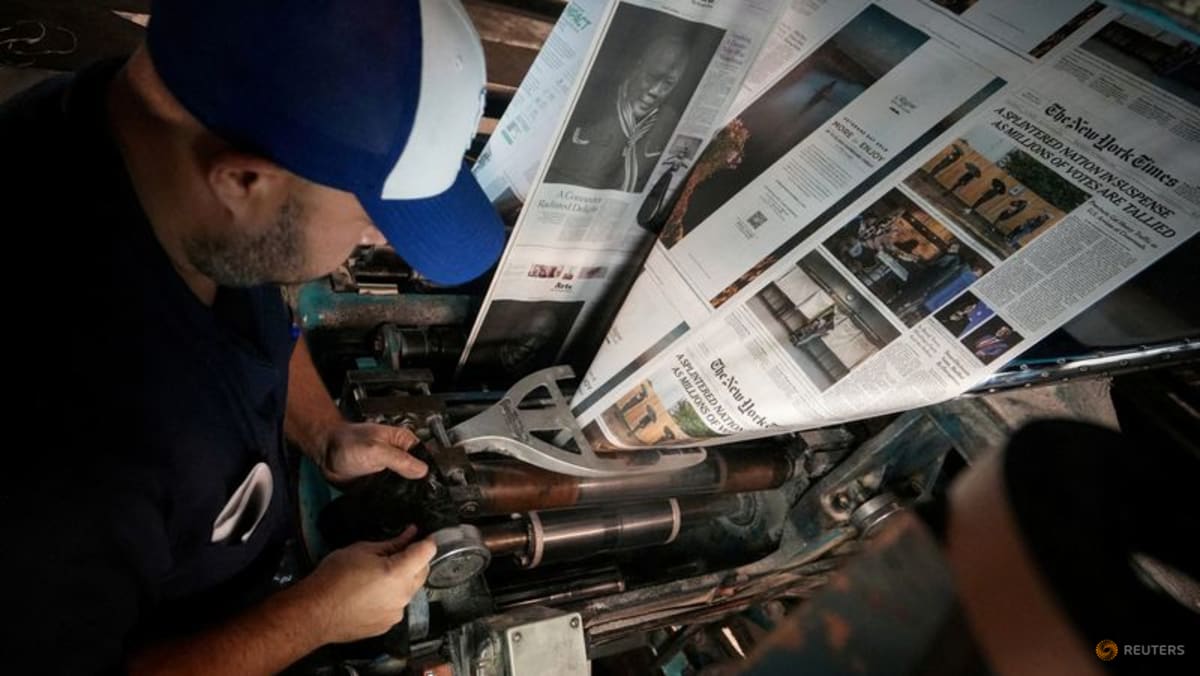
The New York Times, Agence France-Presse and The Economist joined the Standards for Publisher Usage Rights (SPUR) coalition on 12 October. It aims to stop AI firms using publisher content without permission, and it now has more than 80 members.

1 / 2
The story, neutrally told
Mixed · 2The New York Times, Agence France-Presse and The Economist joined more than 40 publishers in the Standards for Publisher Usage Rights (SPUR) coalition on Monday 12 October. The coalition aims to prevent AI firms from using or profiting from publishers' content without permission. CNAN “The New York Times, Agence France-Presse and The Economist on Monday joined more than 40 publishers in a coalition aimed at preventing AI firms from using or profiting from their content without permission.” Read at CNA ↗ The Straits TimesRC “The New York Times, Agence France-Presse and The Economist on Oct 12 joined more than 40 publishers in a coalition” Read at The Straits Times ↗ Mixed · 2SPUR launched in February and now has more than 80 members across over 20 countries. Other new members include The Atlantic and Brazil's National Association of Newspapers. Founding members include the Financial Times, BBC and Associated Press. CNAN “now has more than 80 members across over 20 countries. New members include The Atlantic and Brazil's National Association of Newspapers, joining founding members such as the Financial Times, BBC and Associated Press.” Read at CNA ↗ The Straits TimesRC “New members include The Atlantic and Brazil’s National Association of Newspapers” Read at The Straits Times ↗ Mixed · 2SPUR is funded entirely by its members. According to its website, it is developing industry-wide standards and technical systems to help publishers track and control how AI companies use their content, and to facilitate licensing agreements. CNAN “SPUR, which is funded entirely by its members, is developing industry-wide standards and technical systems to help publishers track and control how AI companies use their content and facilitate licensing agreements, according to its website.” Read at CNA ↗ The Straits TimesRC “SPUR, which is funded entirely by its members, is developing industry-wide standards and technical systems” Read at The Straits Times ↗
Mixed · 2SPUR said it recently introduced a Content Telemetry Standard. It is designed to standardise how AI agents record and report their use of media content, as part of efforts to ensure creators are compensated. CNAN “SPUR said it recently introduced its Content Telemetry Standard, designed to standardize how AI agents record and report their use of media content” Read at CNA ↗ The Straits TimesRC “designed to standardise how AI agents record and report their use of media content, as part of efforts to ensure creators are compensated for their work.” Read at The Straits Times ↗ Mixed · 2Rebecca Grossman-Cohen, the New York Times' head of strategic partnerships and chief of staff, said in a statement: "Intellectual property protection and technological advancement can and must co-exist." CNAN “"Intellectual property protection and technological advancement can and must co-exist," Rebecca Grossman-Cohen” Read at CNA ↗ The Straits TimesRC ““Intellectual property protection and technological advancement can and must co-exist,” Rebecca Grossman-Cohen” Read at The Straits Times ↗ Mixed · 2The move comes as publishers step up legal efforts against AI companies. Earlier in October, USA Today and several newspapers it owns sued OpenAI, alleging copyright infringement. OpenAI and its backer Microsoft also face similar claims from prominent authors and news organisations, including the New York Times. CNAN “Earlier this month, USA Today and several newspapers it owns sued OpenAI, alleging copyright infringement.” Read at CNA ↗ The Straits TimesRC “OpenAI and its backer, Microsoft, also face similar copyright claims from prominent authors and news organisations, including the New York Times.” Read at The Straits Times ↗
Mixed · 2Publishers are also dealing with falling referral traffic as search engines roll out AI-generated answers that let users read information without clicking through. Google organic-search referrals to more than 2,500 websites fell 33% globally between November 2024 and November 2025, according to a Reuters Institute report citing Chartbeat data. CNAN “Google organic-search referrals to more than 2,500 websites fell 33 per cent globally between November 2024 and November 2025” Read at CNA ↗ The Straits TimesRC “Google organic-search referrals to more than 2,500 websites fell 33% globally between November 2024 and November 2025, according to a Reuters Institute report, citing data from Chartbeat.” Read at The Straits Times ↗
Every sentence links to the reporting it rests on. The pill in front of each says where its sources sit: Left, Centre or Right when one side supplies at least half of them, Mixed when they are evenly split. The number is how many outlets it cites.
Left0 outlets
No left outlet in our sources has covered this story yet.
Centre1 outlet
- Framing
- Straight business report on the coalition's growth, set against publishers' legal action and falling search traffic.
- Emphasis
- Membership numbers, SPUR's technical standards and the NYT statement.
- Leaves out or plays down
- No view from AI companies and no detail on what SPUR can enforce.
- For example
-
“Publishers are stepping up legal efforts to prevent AI companies from using their content without permission to train large language models.” — CNA
Right1 outlet
- Framing
- Carries the same Reuters report, with the legal-pressure angle placed in a standfirst. The wording matches the centre version apart from spelling and date style, so it shows no distinct framing.
- Emphasis
- Same as the centre version: membership, standards, litigation context.
- Leaves out or plays down
- No view from AI companies and no detail on what SPUR can enforce.
- For example
-
“Publishers are stepping up legal efforts to prevent AI companies from using their content without permission to train large language models.” — The Straits Times
What every side reports
- The NYT, AFP and The Economist joined SPUR on 12 October, with more than 40 publishers.
- SPUR launched in February and has more than 80 members in over 20 countries.
- SPUR is funded entirely by its members and recently introduced a Content Telemetry Standard.
- USA Today and its newspapers sued OpenAI earlier in October.
- Google organic-search referrals to over 2,500 sites fell 33% between November 2024 and November 2025.
New York Times organisation
The New York Times, through Rebecca Grossman-Cohen, says intellectual property protection and technological advancement can and must co-exist. It is also a litigant against OpenAI and Microsoft.
“"Intellectual property protection and technological advancement can and must co-exist," Rebecca Grossman-Cohen” — CNA
“OpenAI and its backer, Microsoft, also face similar copyright claims from prominent authors and news organisations, including the New York Times.” — The Straits Times
Standards for Publisher Usage Rights coalition organisation
SPUR presents itself as a member-funded body building standards and technical systems so publishers can track, control and license AI use of their content.
“SPUR, which is funded entirely by its members, is developing industry-wide standards and technical systems to help publishers track and control how AI companies use their content and facilitate licensing agreements, according to its website.” — CNA
Left0 articles
No coverage yet.
Centre1 article
-
CNAN ·
NYT, Economist among publishers joining coalition to curb unpaid AI use
Neutral Plain news report of new SPUR members, with litigation and traffic-decline context.
Right1 article
-
The Straits TimesRC · · via Reuters
NYT, Economist among publishers joining coalition to curb unpaid AI use
Neutral Reuters copy run by The Straits Times, reporting the same facts neutrally.
- 13 Oct 00:05 First CNAN NYT, Economist among publishers joining coalition to curb unpaid AI use
- 13 Oct 01:06 +1h 1m The Straits TimesRC NYT, Economist among publishers joining coalition to curb unpaid AI use via Reuters
Times are when each article was published, or when we first saw it if the outlet gave no time.
Ask about this story
Loading…