Asteroid 1998 KY26 accelerates unexplained; Loeb suggests lost Soviet probe, NASA sees asteroid
A new Icarus study rules out a "dark comet" explanation for the unexplained acceleration of near-Earth object 1998 KY26. Harvard's Avi Loeb argues it may be the lost Soviet probe Phobos 1, while NASA's administrator says he has seen no evidence it is anything but an asteroid.

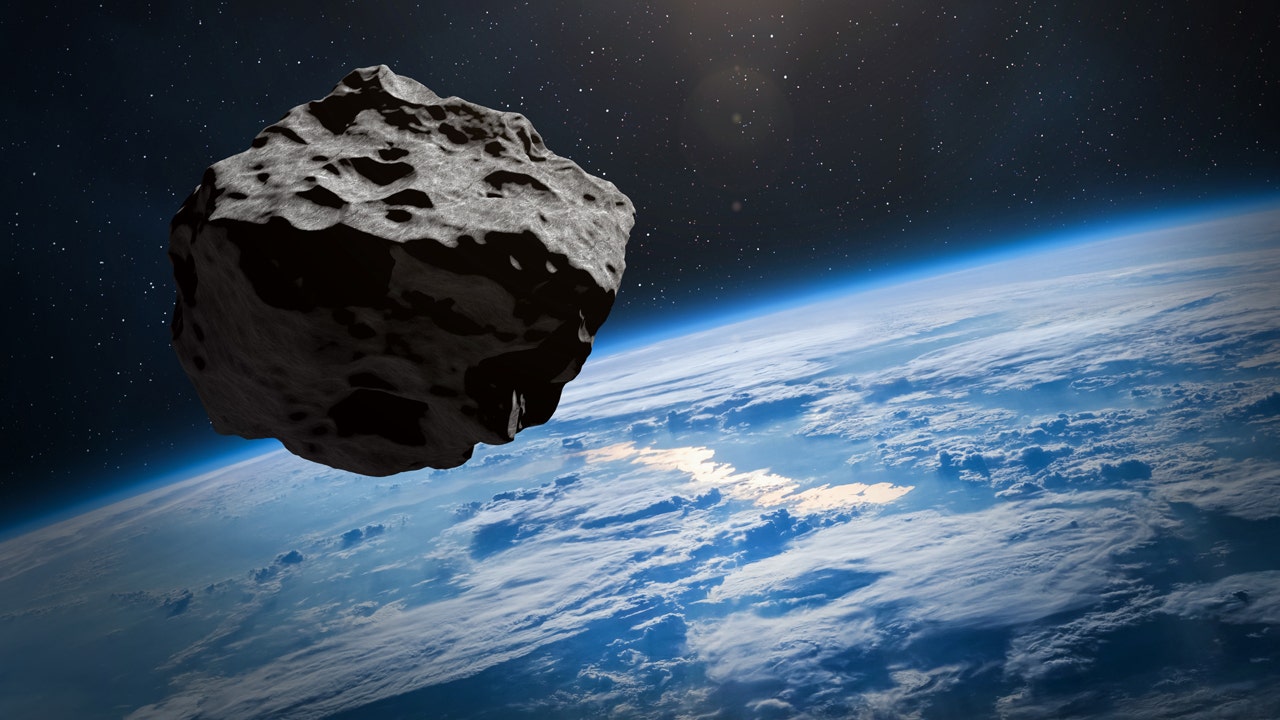
1 / 2
The story, neutrally told
Right · 21998 KY26, a roughly 36-foot (about school-bus-sized) object generally believed to be a near-Earth asteroid, is accelerating in a way that the gravity of the sun and planets does not explain. Daily MailR “is speeding up in a way that the gravity of the sun and planets cannot account for” Read at Daily Mail ↗ Fox NewsR “the roughly 36-foot-wide object is believed to be a near-Earth asteroid” Read at Fox News ↗ Right · 1The object spins once every 5.35 minutes, which the Daily Mail calls extremely fast for a space rock; the unexplained push was first noticed in 2023 from 25 years of telescope data. Daily MailR “spins once every 5.35 minutes – extremely fast for a space rock”“In 2023, scientists first discovered that 1998 KY26 was moving faster than normal” Read at Daily Mail ↗ Right · 2A new peer-reviewed study in the journal Icarus by Georgia Tech researchers Korbin Hansen and Masatoshi Hirabayashi found the object is likely too warm for buried water ice to survive long enough to explain the acceleration, concluding it is likely a dehydrated asteroid and that calculated water-loss rates "preclude 1998 KY26 being a dark comet at present". Fox NewsR “preclude 1998 KY26 being a dark comet at present” Read at Fox News ↗ Daily MailR “'We determined that 1998 KY26 is likely a dehydrated asteroid,' the researchers wrote” Read at Daily Mail ↗
Right · 2Harvard physicist Avi Loeb and co-authors Adam Hibberd and Adam Crowl, in a study on arXiv, argue the object could be Phobos 1, a Soviet probe launched in 1988 that stopped communicating on its way to Mars. Daily MailR “Loeb and co-authors Adam Hibberd and Adam Crowl released their own study on arXiv” Read at Daily Mail ↗ Fox NewsR “an unmanned Soviet spacecraft that stopped communicating while traveling to Mars in 1988” Read at Fox News ↗ Right · 1They say a simplified Phobos 1 model matched eight sets of brightness observations, and that sunlight pressing on a cylinder or solar panels better matched hundreds of telescope and radar observations; the authors say this cannot be conclusive but adds "strong weight" to the hypothesis, which they call "strongly plausible but presently unproven". Fox NewsR “the spacecraft model closely matched eight sets of observations of the object”“strongly plausible but presently unproven” Read at Fox News ↗ Right · 1Fox News reports that earlier research found sunlight and escaping heat could produce the extra push without buried water, and that a separate study in Astronomy & Astrophysics found the object's light consistent with a rocky asteroid likely from the inner asteroid belt. Fox NewsR “sunlight hitting KY26 and heat escaping from its surface could produce the extra push without buried water”“likely came from the inner part of the asteroid belt” Read at Fox News ↗
Right · 1NASA Administrator Jared Isaacman said on Fox & Friends that nothing is about to hit Earth and that he has seen no evidence KY26 is a threat or anything other than an asteroid, though NASA continues to monitor it. Fox NewsR “I've not seen any evidence to suggest this is a threat to our planet or anything other than an asteroid.” Read at Fox News ↗ Right · 1The Daily Mail says the object is about 189 million miles away and will pass within 32 million miles in 2028, with the European Space Agency saying it comes within 10 million miles in 2039. Daily MailR “its current course is taking it within 32million miles of our planet in 2028”“coming within 10million miles” Read at Daily Mail ↗ Right · 2Japan's Hayabusa2 is due to reach the object in 2031 (July, per Fox News), which Loeb says will test his idea: he predicts its cameras will reveal the label "Made in the U.S.S.R." Fox NewsR “scheduled to rendezvous with KY26 in July 2031” Read at Fox News ↗ Daily MailR “Hayabusa 2’s cameras will reveal the label "Made in the U.S.S.R."” Read at Daily Mail ↗
Every sentence links to the reporting it rests on. The pill in front of each says where its sources sit: Left, Centre or Right when one side supplies at least half of them, Mixed when they are evenly split. The number is how many outlets it cites.
Left0 outlets
No left outlet in our sources has covered this story yet.
Centre0 outlets
No centre outlet in our sources has covered this story yet.
Right2 outlets
- Framing
- Both outlets lead on the mystery of an accelerating object and the lost Soviet spacecraft theory. The Daily Mail presents it as baffling scientists; Fox News adds NASA's reassurance and conventional explanations.
- Emphasis
- Loeb's Phobos 1 theory and his 'Made in the U.S.S.R.' line; Fox adds Isaacman's response, caveats from the authors and alternative asteroid studies.
- Leaves out or plays down
- The Daily Mail does not report NASA's view, the authors' caveat that the theory is unproven, or the rocky-asteroid study. Fox News omits the Daily Mail's distance and flyby figures.
- Charged language
- “mysteriously accelerating”“long-lost spacecraft”“baffled scientists”“Mysterious object”
- For example
-
“An alleged space rock traveling towards Earth has baffled scientists who cannot explain why it is speeding up.” — Daily Mail
“Mysterious object moving through space could be lost Soviet probe as NASA weighs in on theory” — Fox News
What every side reports
- 1998 KY26 is about 36 feet across and spins once every 5.35 minutes.
- Its acceleration is not explained by gravity alone.
- A Georgia Tech study in Icarus casts doubt on the dark-comet explanation.
- Avi Loeb and colleagues propose it could be Phobos 1, lost in 1988.
- Japan's Hayabusa2 is due to reach it in 2031.
Where accounts differ
-
What the object is
- Right
- Daily Mail: the study leaves Loeb's lost-spacecraft theory as the remaining explanation and says the object has 'something else powering it'. Fox News: leads with the theory but gives NASA's Isaacman's view that it is an asteroid, and notes the researchers call the idea unproven.
Left0 articles
No coverage yet.
Centre0 articles
No coverage yet.
Right2 articles
-
Alarmist Presents the acceleration as a baffling mystery and gives Loeb's lost-spacecraft theory the final word, with no NASA response.
-
Mysterious object moving through space could be lost Soviet probe as NASA weighs in on theory
Mixed Leads with the Soviet-probe theory but balances it with NASA's reassurance, the authors' caveats and conventional asteroid studies.
- 11 Nov 21:29 First Daily MailR Object heading toward Earth is mysteriously accelerating as scientist claims it is a long-lost spacecraft
- 12 Nov 16:13 +18h 44m Fox NewsR Mysterious object moving through space could be lost Soviet probe as NASA weighs in on theory
Times are when each article was published, or when we first saw it if the outlet gave no time.
Ask about this story
Loading…