Odesa schools go remote and power is patchy after Russian strikes on the grid
Schools in Odesa moved to remote teaching after Russian strikes badly damaged the city's energy grid. Local DTEK officials say Russia is now targeting transmission networks, and about 9,000 households were still without power on 25 November.

1 / 2
The story, neutrally told
Centre · 1Schools in Odesa, a major Ukrainian Black Sea port, switched to remote teaching after Russian strikes gravely damaged the city's energy grid, France 24 reported on 23 November. France 24N “Schools in Odesa will switch to remote teaching after Russian strikes gravely damaged the energy grid in the major Ukrainian Black Sea port city.” Read at France 24 ↗ Centre · 1France 24 described the strikes as part of a wide-ranging Russian campaign against Ukraine's energy infrastructure, with another freezing wartime winter approaching. France 24N “Russia has carried out a wide-ranging campaign of strikes against Ukraine's energy infrastructure, with the prospect of another freezing wartime winter looming.” Read at France 24 ↗ Right · 1Reuters reported that Moscow launched a large-scale attack on Ukraine's energy system late the previous week. It caused widespread power, heating and water outages in Odesa ahead of the winter drop in temperatures. The Straits TimesRC “Moscow launched a large-scale attack on Ukraine's energy system late last week, causing widespread power, heating and water supply outages in Odesa ahead of the winter plunge in temperatures.” Read at The Straits Times ↗
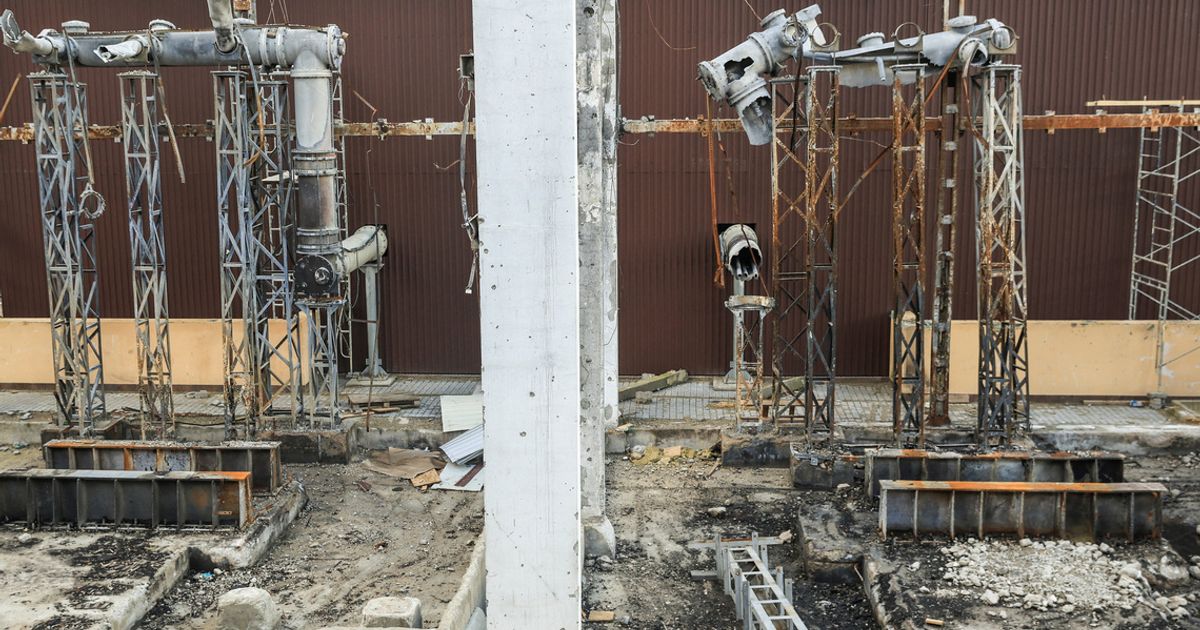
Right · 1Two days after that attack, nearly 240,000 people in wider Odesa were still without heating, according to government data cited by Reuters. After a further overnight strike, about 9,000 households in the region had no power on Wednesday morning, and local authorities said Russia again hit DTEK facilities. The Straits TimesRC “Two days after the attack, nearly 240,000 people remained without heating in wider Odesa, according to government data.”“about 9,000 households in the region remained without power on Wednesday morning following an overnight strike.” Read at The Straits Times ↗ Right · 1Dmytro Hryhoryev, head of DTEK Odesa Power Grids, said Russia first tried to destroy generation capacity. Ukraine learned to restore that quickly, he said, so Moscow turned to transmission systems such as substations, and more recently to the backbone lines linking regions. The Straits TimesRC “Initially, Russia sought to destroy electricity generation capacity, but Ukraine has learned to restore that quickly, he said. So Moscow began attacking power transmission systems, like this substation.” Read at The Straits Times ↗ Right · 1He said Russia had attacked 60% of substations in the region, and some had been hit three, four or even five times. Repairs had restored supply and the infrastructure remained connected, he said. The Straits TimesRC “Russia had attacked 60% of substations in the region but repairs had restored power supplies and infrastructure remained connected.”“We have substations that have been attacked three or four times. One substation was even attacked five times,” Read at The Straits Times ↗
Right · 1Hryhoryev described the attacks as part of an effort to cut Odesa, home to nearly 1 million people, off from the rest of Ukraine. DTEK chief executive Maxim Timchenko told Reuters this month that Ukraine generates enough electricity for its needs but struggles to deliver it from western power stations to other regions. The Straits TimesRC “said the attack was part of Russian efforts to cut off the Black Sea port city — home to nearly 1 million people — from the rest of Ukraine.”“the problem was delivering it from power stations in the western part of the country to consumers in other regions.” Read at The Straits Times ↗ Right · 1Odesa has no generation facilities of its own and relies on power distributed by DTEK, which runs five thermal power plants. Damage to key transmission components, which often use specialised equipment that is hard to replace, can leave regions without electricity for days or weeks. The Straits TimesRC “DTEK generates electricity at its five thermal power plants and distributes power to several regions, including Odesa, which does not have its own generation facilities.”“can leave entire regions without electricity for days or even weeks.” Read at The Straits Times ↗ Right · 1Russia denies deliberately targeting civilians but says vital energy infrastructure is a legitimate target. Ukraine has repeatedly offered to halt its attacks on Russian oil refineries in return for Moscow suspending strikes on electricity infrastructure, and Russia has so far refused. President Volodymyr Zelenskiy says Moscow is trying to make Ukraine's major cities unliveable. The Straits TimesRC “Russia denies deliberately targeting civilians during its war in Ukraine but says vital energy infrastructure is a legitimate target.”“Russia has so far refused. Ukrainian President Volodymyr Zelenskiy says Moscow is striving to make Ukraine's major cities unliveable.” Read at The Straits Times ↗
Every sentence links to the reporting it rests on. The pill in front of each says where its sources sit: Left, Centre or Right when one side supplies at least half of them, Mixed when they are evenly split. The number is how many outlets it cites.
Left0 outlets
No left outlet in our sources has covered this story yet.
Centre1 outlet
- Framing
- A short video-page item that leads with the schools switching to remote learning and places the strikes in Russia's wider campaign against energy infrastructure.
- Emphasis
- The effect on pupils and the looming winter.
- Leaves out or plays down
- No figures, named officials or detail on which parts of the grid were hit.
- Charged language
- “gravely damaged”“pounds”
- For example
-
“Schools in Odesa will switch to remote teaching after Russian strikes gravely damaged the energy grid in the major Ukrainian Black Sea port city.” — France 24
Right1 outlet
- Framing
- Reuters copy carried by the Straits Times. It follows a local DTEK official through a damaged substation and explains how Russian tactics have shifted toward transmission networks.
- Emphasis
- Technical detail on grid repair, outage figures, and the stalled offer to trade refinery strikes for a halt to attacks on the grid.
- Leaves out or plays down
- Does not mention the school closures.
- Charged language
- “unliveable”
- For example
-
“Initially, Russia sought to destroy electricity generation capacity, but Ukraine has learned to restore that quickly, he said.” — The Straits Times
What every side reports
- Russian strikes have damaged the energy grid in Odesa.
- Russia has run a sustained campaign against Ukraine's energy infrastructure.
- Winter is approaching, raising the stakes of the outages.
Where accounts differ
-
Whether Russia's strikes on energy infrastructure are legitimate
- Centre
- Describes the strikes as part of a campaign against energy infrastructure, without giving Russia's position.
- Right
- Reuters says Russia denies deliberately targeting civilians but calls energy infrastructure a legitimate target, while Zelenskiy says Moscow aims to make cities unliveable.
Russia place
Russia says vital energy infrastructure is a legitimate target and denies deliberately targeting civilians. It has so far refused Ukraine's offer to swap halts on refinery and grid strikes.
“Russia denies deliberately targeting civilians during its war in Ukraine but says vital energy infrastructure is a legitimate target.” — The Straits Times
Ukraine place
Ukraine, through DTEK and President Zelenskiy, says Russia is shifting to transmission networks to isolate cities. It says crews restore supply quickly and has offered to halt refinery strikes in exchange for a halt on grid attacks.
“Ukraine has repeatedly offered to halt its own attacks on Russia's oil refining facilities” — The Straits Times
Odesa place
Odesa faces outages in power, heating and water, and its schools have moved to remote teaching, while local DTEK crews work to keep power connected.
“Schools in Odesa will switch to remote teaching” — France 24
“We have learned to work in rain and snow, to work at night, to work without breaks,” — The Straits Times
Left0 articles
No coverage yet.
Centre1 article
-
Odesa pupils switch to remote learning as Russia pounds Ukraine’s energy grid
Sympathetic Brief item stressing the impact on schoolchildren and a looming harsh winter.
Right1 article
-
The Straits TimesRC · · via Reuters
Ukraine battles to keep lights on in Odesa as Russia strikes grid
Neutral Reuters on-the-ground report centred on a DTEK official's account of changing Russian tactics, with Russia's stated position included.
- 23 Nov 09:51 First France 24N Odesa pupils switch to remote learning as Russia pounds Ukraine’s energy grid
- 25 Nov 12:31 +50h 41m The Straits TimesRC Ukraine battles to keep lights on in Odesa as Russia strikes grid via Reuters
Times are when each article was published, or when we first saw it if the outlet gave no time.
Ask about this story
Loading…