Oman's foreign minister urges Gulf–Iran non-aggression pact, says US framing of Iran blocks progress
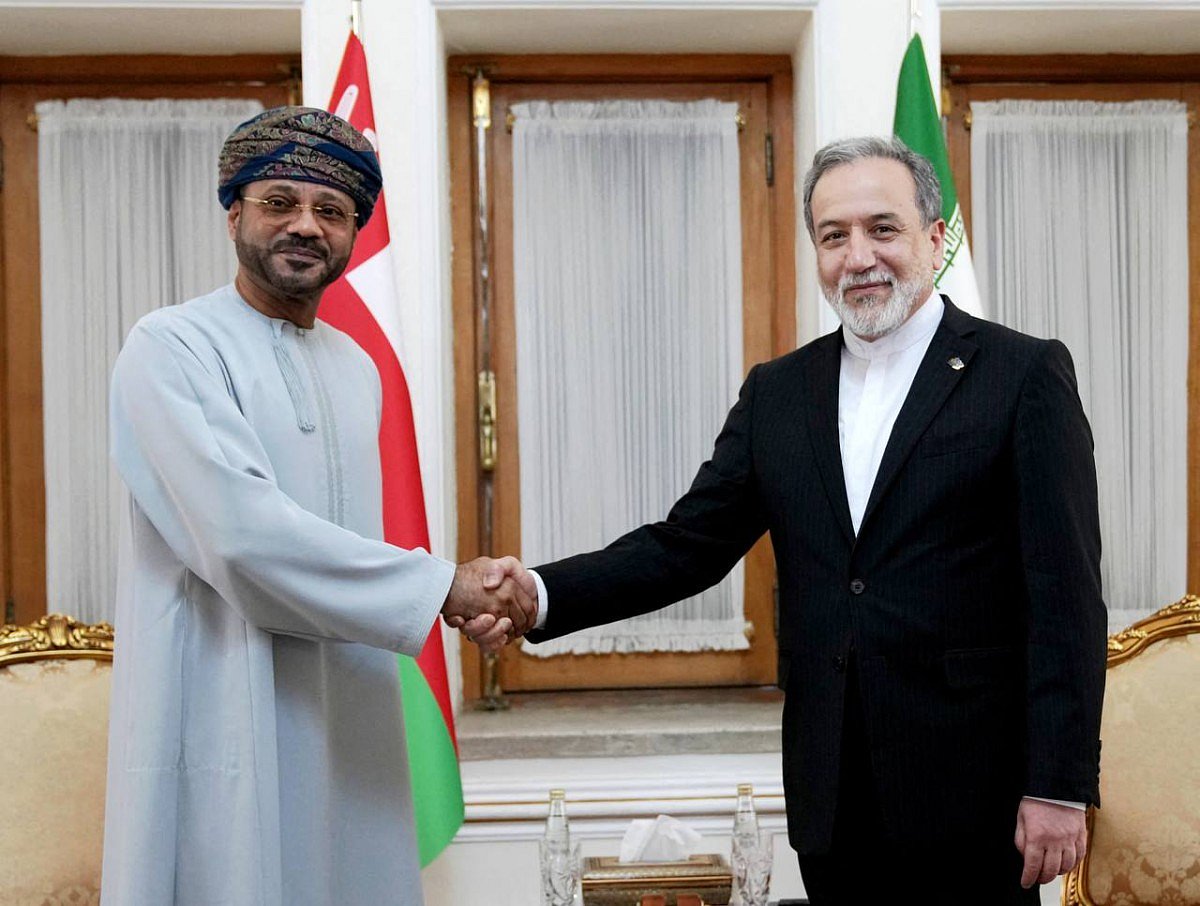
Oman's foreign minister, Badr Albusaidi, called in a Cambridge speech for a non-aggression pact among the six GCC states, Iraq and Iran. He said outside powers' treatment of Iran as a threat has held back regional security.
1 / 2
The story, neutrally told
Mixed · 2Oman's foreign minister, Badr Albusaidi, said on Monday 26 October at Girton College, Cambridge, that the region should take greater responsibility for its own security and should include Iran in it. Gulf NewsN “Speaking at Girton College at the University of Cambridge in the United Kingdom, Albusaidi urged regional countries to take greater responsibility for their own security” Read at Gulf News ↗ The GuardianLC “Speaking at Girton College, Cambridge, he said the talks might be difficult” Read at The Guardian ↗ Mixed · 2He called for a non-aggression pact among the eight states bordering the Gulf: the six Gulf Cooperation Council members, Iraq and Iran. Gulf NewsN “A Non-Aggression Pact between all eight states should be the goal” Read at Gulf News ↗ The GuardianLC “Badr Albusaidi called for a non-aggression security pact involving all six Gulf states as well as Iran and Iraq.” Read at The Guardian ↗ Left · 1The Guardian reported him saying the US would in future no longer be the primary provider of security, and that America's 50-year insistence that Gulf states view Iran as a threat had held back the region's ability to solve its problems. The GuardianLC “The US would in future no longer be the primary provider of security, he said.”“held back by America’s 50-year insistence that the Gulf states should view Iran as a security threat” Read at The Guardian ↗
Mixed · 2Albusaidi said Iran had been "systematically excluded" from regional security arrangements for half a century and that the requirement to exclude it, and to position it as the threat, was among the most damaging priorities imposed from outside. He told the audience that a framework without Tehran would be "inherently unstable" and "structurally unsound", according to Gulf News. The GuardianLC “Perhaps the most damaging of the priorities imposed on the region from the outside has been the requirement that Iran be excluded.” Read at The Guardian ↗ Gulf NewsN “describing a framework without Tehran as “inherently unstable” and “structurally unsound”” Read at Gulf News ↗ Mixed · 2He said prewar US-Iran nuclear talks, which Oman mediated in February, had made "significant progress", and that the basic components of an agreement still exist if both sides return to negotiations. Gulf NewsN “The basic components for such an agreement still exist, should both parties decide to return to these negotiations” Read at Gulf News ↗ The GuardianLC “which Oman mediated, were “making significant progress, and that an agreement was within reach.” Read at The Guardian ↗ Mixed · 2On the Strait of Hormuz, Oman and Iran have outlined a temporary arrangement for shipping, but Albusaidi said it is hard to see it implemented unless Iran and the US compromise. The Guardian said the plan is on hold until the US and Iran lift their respective blockades. Gulf NewsN “It is hard to see how any such arrangement can be implemented unless both Iran and the United States are willing to compromise and reach a pragmatic understanding” Read at Gulf News ↗ The GuardianLC “the plan is on hold until the US and Iran lift their respective blockades of the waterway” Read at The Guardian ↗
Left · 1The Guardian described the speech as significant and Albusaidi as the first Gulf leader to break ranks so explicitly by proposing a security alliance with Iran, a long-term Iranian aim. It noted the same day Turkish, Pakistani and Saudi defence and intelligence officials visited Tehran to try to prevent renewed fighting between the US and Iran, amid reports of a US military buildup. The GuardianLC “Albusaidi is the first Gulf leader to break ranks so explicitly by calling for the mainly Sunni Gulf states to form a security alliance with Iran”“high-level defence and intelligence officials from Turkey, Pakistan and Saudi Arabia travelled to Tehran in an attempt to prevent a renewed outbreak of fighting between the US and Iran” Read at The Guardian ↗ Left · 1The Guardian added that the idea will be resisted in much of the region given damage Iran has inflicted on Gulf economies directly or through proxies such as the Houthis, and that a pact would take many months and may not meet Washington's demand that Iran reopen Hormuz before sanctions are lifted. The GuardianLC “The idea of a security pact with Iran will be resisted in large parts of the Middle East”“A pact that is likely to take many months to negotiate may also not be a solution to Washington’s demand that Iran reopen the strait of Hormuz before US sanctions are lifted.” Read at The Guardian ↗
Every sentence links to the reporting it rests on. The pill in front of each says where its sources sit: Left, Centre or Right when one side supplies at least half of them, Mixed when they are evenly split. The number is how many outlets it cites.
Left1 outlet
- Framing
- The Guardian treats the speech as a significant diplomatic break from Gulf consensus, placing it amid US-Iran confrontation, a US military buildup and a Saudi-Turkish-Pakistani mission to Tehran, while noting obstacles.
- Emphasis
- Criticism of US and external powers' role, the wider regional crisis and doubts about feasibility.
- Leaves out or plays down
- Does not quote Oman's Foreign Ministry as the source or the 'structurally unsound' remark.
- Charged language
- “browbeat”“break ranks”
- For example
-
“a significant speech designed to break the deadlock over the region’s future” — The Guardian
Centre1 outlet
- Framing
- Gulf News gives a short, factual account of the proposals as set out by Oman's Foreign Ministry, centred on the pact and conditions for Hormuz progress.
- Emphasis
- Inclusion of Iran, regional responsibility, and need for US-Iran compromise.
- Leaves out or plays down
- Omits the criticism of US policy toward Iran as a threat, the Tehran delegation visit and context of possible renewed fighting.
- Charged language
- “inherently unstable”“structurally unsound”
- For example
-
“according to Oman's Foreign Ministry” — Gulf News
Right0 outlets
No right outlet in our sources has covered this story yet.
What every side reports
- Albusaidi spoke at Girton College, Cambridge, on Monday 26 October.
- He called for a non-aggression pact among the six GCC states, Iraq and Iran.
- He said US-Iran talks had made significant progress before the war.
- An Oman-Iran temporary Hormuz shipping arrangement exists but depends on US-Iran compromise.
Where accounts differ
-
Whether the speech was aimed at US policy
- Left
- Presents it as a rebuke of the US insistence that Iran is a threat, and says the US would no longer be primary security provider.
- Centre
- Reports it as a call for regional responsibility and Iran's inclusion, without framing it as criticism of the US.
Badr Albusaidi person
Argues that excluding Iran and relying on external powers has made regional problems like Hormuz intractable, and urges a non-aggression pact of eight states while saying US-Iran talks can resume.
“It’s not a matter of whether you’re friendly or hostile to Iran” — Gulf News
“Positioned as the threat against which regional security had to be organised.” — The Guardian
Iran place
Per the Guardian, Iran has long proposed a regional security pact in which it, rather than the US, plays a role; Tehran said the meeting with Saudi, Turkish and Pakistani officials also explored future security arrangements.
“The Iranian foreign ministry has often proposed a security pact for the region in which Iran, as opposed to the US, plays a role.” — The Guardian
Oman place
Oman has mediated US-Iran talks and agreed a temporary Hormuz arrangement with Iran, and has explored a regional pact including Iran.
“Oman is one Gulf state to have explored a regional security pact that includes Iran.” — The Guardian
Left1 article
-
Middle East peace held back by US insistence that Iran is a threat, Oman’s foreign minister says
Mixed Presents Albusaidi's speech as a significant challenge to US-centred security thinking, with context on regional tensions and caveats about resistance and feasibility.
Centre1 article
-
Oman calls for security framework, non-aggression pact among 8 Gulf states including Iran
Neutral Concise report of the Omani proposals, attributed to Oman's Foreign Ministry, emphasising regional responsibility and US-Iran compromise.
Right0 articles
No coverage yet.
- 26 Oct 19:12 First The GuardianLC Middle East peace held back by US insistence that Iran is a threat, Oman’s foreign minister says
- 27 Oct 00:20 +5h 8m Gulf NewsN Oman calls for security framework, non-aggression pact among 8 Gulf states including Iran
Times are when each article was published, or when we first saw it if the outlet gave no time.
Ask about this story
Loading…