Opinion: Is US 'strategic ambiguity' on Taiwan still workable?
Two opinion pieces question the long-standing US policy of not saying whether it would defend Taiwan. A Washington Examiner essay says ambiguity risks miscalculation, and the South China Morning Post describes US realists urging that military intervention be ruled out.
1 / 2
The story, neutrally told
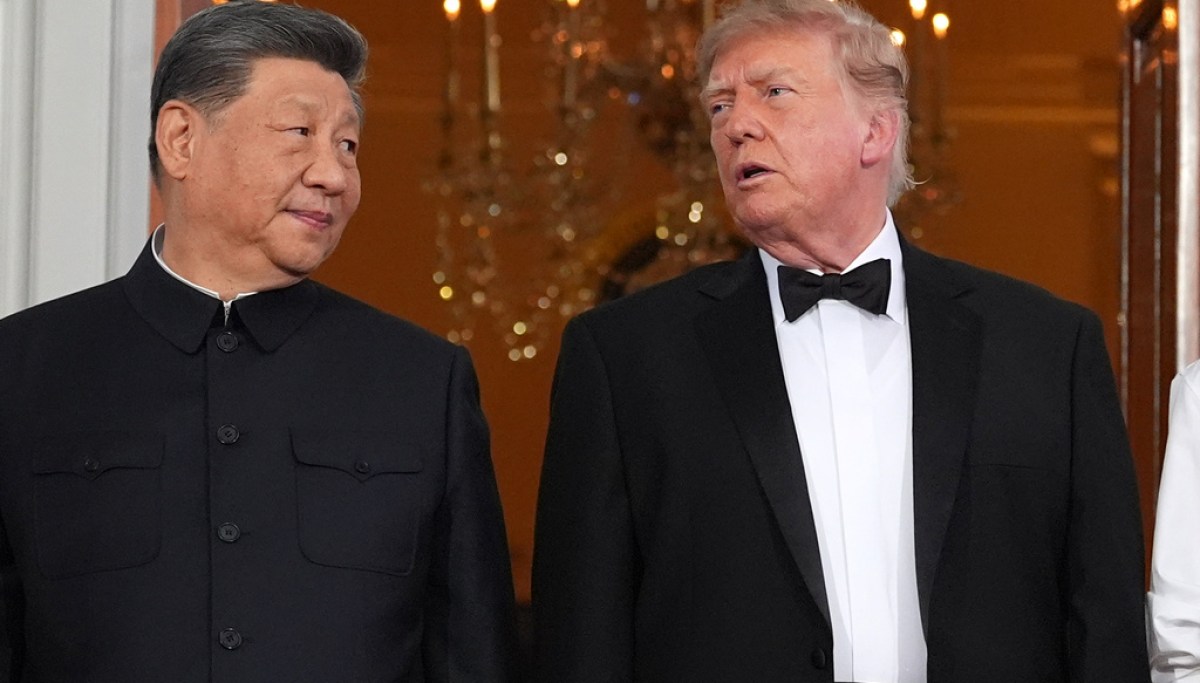
Mixed · 2Two opinion pieces published between 10 and 13 October 2026 examine the US policy of 'strategic ambiguity' on Taiwan, under which Washington does not say whether it would intervene militarily if China attacked the island. Washington ExaminerR “has deliberately avoided making an automatic public commitment to defend Taiwan in the event of a Chinese attack” Read at Washington Examiner ↗ South China Morning PostN “by not declaring whether it would intervene militarily in a potential Taiwan conflict” Read at South China Morning Post ↗ Right · 1Andrew Moore, a small business owner and author, argues in the Washington Examiner that the policy was meant to deter Beijing while discouraging Taiwan from provocative moves. He says it may once have made strategic sense but now creates 'room for miscalculation' as China's military has grown. Washington ExaminerR “Sometimes ambiguity creates room for diplomacy. At other times, it creates room for miscalculation.”“China’s military capabilities have grown substantially, while Taiwan has continued strengthening its defenses.” Read at Washington Examiner ↗ Right · 1Moore's central point is that Washington, Beijing and Taipei may each hold different assumptions about what the others intend. He gives the fate of Taiwan's semiconductor fabrication plants in an invasion as an example, and warns that each could be wrong. He uses Sartre and the film Rashomon as analogies. Washington ExaminerR “The problem is not simply what each intends to do, but what each believes the others intend to do.”“Each country could reasonably believe it understands the intentions of the others and still be wrong.” Read at Washington Examiner ↗
Right · 1Moore also notes that Trump and Xi Jinping met in Busan, South Korea, on 30 October 2025 and reached an agreement on tariffs and agricultural purchases. He cites Chinese youth disillusionment ('tang ping', 'bai lan') but says it does not necessarily make conflict more likely. Washington ExaminerR “Trump and Chinese President Xi Jinping met in Busan, South Korea, on Oct. 30, 2025”“I don’t suggest that this means China’s young people are turning against their country” Read at Washington Examiner ↗ Centre · 1The South China Morning Post piece, by Albee Zhang, covers a different argument: a small group of realist US strategists wants the US to rule out military intervention over Taiwan to avoid a catastrophic war with China. Experts quoted say this is still a minority view but is opening debate. South China Morning PostN “A small group of realist US strategists is pushing for the US to rule out military intervention over Taiwan”“despite still being a minority view, was at least opening debate” Read at South China Morning Post ↗ Centre · 1Jennifer Kavanagh of Defense Priorities argues the US military is now 'fragile' and short of munitions, and that its ability to outlast China in a Taiwan war is in question. She told the SCMP that in her modelling the US typically runs out of air-defence and offensive missiles before China does. South China Morning PostN “its ability to outlast China in a war over Taiwan is now in question”“US typically runs out of air-defence missiles and offensive missiles before China does” Read at South China Morning Post ↗
Centre · 1Her 10 September report also proposed replacing US mutual defence treaties with Japan, South Korea, the Philippines and Australia with narrower partnerships, and moving most forces away from the first island chain. It drew strong pushback in US national security circles, where it was called a 'bombshell' and 'radical' and was deemed to be Communist Party 'talking points'. South China Morning PostN “replacing US mutual defence treaties with Japan, South Korea, the Philippines and Australia with narrower security partnerships”“was called a “bombshell” and “radical”” Read at South China Morning Post ↗ Centre · 1The SCMP traces the restraint school back to Ted Galen Carpenter in 1998, with later contributions from Charles Glaser, Doug Bandow, Stephen Wertheim and Michael Swaine. Swaine argues that Taiwan is not a vital enough interest to justify risking a major war with China. Xin Qiang of Fudan University says ambiguity has become meaningless as Chinese power has risen, but that policy inertia makes the non-intervention view unlikely to become mainstream. South China Morning PostN “Since I believe that it is in fact not a vital enough interest to justify risking a major war with China.”“it would be difficult for this argument, which was still proposed by a minority voice, to become a mainstream view due to policy inertia” Read at South China Morning Post ↗ Centre · 1On Trump, the SCMP reports he has declined to say whether he would defend Taiwan, unlike Joe Biden, who repeatedly said the US would. After a May summit with Xi the US paused a US$14 billion arms sale to Taiwan, which remains on hold. Trump was silent on Taiwan at a second summit last month, the SCMP says. South China Morning PostN “While former US president Joe Biden repeatedly said the US would defend Taiwan in the event of a potential conflict, Trump has declined to say whether he would do so.”“the US paused a US$14 billion arms sale to Taiwan, which is still on hold” Read at South China Morning Post ↗
Every sentence links to the reporting it rests on. The pill in front of each says where its sources sit: Left, Centre or Right when one side supplies at least half of them, Mixed when they are evenly split. The number is how many outlets it cites.
Left0 outlets
No left outlet in our sources has covered this story yet.
Centre1 outlet
- Framing
- An analytical piece on the debate among US restraint-minded strategists about ending ambiguity, framed around whether now is the right time.
- Emphasis
- Kavanagh's modelling and proposals, the lineage of restraint scholars, Chinese academic reaction, and Trump's arms-sale pause.
- Leaves out or plays down
- Does not discuss the specific risk of three-way miscalculation or the semiconductor scenario.
- Charged language
- “bombshell”“radical”“talking points”
- For example
-
“is being challenged by realist US strategists amid a broader debate over America’s role in the world” — South China Morning Post
Right1 outlet
- Framing
- A personal, literary opinion essay saying Trump-era strategic ambiguity is no longer clever and risks miscalculation and war.
- Emphasis
- Mutual misperception among Washington, Beijing and Taipei, the semiconductor-plant scenario, and Chinese youth attitudes.
- Leaves out or plays down
- Does not mention the realist push to abandon the commitment, the paused US$14 billion arms sale or Trump's refusal to say whether he would defend Taiwan.
- Charged language
- “isn’t clever anymore”“going to start a war”
- For example
-
“The wisdom of ambiguity can prevent unnecessary conflict, but it can also become a breeding ground of miscalculation” — Washington Examiner
What every side reports
- US policy has long avoided saying whether it would defend Taiwan militarily.
- China's military power has grown, weakening the original logic of the policy.
- Trump and Xi Jinping have held summits that touched on US-China relations.
Where accounts differ
-
What should happen to strategic ambiguity
- Centre
- The SCMP reports on a minority realist camp urging the US to rule out intervention outright. It also quotes experts who doubt this will become mainstream.
- Right
- Moore says the ambiguity is dangerous because the three parties may misread each other. He does not call for a specific replacement policy.
Donald Trump person
Per the SCMP, Trump has declined to say whether he would defend Taiwan, paused a US$14 billion arms sale after the May summit, and questioned whether US forces should travel 9,500 miles to fight. Moore describes his administration as continuing the ambiguity policy.
“Trump has declined to say whether he would do so.” — South China Morning Post
“most recently under President Donald Trump” — Washington Examiner
Taiwan place
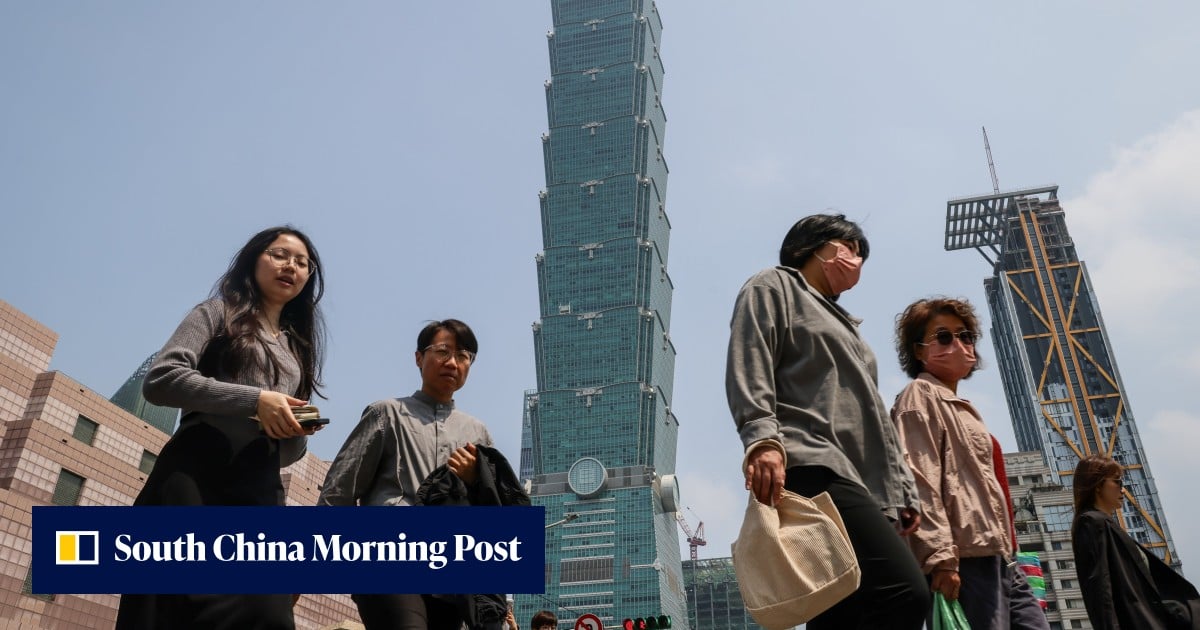
Beijing regards Taiwan as part of China, to be reunited by force if necessary. Taiwan is said to be strengthening its defences and is among the three parties in Moore's misperception scenario.
“Beijing regards Taiwan as part of China to be reunited by force if necessary.” — South China Morning Post
“Taiwan has continued strengthening its defenses” — Washington Examiner
United States place
The US officially does not recognise Taiwan as independent but supplies it with defensive weapons and opposes forcible takeover. Its policy of ambiguity is being debated.
“Washington is committed to supplying it with defensive weapons and opposes any forcible takeover.” — South China Morning Post
North America1 outlet
The Washington Examiner essay treats ambiguity as a risk in itself, using Trump's Taiwan policy as its starting point.
“That is where ambiguity becomes dangerous.” — Washington Examiner
Washington Examiner
East and Southeast Asia1 outlet
The SCMP presents the US debate over abandoning ambiguity, with a Fudan University scholar's view that the policy has lost its basis.
“the policy had become meaningless with the rise of Chinese military power” — South China Morning Post
South China Morning Post
Left0 articles
No coverage yet.
Centre1 article
-
South China Morning PostN · · Opinion
Is this the best time for US strategists to push for abandoning ambiguity on Taiwan?
Neutral Explanatory piece mapping the minority realist case for ending ambiguity and the pushback, with experts on both sides.
Right1 article
-
Washington ExaminerR · · Opinion
Trump’s ‘strategic ambiguity’ isn’t clever anymore. It’s going to start a war over Taiwan
Critical Personal essay using anniversary-dinner and Sartre analogies to argue ambiguity breeds miscalculation among Washington, Beijing and Taipei.
- 10 Oct 11:00 First Washington ExaminerR Trump’s ‘strategic ambiguity’ isn’t clever anymore. It’s going to start a war over Taiwan Opinion
- 13 Oct 16:00 +77h South China Morning PostN Is this the best time for US strategists to push for abandoning ambiguity on Taiwan? Opinion
Times are when each article was published, or when we first saw it if the outlet gave no time.
Ask about this story
Loading…