Opinion: US risks ceding AI rule-making leadership to China
Two opinion pieces, in Newsweek and the South China Morning Post, argue Washington is losing influence over international AI rules as China builds a global governance body and the EU regulates. They differ on details such as WAICO's membership and on what the US should do.
1 / 2
The story, neutrally told
Centre · 2Two opinion pieces published on 6 and 7 October 2026 argue that the United States is giving up influence over how artificial intelligence is governed internationally. NewsweekN “The United States is ceding ground to Beijing in the race to become the world’s top AI rule-maker.” Read at Newsweek ↗ South China Morning PostN “The United States can remain ahead in important areas of AI and still lose influence over the rules that govern the technology.” Read at South China Morning Post ↗ Centre · 1Newsweek's John Feng writes that China and the US should be fighting for the pen, but that America is barely in the running. NewsweekN “China and the United States should be fighting for the pen, but America is barely in the running.” Read at Newsweek ↗ Centre · 1Feng says China created the World Artificial Intelligence Cooperation Organization (WAICO) this summer to draw in small and middle-income countries outside the US tech boom. He says many of its 37 members, including Cuba, Iran and Russia, are on America's AI cooperation blacklist. NewsweekN “This summer, China created the World Artificial Intelligence Cooperation Organization, or WAICO.”“Many of WAICO's 37 members are on America’s AI cooperation blacklist: Cuba, Iran and Russia” Read at Newsweek ↗
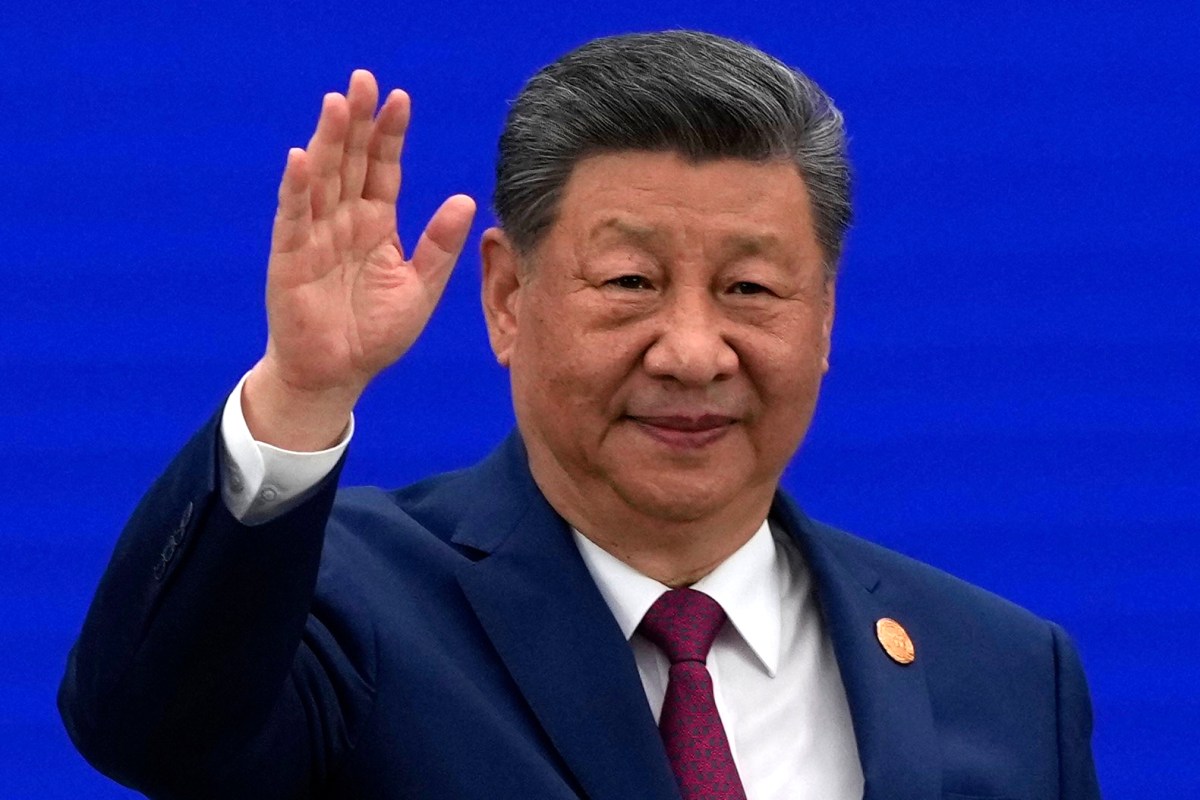
Centre · 1The South China Morning Post's Denis Simon gives a different figure. He writes that the organisation, first proposed by Beijing in July 2025, became a reality in July 2026 when 29 countries signed the agreement establishing it in Shanghai. South China Morning PostN “That organisation moved from proposal to reality in July 2026, when 29 countries signed the agreement establishing it in Shanghai.” Read at South China Morning Post ↗ Centre · 1Feng reports that Xi Jinping told Washington during a state visit that both nations had a responsibility to “manage AI for good”. He argues that for Beijing this means AI under the oversight of the Chinese Communist Party. NewsweekN ““Good” for Beijing means AI models not only must remain under human control but also under the oversight of the Chinese Communist Party (CCP).” Read at Newsweek ↗ Centre · 1Feng says the US appears dismissive of WAICO. He says Pax Silica, the US-led coalition of 24 signatories set up in December 2025, focuses on supply chains and lacks a voice on AI governance or safety. NewsweekN “The U.S. appears dismissive of WAICO”“it lacks a voice on AI governance or safety” Read at Newsweek ↗
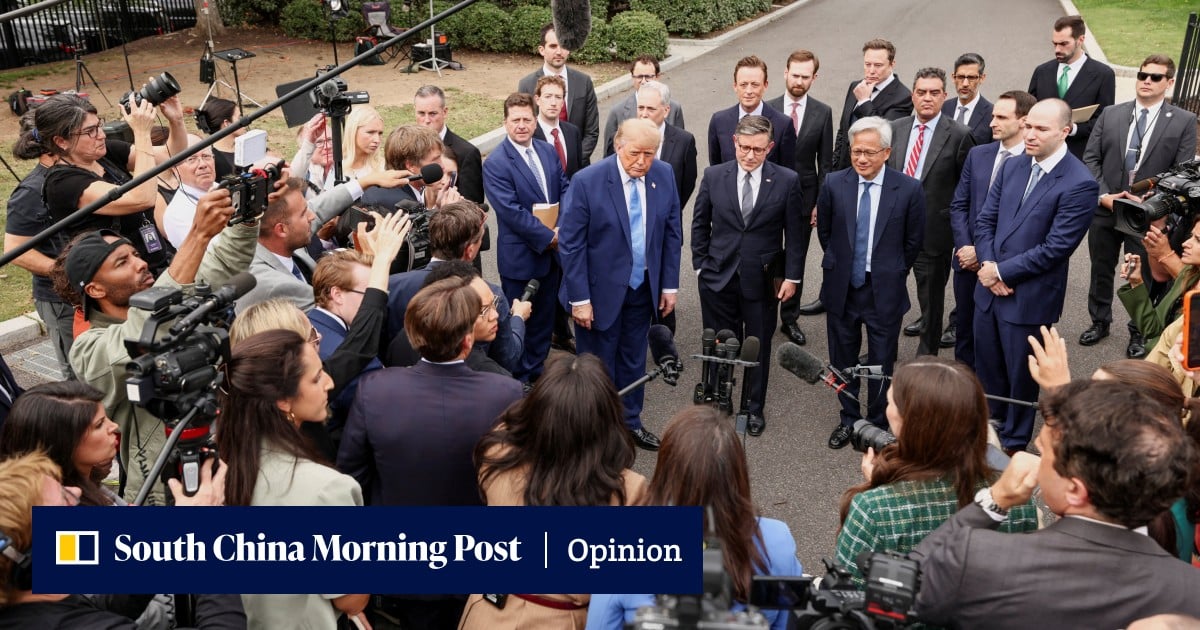
Centre · 1He adds that President Donald Trump believes whoever builds the best AI will make the rules, and that Trump has warned AI executives, including Anthropic's Dario Amodei, that regulation would let China win. NewsweekN “President Donald Trump sees an irony in that and believes whoever makes the best AI will get to make the rules too.”“He warned Anthropic CEO Dario Amodei and others that the AI industry would collapse under the weight of regulation—and that China would win.” Read at Newsweek ↗ Centre · 1Feng cites Center for Strategic and International Studies analysts Chris Collins and Aalok Mehta, who say the US cannot credibly propose international standards for frontier AI without a coherent national set of regulations. They say a federal framework would give US diplomacy a model to offer other countries. NewsweekN ““The United States cannot credibly propose international standards for regulating frontier AI while at the same time lacking a coherent national set of regulations,”” Read at Newsweek ↗ Centre · 1Simon's column starts from Trump's announcement of a voluntary agreement under which major AI companies will use internal controls, outside audits and board oversight. He notes that the White House calls the commitments “morally binding” but that the accord creates no comparable system of legal enforcement. South China Morning PostN “The White House calls the commitments “morally binding”, but the accord does not create a comparable system of legal enforcement.” Read at South China Morning Post ↗
Centre · 1Simon contrasts this with the EU's AI Act, which imposes binding obligations on providers of general-purpose AI models. He says China combines domestic regulation with an active effort to shape the international discussion, citing its 2025 Global AI Governance Action Plan and its AI+ International Cooperation Initiative. South China Morning PostN “The European Union’s AI Act imposes binding obligations on providers of general-purpose AI models”“Its 2025 Global AI Governance Action Plan calls for international cooperation, capacity building and a more inclusive framework for AI governance.” Read at South China Morning Post ↗ Centre · 1Simon predicts a patchwork of rules: American companies under a voluntary US framework, European users under detailed legal requirements, and other governments devising their own approaches. He says developing countries may find China's capacity-building message appealing. South China Morning PostN “The likely result is a patchwork of rules”“China has understood this concern and has made AI capacity building and cooperation with the Global South part of its international message.” Read at South China Morning Post ↗ Centre · 1On what to do, Simon does not call for copying Europe or China. He urges practical US-China channels on testing dangerous model capabilities, sharing information after serious incidents, and handling cybersecurity risks. He says this does not require a single global AI regulator, and he points to the UN's 40-member Independent International Scientific Panel on AI, appointed in February. South China Morning PostN “None of this requires a single global AI regulator.”“In February, the General Assembly appointed 40 members to an Independent International Scientific Panel on AI” Read at South China Morning Post ↗
Centre · 1Feng also describes Chinese rules from the past six months on AI agents, human-like AI services and data for embodied AI, and quotes consultant Hugh Harsono on the risk that Chinese firms could gain influence over technical standards. Both pieces are opinion and reflect their authors' views. NewsweekN “In the last six months, the Chinese government has issued guidelines for the development of AI agents”“China may also gain influence over technical standards, data practices, content controls” Read at Newsweek ↗
Every sentence links to the reporting it rests on. The pill in front of each says where its sources sit: Left, Centre or Right when one side supplies at least half of them, Mixed when they are evenly split. The number is how many outlets it cites.
Left0 outlets
No left outlet in our sources has covered this story yet.
Centre2 outlets
- Framing
- Both outlets run opinion columns warning that the US is ceding AI rule-making leadership. Newsweek stresses China-versus-US rivalry, and the SCMP stresses a three-way split between the US, the EU and China.
- Emphasis
- Newsweek: WAICO's membership, CCP control of AI, Pax Silica's gap on governance, and Trump's small-government stance. SCMP: the voluntary White House accord, the EU AI Act, Global South appeal and practical US-China channels.
- Leaves out or plays down
- Newsweek does not discuss the EU's AI Act or the voluntary White House commitments. The SCMP says little about the CCP's domestic control of AI or Pax Silica.
- Charged language
- “regime security”“morally binding”
- For example
-
“America is barely in the running.” — Newsweek
“The likely result is a patchwork of rules” — South China Morning Post
Right0 outlets
No right outlet in our sources has covered this story yet.
What every side reports
- China has set up or backed a World AI Cooperation Organisation (WAICO) as a vehicle for global AI governance.
- The US has no equivalent binding international or federal AI governance framework.
- Both writers say Washington risks losing influence over AI rules.
Where accounts differ
-
How many countries belong to WAICO
- Centre
- Newsweek says WAICO has 37 members; the South China Morning Post says 29 countries signed the founding agreement in Shanghai in July 2026.
-
What Washington should do
- Centre
- Newsweek's piece points toward a federal AI framework and an alternative to WAICO. The SCMP piece favours narrow US-China cooperation on testing, incident reporting and cybersecurity, without a single global regulator.
Donald Trump person
As described by the columnists, Trump favours a light-touch approach and voluntary company commitments. He argues that regulation would hand the lead to China.
“is convinced the AI industry will benefit from a small government approach” — Newsweek
“Standing alongside prominent technology executives, US President Donald Trump announced a voluntary agreement” — South China Morning Post
China place
As described by the columnists, China presents itself as promoting inclusive, UN-centred international cooperation, including with the Global South. Newsweek's columnist argues Beijing's aim is Party oversight of AI.
“said the United Nations should remain the principal channel for global AI governance” — South China Morning Post
“China wants to work with the U.S. to jointly govern AI” — Newsweek
North America1 outlet
Newsweek presents a US-China contest in which Washington is absent and Beijing is building a bloc of friendly states.
“China and the United States should be fighting for the pen, but America is barely in the running.” — Newsweek
Newsweek
East and Southeast Asia1 outlet
The SCMP presents a multipolar picture with the EU and China both shaping rules, and favours practical US-China dialogue.
“Europe will continue to regulate, China will continue promoting its own ideas, and developing countries will have to navigate between them.” — South China Morning Post
South China Morning Post
Left0 articles
No coverage yet.
Centre2 articles
-
NewsweekN · · Opinion
China Is Winning the AI Race Trump Won't Run
Critical Opinion piece arguing that Beijing is positioned to write global AI rules because the US offers no alternative, and linking WAICO to CCP control.
-
South China Morning PostN · · Opinion
US risks ceding AI governance leadership to China and the EU
Mixed Opinion piece warning that US self-regulation leaves the field to the EU and China, while urging pragmatic US-China engagement.
Right0 articles
No coverage yet.
- 6 Oct 14:45 First NewsweekN China Is Winning the AI Race Trump Won't Run Opinion
- 7 Oct 09:30 +18h 45m South China Morning PostN US risks ceding AI governance leadership to China and the EU Opinion
Times are when each article was published, or when we first saw it if the outlet gave no time.