Oregon board prepares universal single-payer health plan proposal for lawmakers
A nine-person Oregon board is due to send lawmakers a proposal for state-run universal health coverage from 2032, which would be the first single-payer system in the US. Hospitals and insurers are wary, and federal approval is uncertain.
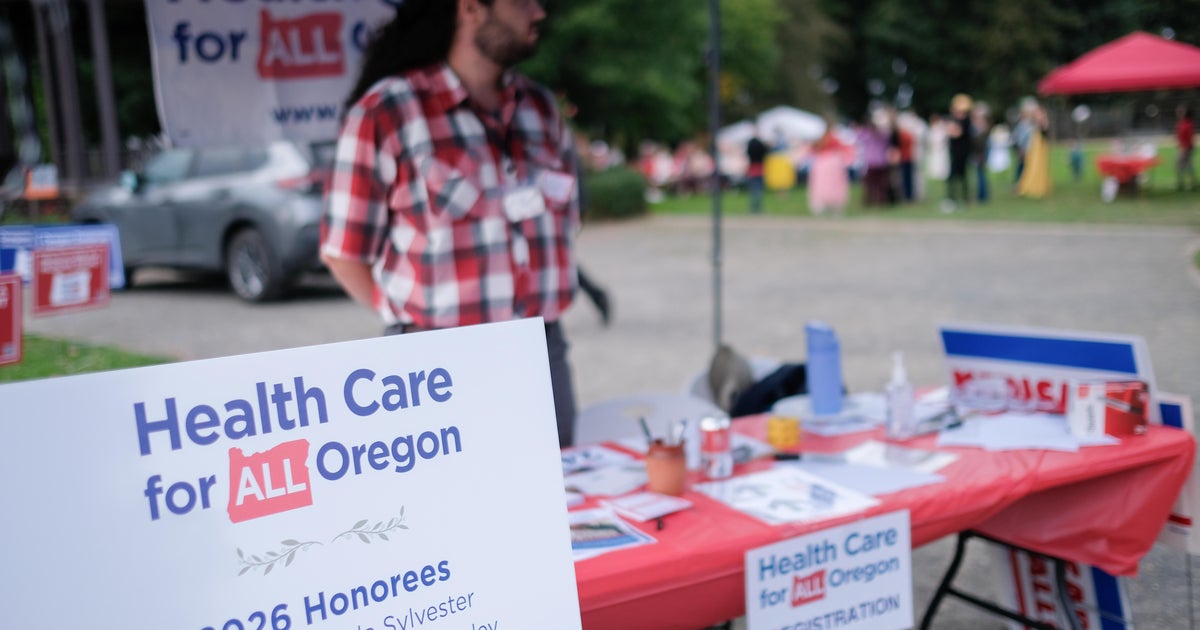
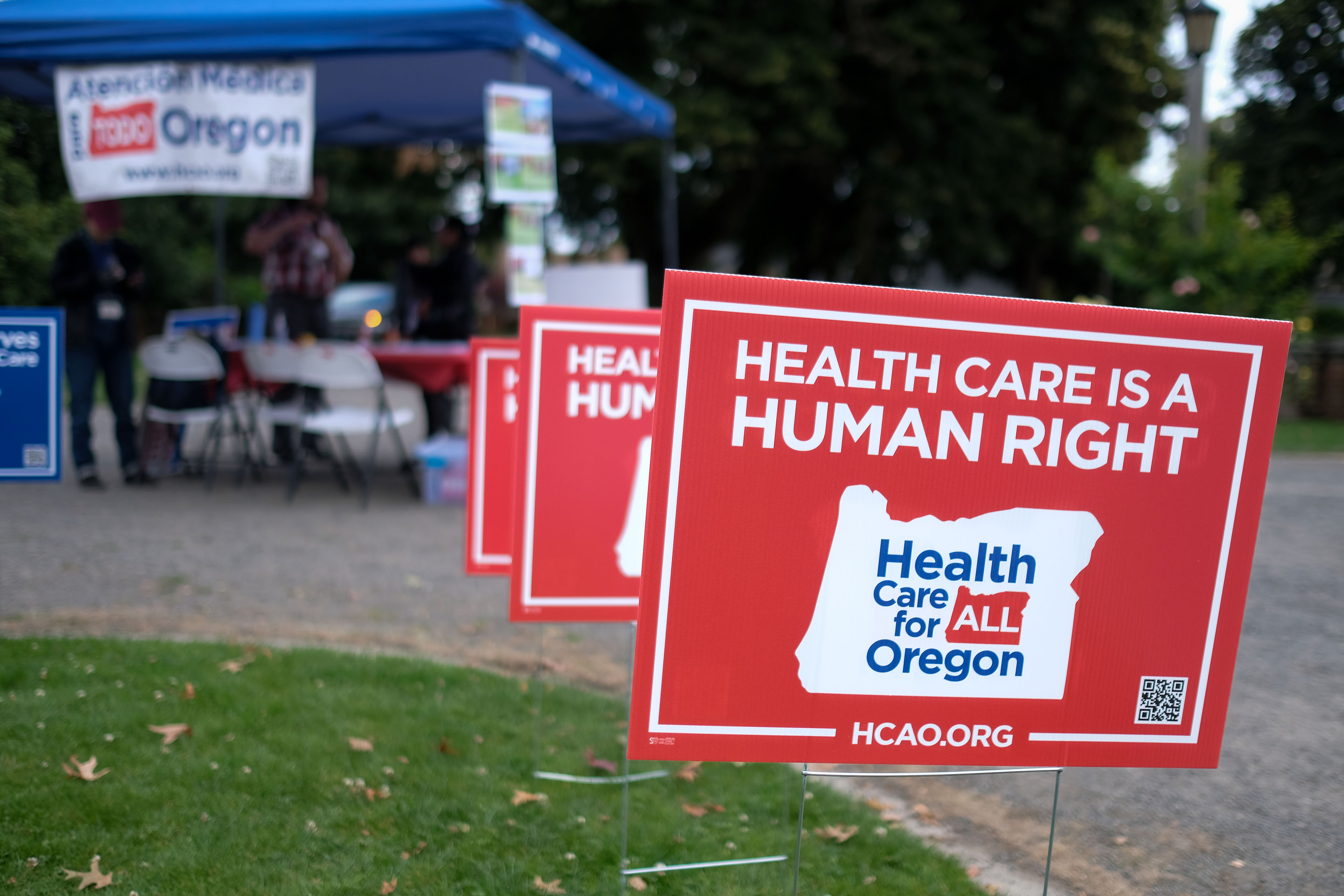
1 / 2
The story, neutrally told
Mixed · 2Oregon's Universal Health Plan Governance Board, a nine-person panel created by the state legislature in 2023, is due to send lawmakers its proposal for a universal health plan by Dec. 1. KFF Health NewsN “A panel created by the state legislature in 2023 is slated to send lawmakers its proposal for a universal health plan by Dec. 1.” Read at KFF Health News ↗ CBS NewsLC “The nine-person Universal Health Plan Governance Board seeks to establish, starting in 2032” Read at CBS News ↗ Centre · 1The board wants to provide medical, vision, dental and mental health benefits to every state resident from cradle to grave, starting in 2032, with no premiums, deductibles or copayments. KFF Health NewsN “medical, vision, dental, and mental health benefits for every state resident from cradle to grave — with no premiums, deductibles, or copayments” Read at KFF Health News ↗ Mixed · 2Lawmakers could vote on the plan in the 2027 legislative session or refer it to voters as a 2028 ballot measure. If approved, Oregon would be the first state to implement a single-payer system, and it could serve as a model for others. CBS NewsLC “Lawmakers could vote on the plan during the 2027 legislative session or refer it to voters as a ballot measure in 2028.” Read at CBS News ↗ KFF Health NewsN “the state would be the first in the U.S. to implement what’s called a single-payer health coverage system” Read at KFF Health News ↗
Centre · 1The proposal aims to keep current total spending by government, business and consumers, replacing insurance premiums and other out-of-pocket costs with new corporate and personal taxes. These would be combined with federal and state money into a single fund paying all hospitals, doctors and other practitioners. KFF Health NewsN “Oregon’s proposal seeks to maintain the current level of spending on healthcare by government, business, and consumers with new corporate and personal taxes” Read at KFF Health News ↗ Left · 1Board members say savings from cutting red tape, reducing fraud and negotiating drug costs should allow better benefits for more people. CBS NewsLC “Board members said savings from cutting red tape, reducing fraud, and negotiating drug costs should allow the state to provide better benefits to more people.” Read at CBS News ↗ Mixed · 2In examples prepared for consumer focus groups, the board estimated that a 30-year-old earning $55,000 and buying a benchmark silver plan, who now pays $5,478 a year in premiums, could instead pay $2,331 in taxes. A person earning $55,000 with employer coverage, who now pays $3,063 in premiums and out-of-pocket costs, could pay nothing for health services. KFF Health NewsN “now pays $5,478 a year for insurance premiums in Oregon, but instead could pay $2,331 in taxes under the proposed plan” Read at KFF Health News ↗ CBS NewsLC “Someone making $55,000 a year with coverage through their employer now pays $3,063 in premiums and out-of-pocket costs.” Read at CBS News ↗
Mixed · 2The plan would keep employer contributions through a payroll tax on companies with payrolls above $500,000, with employees getting a partial tax credit. As a result, 31% to 60% of Oregonians would pay nothing for health benefits, while more affluent people could pay more than now, depending on tax rates and thresholds lawmakers set. KFF Health NewsN “establishing a corporate payroll tax for companies whose payrolls exceed $500,000” Read at KFF Health News ↗ CBS NewsLC “More affluent people, however, could end up paying more than they do now.” Read at CBS News ↗ Centre · 1Doctors would be paid between Medicare and private-insurance rates, with rates negotiated to shift money toward primary care and away from specialty services. Total payments to doctors would stay unchanged, but it is unclear whether physicians would accept the structure. KFF Health NewsN “doctors and other practitioners would be paid somewhere between what Medicare pays on the low end and what private insurance pays on the high end” Read at KFF Health News ↗ Mixed · 2Becky Hultberg, president and CEO of the Hospital Association of Oregon, said the proposal "preserves much of the broken, fragmented status quo and adds new taxes and complexity that Oregonians can’t afford" and could destabilize a struggling system. Backers argue a single payer would cut hospitals' billing burden and could stabilize rural hospitals. CBS NewsLC “This proposal could destabilize a system that is already struggling.” Read at CBS News ↗ KFF Health NewsN “Rural hospitals could gain financial stability.” Read at KFF Health News ↗
Mixed · 2The Oregon Medical Association says it shares many of the board's goals but has not declared support or opposition. Health insurers have not formally weighed in, though a single-payer system would essentially close Oregon to private plans. KFF Health NewsN “the group has yet to declare its support or opposition to the effort” Read at KFF Health News ↗ CBS NewsLC “a single-payer system would, in essence, close off Oregon to any private healthcare plans” Read at CBS News ↗ Mixed · 2Advocates expect heavy opposition from insurers. Collin Stackhouse of Health Care for All Oregon and former insurance executive Wendell Potter predicted insurers would campaign on high taxes, loss of choice and "socialized medicine". The trade group AHIP's Chris Bond said Americans report strong satisfaction with their coverage and called for action on hospital and drug prices. KFF Health NewsN “We expect insurance companies to put every ounce of money they can against this idea because our system is broken and they profit from it,”” Read at KFF Health News ↗ CBS NewsLC “Policy solutions are needed to rein in the ever-higher prices charged by hospitals and drugmakers and make care more affordable for everyone.” Read at CBS News ↗ Mixed · 2Past efforts have failed: Vermont's legislature voted for universal care in 2011 but Gov. Peter Shumlin dropped it three years later, and ballot measures in Colorado (2016), Oregon (2002) and California (1994) failed by large margins. Jonathan Oberlander of the University of North Carolina said a national Medicare for All is unlikely soon, making states like Oregon a more realistic path. CBS NewsLC “Ballot measures in Colorado in 2016, Oregon in 2002, and California in 1994 all failed by large margins.” Read at CBS News ↗ KFF Health NewsN “A state like Oregon provides a more hospitable political environment and a more realistic path to single-payer reform.” Read at KFF Health News ↗
Mixed · 2It is unclear whether Oregon could win federal approval to redirect Medicare and Medicaid dollars. Backers do not expect the Trump administration to be receptive, but say approval is years away and hope the 2028 presidential election brings a more supportive administration; without waivers, Oregon could proceed in stages. KFF Health NewsN “Backers of the proposal do not expect the Trump administration to be receptive” Read at KFF Health News ↗ CBS NewsLC “If federal waivers are not secured, Oregon could proceed in stages” Read at CBS News ↗
Every sentence links to the reporting it rests on. The pill in front of each says where its sources sit: Left, Centre or Right when one side supplies at least half of them, Mixed when they are evenly split. The number is how many outlets it cites.
Left1 outlet
- Framing
- CBS News runs the explainer, with the same text as KFF Health News, under a headline asking whether Oregon's first-in-nation universal system 'will it work', leading on the state's more ambitious aims compared with national Democrats' proposals.
- Emphasis
- The plan's design and savings claims, the history of failed single-payer efforts, and the expected insurer opposition.
- Leaves out or plays down
- Does not note the story originated at KFF Health News in the text provided; no right-leaning voices beyond hospital and insurer representatives.
- Charged language
- “healthcare behemoths”
Centre1 outlet
- Framing
- KFF Health News (byline Markian Hawryluk) places Oregon's plan in the context of the midterm elections and the revived universal healthcare debate, under a broader headline about states ahead of others.
- Emphasis
- Oregon's timetable, proposed financing, stakeholders' reactions and federal approval hurdles.
- Leaves out or plays down
- Does not include any position from the Trump administration or from Oregon Republicans.
- Charged language
- “healthcare behemoths”“socialized medicine”
- For example
-
“Midterms Have Revived Universal Healthcare Debate. These States Are Ahead of Everyone.” — KFF Health News
“The industry’s deep pockets have helped derail myriad universal healthcare efforts at the federal and state levels.” — KFF Health News
Right0 outlets
No right outlet in our sources has covered this story yet.
What every side reports
- The board's proposal is due to go to lawmakers on or by Dec. 1, with benefits starting in 2032.
- A legislative vote could come in 2027 or a ballot measure in 2028.
- The Hospital Association of Oregon opposes the draft; the Oregon Medical Association and insurers have not formally taken positions.
- Federal approval for redirecting Medicare and Medicaid money is uncertain.
Where accounts differ
-
Whether the plan would help or destabilize Oregon's health system
- Left
- Backers argue savings from less red tape, fraud and drug costs would fund better benefits and could help rural hospitals; the hospital association says it adds taxes and complexity (CBS News).
- Centre
- Same account in KFF Health News: board members cite savings; the Hospital Association of Oregon says it could destabilize the system.
Oregon place
Oregon's governance board, through executive director Miriam McDonell, presents the plan as a different model in which everyone contributes according to ability rather than use of care.
“Everyone contributes based on the amount that they are able to contribute and not based on utilization.” — KFF Health News
Universal healthcare topic
Proponents say public support for universal healthcare is rising and states can pioneer it; critics say it would add taxes and complexity and may not win federal approval.
“Proponents of the proposal argue that the public supports universal healthcare more than ever” — CBS News
“It’s unclear whether Oregon could secure federal approval to redirect Medicare and Medicaid dollars into its universal plan.” — KFF Health News
Left1 article
-
Oregon eyes nation's first universal healthcare system. Will it work?
Neutral Explainer on Oregon's plan with a question-style headline, balancing proponents' savings claims against hospital and insurer skepticism.
Centre1 article
-
Midterms Have Revived Universal Healthcare Debate. These States Are Ahead of Everyone.
Neutral Same reporting tied to the midterm debate, covering the plan's design, stakeholder reactions and uncertainties.
Right0 articles
No coverage yet.
- 30 Sep 10:00 First CBS NewsLC Oregon eyes nation's first universal healthcare system. Will it work?
- 2 Oct 10:00 +48h KFF Health NewsN Midterms Have Revived Universal Healthcare Debate. These States Are Ahead of Everyone.
Times are when each article was published, or when we first saw it if the outlet gave no time.
Ask about this story
Loading…