Outlaw Ocean report: ethoxyquin, the fishmeal fire preventive, carries cancer concerns
An Outlaw Ocean Project investigation by Ian Urbina, published by Inside Climate News and Grist, traces how ethoxyquin ended ship fires caused by fishmeal and then became a contested carcinogen concern in farmed seafood feed. Its common replacement, BHA, also carries health concerns.
1 / 2
The story, neutrally told
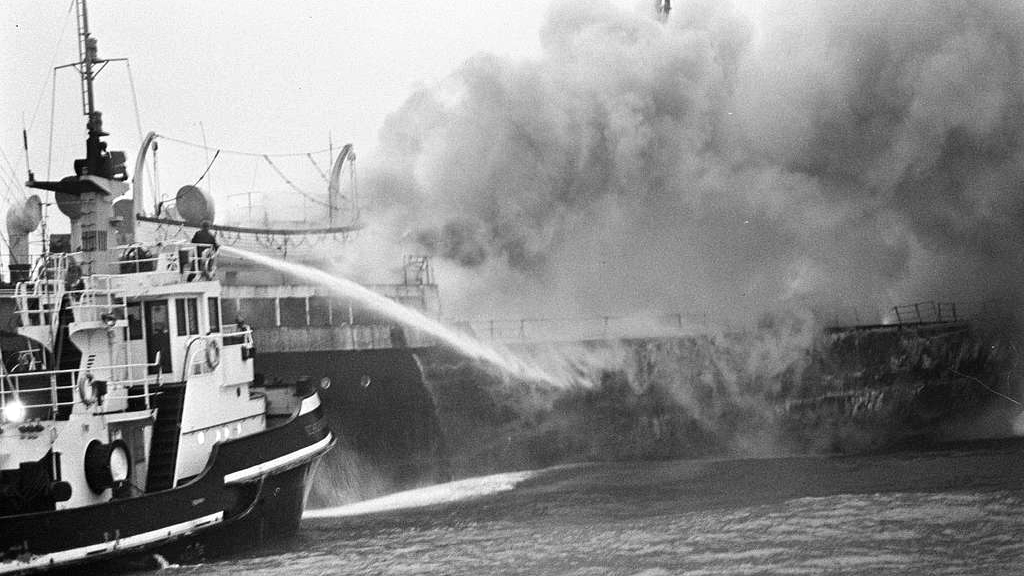
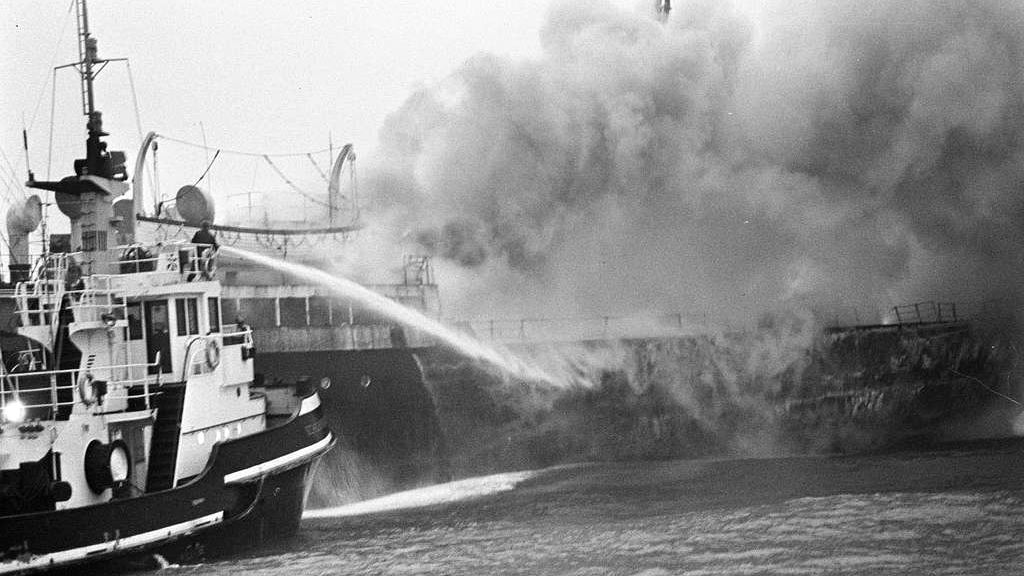
Left · 2An investigation by Ian Urbina of The Outlaw Ocean Project, a news organisation in Washington, D.C., says the chemical that stopped fishmeal from catching fire on ships is a carcinogen that has entered the farmed-seafood food chain. Inside Climate NewsLC “But there was a problem: Ethoxyquin is a carcinogen.” Read at Inside Climate News ↗ GristL “The Outlaw Ocean Project, a news organization in Washington, D.C.” Read at Grist ↗ Left · 2Fishmeal is a dark yellow powder made by drying and pulverising fish. If untreated, it can combust spontaneously as it decays and oxidises. The report cites three fires in early 1966: a South African ship that burned for five days in Bristol, a Liberian steamship that ignited petrol barrels near Rotterdam and sank, and a Danish ship off Long Beach, California, where a longshoreman was killed. Inside Climate NewsLC “The culprit in each fire was fishmeal, a dark yellow powder made by drying and pulverizing fish” Read at Inside Climate News ↗ GristL “killing a longshoreman and causing over a million dollars in estimated damages” Read at Grist ↗ Left · 2According to the Outlaw Ocean Project's sweep of historical news coverage, fishmeal was tied to at least 90 ship and plant fires from the 1950s through the 1970s. Inside Climate NewsLC “Tied to at least 90 ship and plant fires from the 1950s through the 1970s” Read at Inside Climate News ↗ GristL “according to a sweep of historical news coverage by The Outlaw Ocean Project” Read at Grist ↗
Left · 2In 1967 the American feed producer Cargill announced ethoxyquin as a solution. The chemical had previously been used to keep rubber tires from drying out and as a preservative on fruit and alfalfa. Press-reported fires fell from a typical 16 ship fires a year, per the Liverpool Underwriters Association, to five by the 1970s. Inside Climate NewsLC “In 1967, American feed producer Cargill announced a solution: ethoxyquin.” Read at Inside Climate News ↗ GristL “from a typical 16 ship fires a year, according to the Liverpool Underwriters Association, to five” Read at Grist ↗ Left · 2In 1976 the U.S. Coast Guard made ethoxyquin treatment mandatory for fishmeal shipments. Three years later the United Nations maritime body recommended it "to prevent spontaneous combustion." Inside Climate NewsLC “By 1976, the U.S. Coast Guard imposed mandatory ethoxyquin treatment on fishmeal shipments” Read at Inside Climate News ↗ GristL “to prevent spontaneous combustion” Read at Grist ↗ Left · 2Health concerns appeared early and have continued. A 1969 U.N. food and agriculture paper noted toxic effects in laboratory animals fed high concentrations. A 1987 British study found "severe damage" and a potentially "carcinogenic effect" in rats. In 2015 the European Food Safety Authority said an impurity, p-phenetidine, could cause genetic mutations. Inside Climate NewsLC ““Toxic effects had been observed in laboratory animals fed high concentrations of ethoxyquin,” said a 1969 paper” Read at Inside Climate News ↗ GristL “an impurity within ethoxyquin, known as p-phenetidine, was capable of causing mutations in genetic material” Read at Grist ↗
Left · 2The report says there is no scientific consensus on whether eating farmed seafood raised on ethoxyquin-treated feed is safe. The European Commission suspended its authorisation in animal feed in 2017. It is now banned in the U.K. and in European Economic Area members including Norway, Iceland and Liechtenstein, but is still permitted within limits in Australia, Japan, South Korea and the U.S. Inside Climate NewsLC “There is a lack of scientific consensus on whether it is safe to eat farmed seafood raised on feed treated with ethoxyquin” Read at Inside Climate News ↗ GristL “ethoxyquin, within limits, is still permitted in animal feed in Australia, Japan, South Korea, and the U.S.” Read at Grist ↗ Left · 2The report says more than half of the seafood eaten worldwide now comes from fish farms, and most farmed species are fed fishmeal and fish oil. Inside Climate NewsLC “With more than half of the seafood eaten worldwide now coming from fish farms” Read at Inside Climate News ↗ GristL “the majority of such species fed fishmeal and fish oil” Read at Grist ↗ Left · 2In the U.S., ethoxyquin has been at the centre of about six lawsuits, typically alleging false advertising. In 2022 a class action against Aldi over "sustainable" Atlantic salmon, and a suit against Gorton's over "sustainably sourced" frozen tilapia, both cited the EU ban and risk to aquatic life. Both were settled out of court. Inside Climate NewsLC “it has been at the center of a half-dozen lawsuits, typically involving claims of false advertising” Read at Inside Climate News ↗ GristL “This lawsuit also cited the “risk for aquatic life” and the European Union’s ban, and was settled out of court.” Read at Grist ↗
Left · 2In Canada, the Food Inspection Agency requires a label on feeds containing ethoxyquin but does not specify how it tests for the chemical, and inspectors do not check whether it ends up in seafood, according to its 2022 report. A 2024 EU audit found the agency completed only about 40 percent of planned inspections, citing "systematic and significant under-delivery" in seafood testing. Inside Climate NewsLC “a 2024 audit of the Canadian agency by the EU found it completed only about 40 percent of its planned inspections” Read at Inside Climate News ↗ GristL “Inspectors also do not check whether ethoxyquin ends up in the seafood itself” Read at Grist ↗ Left · 2Cargill said in a statement that it has assessed alternative antioxidants since 2005. It said it no longer uses ethoxyquin in its global salmon feed business or in any market where it is not authorised in aquafeed, and that it did not develop the chemical. Inside Climate NewsLC “Cargill said in a statement that it has assessed alternative antioxidants since 2005” Read at Inside Climate News ↗ GristL “The company also noted that it did not develop ethoxyquin.” Read at Grist ↗ Left · 2James Frank, managing director of the Peruvian fishmeal company MSICeres, said in a 2022 webinar that more destinations are refusing ethoxyquin, starting with Peru's local market. He said all Peruvian fishmeal exports to Europe, Canada, the U.S. and Australia are now ethoxyquin-free. Producers have also shifted to natural additives such as rosemary extract and vitamin E compounds. Inside Climate NewsLC “100 percent of Peru’s fishmeal exports to Europe, Canada, the U.S. and Australia are now ethoxyquin-free” Read at Inside Climate News ↗ GristL “including natural additives such as rosemary extract and vitamin E compounds” Read at Grist ↗
Left · 2The most popular alternative is now butylated hydroxyanisole (BHA), favoured for lower cost and strong antioxidant properties. The report says BHA has significant health risks of its own. The U.S. National Toxicology Program called it "reasonably anticipated to be a human carcinogen" as early as 1991, and Japanese researchers found malignant tumours in rats in 2008. In February the U.S. FDA announced it was reassessing BHA's safety as a food additive. Inside Climate NewsLC “The U.S. National Toxicology Program identified BHA as “reasonably anticipated to be a human carcinogen” as early as 1991” Read at Inside Climate News ↗ GristL “In February, the U.S. Food and Drug Administration announced it was reassessing the safety of the substance as a food additive.” Read at Grist ↗ Left · 2The report concludes that the aquaculture and fishmeal industries are in a "perilous loop": from deadly ship fires to a carcinogenic fire retardant, and then to another. Inside Climate NewsLC “pivoting from deadly ship fires to a carcinogenic fire retardant, and then to yet another one” Read at Inside Climate News ↗ GristL “find themselves in a perilous loop” Read at Grist ↗
Every sentence links to the reporting it rests on. The pill in front of each says where its sources sit: Left, Centre or Right when one side supplies at least half of them, Mixed when they are evenly split. The number is how many outlets it cites.
Left2 outlets
- Framing
- Both outlets run the same Outlaw Ocean Project piece by Ian Urbina, and the text is essentially identical. It is a historical, investigative account of a fire-safety fix that became a food-safety concern. Inside Climate News carries it under its climate-and-environment remit, and Grist files it under accountability.
- Emphasis
- The irony of a fix for deadly fires becoming a carcinogen concern, regulatory gaps (Canada's testing, differing national bans), the lawsuits, and the problem with the BHA replacement.
- Leaves out or plays down
- Neither outlet adds its own reporting, and neither includes an ethoxyquin manufacturer or regulator beyond Cargill's statement. The report itself acknowledges there is no scientific consensus on safety for eating seafood from treated feed.
- Charged language
- “perilous loop”“insatiable hunger for seafood”“a carcinogenic fire retardant”
- For example
-
“pivoting from deadly ship fires to a carcinogenic fire retardant, and then to yet another one.” — Inside Climate News
“A chemical additive helped stop fishmeal from catching fire on ships, but it carried a downstream carcinogenic risk to modern food systems.” — Grist
Centre0 outlets
No centre outlet in our sources has covered this story yet.
Right0 outlets
No right outlet in our sources has covered this story yet.
What every side reports
- Fishmeal can spontaneously combust, and was tied to at least 90 ship and plant fires from the 1950s to the 1970s, according to the Outlaw Ocean Project's review of news coverage.
- Ethoxyquin was introduced in 1967 and sharply reduced fishmeal fires; the U.S. Coast Guard made it mandatory in 1976.
- The EU suspended ethoxyquin in animal feed in 2017; it is banned in the U.K. and the EEA but permitted within limits in the U.S., Australia, Japan and South Korea.
- Cargill says it no longer uses ethoxyquin in its global salmon feed business.
- BHA, the common alternative, also has carcinogen concerns; the FDA is reassessing it.
The Outlaw Ocean Project organisation
Presents ethoxyquin as an effective fix for deadly fishmeal fires that is a carcinogen, now entangled in aquaculture feed and in uneven regulation. It says the replacement BHA also carries health risks, while noting that scientists lack consensus on the safety of eating seafood from treated feed.
“There is a lack of scientific consensus on whether it is safe to eat farmed seafood raised on feed treated with ethoxyquin” — Inside Climate News
“But like the chemical it aims to supplant, BHA has its own significant health risks, according to researchers.” — Grist
Left2 articles
-
The Fire Retardant in the Seafood Chain
Critical Republishes the Outlaw Ocean investigation as a cautionary history of a fire-prevention chemical turned carcinogen concern, ending on a 'perilous loop' of replacements.
-
GristL ·
The fire retardant in the seafood chain
Critical Runs the same investigation with a standfirst stressing a 'downstream carcinogenic risk to modern food systems'.
Centre0 articles
No coverage yet.
Right0 articles
No coverage yet.
- 14 Oct 10:00 First Inside Climate NewsLC The Fire Retardant in the Seafood Chain
- 17 Oct 14:00 +76h GristL The fire retardant in the seafood chain
Times are when each article was published, or when we first saw it if the outlet gave no time.
Ask about this story
Loading…