Missing wolfhound's owner sent suspected AI photo after offering A$10,000 reward
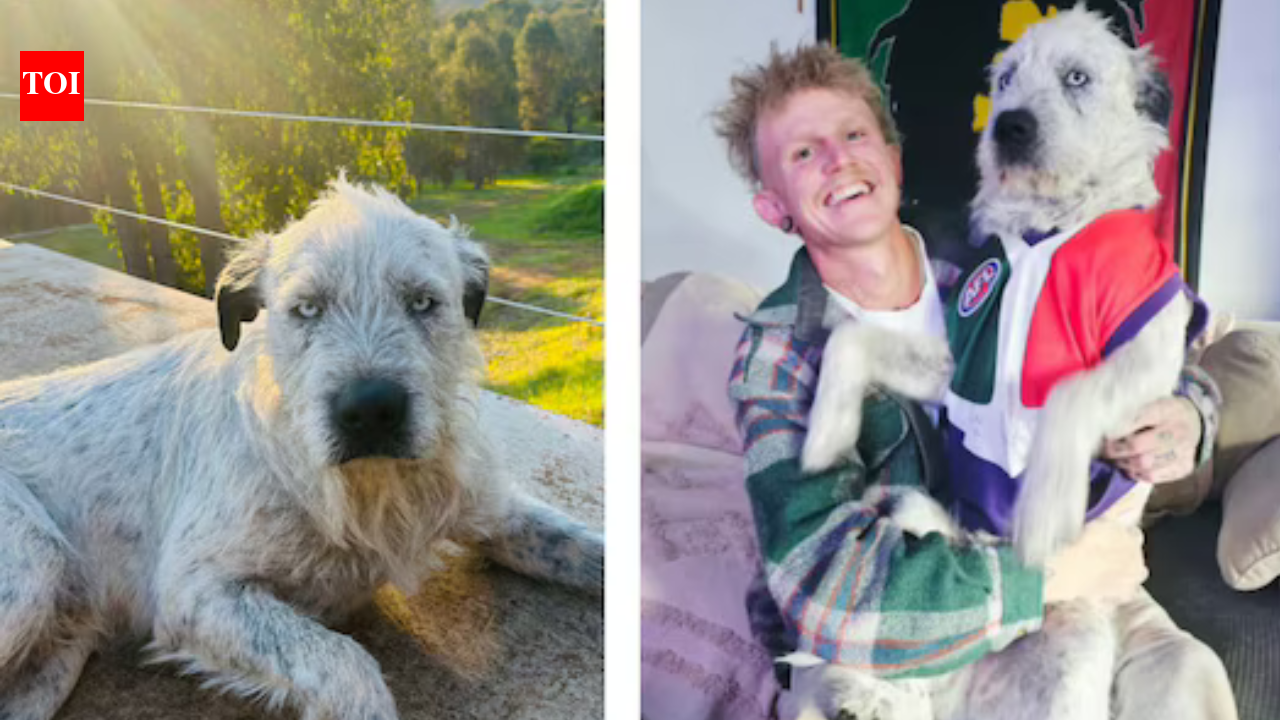
A Western Australian man whose dog Bundy went missing offered a A$10,000 reward and was then sent what he says is an AI-generated photo by someone claiming to have the dog. Australia's National Anti-Scam Centre says it knows of scams targeting people searching for missing pets.
1 / 2
The story, neutrally told
Mixed · 2Westyn Ruyter, from Balingup in Western Australia, offered a $10,000 reward on Facebook for the return of his missing dog, Bundy, an Irish wolfhound. ABC News (Australia)LC “he offered a $10,000 reward on Facebook for anyone who would return him” Read at ABC News (Australia) ↗ The Times of IndiaN “offered a A$10,000 reward for its safe return” Read at The Times of India ↗ Mixed · 2Balingup is about 240 kilometres south of Perth. The Times of India, citing Ruyter's account, says Bundy is 18 months old and an Irish wolfhound and blue heeler cross. It says he disappeared on 9 October near Southampton Road, after Ruyter let him and two other dogs out on his rural property. The Times of IndiaN “18-month-old dog, Bundy, an Irish wolfhound and blue heeler cross, disappeared on October 9 near Southampton Road in Balingup” Read at The Times of India ↗ ABC News (Australia)LC “his hometown of Balingup, 240 kilometres south of Perth” Read at ABC News (Australia) ↗ Left · 1Soon after the reward was posted, someone messaged Ruyter claiming to have found Bundy and proposed meeting at a general store in Balingup. ABC News (Australia)LC “someone claiming to have found Bundy and offering to meet at a general store in his hometown of Balingup” Read at ABC News (Australia) ↗
Centre · 1Ruyter sent his father to the meeting point, according to the Times of India. His father waited about an hour and searched the town, but nobody arrived with the dog. The Times of IndiaN “Ruyter arranged for his father to go to the meeting point.”“His father waited for approximately an hour and searched around the town” Read at The Times of India ↗ Left · 1When Ruyter asked for further proof, the person sent a photo of a dog in a crate. Ruyter says it is obviously AI-generated: it reuses the photo of Bundy he had posted on Facebook, the dog bowl looks fake, and the cage is blurred in front of the dog's face. The sender then stopped replying. ABC News (Australia)LC “"They just sent me a photo of him in a crate, and it's obviously AI," Mr Ruyter said.”“and then they just never replied again” Read at ABC News (Australia) ↗ Left · 1A spokesperson for the Australian Competition and Consumer Commission's National Anti-Scam Centre said it knew people with missing pets were being targeted. The spokesperson said scammers use AI-generated images to 'prove' they have the pet and demand money, gift cards or cryptocurrency for its return. The centre encourages victims of AI scams to report them. ABC News (Australia)LC “Scammers use AI-generated images to 'prove' they have the pet and demand money, gift cards or cryptocurrency in exchange for the pet's return.”“The centre encourages victims of AI scams to report the incidents.” Read at ABC News (Australia) ↗
Left · 1Edith Cowan University's Professor of Cyber Security Practice, Paul Haskell-Dowland, said scammers often search community groups for sensitive information. He said AI and automated tools make it easier to personalise scams, and he advised people to be careful about what they share online, even when desperate. ABC News (Australia)LC “scammers often searched for sensitive information posted in community groups”“people could protect themselves by exercising more caution with what they shared online, even in desperate circumstances” Read at ABC News (Australia) ↗ Centre · 1Several points remain unestablished. The Times of India says the available information does not identify the sender or independently confirm which technology produced the image. It also says nothing confirms that Ruyter paid money or that the sender demanded payment from him. It adds that Ruyter still hopes to find Bundy. The Times of IndiaN “The available information does not identify the person behind the messages or independently establish which technology was used to create or manipulate the image.”“the available reporting does not establish that the person who contacted Ruyter demanded payment from him” Read at The Times of India ↗ Centre · 1The Times of India also reports that security cameras on Ruyter's property were stolen, but that no connection has been established between the theft and Bundy's disappearance. The Times of IndiaN “However, no connection has been established between the missing cameras and Bundy's disappearance.” Read at The Times of India ↗
Every sentence links to the reporting it rests on. The pill in front of each says where its sources sit: Left, Centre or Right when one side supplies at least half of them, Mixed when they are evenly split. The number is how many outlets it cites.
Left1 outlet
- Framing
- A human-interest story about an owner's heartbreak, paired with an official scam warning and an expert's advice.
- Emphasis
- Ruyter's hope and disappointment, the ACCC warning and the cybersecurity professor's advice on sharing information online.
- Leaves out or plays down
- Does not say whether any money was demanded or paid. It gives no date for the disappearance and no details of the search.
- Charged language
- “devastated”“second bitter blow”
- For example
-
“instead of getting his dog back he received a second bitter blow” — ABC News (Australia)
“Owner of missing dog devastated by AI photo scam” — ABC News (Australia)
Centre1 outlet
- Framing
- A longer, more cautious rewrite of the ABC report that adds background on the disappearance and stresses what is not established.
- Emphasis
- The timeline of Bundy's disappearance, the father waiting at the meeting point, and caveats that no payment demand, sender identity or AI tool is confirmed.
- Leaves out or plays down
- Relies on the ABC's interviews, with no apparent new reporting from the Times of India.
- Charged language
- “suspected scam”“beloved pet”
- For example
-
“Nor does it confirm that Ruyter paid the person any money.” — The Times of India
“Ruyter told ABC News that the image was obviously AI-generated.” — The Times of India
Right0 outlets
No right outlet in our sources has covered this story yet.
What every side reports
- Westyn Ruyter offered a $10,000 reward for his missing dog Bundy.
- Someone claiming to have found Bundy proposed meeting at a general store in Balingup, but nobody turned up.
- The sender then sent a photo of the dog in a cage or crate that Ruyter believes is AI-generated, and stopped replying.
- The ACCC's National Anti-Scam Centre says it is aware of scams targeting people searching for missing pets.
Where accounts differ
-
Whether the incident is a confirmed scam
- Left
- ABC calls it an 'AI photo scam' in its headline and reports Ruyter's claim that the image is 'obviously AI'.
- Centre
- The Times of India calls it a 'suspected scam' and says the sender, the technology used and any payment demand are not established.
Westyn Ruyter person
Says he was excited by the message and then grew suspicious when no one showed up. He believes the photo was AI-generated and the sender never replied after he asked for proof.
“"It gave me so much hope. I was that excited," Mr Ruyter said.” — ABC News (Australia)
“it's the exact photo I posted on Facebook of him, and they've just put him in a box” — ABC News (Australia)
AI photo scam topic
The ACCC's National Anti-Scam Centre describes scammers using AI-generated images as 'proof' to demand money, gift cards or cryptocurrency for missing pets.
“Scammers exploit situations that are urgent or emotionally distressing,” — ABC News (Australia)
Oceania1 outlet
ABC Australia reports the local story first-hand, quoting Ruyter, the ACCC and a Western Australian academic.
“A WA man who offered a significant reward for the return of his Irish wolfhound” — ABC News (Australia)
ABC News (Australia)
South Asia1 outlet
The Times of India presents the story as an international item built on the ABC's reporting, with cautionary caveats.
“Ruyter told ABC News that the image was obviously AI-generated.” — The Times of India
The Times of India
Left1 article
-
Owner of missing dog devastated by AI photo scam
Sympathetic Treats the incident as a scam and centres the owner's distress, with an official warning and an expert's advice.
Centre1 article
-
Australian man offers $10,000 for missing dog, targeted by AI-photo scam
Neutral Rewrites the ABC story with extra background and explicit caveats that the scam, the payment demand and the AI tool are unconfirmed.
Right0 articles
No coverage yet.
- 27 Oct 05:48 First ABC News (Australia)LC Owner of missing dog devastated by AI photo scam
- 28 Oct 13:32 +31h 44m The Times of IndiaN Australian man offers $10,000 for missing dog, targeted by AI-photo scam
Times are when each article was published, or when we first saw it if the outlet gave no time.
Ask about this story
Loading…