Palace: King's Caribbean tour won't shy from slavery history; apology, reparations for government
Buckingham Palace released details of King Charles's Caribbean tour of the Bahamas, Guyana and Antigua and Barbuda, saying it will not shy away from "the darkest days of our past" but is chiefly about each country's present and future. It said apologies and reparations are matters for the government.


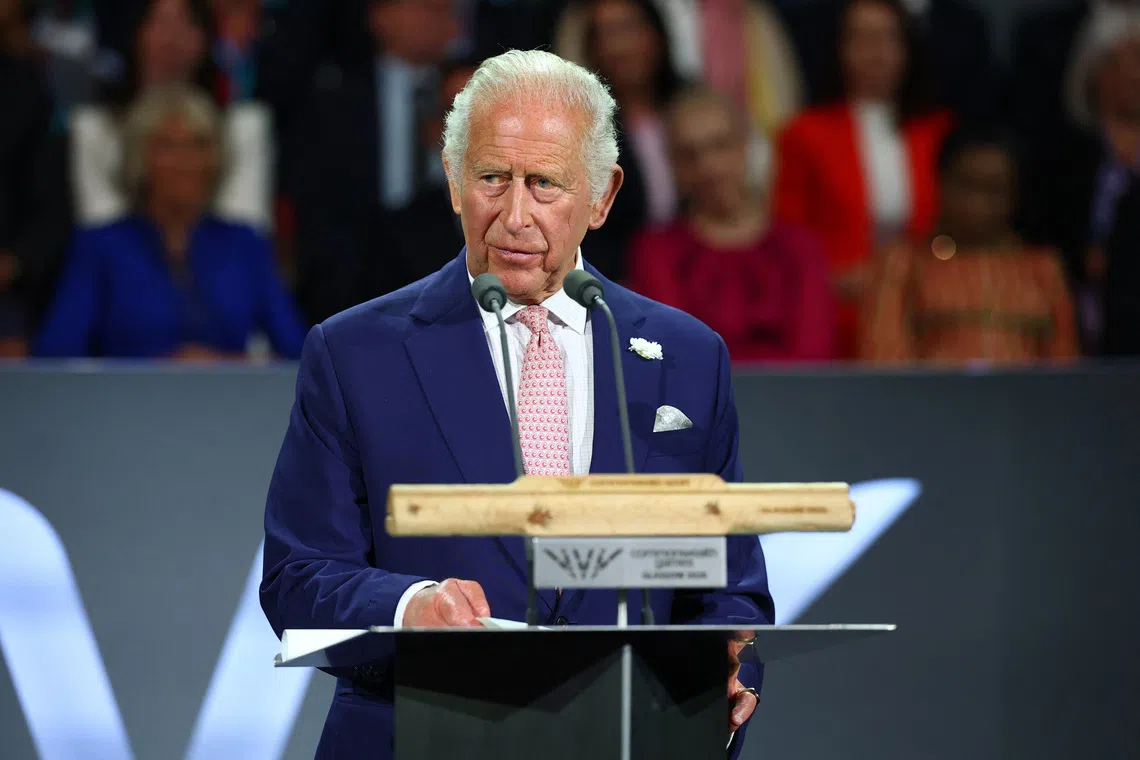
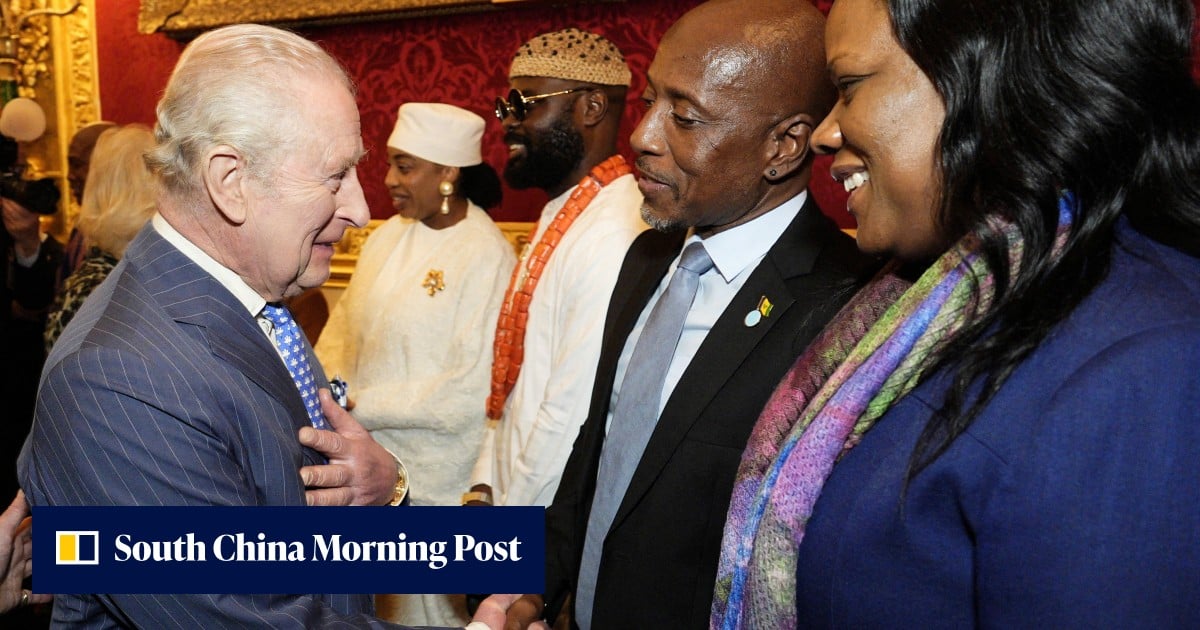
1 / 4
The story, neutrally told
MixedBuckingham Palace said on Friday 2 October that King Charles's Caribbean tour will not shy away from "the darkest days of our past" over Britain's role in the transatlantic slave trade. The Straits TimesRC “King Charles will not shy away from "the darkest days of our past" over Britain's involvement in the transatlantic slave trade when he tours the Caribbean later this month, Buckingham Palace said on Friday.” Read at The Straits Times ↗ Evening StandardN “The King’s Caribbean tour will not shy away from “the darkest days of our past” as debates about slavery and reparations continue among Commonwealth nations, Buckingham Palace has said.” Read at Evening Standard ↗ MixedA palace spokesperson said the programme would, in keeping with the wishes of host nations, "principally be oriented to the vibrant present and promising future of each country", with programmes developed in close consultation with their governments. Evening StandardN “it will principally be oriented to the vibrant present and promising future of each country, with visit programmes developed in close consultation with their governments to reflect their individual priorities.” Read at Evening Standard ↗ Daily MirrorL “A Buckingham Palace spokesman said there were “important discussions” taking place about colonial legacy and slavery but said they were “primarily matters for Governments to address”.” Read at Daily Mirror ↗ MixedThe Palace said that on reparations and apologies, "that is a matter for the government" and that the King always acts on its advice; it also pointed to his past statements and his support for Commonwealth education programmes and the King's Trust. Evening StandardN “But as far as reparations and apologies go, that is a matter for the Government.” Read at Evening Standard ↗ Daily MirrorL “the personal support for Commonwealth education programmes since the last Chogm, and his support, over many decades, for young people through The King’s Trust.” Read at Daily Mirror ↗
MixedThe itinerary is a solo visit to the Bahamas from 27 to 29 October, a state visit to Guyana from 29 to 30 October at the Government's request, then Antigua and Barbuda from 1 to 4 November with Queen Camilla for the Commonwealth Heads of Government Meeting (Chogm). Evening StandardN “Charles will begin his Caribbean tour by visiting The Bahamas from October 27-29, followed by the state visit to Guyana, October 29-30 and attend Chogm during his trip to Antigua and Barbuda with the Queen from November 1-4.” Read at Evening Standard ↗ Daily MirrorL “He will then spend two days on a solo visit to Guyana at the request of the Government” Read at Daily Mirror ↗ LeftIn the Bahamas he will visit a youth rally at Clifford Park and watch the Junkanoo parade; in Guyana he will lay wreaths at the Georgetown (Rabbit Walk) Memorial; in Antigua and Barbuda he will attend the 45th independence day celebrations on 1 November with a parade at the Sir Vivian Richards Stadium and address Chogm. Daily MirrorL “engagements will include visiting a youth rally with young Bahamians in the country’s Clifford Park.”“he will lay wreaths commemorating the shared loss and sacrifice of British, Guyanese and Commonwealth forces at the Georgetown (Rabbit Walk) Memorial.” Read at Daily Mirror ↗ MixedThe UK government's position is that it will not pay financial reparations, though it acknowledges the trade was abhorrent and its effects endure; the King follows ministers' guidance and it is understood he has not been advised to offer an apology or reparations. Evening StandardN “The King follows the guidance of his ministers and it is understood the Government has not advised him to offer an apology or reparations, in keeping with established policy.” Read at Evening Standard ↗ Daily MirrorL “The government absolutely acknowledges that the transatlantic trade in enslaved people was abhorrent, and that the impacts of that were horrific and do endure to today.” Read at Daily Mirror ↗
CentreForeign Secretary Ed Miliband, who is expected to attend with Prime Minister Andy Burnham, told Politico: "I don’t think reparations are the answer." Evening StandardN “I don’t think reparations are the answer, and I’ve had those discussions already with some of our Commonwealth colleagues.” Read at Evening Standard ↗ MixedThe trip comes amid growing calls from Caribbean and African nations for reparations, and the Mirror reported that activists in the Bahamas told the King "don’t come empty handed" and urged an apology. The Straits TimesRC “The trip comes amid growing clamour from Caribbean and African nations for Britain and other colonial powers to pay reparations for their involvement in slavery” Read at The Straits Times ↗ Daily MirrorL “activists in the Bahamas have told the King “don’t come empty handed”” Read at Daily Mirror ↗ MixedLast month Jamaica formally petitioned the King to seek legal advice from the Privy Council on three questions about slavery, including whether Britain owes restitution; such an opinion would not compel the UK to pay reparations. Evening StandardN “a delegation from Jamaica travelled to the UK to file a petition asking the King to refer three questions about transatlantic chattel slavery to the Judicial Committee of the Privy Council” Read at Evening Standard ↗ Daily MirrorL “A Privy Council opinion would not compel the UK government to pay reparations” Read at Daily Mirror ↗
MixedBackground cited includes his 2021 Barbados remarks calling slavery an "atrocity" that "forever stains our history", the UN General Assembly vote in March in which the UK abstained, and the royal family's historic links to the slave trade; Reuters said Britain transported an estimated 3.2 million people. Evening StandardN “with the UK and EU member states among 52 countries that abstained during the vote in March.” Read at Evening Standard ↗ The Straits TimesRC “with Britain responsible for transporting an estimated 3.2 million people, making it the second most active European nation after Portugal.” Read at The Straits Times ↗
Every sentence links to the reporting it rests on. The pill in front of each says where its sources sit: Left, Centre or Right when one side supplies at least half of them, Mixed when they are evenly split.
Left1 outlet
- Framing
- Leads on the Palace's line but stresses that the King will again stop short of an apology, and that campaigners will be disappointed.
- Emphasis
- Bahamian activists' demand, detailed itinerary, Privy Council referral and the royal family's history in the slave trade.
- Leaves out or plays down
- Does not mention Reuters' figures on the scale of the slave trade.
- Charged language
- “don’t come empty handed”“stop short once again”
- For example
-
“it appears he will stop short once again of apologising” — Daily Mirror
“campaigners calling for reparations are to be further disappointed” — Daily Mirror
Centre2 outlets
- Framing
- Straight report of the Palace statement, with the expected pressure on the King to apologise and the government's stance.
- Emphasis
- Government position, Miliband's comments, Mia Mottley's reparations manifesto and Jamaica's petition.
- Leaves out or plays down
- Gives little detail of the Bahamas and Guyana engagements.
- Charged language
- “darkest days of our past”
- For example
-
“Charles is expected to face renewed calls to apologise for the UK’s role in the transatlantic trade in enslaved people” — Evening Standard
Right1 outlet
- Framing
- Reuters copy carried by the Straits Times: a concise wire report of the Palace statement and the reparations backdrop.
- Emphasis
- Scale of the slave trade, the King's role as head of state and of the Commonwealth, and Commonwealth Secretary-General's expectations.
- Leaves out or plays down
- Omits the itinerary details, the government's advice on an apology and Miliband's comments.
- Charged language
- “growing clamour”
- For example
-
“The trip comes amid growing clamour from Caribbean and African nations for Britain and other colonial powers to pay reparations” — The Straits Times
What every side reports
- Buckingham Palace said the tour will not shy away from 'the darkest days of our past' but will focus mainly on each country's present and future.
- The UK government will not pay financial reparations for slavery.
- Jamaica formally asked the King to seek legal advice on slavery reparations last month.
- The tour ends with the Commonwealth summit in Antigua and Barbuda from 1 to 4 November.
Where accounts differ
-
Whether the King will apologise
- Left
- Mirror says it 'appears he will stop short once again of apologising' and that campaigners will be disappointed.
- Centre
- Standard says he is expected to face renewed calls to apologise and it is understood the Government has not advised an apology.
- Right
- Reuters copy does not address an apology; it says the government ruled out reparations and the King has previously expressed sorrow.
-
The King's Caribbean tour will not shy away from "the darkest days of our past" but will be oriented mainly to each country's present and future.
Supported- Supports 3
- Daily Mirror, Evening Standard, The Straits Times
-
The UK government will not pay financial reparations for slavery.
Reported- Reports 3
- Daily Mirror, Evening Standard, The Straits Times
-
Jamaica has formally asked the King to refer slavery reparations questions to the Privy Council for legal advice.
Reported- Reports 3
- Daily Mirror, Evening Standard, The Straits Times
King Charles III person
Through the Palace, the King is presented as having acknowledged the wrongs of the past and expressed personal sorrow, but acting on government advice on apologies and reparations.
“His Majesty always acts on his government's advice.” — Daily Mirror
“opportunities will be found during the visit to reflect and renew his personal, wholehearted, and continuing commitment to that process.” — The Straits Times
Left1 article
-
King Charles will not 'shy away from darkest days of our past' on Caribbean tour
Critical Emphasises that the King will again not apologise and that campaigners will be disappointed.
Centre2 articles
-
Charles’ Caribbean tour will not shy away from ‘the darkest days of our past’
Neutral Reports the Palace statement alongside the government's position and the expected calls for an apology.
-
South China Morning PostN · · via AFP
King Charles to acknowledge ‘darkest days’ of colonial rule on Caribbean tour
Right1 article
-
The Straits TimesRC · · via Reuters
King Charles will not shy away from slavery issue during Caribbean tour, Buckingham Palace says
Neutral Reuters wire report setting the Palace statement against growing reparations demands.
- 2 Oct 18:00 First Daily MirrorL King Charles will not 'shy away from darkest days of our past' on Caribbean tour
- 2 Oct 18:03 +3m The Straits TimesRC King Charles will not shy away from slavery issue during Caribbean tour, Buckingham Palace says via Reuters
- 2 Oct 18:14 +14m Evening StandardN Charles’ Caribbean tour will not shy away from ‘the darkest days of our past’
- 2 Oct 19:11 +1h 12m South China Morning PostN King Charles to acknowledge ‘darkest days’ of colonial rule on Caribbean tour via AFP
Times are when each article was published, or when we first saw it if the outlet gave no time.