Annual climate report: 7 of 16 planetary vital signs at record extremes as El Niño builds
An international group of scientists published an annual "State of the Climate" report in BioScience saying seven of 16 tracked indicators are at their most extreme recorded state. They warn a strengthening El Niño could add to the heat.

1 / 2
The story, neutrally told
Left · 1An international group of scientists published the latest annual "State of the Climate" report in the journal BioScience on Wednesday 14 October 2026, tracking 16 key markers, or "vital signs", of Earth's climate. Scientific AmericanLC “The report was published in the journal BioScience on Wednesday.”“measures 16 key markers of Earth’s climate” Read at Scientific American ↗ Left · 2Seven of the 16 indicators are in their most extreme state ever recorded, according to the report. WiredLC “seven of the 16 planetary vital signs tracked by the researchers have never been in a more extreme state” Read at Wired ↗ Scientific AmericanLC “Seven of these have reached “record extremes,” says report co-author Christopher Wolf” Read at Scientific American ↗ Left · 1Oregon State University researcher Bill Ripple, the lead author, said: "If Earth were a patient coming in for an annual physical, I would say its condition is serious and getting worse." WiredLC ““If Earth were a patient coming in for an annual physical, I would say its condition is serious and getting worse,” Oregon State University researcher Bill Ripple says.” Read at Wired ↗
Left · 2Records include atmospheric carbon dioxide at 428 parts per million, methane at 1,940 parts per billion and nitrous oxide at 340 parts per billion, a record jump in ocean heat, and record-low Greenland and Antarctic ice sheets. Scientific AmericanLC “has reached record-high levels (428 parts per million), as have other greenhouse gases such as methane (1,940 parts per billion) and nitrous oxide (340 parts per billion)” Read at Scientific American ↗ WiredLC “Greenland and Antarctic ice sheets have shrunk to record lows, while ocean heat has soared to record highs.” Read at Wired ↗ Left · 2Wired reports that carbon dioxide is 50 percent above preindustrial levels, and that warming has quickened from about 0.05 °C per decade from 1880 to 1970 to 0.36 °C per decade since 2010. Co-author Christopher Wolf said "Global warming appears to be accelerating." WiredLC “from about 0.05 degrees Celsius per decade from 1880 through 1970 to 0.36 degrees Celsius per decade since 2010” Read at Wired ↗ Scientific AmericanLC ““Global warming appears to be accelerating,” Wolf says.” Read at Scientific American ↗ Left · 1Global average temperature, including land, is not at a record extreme, but Wired says that may change by the end of the year as El Niño strengthens, and describes this year's El Niño as shaping up to be one for the record books. Ripple said a strong El Niño could temporarily push temperatures higher and bring extra heat and drought to vulnerable regions, and that it is now occurring on top of a much warmer planet. WiredLC “While the global average temperature, including land, isn’t at a record extreme, that may change by the end of the year as El Niño strengthens.”““A strong El Niño could temporarily push global temperatures even higher, while bringing additional heat and drought to vulnerable regions,”” Read at Wired ↗
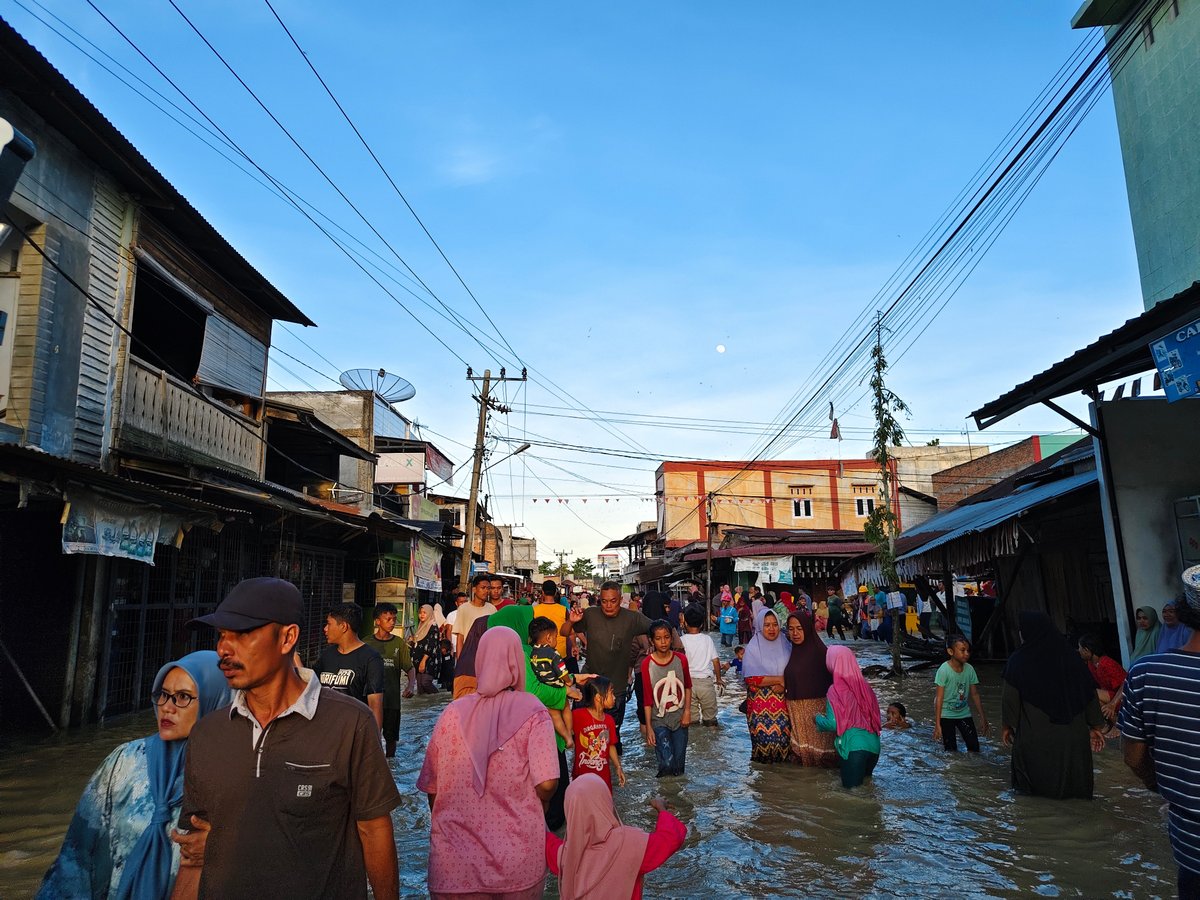
Left · 1Scientific American says the report links climate change since September 2025 to floods in places including Albania, Bali, Brazil, Greece, Indonesia and Vietnam, heat waves in Europe, India and the U.S., and wildfires in Australia and Florida. Scientific AmericanLC “since September 2025 climate change has fueled myriad natural disasters, including floods in Albania, Bali, Brazil, Columbia, Greece, Indonesia, and Vietnam” Read at Scientific American ↗ Left · 2The authors warn of tipping points: possible disruption of the Atlantic Meridional Overturning Circulation and "irreversible" damage to the Amazon, which Wired says could shift from rainforest toward savanna, though crossing that threshold this year is highly unlikely. Wired adds that coral reefs face likely mass bleaching, with most coral unlikely to survive warming beyond 1.5 °C. Scientific AmericanLC “disruptions to the Atlantic Meridional Overturning Circulation (AMOC)” Read at Scientific American ↗ WiredLC “It’s highly unlikely that crossing that tipping point is imminent, let alone something that will happen this year.”“if the planet warms beyond 1.5 degrees Celsius, most of the world’s coral will be unlikely to survive” Read at Wired ↗ Left · 2The report also notes some encouraging signs, with carbon-free energy playing a bigger role in the power grid, which it calls an "Age of Electricity", but annual greenhouse gas emissions remain at record highs. Wolf said "The window for action is narrowing, but it has not closed," and called for rapid emissions cuts and adaptation. WiredLC “Despite that, annual greenhouse gas emissions are at record highs.” Read at Wired ↗ Scientific AmericanLC “The window for action is narrowing, but it has not closed.”” Read at Scientific American ↗
Every sentence links to the reporting it rests on. The pill in front of each says where its sources sit: Left, Centre or Right when one side supplies at least half of them, Mixed when they are evenly split. The number is how many outlets it cites.
Left2 outlets
- Framing
- Both outlets present the report as a stark medical-style diagnosis of a deteriorating planet, quoting its authors directly.
- Emphasis
- Scientific American stresses the numbers, disasters and the narrowing window for action; Wired stresses El Niño, the Amazon and coral risks.
- Leaves out or plays down
- Neither gives outside experts' views or questions the report's methodology.
- Charged language
- “sobering diagnosis”“avalanche of bad news”“climate emergency”
- For example
-
““This is no longer a warning for the future; it is a diagnosis of the present,” the authors write.” — Scientific American
“The report is an avalanche of bad news for the climate” — Wired
Centre0 outlets
No centre outlet in our sources has covered this story yet.
Right0 outlets
No right outlet in our sources has covered this story yet.
What every side reports
- The report was published in BioScience on Wednesday 14 October 2026.
- Seven of 16 vital signs are at record extremes.
- Ocean heat and greenhouse gas levels are at record highs and ice sheets are shrinking.
- The Amazon is at risk of a tipping point.
Left2 articles
-
WiredLC ·
Earth’s Condition Is ‘Serious and Getting Worse’ as Climate Change Intensifies
Alarmist Frames the report through El Niño and the Amazon, with a cigarette metaphor and a political aside about Brazil.
-
Climate scientists issue a sobering diagnosis about Earth's 'vital signs'
Alarmist Leads with scientists' warning that Earth's life-support systems are breaking down, with figures and hope tied to rapid action.
Centre0 articles
No coverage yet.
Right0 articles
No coverage yet.
- 14 Oct 15:00 First WiredLC Earth’s Condition Is ‘Serious and Getting Worse’ as Climate Change Intensifies
- 14 Oct 15:00 First Scientific AmericanLC Climate scientists issue a sobering diagnosis about Earth's 'vital signs'
Times are when each article was published, or when we first saw it if the outlet gave no time.
Ask about this story
Loading…