Police watchdog finds facial recognition checks and custody image retention fall short
An HM Inspectorate of Constabulary and Fire & Rescue Services report on retrospective facial recognition warns that some officers treat matches as evidence, risking wrongful arrests, and that custody images that should have been deleted remain searchable.
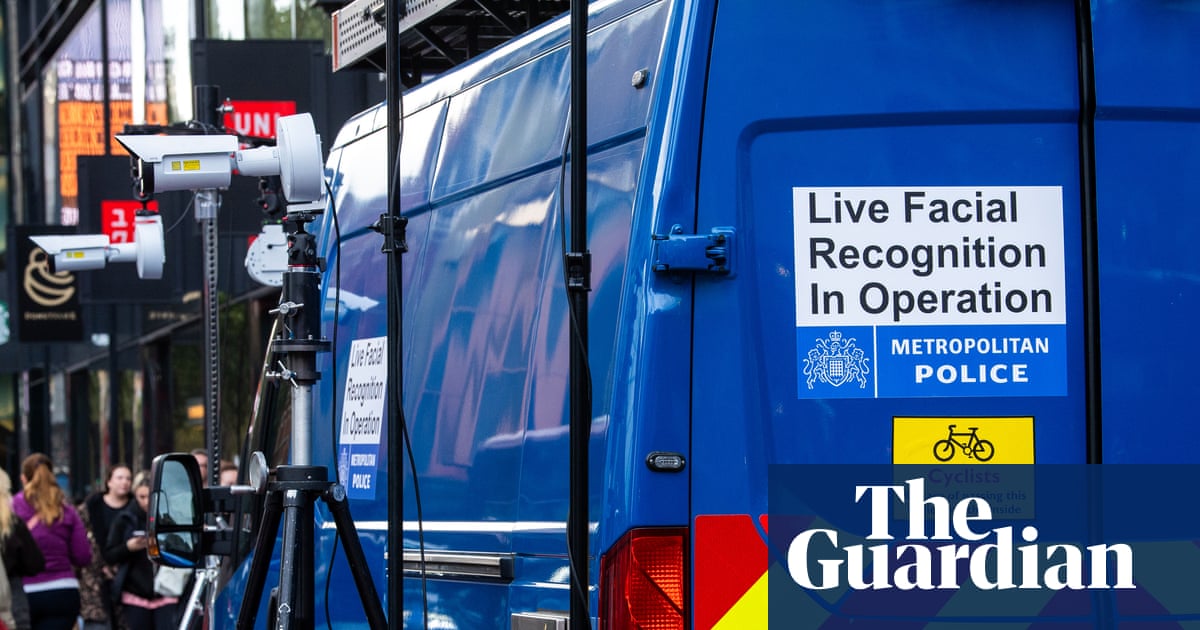

1 / 2
The story, neutrally told
Mixed · 2A report by His Majesty's Inspectorate of Constabulary and Fire and Rescue Services, published on Wednesday 11 November 2026, found that some police officers risk wrongly arresting people if they treat retrospective facial recognition (RFR) results as evidence. The GuardianLC “The report by His Majesty’s Inspectorate of Constabulary, published on Wednesday, covers only retrospective facial recognition.” Read at The Guardian ↗ Evening StandardN “Some investigators didn’t know that RFR results were intelligence rather than evidence and required further inquiries before officers took enforcement action.” Read at Evening Standard ↗ Mixed · 2The inspectors said that in a small number of cases officers relied too heavily on RFR results, which led to inappropriate investigative action, and that experienced investigators generally understood the limits of the technology while less experienced ones often did not. Evening StandardN “less experienced investigators often had a weaker understanding.” Read at Evening Standard ↗ The GuardianLC “In a small number of cases, officers relied too heavily on RFR results, which led to inappropriate investigative action.” Read at The Guardian ↗ Left · 1The Guardian reports the inspectors found continuing bias in the algorithm, including a greater likelihood of wrongly flagging people from ethnic minorities, and that some users uploaded poor-quality probe images such as blurred pictures or images with multiple faces. The GuardianLC “The report said there are still issues with bias in the algorithm, including being more likely to wrongly flag people from ethnic minorities as suspects.”“including blurred images and images containing multiple faces” Read at The Guardian ↗
Mixed · 2Inspectors also found that custody images that should have been deleted under existing retention rules remained available for facial recognition searches, which they said risks undermining public confidence. Evening StandardN “We found that some images which should have been deleted under existing retention rules remained available for facial recognition searches.” Read at Evening Standard ↗ The GuardianLC “custody images that should have been deleted were in fact kept” Read at The Guardian ↗ Mixed · 2The report said legislation has not kept up with the technology and there is no comprehensive statutory framework governing police use of facial recognition, and that governance and oversight were not sufficiently consistent across policing. Evening StandardN “There is no comprehensive statutory framework governing the police use of facial recognition technology.” Read at Evening Standard ↗ The GuardianLC “This makes it more difficult for forces to understand the lawful basis for RFR’s use and what safeguards are needed to protect the public.” Read at The Guardian ↗ Centre · 1The report found some forces were not complying with national audit requirements: of forces in England and Wales, two audited the correct number of RFR files, seven had no auditor appointed and ten audited more than the 1% of records required. Evening StandardN “The report found some forces were not complying with national audit requirements.”“Seven forces had not appointed an auditor.” Read at Evening Standard ↗
Centre · 1Inspectors visited seven police forces (British Transport Police, the Metropolitan Police, Cheshire, Dorset, Gwent, Northumbria and Surrey) and the National Crime Agency in March and April this year, and recommended better national and local governance, clear national standards, and improved oversight and training. Evening StandardN “Inspectors visited seven police forces – British Transport Police, Metropolitan Police and those in Cheshire, Dorset, Gwent, Northumbria and Surrey – and the National Crime Agency, in March and April this year.”“The report made recommendations including improvements to national and local governance, the introduction of clear national standards” Read at Evening Standard ↗ Left · 1His Majesty's Inspector of Constabulary Kathryn Stone said forces must show safeguards are in place, bias and data retention risks are managed and decisions remain subject to human judgment, and called for a clearer statutory framework and stronger national standards. The GuardianLC “A clearer statutory framework, stronger national standards and improved governance and oversight arrangements are essential to maintaining public confidence.” Read at The Guardian ↗ Left · 1Jasleen Chaggar of Big Brother Watch called the findings alarming, said police were not logging their RFR use, and argued police should not continue using the algorithm with so few safeguards and at settings more likely to misidentify women, Asian and black people. The GuardianLC “The revelations that officers are treating facial recognition as bona fide evidence rather than a probability score is alarming.”“police aren’t even logging their use of retrospective facial recognition” Read at The Guardian ↗
Left · 1Ben Russell, the National Police Chiefs' Council lead on facial recognition, said policing remains committed to ethical, proportionate and responsible use of RFR and was pleased the inspectorate recognised its possibilities. The GuardianLC “Policing remains committed to the ethical, proportionate and responsible use of retrospective facial recognition to help investigate crime” Read at The Guardian ↗ Left · 1Prof Pete Fussey of the University of Southampton, formerly a police adviser on facial recognition, said meaningful human scrutiny of AI systems is a legal requirement and that the report gives examples of investigators accepting the computer's suggestions without further checks. The GuardianLC “Meaningful human scrutiny of AI systems is a legal requirement, yet the report gives examples of investigators taking the computer’s suggestions at face value without further checks.” Read at The Guardian ↗ Centre · 1Earlier this month the Home Office pledged tougher laws on police use of live facial recognition, to be introduced under the Police Reform Bill so it is intelligence-led and proportionate, and a new algorithm is being trialled after 2024 concerns that minority ethnic people, women and those in their 20s were more likely to appear in search results. Evening StandardN “Laws will be introduced to Parliament under the Police Reform Bill to make sure police use of facial recognition is “intelligence-led and proportionate””“A new algorithm for the technology is being trialled amid concerns raised in 2024” Read at Evening Standard ↗
Every sentence links to the reporting it rests on. The pill in front of each says where its sources sit: Left, Centre or Right when one side supplies at least half of them, Mixed when they are evenly split. The number is how many outlets it cites.
Left1 outlet
- Framing
- Leads on the risk of wrongful arrest, especially of ethnic minorities, from errors and bias in the technology.
- Emphasis
- Algorithmic bias, poor-quality probe images, and critical voices (Big Brother Watch, Prof Pete Fussey) alongside the inspector and police chiefs.
- Leaves out or plays down
- Does not give the NPCC audit compliance figures or the list of forces inspected.
- Charged language
- “alarming”“bona fide evidence”
- For example
-
“Police officers risk arresting innocent people, especially from ethnic minorities, if they treat inaccurate facial recognition data as evidence, an official report has found.” — The Guardian
Centre1 outlet
- Framing
- Leads on custody photos that should have been deleted still being usable in facial recognition searches.
- Emphasis
- Inconsistent oversight, audit compliance figures, training gaps among junior officers, and the Home Office's planned legislation.
- Leaves out or plays down
- Does not report the report's findings on bias against ethnic minorities or include comment from campaigners or police chiefs.
- For example
-
“Custody photographs that ought to have been deleted are being wrongly retained and can still be picked up in facial recognition searches, a watchdog has warned.” — Evening Standard
Right0 outlets
No right outlet in our sources has covered this story yet.
What every side reports
- The HMICFRS report covers retrospective facial recognition.
- Some investigators did not know RFR results are intelligence rather than evidence.
- In a small number of cases officers relied too heavily on RFR results.
- There is no comprehensive statutory framework governing police use of facial recognition.
- Some custody images that should have been deleted remained available for searches.
Where accounts differ
-
How central ethnic bias and wrongful arrest are to the findings
- Left
- Leads with the risk of wrongful arrest for ethnic minorities and says the report found bias in the algorithm.
- Centre
- Leads with wrongly retained custody images; the report's bias findings are not covered, and bias appears only as a 2024 concern about a new algorithm trial.
HM Inspectorate of Constabulary and Fire & Rescue Services organisation
Says RFR can help but that some investigators fail to corroborate matches, that bias and image retention remain problems, and that a statutory framework and national standards are needed.
“Police forces must be able to show that appropriate safeguards are in place” — The Guardian
“The retention of custody images remains an area of concern” — Evening Standard
Left1 article
-
Facial recognition errors put ethnic minorities at risk of wrongful arrest, police watchdog warns
Critical Presents the report as a warning that biased, error-prone technology risks wrongful arrests of ethnic minorities, with campaigner and academic criticism.
Centre1 article
-
Police mugshots that should have been deleted 'being used in facial recognition tech'
Neutral Reports the watchdog's findings on custody image retention, oversight and audit gaps, with Home Office context.
Right0 articles
No coverage yet.
- 12 Nov 00:01 First The GuardianLC Facial recognition errors put ethnic minorities at risk of wrongful arrest, police watchdog warns
- 12 Nov 00:01 +1m Evening StandardN Police mugshots that should have been deleted 'being used in facial recognition tech'
Times are when each article was published, or when we first saw it if the outlet gave no time.
Ask about this story
Loading…