Maariv poll: Netanyahu's bloc 51 seats, opposition 53, ahead of Oct. 27 election
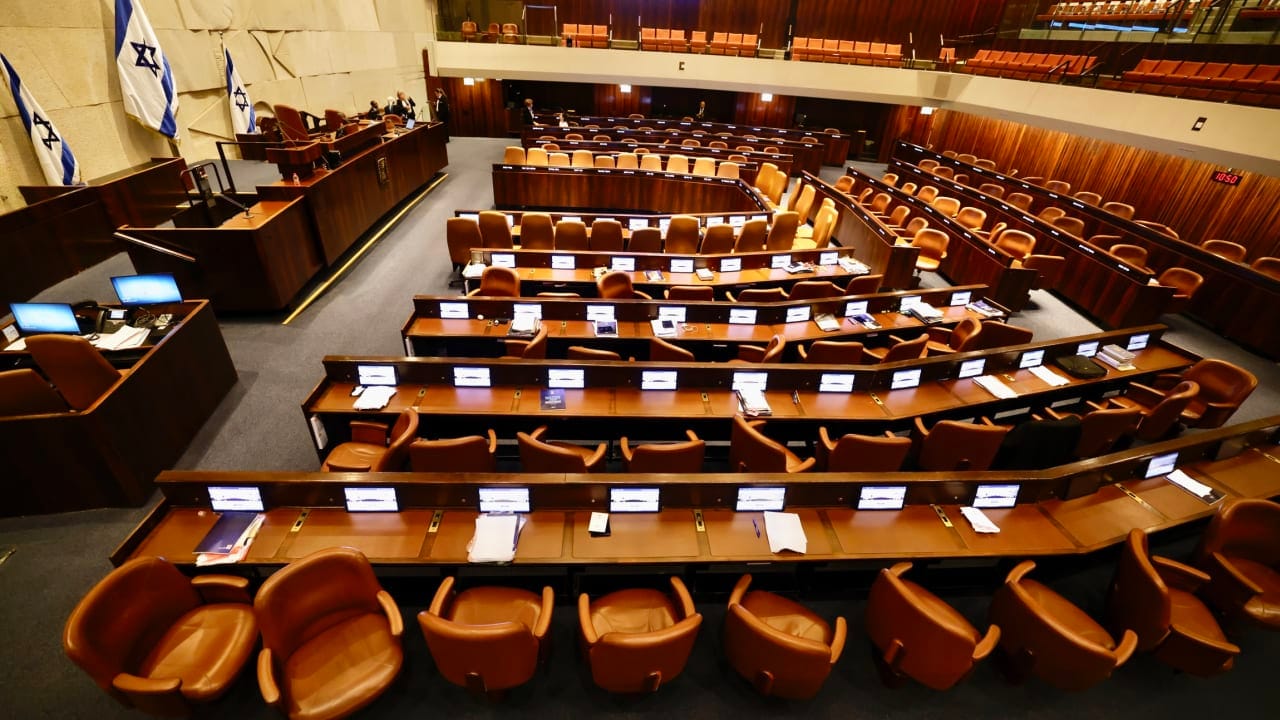
A Maariv poll published on 2 October gives Netanyahu's coalition bloc 51 seats and the Zionist opposition bloc 53. Neither reaches the 61 seats needed for a majority in the 120-seat Knesset.
1 / 2
The story, neutrally told
A Maariv poll published on Friday 2 October showed Prime Minister Benjamin Netanyahu's coalition bloc at 51 seats and the opposition bloc at 53, less than a month before the 27 October general election. The Jerusalem PostRC “the coalition bloc gained two seats this week, rising to 51, while the opposition bloc fell by two seats to 53” Read at The Jerusalem Post ↗ Anadolu AgencyN “Israeli opposition parties would win 53 seats against 51 for Prime Minister Benjamin Netanyahu’s bloc” Read at Anadolu Agency ↗ The coalition gained two seats and the opposition lost two compared with the previous survey, narrowing the gap between the camps to two seats. The Jerusalem Post says the coalition had 49 and the opposition 55 before. Anadolu AgencyN “Netanyahu’s bloc gained two seats compared with the previous survey, while the opposition lost two, narrowing the gap between the camps to two seats.” Read at Anadolu Agency ↗ The Jerusalem PostRC “the coalition bloc received 51 seats, compared with 49 in the previous poll” Read at The Jerusalem Post ↗ The poll also gives 12 seats to Arab parties and four to the Reservists and Economic Party led by Yoaz Hendel. Neither Netanyahu's camp nor the opposition would reach the 61 seats needed to form a government in the 120-member Knesset. Anadolu AgencyN “neither Netanyahu’s camp nor the opposition would reach the 61-seat majority needed to form a government in the 120-member Knesset” Read at Anadolu Agency ↗ The Jerusalem PostRC “the Reservists and Economic Party received four, unchanged from the previous poll, and the Arab parties received 12” Read at The Jerusalem Post ↗
Anadolu adds that most opposition leaders say they will not rely on Arab parties' support to form a government, which leaves the prospects for a governing coalition uncertain. Anadolu AgencyN “Most opposition leaders say they will not rely on Arab parties’ support to form a government, leaving prospects for a governing coalition uncertain.” Read at Anadolu Agency ↗ In the coalition bloc, Likud rose from 18 to 19 seats. Shas and United Torah Judaism each rose from six to seven. Otzma Yehudit (Jewish Power) has nine, Religious Zionism-Zehut fell from six to five, and People of Israel has four. The Jerusalem PostRC “Likud rose to 19 from 18”“United Torah Judaism rose to seven from six, Shas rose to seven from six, Religious Zionism-Zehut fell to five from six” Read at The Jerusalem Post ↗ Anadolu AgencyN “Ben-Gvir’s Jewish Power with nine” Read at Anadolu Agency ↗ In the opposition bloc, Gadi Eisenkot's Yashar fell from 22 to 21 seats, down four over the past month. The Democrats fell from 11 to 10. Bennett's party (B'Yachad/Together) stayed at 13, Yisrael Beytenu at nine, the Joint List at seven and Ra'am at five. The Jerusalem PostRC “Yashar received 21 seats, compared with 22 in the previous poll”“The party lost another seat this week, falling to just 21 seats, a decline of four seats over the past month.” Read at The Jerusalem Post ↗ Anadolu AgencyN “Naftali Bennett’s Together 13, Yair Golan’s Democrats 10, and Avigdor Lieberman’s Yisrael Beytenu nine” Read at Anadolu Agency ↗
The Jerusalem Post reports that the Reservists and People of Israel again crossed the electoral threshold with four seats each but are not yet in safe territory. Blue and White (0.7%), the Haredi Public party (0.6%), Noam (0.4%) and Tzomet Beit Yisrael (0.3%) fell short. The share of undecided voters fell to 6.4%. The Jerusalem PostRC “The Reservists and People of Israel again crossed the electoral threshold this week, receiving four seats each.”“The share of undecided voters also declined, standing at just 6.4% this week.” Read at The Jerusalem Post ↗ On suitability to be prime minister, Eisenkot led Netanyahu 47% to 41%, a gap that narrowed to six points. Bennett led Netanyahu 45% to 41%, and Netanyahu led Avigdor Liberman 44% to 39%. The Jerusalem PostRC “with the difference falling to six percentage points, 47% to 41%” Read at The Jerusalem Post ↗ Anadolu AgencyN “Netanyahu led Lieberman 44% to 39%” Read at Anadolu Agency ↗ The poll also found that 67% of Israelis are concerned about a security event on the scale of 7 October 2023: 43% fairly concerned and 24% very concerned. Another 26% were not concerned and 7% did not know. The Jerusalem Post adds that 65% of coalition voters and 77% of opposition voters share the concern. The Jerusalem PostRC “concern about an event similar to October 7 was shared by both coalition voters, 65%, and opposition voters, 77%” Read at The Jerusalem Post ↗ Anadolu AgencyN “67% of Israelis expressed concern about the possibility of a security incident on the scale of the Oct. 7, 2023 attack” Read at Anadolu Agency ↗
Lazar Research, headed by Dr. Menachem Lazar, conducted the poll with Panel4ALL on 30 September and 1 October. Of 4,413 people invited, 602 took part, and the margin of error is four percentage points. The Jerusalem PostRC “The poll, conducted on September 30 and October 1, was conducted by Lazar Research, headed by Dr. Menachem Lazar” Read at The Jerusalem Post ↗ Anadolu AgencyN “Lazar Research conducted the survey among 602 Israeli adults. Its margin of error was four percentage points.” Read at Anadolu Agency ↗
Every sentence links to the reporting it rests on.
Left0 outlets
No left outlet in our sources has covered this story yet.
Centre1 outlet
- Framing
- Anadolu leads with the bloc totals and the hung-parliament outlook, naming the 'Netanyahu bloc' against the opposition.
- Emphasis
- Lack of a 61-seat majority, uncertainty over forming a government, party leaders' names and the prime-ministerial suitability numbers.
- Leaves out or plays down
- Leaves out the previous seat totals, the threshold parties, the undecided share and the coalition/opposition breakdown of security concern.
- Charged language
- “extremist National Security Minister Itamar Ben-Gvir”
- For example
-
“Under the projections, neither Netanyahu’s camp nor the opposition would reach the 61-seat majority needed to form a government” — Anadolu Agency
Right1 outlet
- Framing
- The Jerusalem Post leads with the narrowing gap between the blocs as security returns to the public agenda, and gives party-by-party movement.
- Emphasis
- Week-on-week seat changes, Yashar's decline, threshold parties, undecided share, security concern split by coalition and opposition voters, and polling methodology.
- Leaves out or plays down
- Does not note that neither bloc reaches 61 seats, or that opposition leaders reject relying on Arab parties.
- Charged language
- “Gaps narrow”
- For example
-
“Against the backdrop of security issues returning to the forefront of the public agenda, the gap between the political blocs continued to narrow” — The Jerusalem Post
What every side reports
- Maariv poll: coalition bloc 51 seats, opposition bloc 53
- Neither bloc reaches the 61 seats needed for a majority
- Arab parties 12 seats, Reservists four
- Eisenkot leads Netanyahu 47% to 41%; Bennett leads 45% to 41%; Netanyahu leads Liberman 44% to 39%
- 67% are concerned about an October 7-scale security event
- 602 respondents, margin of error four points
Benjamin Netanyahu person
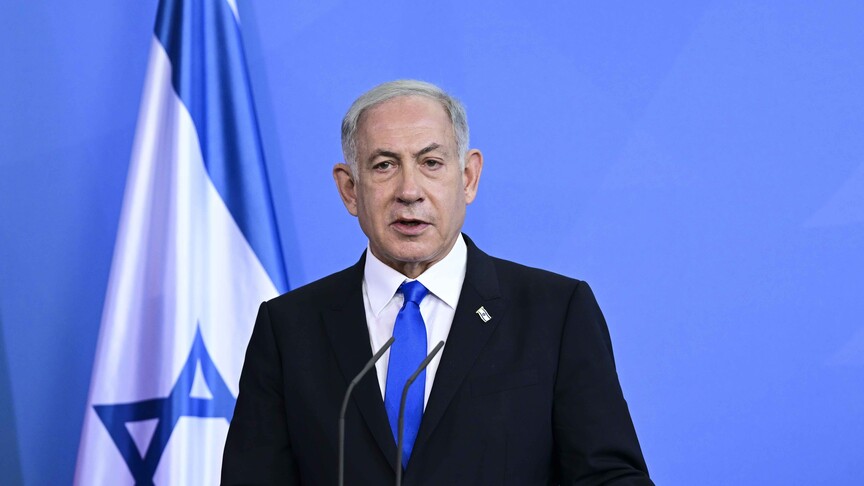
Netanyahu's bloc gained two seats, and he narrowed his deficit to Eisenkot to six points but still trails Eisenkot and Bennett head to head. Coverage gives no statement from Netanyahu himself.
“Prime Minister Benjamin Netanyahu narrowed the gap with Eisenkot this week” — The Jerusalem Post
“Bennett led Netanyahu by 45% to 41%” — Anadolu Agency
Left0 articles
No coverage yet.
Centre1 article
-
Netanyahu bloc projected to win 51 seats in Oct. 27 elections, opposition 53: Poll
Neutral Concise poll report framed around the hung-Knesset outlook and Netanyahu's bloc, with one charged descriptor for Ben-Gvir.
Right1 article
-
Gaps narrow between coalition, opposition blocs as security is spotlighted in public agenda - poll
Neutral Detailed poll report stressing the narrowing gap and security concerns.
- 2 Oct 06:40 First The Jerusalem PostRC Gaps narrow between coalition, opposition blocs as security is spotlighted in public agenda - poll
- 2 Oct 10:21 +3h 42m Anadolu AgencyN Netanyahu bloc projected to win 51 seats in Oct. 27 elections, opposition 53: Poll
Times are when each article was published, or when we first saw it if the outlet gave no time.