Possible world's oldest shipwreck, about 4,700 years old, found off Turkey's Kekova Island
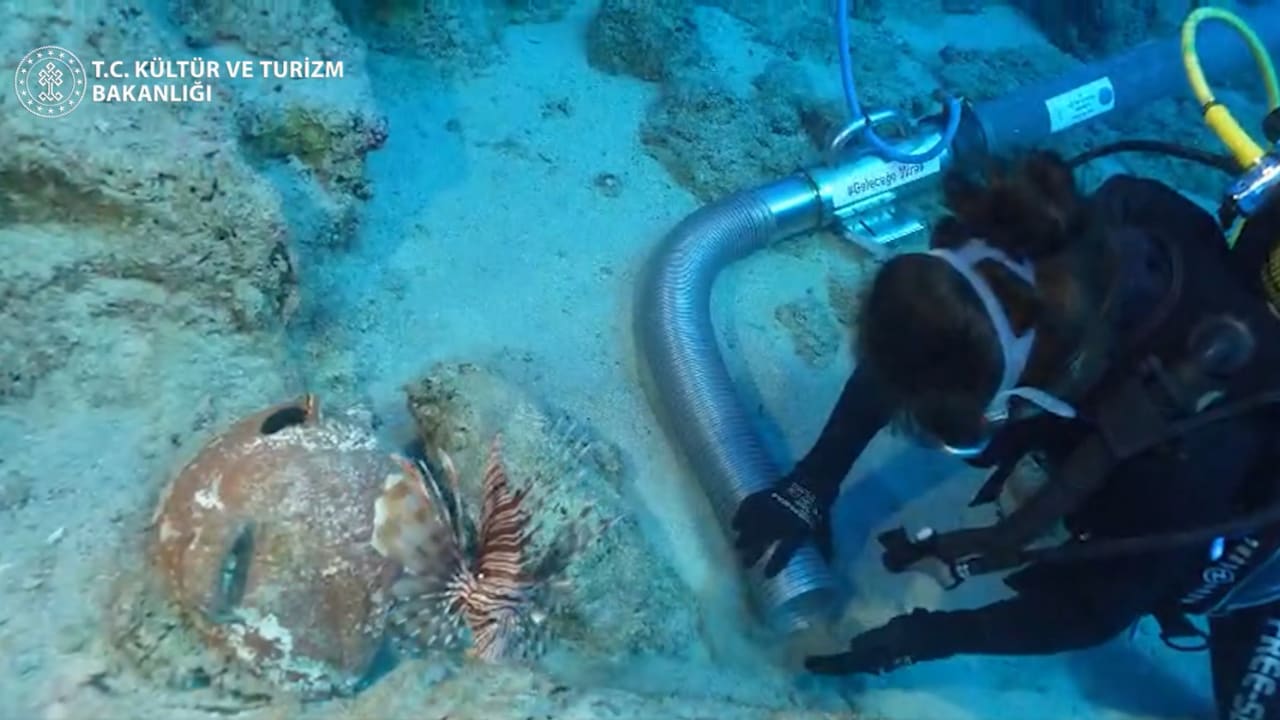
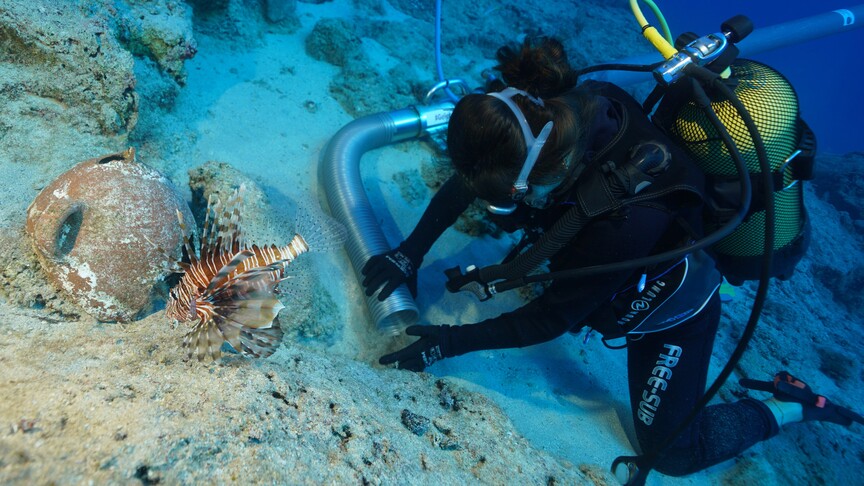
Turkish archaeologists say a wreck near Kekova Island, Antalya, carrying amphorae about 4,700 years old, is the world's oldest known shipwreck. Anadolu reports Guinness World Records has now recognised it.
1 / 2
The story, neutrally told
Mixed · 2Turkey's Culture and Tourism Minister Mehmet Nuri Ersoy announced on 14 October 2026 that amphorae about 4,700 years old, from what he called the world's oldest shipwreck, had been found near Kekova Island in Antalya province. Anadolu AgencyN “Turkish Culture and Tourism Minister Mehmet Nuri Ersoy announced on Oct. 14 that around 4,700-year-old amphorae belonging to the world's oldest shipwreck had been discovered near Kekova Island in Antalya.” Read at Anadolu Agency ↗ The Jerusalem PostRC “Evidence of what may be the world's oldest shipwreck was discovered off the coast of Kekova, Turkish Tourism and Culture Minister Mehmet Ersoy announced on X/Twitter.” Read at The Jerusalem Post ↗ Right · 1The Jerusalem Post, citing the BBC, reports that three stone anchors and some 30 amphorae were uncovered, and that the amphorae date to the Bronze Age, roughly 4,400 to 4,700 years ago. The Jerusalem PostRC “Three stone anchors and some 30 amphorae were uncovered, according to the BBC.”“approximately 4,400 to 4,700 years ago” Read at The Jerusalem Post ↗ Right · 1Prof. Hakan Öniz of Akdeniz University, who led the expedition for the Mediterranean Archaeology Association, told the BBC that comparing decoration techniques means the wreck is Early Bronze Age "100%". The Jerusalem PostRC “we can definitely say our wreck is Early Bronze Age. This is 100%.” Read at The Jerusalem Post ↗
Right · 1Clay analysis indicates the amphorae were probably made in workshops in the Jordan Valley, and similar examples have been found in Egypt, Troy and Crete. The Jerusalem PostRC “Analysis of the vessels shape indicate that they had likely been produced in workshops in the Jordan Valley, similar to others found in Egypt, Troy, and Crete.” Read at The Jerusalem Post ↗ Right · 1One amphora with nine distinct markings and two holes in its body may have been used as a cheese or butter churn, which the Jerusalem Post says suggests Bronze Age sailors might have made their own food on long voyages. The Jerusalem PostRC “The vessel is thought to have been used as a cheese or butter churn, indicating that Bronze Age sailors might have made their own food during long voyages.” Read at The Jerusalem Post ↗ Right · 1Macquarie University archaeologist Dr Karin Sowada, quoted by the BBC, said some amphorae held a glossy residue that could be olive oil, wine or tree resins, and could result from the jars being reused over many years. The Jerusalem PostRC “It could be olive oil, it could be wine, it could be tree resins.”“It's possible that [the residue] could actually be the result of reuse of the jars.” Read at The Jerusalem Post ↗
Centre · 1Anadolu Agency reported on 4 November that the wreck has entered Guinness World Records as the world's oldest shipwreck, according to Öniz, who said this was officially announced this week. Anadolu AgencyN “The shipwreck we discovered in the Kekova region entered Guinness World Records this week as the 'world's oldest shipwreck,' and this was officially announced,” Read at Anadolu Agency ↗ Centre · 1Öniz told Anadolu that the team found the wreck in 2024 during coastal and surface surveys and first thought it was Ottoman, 100 to 400 years old; similar amphorae in publications from Egypt led them to return with ministry permission and recognise an Early Bronze Age wreck lying 35-40 metres deep. Anadolu AgencyN “We discovered the Kekova wreck in 2024, but when we first found it, we thought it belonged to the Ottoman period,”“located at a depth of 35-40 meters (115-131 feet)” Read at Anadolu Agency ↗ Centre · 1The finds are being conserved at a regional laboratory and Akdeniz University's underwater archaeology laboratory in Kemer, and Öniz said they will be shown in coming months at the "Four Seas, One Museum" in Istanbul's Haydarpasa district and at the Mediterranean Underwater Archaeology Museum in Kemer, Antalya, which is nearing completion. Anadolu AgencyN “artifacts recovered from the shipwreck would be displayed in the coming months at the newly completed "Four Seas, One Museum" in Istanbul's Haydarpasa district.” Read at Anadolu Agency ↗
Every sentence links to the reporting it rests on. The pill in front of each says where its sources sit: Left, Centre or Right when one side supplies at least half of them, Mixed when they are evenly split. The number is how many outlets it cites.
Left0 outlets
No left outlet in our sources has covered this story yet.
Centre1 outlet
- Framing
- Anadolu Agency treats the wreck as established as the world's oldest, led by the Guinness recognition and national pride in Turkish underwater archaeology.
- Emphasis
- Discovery history, Öniz's account, the Guinness listing, planned museum displays and Turkey's standing in the field.
- Leaves out or plays down
- Does not mention the Jordan Valley origin, the possible churn, the residue or any outside expert caution.
- Charged language
- “source of pride”
- For example
-
“"This is a source of pride for us.” — Anadolu Agency
“has entered Guinness World Records as the world's oldest shipwreck” — Anadolu Agency
Right1 outlet
- Framing
- The Jerusalem Post presents the find cautiously as evidence of what "may be" the oldest shipwreck, relaying the BBC's reporting and the minister's post, with a human-interest angle on ancient sailors.
- Emphasis
- Cargo details, the Jordan Valley origin of the amphorae, the possible churn and the residue, with an outside expert's caution about reuse.
- Leaves out or plays down
- Does not mention the 2024 discovery, the initial Ottoman-era assumption, the depth, or Guinness recognition.
- Charged language
- “time capsule at the bottom of the sea”
- For example
-
“"The shipwreck is a time capsule at the bottom of the sea,"” — The Jerusalem Post
“Evidence of what may be the world's oldest shipwreck was discovered” — The Jerusalem Post
What every side reports
- The wreck lies near Kekova Island off Antalya, Turkey.
- Its amphorae are about 4,700 years old, from the Early Bronze Age.
- Minister Mehmet Nuri Ersoy announced the find on 14 October 2026.
- Prof. Hakan Öniz of Akdeniz University leads the scientific work.
Where accounts differ
-
Certainty of the 'oldest shipwreck' label
- Centre
- Anadolu states it is the world's oldest, now in Guinness World Records.
- Right
- The Jerusalem Post says it 'may be' the world's oldest.
Left0 articles
No coverage yet.
Centre1 article
-
World's oldest shipwreck discovered off Türkiye's coast enters Guinness World Records
Celebratory Reports the Guinness recognition with Turkish pride and policy context, quoting the lead archaeologist.
Right1 article
-
Evidence of what may be world’s oldest shipwreck found in underwater excavations off Turkish isle
Neutral Relays BBC and ministry statements, hedging with 'may be' and including an outside expert's caveat.
- 31 Oct 23:24 First The Jerusalem PostRC Evidence of what may be world’s oldest shipwreck found in underwater excavations off Turkish isle
- 4 Nov 10:35 +83h 12m Anadolu AgencyN World's oldest shipwreck discovered off Türkiye's coast enters Guinness World Records
Times are when each article was published, or when we first saw it if the outlet gave no time.
Ask about this story
Loading…