Jonathan Blow's puzzle game Order of the Sinking Star releases with about 1,500 puzzles
Order of the Sinking Star, Jonathan Blow's first game in about a decade, is due out Thursday with roughly 1,500 puzzles. The BBC interviewed Blow; Screen Rant's review praised the game while noting frustrations with its story and voice acting.

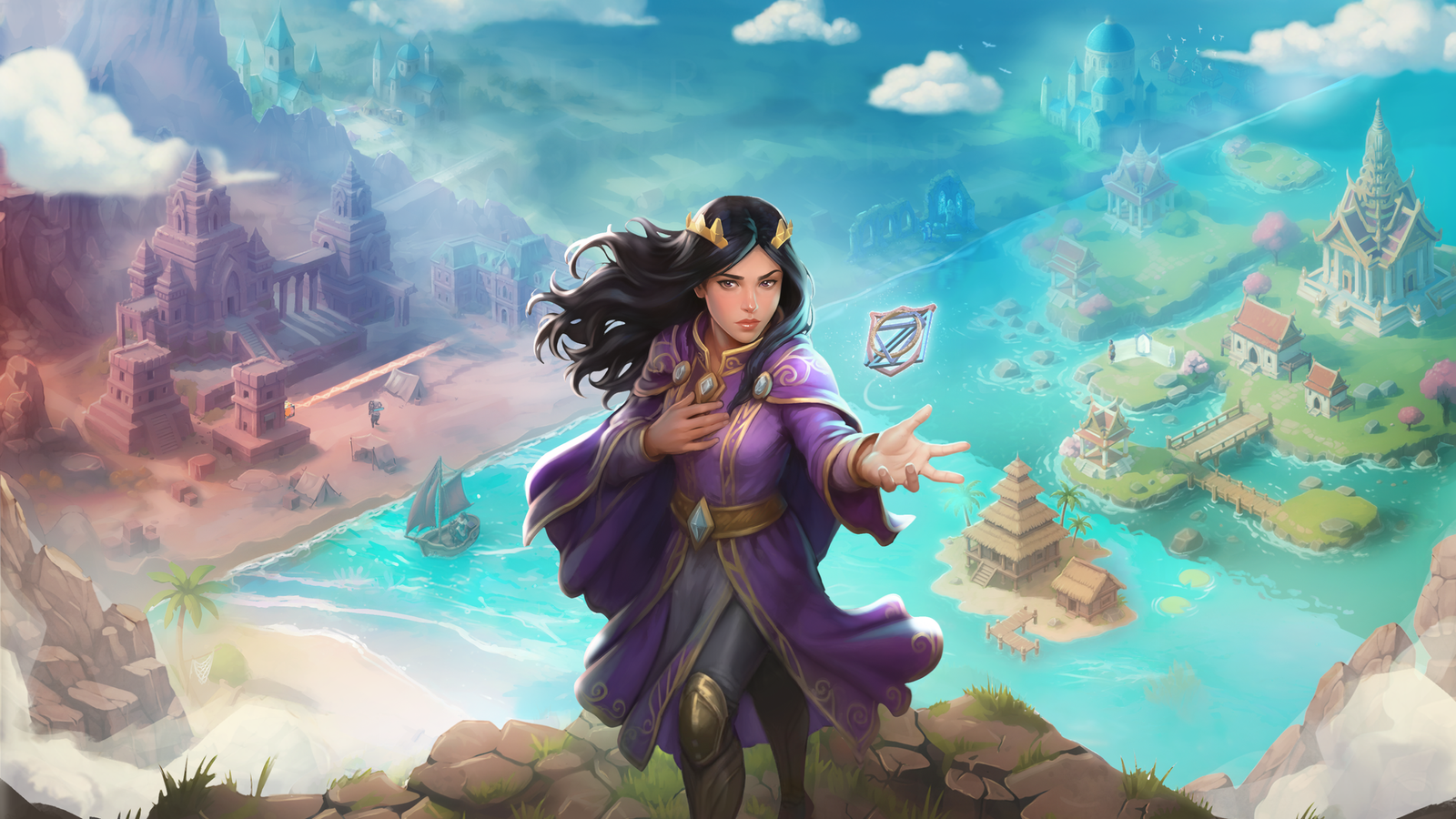
1 / 2
The story, neutrally told
Centre · 2Order of the Sinking Star, a puzzle game from American developer Jonathan Blow and his small team at Thekla Inc., is due to be released on Thursday, according to the BBC. BBC NewsN “The Order of the Sinking Star is due to be released on Thursday” Read at BBC News ↗ Screen RantN “Thekla Inc.'s latest is an epic of the form” Read at Screen Rant ↗ Centre · 1Blow says it has roughly 1,500 puzzles and estimates it could take around 500 hours to complete. He calls it "the biggest puzzle game ever made". BBC NewsN “a game with roughly 1,500 puzzles that he estimates could take around 500 hours to complete”“the biggest puzzle game ever made” Read at BBC News ↗ Centre · 1Screen Rant's reviewer cited "apparent 1,000+ puzzles" and said they could not think of another puzzle game of comparable scale. Screen RantN “nor whether I have what it takes to best its apparent 1,000+ puzzles”“I struggle to think of another puzzle game with comparable scale.” Read at Screen Rant ↗
Centre · 1It is Blow's first project since The Witness, and he is best known for the 2008 puzzle-platformer Braid. The BBC reports it took ten years and began as a simple "design experiment". BBC NewsN “a decade on from his last project, The Witness”“creating the genre-defining puzzle-platformer Braid in 2008”“started as a simple "design experiment"” Read at BBC News ↗ Centre · 2The game has four worlds viewed from overhead, built on the mechanics of four existing free puzzle games by other designers, used with their permission. Those ideas are combined to create new puzzles. One example is Alan Hazelden's 2014 game Mirror Isles, whose mirror-swapping mechanic is combined with Hazelden's Skipping Stones to Lonely Homes. BBC NewsN “built on the mechanics of four pre-existing free puzzle games from other designers (with their permission to do so)”“the free 2014 game Mirror Isles by Alan Hazelden” Read at BBC News ↗ Screen RantN “its starting point of four (formally licensed) independent projects” Read at Screen Rant ↗ Centre · 1Blow made his own programming language, Jai, and used it with a custom engine to build the game. He says this let him build something "tuned and authored very specifically" to his aims, and that he would like his next project to be less on "hard mode". BBC NewsN “The developer decided to make his own programming language, Jai, from scratch.”“I do want the next project after this to be less on hard mode” Read at BBC News ↗
Centre · 1Blow says AI was "not part of the pipeline at all" for the game. He is sceptical of claims about AI productivity and worries that fewer people may learn to program. BBC NewsN “"not part of the pipeline at all" for Order of the Sinking Star”“A danger is that not many people know how to program in the future” Read at BBC News ↗ Centre · 1The BBC notes that in December 2025 Hazelden publicly distanced himself from Blow in a Bluesky post, describing him as "dismissive of diversity efforts" and "pro-MAGA". Blow has not responded publicly to these critiques and told the BBC he decided to "sit down and focus on the games". BBC NewsN “In December 2025, Hazelden publicly distanced himself from Blow”“Blow, who has not responded to these critiques publicly, tells me he instead decided to "sit down and focus on the games".” Read at BBC News ↗ Centre · 1Screen Rant's review calls the game a "Maxed-Out Puzzle Game Masterpiece", praising its visuals, atmosphere, orchestral soundtrack and generous undo function. It says the game can feel overwhelming, is not exactly beginner-friendly, and teaches its rules less patiently than The Witness. Screen RantN “Order of the Sinking Star Review: A Maxed-Out Puzzle Game Masterpiece”“I wouldn’t call the game beginner-friendly, exactly”“Order of the Sinking Star is much less patient and formal” Read at Screen Rant ↗
Centre · 1The reviewer criticises the cryptic narrative, which they say is hard to follow at first, and some voice performances, though they say neither undermined their esteem for the game. Screen RantN “though some voice performances dampen the experience”“little of it read as coherent at first” Read at Screen Rant ↗
Every sentence links to the reporting it rests on. The pill in front of each says where its sources sit: Left, Centre or Right when one side supplies at least half of them, Mixed when they are evenly split. The number is how many outlets it cites.
Left0 outlets
No left outlet in our sources has covered this story yet.
Centre2 outlets
- Framing
- The BBC runs a creator profile and interview about why the game took ten years, with Blow's views on the industry and AI. Screen Rant publishes a very positive review focused on gameplay, visuals and sound.
- Emphasis
- The BBC stresses scale, Blow's uncompromising approach, the custom language and engine, and his AI scepticism. Screen Rant stresses puzzle design, presentation and the undo function.
- Leaves out or plays down
- Screen Rant does not mention the Hazelden criticism or Blow's views on AI. The BBC includes no hands-on assessment of the game's quality.
- Charged language
- “biggest puzzle game ever”“Masterpiece”“utterly sublime”
- For example
-
“For ten years, Jonathan Blow has been working with a small team on what he believes is "the biggest puzzle game ever made".” — BBC News
“Ingenious, frustrating, and utterly sublime.” — Screen Rant
Right0 outlets
No right outlet in our sources has covered this story yet.
What every side reports
- Order of the Sinking Star is from Jonathan Blow and Thekla Inc.
- It builds on four licensed, pre-existing independent puzzle games.
- It is Blow's follow-up to The Witness and was made over about a decade.
Where accounts differ
-
How many puzzles the game contains
- Centre
- The BBC says roughly 1,500, citing Blow. Screen Rant's reviewer refers to an "apparent 1,000+ puzzles".
Order of the Sinking Star product
Presented by its creator as an uncompromising, design-led project with about 1,500 puzzles, and by Screen Rant as an approachable but sometimes overwhelming puzzle epic.
“I let the design dominate that process. But then because we did that, we always have something unique” — BBC News
“which can admittedly become overwhelming” — Screen Rant
UK and Ireland1 outlet
The BBC treats the release as a news and profile piece on the creator and his stance on industry trends.
“its creator explains why it took 10 years” — BBC News
BBC News
North America1 outlet
Screen Rant treats it as a consumer review of the game itself.
“An encyclopedic collection of visually sumptuous puzzles” — Screen Rant
Screen Rant
Left0 articles
No coverage yet.
Centre2 articles
-
The ‘biggest puzzle game ever’ is being released – its creator explains why it took 10 years
Neutral Interview-driven profile of Blow explaining the game's scale, long development and his views on AI, with context on the Hazelden criticism.
-
Screen RantN · · Opinion
Order of the Sinking Star Review: A Maxed-Out Puzzle Game Masterpiece
Celebratory Highly favourable review calling the game an epic of the form, with minor criticism of story and voice acting.
Right0 articles
No coverage yet.
- 7 Oct 00:01 First BBC NewsN The ‘biggest puzzle game ever’ is being released – its creator explains why it took 10 years
- 7 Oct 14:00 +13h 59m Screen RantN Order of the Sinking Star Review: A Maxed-Out Puzzle Game Masterpiece Opinion
Times are when each article was published, or when we first saw it if the outlet gave no time.