Rare narrow-headed ant nest stolen from Devon reserve, England's last site for the species
Devon Wildlife Trust says a nest of up to 5,000 narrow-headed ants was dug up and taken from Chudleigh Knighton Heath, the last place the species lives in England. The theft has been reported to Devon and Cornwall Police.

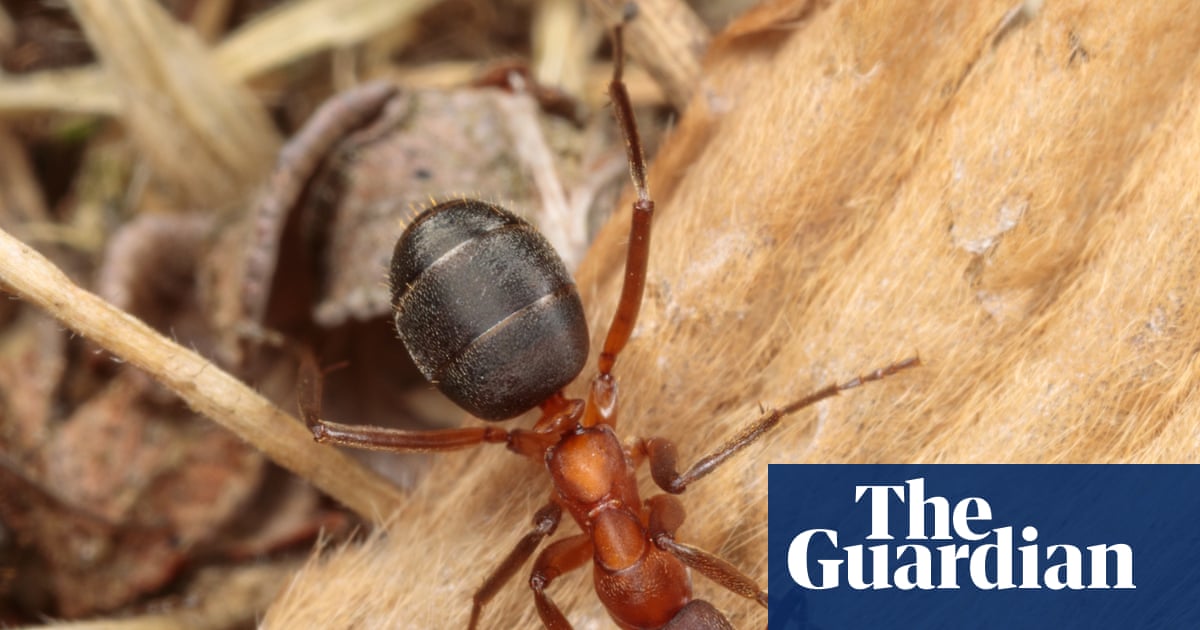

1 / 3
The story, neutrally told
Mixed · 2Devon Wildlife Trust (DWT) says a nest of narrow-headed ants was dug up and taken from its Chudleigh Knighton Heath nature reserve in south Devon, the last place in England where the species survives. The GuardianLC “a nest of narrow-headed ants had been dug up and taken from Chudleigh Knighton Heath nature reserve in south Devon” Read at The Guardian ↗ Daily ExpressR “removed without permission from its Chudleigh Knighton Heath nature reserve in south Devon” Read at Daily Express ↗ Mixed · 2A single nest can hold between 1,000 and 5,000 ants, along with one or more breeding queens that can live for up to 25 years. The GuardianLC “A single nest can hold a colony of between 1,000 and 5,000 ants, along with one or more breeding queens” Read at The Guardian ↗ GB NewsR “A single nest can hold a colony of 1,000 to 5,000 ants” Read at GB News ↗ Mixed · 2Conservation researchers found the theft in mid-October during regular checks: a hole where a known nest had been, with clear signs of digging with a spade. The GuardianLC “found a hole where a known nest had been and “clear signs of digging with a spade”” Read at The Guardian ↗ GB NewsR “Conservation researchers discovered the theft during regular checks at known nest sites in mid-October.” Read at GB News ↗
Right · 2The site is a Site of Special Scientific Interest, and the ant is a Section 41 species, classed as Nationally Rare and Near Threatened on the IUCN Red List. Its numbers have fallen over the past 100 years as heathland was lost to development and agricultural change. Daily ExpressR “Chudleigh Knighton Heath is a Site of Special Scientific Interest (SSSI)” Read at Daily Express ↗ GB NewsR “it has dwindled over the past 100 years as its favoured heathland homes gave way to building development and agricultural change” Read at GB News ↗ Mixed · 2Julia Balfour of DWT called the removal a "significant loss", saying mature nests represent many years of growth that cannot quickly be replaced, and that the crime is "every bit as serious as illegal raids on wild bird eggs". Daily ExpressR “This is a crime every bit as serious as illegal raids on wild bird eggs.” Read at Daily Express ↗ The GuardianLC “each mature nest, with its long-lived queens, represents many years of growth that cannot quickly be replaced” Read at The Guardian ↗ Right · 2The Express quotes Balfour as saying the latest survey recorded 142 active nests on the reserve, while GB News says there are fewer than 150 known nests; small numbers of colonies remain in Scotland, including on the Balmoral Estate, according to the Express. Daily ExpressR “Our most recent survey recorded 142 active nests on the nature reserve, so every nest matters.”“A small number of colonies still exist in Scotland, including on the Royal Family’s Balmoral Estate.” Read at Daily Express ↗ GB NewsR “with fewer than 150 known nests in the reserve” Read at GB News ↗
Left · 1Stephen Hussey of DWT told the Guardian the thief must have had prior knowledge of ants, because the nests are not obvious to a layperson. He said the motive was hard to guess but could be an attempt to "rewild" the ants elsewhere or collecting by an insect collector, and that moving one nest is unlikely to succeed. The GuardianLC “it could have been an attempt to “rewild” nature by placing the ants back in their former habitats.”“Another possibility was that the ants had been taken by an insect collector, he added.” Read at The Guardian ↗ Mixed · 2The theft has been reported to Devon and Cornwall Police. PC Lucy Wyatt said SSSIs are legally protected and it is a criminal offence to intentionally or recklessly damage, destroy or disturb them, and the public is asked to pass on information through the force's website. DWT is reviewing the reserve's security and will continue regular ant checks. The GuardianLC “DWT said that it was reviewing the security of its nature reserve and would be continuing regular ant checks.” Read at The Guardian ↗ GB NewsR “The force urges members of the public to report information about the theft through its website.” Read at GB News ↗ Right · 2The theft follows the start of a three-year DWT and Buglife project to improve the ants' heathland habitat. GB News says it was backed by more than £200,000 of Government money and announced in September; the Express says the collaboration began in the summer. GB NewsR “a three-year collaboration with invertebrate conservation charity Buglife, after securing more than £200,000 from the Government” Read at GB News ↗ Daily ExpressR “A collaboration between Devon Wildlife Trust and Buglife began in the summer, following support from the Government.” Read at Daily Express ↗
Every sentence links to the reporting it rests on. The pill in front of each says where its sources sit: Left, Centre or Right when one side supplies at least half of them, Mixed when they are evenly split. The number is how many outlets it cites.
Left1 outlet
- Framing
- Guardian leads on the 'reckless' theft setting back years of conservation work, and gives space to DWT's speculation about the thief's motive.
- Emphasis
- Hussey's view that the thief needed expertise, the rewilding or collector possibilities, and DWT's security review.
- Leaves out or plays down
- No nest count or mention of the Government-funded Buglife project.
- Charged language
- “reckless”
- For example
-
“Devon nature reserve says ‘reckless’ theft of narrow-headed ant colony sets back years of conservation work” — The Guardian
“it could have been an attempt to “rewild” nature by placing the ants back in their former habitats.” — The Guardian
Centre0 outlets
No centre outlet in our sources has covered this story yet.
Right2 outlets
- Framing
- Express and GB News lead on thieves striking England's last stronghold, stressing the scale of loss, with GB News calling it a 'shocking theft'.
- Emphasis
- Nest numbers, the Government-backed conservation project, and the species' protected status.
- Leaves out or plays down
- Neither reports Hussey's comments on possible motives or the security review.
- Charged language
- “Thieves have struck”“The shocking theft”“5,000 vanish”
- For example
-
“Thieves have struck at the last stronghold of England’s rarest ant species” — Daily Express
“The shocking theft has now been reported to Devon and Cornwall police.” — GB News
What every side reports
- A narrow-headed ant nest was dug up and taken from Chudleigh Knighton Heath, Devon, England's last site for the species.
- The theft was found in mid-October during routine checks, with signs of digging with a spade.
- It has been reported to Devon and Cornwall Police, which cites SSSI legal protection.
- DWT's Julia Balfour called it a significant loss and compared it to raids on wild bird eggs.
Where accounts differ
-
Number of known nests on the reserve and when the Buglife project began
- Left
- The Guardian gives no nest count or project timing.
- Right
- The Express cites 142 active nests in the latest survey and says the project began in the summer; GB News says fewer than 150 known nests and that the project was announced in September.
-
A narrow-headed ant nest was dug up and removed from Chudleigh Knighton Heath, Devon, the last place in England where the species survives.
Reported- Reports 3
- The Guardian, Daily Express, GB News
-
The theft was discovered in mid-October during regular checks, with signs of digging with a spade.
Reported- Reports 3
- The Guardian, Daily Express, GB News
Devon Wildlife Trust organisation
DWT says the theft is a serious crime and a significant loss, sets back years of work, and prompts a security review; it asks the public for information.
“losing even one colony sets back years of careful work by our staff, volunteers and partners” — Daily Express
“DWT said that it was reviewing the security of its nature reserve” — The Guardian
Narrow-headed ant other
The species is England's rarest ant, now found in one place in England, with colonies growing slowly and queens living up to 25 years.
“Now they are classified as a section 41 species, nationally rare, and near threatened” — The Guardian
Left1 article
-
Rare ant nest stolen from last place in England where species survives
Sympathetic Conservation-focused account that adds DWT's thoughts on motive and the security review.
Centre0 articles
No coverage yet.
Right2 articles
-
Thieves steal rare ant colony from last stronghold in England
Alarmist Crime-report style lead about thieves striking, with DWT and police quotes and the nest count.
-
GB NewsR ·
Rare ants stolen from England’s last remaining colony as 5,000 vanish from nature reserve
Alarmist Dramatic headline and 'shocking theft' wording, with added detail on funding and the species' habits.
- 2 Nov 09:39 First Daily ExpressR Thieves steal rare ant colony from last stronghold in England
- 2 Nov 15:00 +5h 22m The GuardianLC Rare ant nest stolen from last place in England where species survives
- 3 Nov 03:58 +18h 20m GB NewsR Rare ants stolen from England’s last remaining colony as 5,000 vanish from nature reserve
Times are when each article was published, or when we first saw it if the outlet gave no time.
Ask about this story
Loading…