Copernicus report: polar oceans warming fast as sea ice and wildlife habitat shrink
The 10th Copernicus Ocean State Report, published 30 September, says the Arctic is warming rapidly, sea ice is shrinking and wildlife is losing habitat at both poles.
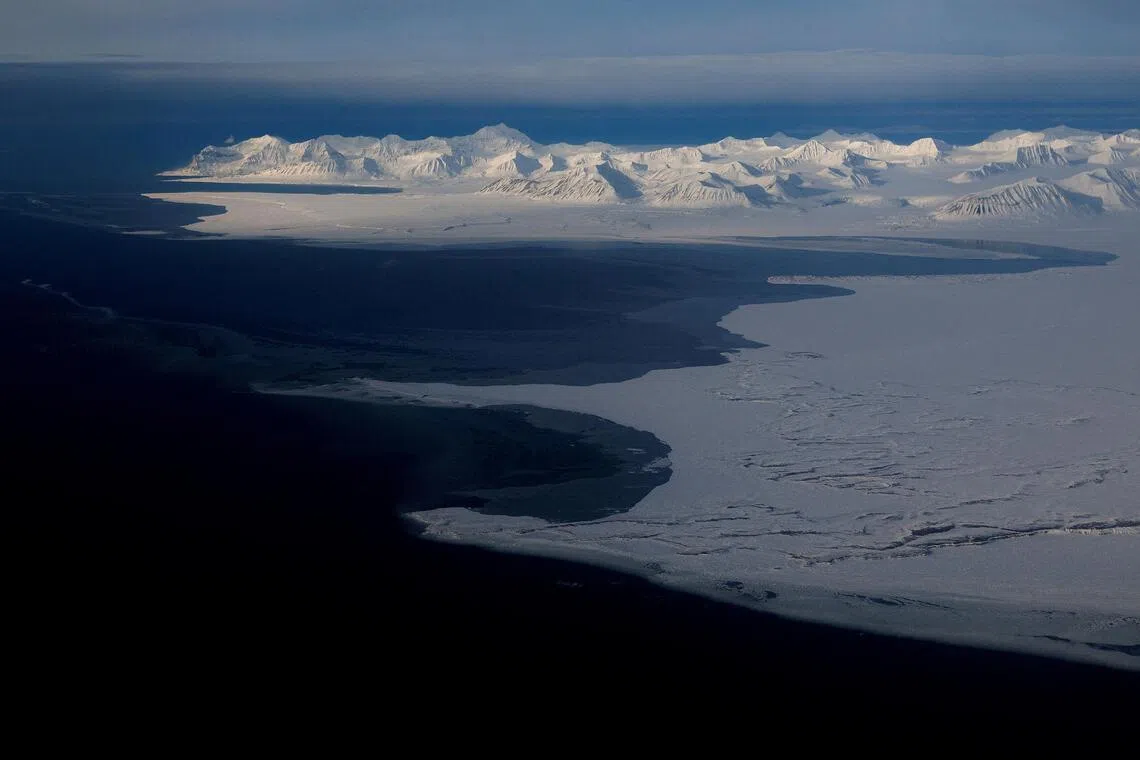

1 / 2
The story, neutrally told
An annual report released on 30 September said climate change is increasingly reshaping the polar oceans, with Arctic waters warming rapidly, sea ice shrinking and wildlife losing habitat at both ends of the planet. The Straits TimesRC “Climate change is increasingly reshaping the polar oceans, with Arctic waters warming rapidly, sea ice shrinking and wildlife losing habitat at both ends of the planet” Read at The Straits Times ↗ France 24N “an annual report said Wednesday” Read at France 24 ↗ The Copernicus Ocean State Report also describes changes across the world's seas, including record-breaking heatwaves in the Mediterranean and Black seas, shifts in marine ecosystems and increasingly acidic waters. France 24N “record-breaking heatwaves in the Mediterranean and Black seas to shifts in marine ecosystems and increasingly acidic waters” Read at France 24 ↗ Pierre Bahurel, director general of Mercator Ocean International, which runs the EU's Copernicus Marine Service, said: "The message is very clear. The ocean is changing rapidly." The Straits TimesRC ““The message is very clear. The ocean is changing rapidly,” said Pierre Bahurel” Read at The Straits Times ↗
The report says the Arctic's combined sea surface and sea-ice surface temperature rose 4.2 deg C between 1982 and 2024, about 1 deg C per decade, against 0.12 deg C per decade for global sea surface temperatures. The Straits TimesRC “rose 4.2 deg C between 1982 and 2024, or around 1 deg C per decade”“global sea surface temperatures have been increasing by 0.12 deg C per decade” Read at The Straits Times ↗ In the Kara Sea north of Siberia, temperatures have climbed by 6.7 deg C since 1982. The Straits TimesRC “temperatures have climbed by 6.7 deg C since 1982, or 1.68 deg C per decade” Read at The Straits Times ↗ Arctic sea ice has shrunk by nearly half a million square kilometres per decade since 1979, an area the size of Spain every 10 years, and the retreat exposes coasts to erosion. The Straits TimesRC “equivalent to losing an area the size of Spain every 10 years”“worsening coastal erosion and raising risks for coastal communities and infrastructure” Read at The Straits Times ↗
Report director Karina von Schuckmann said the decline leaves around 60 per cent of coastal infrastructure vulnerable to erosion and sea level rise. The Straits TimesRC “leaving around 60 per cent of coastal infrastructure vulnerable to erosion and sea level rise” Read at The Straits Times ↗ In Antarctica, record-low sea ice in 2022 coincided with the first recorded large-scale breeding failure of emperor penguins, which the IUCN upgraded to "endangered" in April. The Straits TimesRC “Record-low Antarctic sea ice in 2022 coincided with the first-ever recorded large-scale breeding failure of emperor penguins”“upgraded from “near threatened” to “endangered” by the IUCN” Read at The Straits Times ↗ The report says more than 90 per cent of emperor penguin colonies could be near-extinct by 2100 if sea ice loss continues at its current rate. The Straits TimesRC “could be near-extinct by 2100 if sea ice loss persists at its current rate” Read at The Straits Times ↗
Every sentence links to the reporting it rests on.
Left0 outlets
No left outlet in our sources has covered this story yet.
Centre1 outlet
- Framing
- A short video-page item that summarises the report's headline findings: polar change, plus heatwaves, ecosystem shifts and acidification worldwide.
- Emphasis
- The overall picture of change across the world's seas.
- Leaves out or plays down
- Gives no figures, quotes or details on Arctic temperatures, ice loss, coastal risk or penguins.
- Charged language
- “profound changes”
- For example
-
“The Copernicus Ocean State Report depicts profound changes across the world's seas” — France 24
Right1 outlet
- Framing
- The Straits Times ran AFP copy that leads with Arctic ice loss and warming figures, then covers coastal risk and emperor penguins. It is wire text, so the wording is the agency's rather than the outlet's own.
- Emphasis
- Numbers on temperature rise and ice loss, risks to coastal infrastructure, and the threat to emperor penguins.
- Leaves out or plays down
- Says little about the report's non-polar findings beyond a brief mention of Mediterranean and Black sea heatwaves and acidification.
- Charged language
- “dramatic effects”“near-extinct”
- For example
-
“Some of the more dramatic effects from global warming are taking place in the poles” — The Straits Times
“As temperatures rise, Arctic sea ice has shrunk by nearly half a million square kilometres per decade since 1979” — The Straits Times
What every side reports
- The Copernicus Ocean State Report was published on 30 September 2026.
- It says Arctic waters are warming rapidly, sea ice is shrinking and wildlife is losing habitat at both poles.
- It also reports record marine heatwaves in the Mediterranean and Black seas and increasingly acidic waters.
Climate change topic
The report presents climate change as increasingly reshaping the polar oceans and other seas.
“Climate change is increasingly reshaping the polar oceans” — France 24
Arctic sea ice topic
The report says Arctic sea ice has shrunk by nearly half a million square kilometres per decade since 1979.
“Arctic sea ice has shrunk by nearly half a million square kilometres per decade since 1979” — The Straits Times
Left0 articles
No coverage yet.
Centre1 article
-
Climate change reshaping the polar oceans, says report
Neutral Brief summary of the report's main message on polar oceans and global sea changes.
Right1 article
-
The Straits TimesRC · · via AFP
Polar oceans transformed as warming melts ice habitats: Research
Alarmist AFP wire copy carried by the Straits Times; a detailed, data-led account of polar warming, ice loss and penguin decline that relays the report's warnings.
- 30 Sep 07:35 First The Straits TimesRC Polar oceans transformed as warming melts ice habitats: Research via AFP
- 30 Sep 17:53 +10h 18m France 24N Climate change reshaping the polar oceans, says report
Times are when each article was published, or when we first saw it if the outlet gave no time.