Researchers develop PhotoTat tattoo ink that can be switched on and off with light
A University of Colorado team led by Carson Bruns has developed "PhotoTat", a tattoo ink whose colour is switched on by ultraviolet light and erased by bright light. Coverage notes possible medical uses alongside limits and unresolved safety questions.

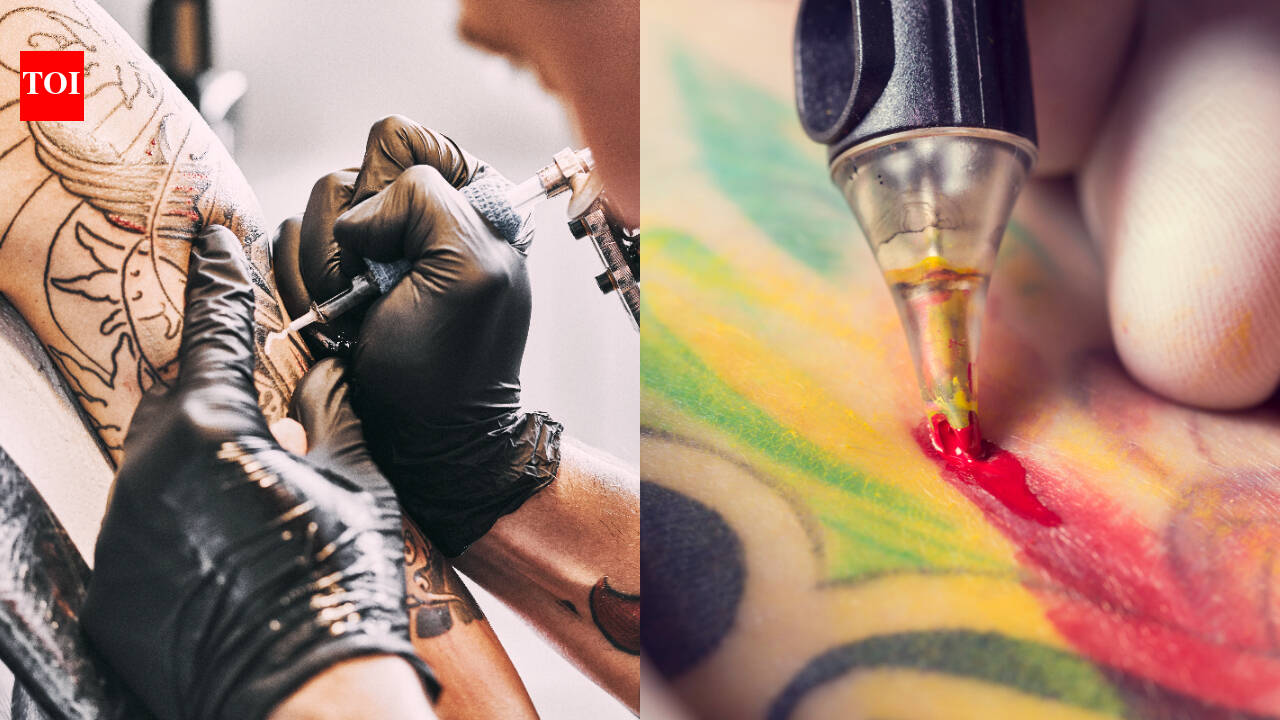
1 / 2
The story, neutrally told
Centre · 2Researchers led by Carson Bruns at the University of Colorado have developed tattoo inks, called PhotoTat, that can be turned on and off by exposure to light. New ScientistN “Tattoos could be radically reimagined following the development of inks that can be turned on and off by exposing them to light.” Read at New Scientist ↗ The Times of IndiaN “Developed by a team including Carson Bruns, an associate professor of biomedical engineering at the University of Colorado Boulder” Read at The Times of India ↗ Centre · 1Instead of traditional inks, the team uses photochromic dyes, which change from a transparent state to a coloured one when exposed to certain wavelengths of light. New ScientistN “Bruns and his colleagues employ photochromic dyes, which change from a transparent state to a coloured one when exposed to certain wavelengths of light.” Read at New Scientist ↗ Centre · 1According to Bruns, ultraviolet light writes the colour in and bright visible light erases it, and the cycle can be repeated; the pigment stays in the skin, so the tattoo is permanent but its appearance is not. New ScientistN ““ultraviolet light writes the colour in, bright visible light erases it, and the cycle can be repeated””““The tattoo is permanent, but its appearance is not.”” Read at New Scientist ↗
Centre · 1The Times of India, citing a Live Science report, says PhotoTat uses blue, magenta and yellow inks with the dyes enclosed in nanoparticles of PMMA, a plastic also used in some medical implants and dermal fillers; a 365-nanometre ultraviolet LED activates them in about two to three seconds. The Times of IndiaN “PhotoTat uses three primary-colour inks — blue, magenta and yellow, containing photochromic dyes.”“A 365-nanometre ultraviolet LED can activate the pigments in approximately two to three seconds.” Read at The Times of India ↗ Centre · 1The Times of India reports that activated colours can stay visible for hours or days under ordinary indoor light but fade within seconds in bright outdoor sunlight, and that in tests the three colour channels stayed switchable in skin for 1.4 to 2.2 years. The Times of IndiaN “the three PhotoTat colour channels remained switchable in the skin for periods ranging from 1.4 to 2.2 years.”“Exposure to bright outdoor sunlight, however, makes them fade within seconds, the report adds.” Read at The Times of India ↗ Centre · 1Bruns has worn a fish-scale PhotoTat tattoo for over two years, reporting no known side effects and no obvious fading; he also says the application method is the same as for conventional tattoos, with pigment particles implanted in the dermis by needle. New ScientistN “Bruns has had a tattoo of fish scales using this method for the past two years, and says he has experienced no known side effects.”“Both are pigment particles implanted in the dermis with a needle, he says.” Read at New Scientist ↗
Centre · 2Suggested uses include hiding a tattoo from view and medical applications, such as the permanent tattoos that guide radiation beams in cancer treatment, which could be made visible when needed and concealed afterwards. New ScientistN “such as for the tattoos used by doctors to guide radiation beams, which leave many patients permanently marked” Read at New Scientist ↗ The Times of IndiaN “PhotoTat could potentially make such markings visible during treatment and conceal them once they are no longer required.” Read at The Times of India ↗ Centre · 1New Scientist lists limitations: 16 clearly distinguishable colours (at least 300 shades), no white, no true cyan, blue ink that gradually develops a permanent purplish tint over many cycles, and a need for sunscreen so sunlight does not activate the colour. New ScientistN “The light-sensitive tattoos can currently be made from 16 colours, which are clearly distinguishable from each other.”“the blue ink gradually develops a permanent, purplish colour as the dye slowly photo-degrades over many on/off cycles” Read at New Scientist ↗ Centre · 1On safety, Bruns says the encapsulating polymer is non-toxic, but the toxicity of the colour-changing dye is unknown, as it is for most tattoo pigments; he says extensive safety studies are needed before public availability. New ScientistN ““The colour-changing [dye] toxicity is unknown, but the toxicity of most tattoo pigments is equally unknown,” he says.”“extensive safety studies need to be carried out before the tattoos will be available to the public.” Read at New Scientist ↗
Centre · 1Signe Bedsted Clemmensen of the University of Southern Denmark cautions that tattoo ink is a foreign substance linked to cancer whether visible or invisible, so similar health concerns likely apply. New ScientistN “many of the same health considerations and concerns that apply to traditional tattoo ink are also likely to apply to invisible tattoo ink” Read at New Scientist ↗ Centre · 1The Times of India says only the purple ink has been commercialised after third-party medical testing, at around $100 for a small bottle, and that researchers hope to add colours and cut costs. The Times of IndiaN “So far, only the purple ink has been commercialised, following third-party medical testing. It is available for around $100 for a small bottle” Read at The Times of India ↗
Every sentence links to the reporting it rests on. The pill in front of each says where its sources sit: Left, Centre or Right when one side supplies at least half of them, Mixed when they are evenly split. The number is how many outlets it cites.
Left0 outlets
No left outlet in our sources has covered this story yet.
Centre2 outlets
- Framing
- Both outlets present a science-discovery story. New Scientist leads with the promise of reversible tattoos and balances it with limitations and an outside expert's safety warning. The Times of India, relaying Live Science, uses a lifestyle angle (a tattoo for a night out) and stresses medical potential.
- Emphasis
- New Scientist: Bruns's own tattoo, colour limits, dye degradation, toxicity uncertainty. Times of India: how the technology works, durability of 1.4 to 2.2 years, medical uses, price.
- Leaves out or plays down
- The Times of India omits the independent safety caution from Clemmensen and the colour limitations (no white or true cyan, blue ink degradation). New Scientist omits the nanoparticle composition, durability figures and commercialisation details.
- Charged language
- “radically reimagined”“intriguing applications”
- For example
-
“Tattoos could be radically reimagined following the development of inks that can be turned on and off by exposing them to light.” — New Scientist
“But what if body art could be switched on for a night out and made to disappear the next morning?” — The Times of India
Right0 outlets
No right outlet in our sources has covered this story yet.
What every side reports
- PhotoTat is a light-switchable tattoo ink developed by a team including Carson Bruns of the University of Colorado.
- The ink uses photochromic dyes and the pigment stays in the skin while its appearance changes.
- Bruns wears experimental PhotoTat tattoos on his own skin.
- Radiation-therapy guide markings are a suggested medical use.
- Further research is needed before broad use.
Where accounts differ
-
Availability of the ink
- Centre
- New Scientist says extensive safety studies are needed before the tattoos are available to the public; the Times of India, citing Live Science, says the purple ink has already been commercialised at about $100 a small bottle.
-
What switches the colour off
- Centre
- New Scientist quotes Bruns saying bright visible light erases the colour; the Times of India says bright outdoor sunlight makes it fade within seconds. The two accounts are not necessarily in conflict.
Tattoos topic
Tattoos are presented as traditionally permanent; PhotoTat would let wearers hide or reveal designs, and give medicine removable-looking markers, though safety remains untested.
“This could be used medically – or to hide the butterfly on your ankle from a judgemental relative.” — New Scientist
“A tattoo has traditionally been a commitment etched into the skin” — The Times of India
Left0 articles
No coverage yet.
Centre2 articles
-
Tattoos could be turned on and off with light
Mixed Enthusiastic about the technology via Bruns's own tattoo, but balanced with listed limitations and an outside expert's cancer-risk caution.
-
Tattoo ink vanishes in sunlight, stays switchable in skin for up to 2.2 years
Sympathetic Second-hand explainer relaying Live Science, hopeful about aesthetic and medical uses while noting cost and safety questions.
Right0 articles
No coverage yet.
- 9 Oct 16:00 First New ScientistN Tattoos could be turned on and off with light
- 11 Oct 12:25 +44h 25m The Times of IndiaN Tattoo ink vanishes in sunlight, stays switchable in skin for up to 2.2 years
Times are when each article was published, or when we first saw it if the outlet gave no time.