Residents and activists oppose Google's $15 billion AI data centre in Visakhapatnam, India
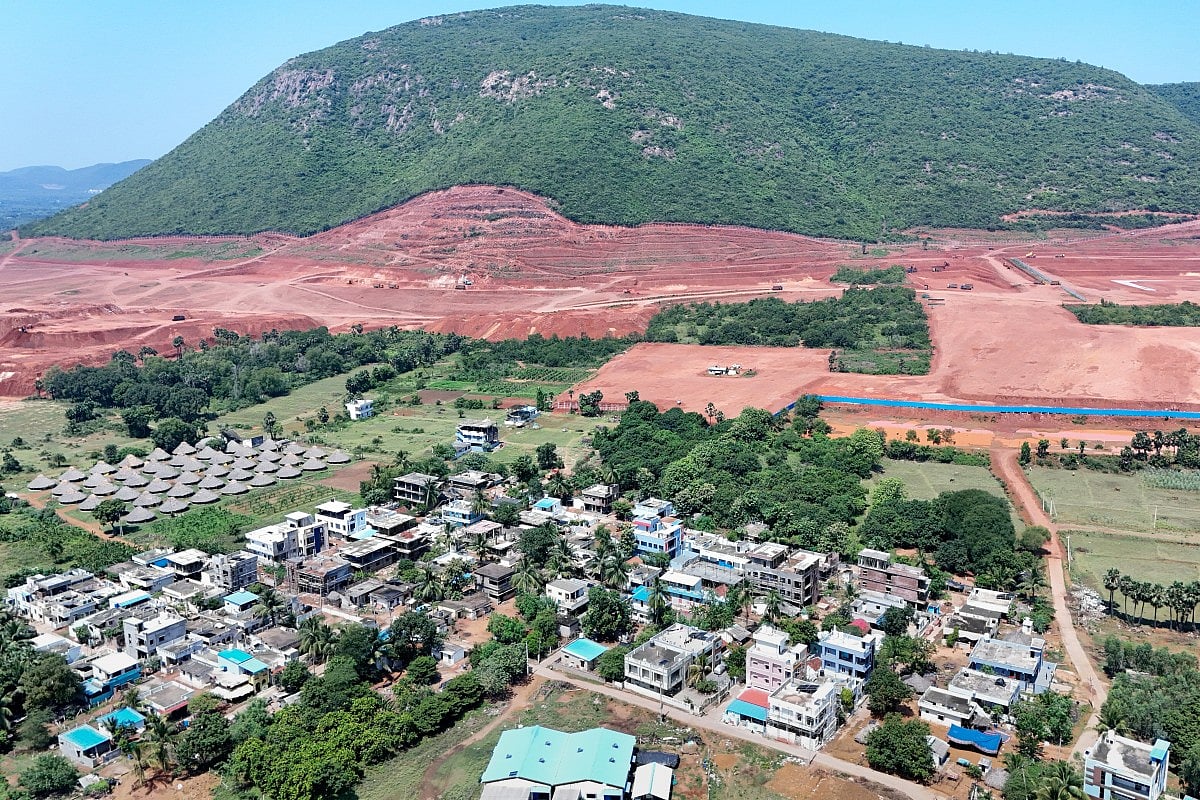
Google's $15 billion, gigawatt-scale AI hub in and around Visakhapatnam, Andhra Pradesh, faces resistance from residents and activists over water, energy and jobs. Google says air cooling and local investment will address the concerns, and state officials back the project.
1 / 1
The story, neutrally told
Mixed · 2Construction of Google's $15 billion AI data centre project in Visakhapatnam, in Andhra Pradesh state, India, has met resistance from residents who fear its effect on the environment and their lives. Gulf NewsN “Construction of a massive Google data centre in the Indian city of Visakhapatnam has been met with resistance from residents who fear the impact on the environment and their lives.” Read at Gulf News ↗ CBC NewsLC “We are completely unhappy with the data centre.” Read at CBC News ↗ Mixed · 2CBC News reports that Google is building the one-gigawatt hub with India's Adani Group across three sites covering over 600 acres. It is Google's largest build-out outside the United States, and parts of it are due to be operational in 2028. CBC NewsLC “Google, with India's powerful Adani Group, is building a massive $15 billion US AI data centre hub in and around Visakhapatnam” Read at CBC News ↗ Gulf NewsN “The data centre -- Google's biggest "AI hub" outside the United States -- is set to become operational in 2028.” Read at Gulf News ↗ Left · 1The state government has welcomed the investment. At the April ground-breaking, Chief Minister N. Chandrababu Naidu said he would "do everything I can to extend co-operation". The state offered land discounts and ten-year concessions on water and electricity tariffs, and the MP for Visakhapatnam, Sribharat Mathukumilli, called the project a "long-term economic boost". CBC NewsLC “the state offered discounts on land and concessions on water and electricity tariffs for ten years.”“If they are willing to come I'll do everything I can to extend co-operation.” Read at CBC News ↗
Mixed · 2Opponents include environmental and human rights advocates, who say approvals were fast-tracked and that costs outweigh rewards. Community organiser Deeksha Vanguru said the data centre boom "doesn't look more than a real estate project" and that India's environmental laws are weak. AFP reports that activists are demanding a moratorium on new data centres across Andhra Pradesh until more is known about their impact. CBC NewsLC “who argue the project's approvals were fast-tracked and that the costs outweigh the rewards.” Read at CBC News ↗ Gulf NewsN “activists are demanding a moratorium on new data centres across Andhra Pradesh until there is more evidence of their impact on the environment and local community.” Read at Gulf News ↗ Left · 1The "Stop Dirty Data Centres" campaign canvasses villagers near the sites, and CBC reports that Meta recently blocked its Instagram account under India's information technology rules. A court challenge in August failed to halt work, and demonstrators marched in Visakhapatnam on 19 September. CBC NewsLC “Recently Meta blocked the campaign's Instagram account under India's information technology rules.”“A court challenge in August failed to halt work on the data centre hub” Read at CBC News ↗ Mixed · 2Water is a central worry in an area hit by drought and a weak monsoon this year. The state government says water will not be diverted from residential use, but residents are sceptical. Google says it chose "advanced air cooling" over water cooling after its water assessment pointed to pressure on the local watershed, and that water use is limited mainly to restrooms and kitchens. CBC NewsLC “The state government says water will not be diverted from residential use, but people are skeptical.” Read at CBC News ↗ Gulf NewsN “Google's water assessment for Visakhapatnam "pointed to pressure on the local watershed", Smith said.” Read at Gulf News ↗
Centre · 1Alexander Smith, Google's head of infrastructure and energy for Asia-Pacific, told AFP that independent environmental assessments are done 12 to 24 months before a project begins. He said Google fully funds required power infrastructure upgrades, plans new clean energy projects in Visakhapatnam, and will not build where a data centre would take power from a community. Google does not disclose site-level power capacity. Gulf NewsN “Independent environmental assessments -- covering grid stability, power supply, water risk, ecology, acoustics and more -- are conducted 12 to 24 months before a project begins,”“Google does not disclose site-level capacity figures for power.” Read at Gulf News ↗ Mixed · 2Jobs and land are also contested. Smith said the development is projected to generate about $688 million in local economic activity a year, and that each Google data centre job supports nine others in the community. The government says the hub could create up to 150,000 indirect jobs and 4,000 a year during construction, but opponents say it will need only hundreds of permanent staff. Farmer Bali Narasingha Rao said he was pressured to sell his acre in Tarluvada for about $25,000 and fears for the future, and over 260 acres are being cleared at the largest site. Google told CBC that noise at the boundary will stay below 55 decibels. Gulf NewsN “For every job inside a Google data centre we support nine additional jobs in the surrounding community,” Read at Gulf News ↗ CBC NewsLC “running the data centres will require only hundreds of permanent employees”“Earth movers are clearing more than 260 acres here” Read at CBC News ↗ Mixed · 2Some residents back the project: software entrepreneur Sudeep Pillarisetty expects it to create opportunities for young tech professionals, and resident V. Jyothi welcomes potential jobs while worrying about water. AFP also notes that a Finnish authority recently ordered work halted on two Google data centre sites pending environmental assessments. CBC NewsLC “is excited that Google chose his city for a data centre” Read at CBC News ↗ Gulf NewsN “A Finnish authority recently ordered work to halt on two Google data centre sites pending mandatory environmental assessments” Read at Gulf News ↗
Every sentence links to the reporting it rests on. The pill in front of each says where its sources sit: Left, Centre or Right when one side supplies at least half of them, Mixed when they are evenly split. The number is how many outlets it cites.
Left1 outlet
- Framing
- CBC's on-the-ground feature follows farmers and residents in Tarluvada and Visakhapatnam, set against the AI boom and state incentives.
- Emphasis
- Land sales and livelihoods, drought, weak regulation, subsidies, the campaign's blocked Instagram account, and the gap between promised and permanent jobs; also some supporters.
- Leaves out or plays down
- Less detail on Google's power plans and environmental assessment process.
- Charged language
- “real estate project”“slap a bunch of concrete there”“Stop Dirty Data Centres”
- For example
-
“This data centre boom for us doesn't look more than a real estate project,” — CBC News
Centre1 outlet
- Framing
- AFP copy carried by Gulf News is a Q&A with Google's Alexander Smith, set against local resistance. It leads with the opposition, then gives Google's answers on water, power, site choice and jobs.
- Emphasis
- Google's assurances and figures on cooling, power funding, clean energy and economic benefit; the activists' call for a moratorium.
- Leaves out or plays down
- Few named residents or farmers; no account of land sales, state incentives or the failed court challenge.
- Charged language
- “gigawatt-scale”“good neighbour”
- For example
-
“But the tech giant says its "gigawatt-scale" AI facility in southern Andhra Pradesh state -- part of a $15 billion investment -- will use air cooling systems” — Gulf News
Right0 outlets
No right outlet in our sources has covered this story yet.
What every side reports
- Google is building a $15 billion AI data centre hub in Visakhapatnam, Andhra Pradesh, due to operate from 2028.
- Google says it will use air cooling rather than water cooling.
- Residents and activists oppose the project over water, energy, environmental and jobs concerns.
- Visakhapatnam already faces water shortages.
Where accounts differ
-
Whether the project will benefit local people
- Left
- CBC gives the government's figures of 150,000 indirect jobs, but quotes opponents who say permanent jobs will be only hundreds and call the project a real estate play.
- Centre
- AFP, carried by Gulf News, relays Google's figures of about $688 million in yearly local economic activity and nine supported jobs per data centre job, and notes opponents say benefits rarely reach residents.
-
Whether water supply will be protected
- Left
- The state says water will not be diverted from residents, but residents quoted by CBC are sceptical amid drought.
- Centre
- Google says air cooling was chosen because of pressure on the watershed and it will replenish 120% of non-cooling freshwater use by 2030.
Google organisation
Says it takes concerns seriously, chose air cooling due to watershed pressure, funds power upgrades and will invest in clean energy and local jobs.
“Smith said Google takes questions raised by the public seriously.” — Gulf News
“Google, in an email statement to CBC News, says it will use an "advanced air cooling system,"” — CBC News
Visakhapatnam place
Host city of the three sites, where residents and activists protest while some locals and officials welcome the investment.
“Demonstrators march against the Google hub in Visakhapatnam, on Sept. 19.” — CBC News
Left1 article
-
What happens when a Google data centre comes to town? Southern India is finding out
Sympathetic Field report centred on farmers and residents' doubts, balanced with officials and supporters.
Centre1 article
-
Gulf NewsN · · via AFP
Google’s $15 billion AI data centre in India faces local resistance
Neutral AFP wire Q&A giving Google's executive space to answer resistance from residents.
Right0 articles
No coverage yet.
- 11 Oct 05:38 First Gulf NewsN Google’s $15 billion AI data centre in India faces local resistance via AFP
- 11 Oct 09:00 +3h 21m CBC NewsLC What happens when a Google data centre comes to town? Southern India is finding out
Times are when each article was published, or when we first saw it if the outlet gave no time.