Retired Syrian officer describes how Eli Cohen was caught and where he may be buried
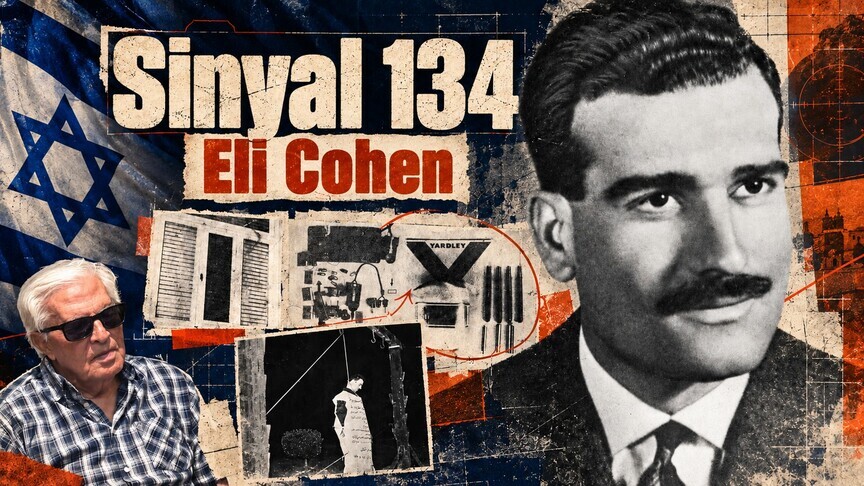
In a multipart Al Majalla interview, retired Syrian officer Said (Saeed) Jawish describes how a signals unit located Israeli spy Eli Cohen in Damascus in 1965, and says Cohen may have been buried near a military barracks.
1 / 2
The story, neutrally told
Centre · 1Retired Syrian officer Said Jawish has given a detailed account of how a Syrian signals unit tracked down the Israeli spy Eli Cohen, in a multipart interview with the Saudi-based magazine Al Majalla; the first installments appeared on 30 September and 1 October. Anadolu AgencyN “Jawish presented his account in a multipart interview with Saudi Arabia-based Al Majalla magazine. The first installments were published on Sept. 30 and Oct. 1.” Read at Anadolu Agency ↗ Mixed · 2Cohen lived in Syria under the identity Kamel Amin Thabet between 1962 and 1965, posing as a wealthy Syrian businessman who had returned from abroad; the Jerusalem Post says he presented himself as having returned from years in Argentina. Anadolu AgencyN “Cohen lived in Syria under the identity Kamel Amin Thabet between 1962 and 1965.” Read at Anadolu Agency ↗ The Jerusalem PostRC “posing as a wealthy Syrian businessman who had returned to Damascus after years in Argentina” Read at The Jerusalem Post ↗ Centre · 1According to Jawish, the effort began in 1956, when he intercepted military call signs he identified as Israeli while teaching at the Military Academy in Homs. After his initial proposal was dismissed, he was formally assigned on 30 September 1957, set up listening posts in the Golan Heights and Damascus, and formed Signal Company 134, which came under the army's Signal Corps rather than its intelligence services. Anadolu AgencyN “leading to Jawish’s formal assignment on Sept. 30, 1957.”“Together, they formed Signal Company 134, which operated under the army’s Signal Corps rather than its intelligence services.” Read at Anadolu Agency ↗
Centre · 1Jawish said the unit could record anonymous Morse-code transmissions in five-letter or five-number groups but could not break the encryption. It intercepted the first message later linked to Cohen in 1962, and over three years used Soviet direction-finding equipment to narrow the search from Damascus to a section of the Abu Rummaneh district and then to one residential building. Anadolu AgencyN “Although the unit could record the signals, Jawish said it could not break the Israeli encryption system.”“Over three years, the search area was gradually narrowed from Damascus to a section of the Abu Rummaneh district and then to a single residential building.” Read at Anadolu Agency ↗ Centre · 1Investigators first suspected a Syrian Airlines pilot of Greek origin whose travel seemed to match gaps in the signals. Using a drug investigation as cover, they searched his apartment and those of a foreign officer and a Turkish diplomat in the same building, found no radio equipment, and drew complaints that led Jawish's commander to close the inquiry. Anadolu AgencyN “Using a drug investigation as cover, Jawish and his team searched the pilot’s apartment.”“The searches generated complaints and prompted Jawish’s commander to close the investigation.” Read at Anadolu Agency ↗ Centre · 1Jawish said he kept working on the case, found a professionally installed antenna on the roof with a coaxial cable running to a fourth-floor apartment registered to Kamel Amin Thabet, and returned the next morning around 7 am. When the transmission began he cut the apartment's electricity three times at an exterior breaker; the interruptions showed up in the recording, confirming the source, and he and two colleagues then forced their way in. Anadolu AgencyN “A black coaxial cable led from the antenna to a fourth-floor apartment registered under the name Kamel Amin Thabet.”“The three interruptions appeared in the unit’s recording, confirming that the transmission originated inside the apartment.” Read at Anadolu Agency ↗
Centre · 1Inside, they found a Morse key and radio device in a Kodak film container hidden in a curtain pelmet. Jawish said Cohen then revealed the main transmitter in a green leather document case, and investigators also found frequency crystals, a notebook of daily cipher information and soap-like objects containing explosive detonators. Cohen reportedly said he had used a French edition of The Three Musketeers as a codebook. Anadolu AgencyN “A Kodak film container concealed there held a small Morse key and a radio device.”“he had initially encrypted messages using a French edition of The Three Musketeers as a codebook” Read at Anadolu Agency ↗ Mixed · 2Cohen was prosecuted and executed in Damascus on 18 May 1965; the Jerusalem Post describes him as a Mossad agent whose cover was blown in January 1965 and who was publicly hanged. Anadolu AgencyN “Cohen was subsequently prosecuted in Syria and executed in Damascus on May 18, 1965.” Read at Anadolu Agency ↗ The Jerusalem PostRC “His cover was ultimately blown in January 1965, when Syrian counterintelligence caught him transmitting messages to Israel.” Read at The Jerusalem Post ↗ Right · 1In a later installment, reported by the Jerusalem Post, Jawish said he and five other Syrian officers debated the night before the execution where to bury Cohen, expecting Israel to try to recover the remains. He said an official named Adnan Tayara proposed the entrance to a military barracks that already had permanent security, so the grave would need no special guarding. The Jerusalem PostRC “We said the Israelis would not let the matter go and would try to obtain his remains, so each of us began suggesting a place where he could be buried”“the grave would not need special guarding.” Read at The Jerusalem Post ↗
Right · 1Jawish said he does not know which of several barracks was chosen, and named Warrant Officer Melhem Qassem, who attended the burial, as the person who knows. The Jerusalem Post presents this as a claim that Cohen may be buried near unidentified barracks outside Damascus. The Jerusalem PostRC “There were several barracks, and I do not know which one was chosen”“The person who knows is [Syrian Warrant Officer] Melhem Qassem, who attended the burial.” Read at The Jerusalem Post ↗ Right · 1The Jerusalem Post adds that Syria has refused to return the remains, which have allegedly been buried multiple times. It also recalls a report from Saudi outlet Al-Hadath nearly a year ago that they could be returned in a deal, after Mossad's seizure of 2,500 documents on Cohen, and a Reuters report that Syria's leadership approved a handover to show goodwill to US President Donald Trump. The Jerusalem PostRC “Since Cohen's execution, Syria has refused to return his remains, which have allegedly been buried multiple times to prevent Israel from finding and returning them.”“Syria's leadership approved the handover of the remains to Israel in a bid to ease Israeli hostility and show goodwill to US President Donald Trump” Read at The Jerusalem Post ↗ Centre · 1Anadolu says the Al Majalla series is expected to cover the interrogation, intercepted messages and wider counterintelligence operation in remaining installments, so further details may follow. Jawish's account is his own recollection more than six decades later and is not independently verified in either article. Anadolu AgencyN “Al Majalla’s interview series is expected to provide further details about the interrogation, intercepted messages and wider counterintelligence operation in its remaining installments.” Read at Anadolu Agency ↗
Every sentence links to the reporting it rests on. The pill in front of each says where its sources sit: Left, Centre or Right when one side supplies at least half of them, Mixed when they are evenly split. The number is how many outlets it cites.
Left0 outlets
No left outlet in our sources has covered this story yet.
Centre1 outlet
- Framing
- Anadolu presents a detailed, step-by-step narrative of the signals unit's hunt for Cohen, told from Jawish's perspective.
- Emphasis
- Technical detail: interception, direction-finding, the rooftop antenna, the timed power cuts and items found in the apartment.
- Leaves out or plays down
- Does not cover the burial question or the diplomatic context of efforts to recover Cohen's remains.
- Charged language
- “Israeli spy”
- For example
-
“retired Syrian officer Said Jawish has provided a detailed account of the operation, describing how Signal Company 134 followed the transmissions for three years” — Anadolu Agency
Right1 outlet
- Framing
- The Jerusalem Post frames the story around the unresolved fate of Cohen's remains, treating Jawish's remarks as a Syrian official's claim.
- Emphasis
- The burial location, Syria's refusal to return the remains and recent reports of a possible handover, plus a related Israel-Lebanon remains item.
- Leaves out or plays down
- Gives little of the detailed account of how Cohen was located, and says Jawish merely 'claims' involvement in the operation.
- Charged language
- “Legendary Israeli spy”“publicly hanged”
- For example
-
“Legendary Israeli spy Eli Cohen may have been buried near unidentified military barracks outside Damascus, Syrian security officer Saeed Jawish claimed” — The Jerusalem Post
What every side reports
- Said (Saeed) Jawish, a retired Syrian officer, gave Al Majalla a multipart interview about the Cohen case.
- Cohen operated in Damascus as Kamel Amin Thabet, posing as a wealthy businessman.
- Cohen was executed in Damascus on 18 May 1965.
Where accounts differ
-
What Jawish's account is mainly about
- Centre
- Anadolu treats it as a technical account of how Signal Company 134 tracked and caught Cohen.
- Right
- The Jerusalem Post focuses on Jawish's claim that Cohen may be buried near a Damascus barracks and on Israel's efforts to recover the remains.
Eli Cohen person
Described by Jawish as having cooperated once his equipment was found; Israeli-side coverage calls him a legendary Mossad agent whose remains Syria has not returned.
“Jawish said Cohen cooperated after the equipment was discovered” — Anadolu Agency
“Since Cohen's execution, Syria has refused to return his remains” — The Jerusalem Post
Syria place
Per Jawish, Syrian officers anticipated Israeli attempts to recover the remains and chose a secured barracks site; Syria has not returned them, though earlier reports said its leadership approved a handover.
“We said the Israelis would not let the matter go and would try to obtain his remains” — The Jerusalem Post
Middle East1 outlet
Anadolu gives an operational account of the Syrian unit's work.
“A radio frequency, encrypted messages and an unidentified transmitter were the only clues available” — Anadolu Agency
Anadolu Agency
Israel1 outlet
The Jerusalem Post stresses the burial site and the prospect of returning the remains to Israel.
“Nearly a year ago, Saudi state-run news outlet Al-Hadath reported that Cohen's remains could be returned to Israel in a deal with Syria.” — The Jerusalem Post
The Jerusalem Post
Left0 articles
No coverage yet.
Centre1 article
-
How Syria’s Signal Company 134 tracked down Israeli spy Eli Cohen
Neutral Straightforward narrative retelling of Jawish's account of how Cohen was located, with attribution throughout.
Right1 article
-
Israeli spy Eli Cohen may have been buried near Damascus barracks, Syrian official claims
Mixed Reports the burial claim with caution and places it in the context of Israel's long effort to recover Cohen's remains and related regional prisoner and remains talks.
- 2 Oct 19:55 First Anadolu AgencyN How Syria’s Signal Company 134 tracked down Israeli spy Eli Cohen
- 4 Oct 14:08 +42h 13m The Jerusalem PostRC Israeli spy Eli Cohen may have been buried near Damascus barracks, Syrian official claims
Times are when each article was published, or when we first saw it if the outlet gave no time.