Winter of the Crow: reviewers praise Lesley Manville in Cold War thriller set in 1981 Poland
Two left-leaning UK outlets review Kasia Adamik's Winter of the Crow, adapted from an Olga Tokarczuk story, and both praise Lesley Manville's performance as a British academic caught in Poland as martial law begins.
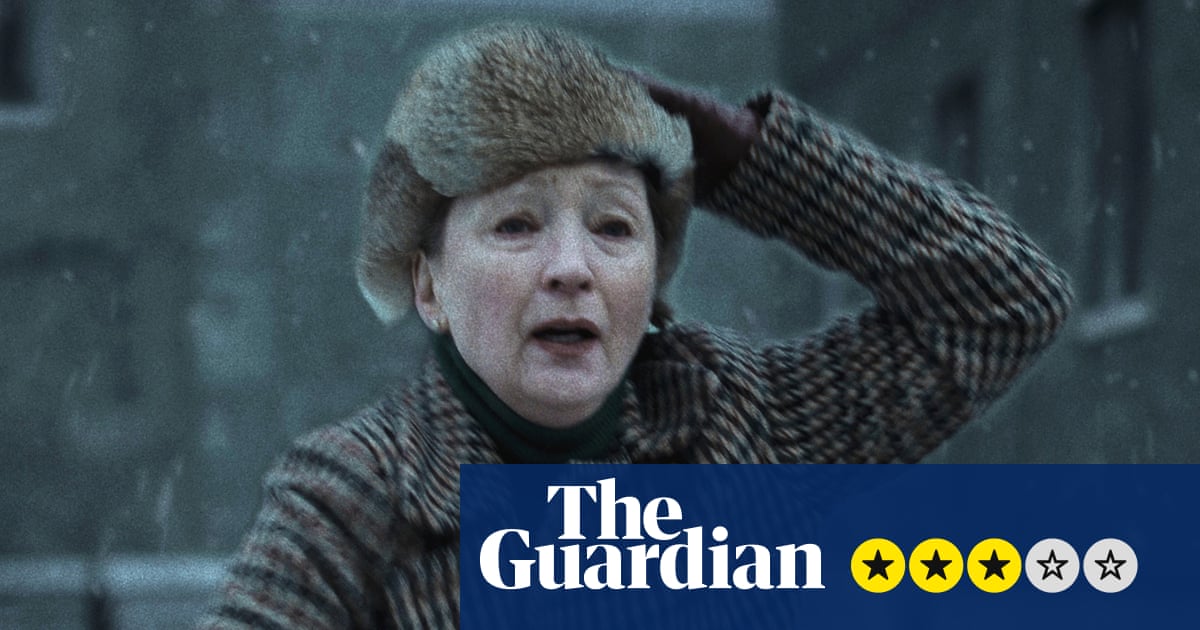
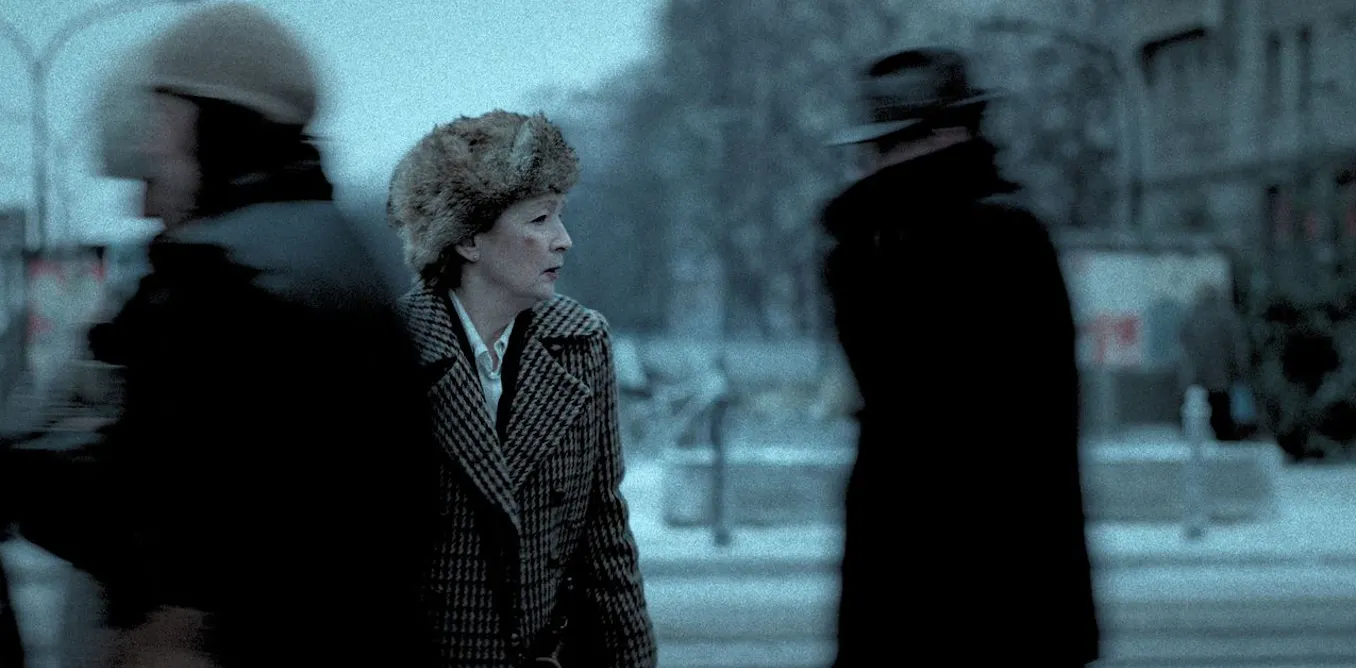
1 / 2
The story, neutrally told
Left · 2Winter of the Crow is a Cold War thriller directed by Kasia Adamik, adapted from Olga Tokarczuk's story "Professor Andrews Goes to Warsaw". The GuardianLC “The director is Kasia Adamik, daughter of The Green Border’s Agnieszka Holland; the film is adapted from a story by Olga Tokarczuk, called Professor Andrews Goes to Warsaw.” Read at The Guardian ↗ The ConversationLC “Based on a short story by Nobel prize-winning Polish author Olga Tokarczuk and set in December 1981” Read at The Conversation ↗ Left · 2Lesley Manville plays Professor Andrews, a blunt British academic psychologist who travels to Warsaw to give a lecture in 1981; the Guardian notes that Andrews likes taking Polaroid photographs and is known for a book on dreams. The GuardianLC “Lesley Manville plays Professor Andrews, an academic clinical psychologist (like Tokarczuk) from Britain with testy, peremptory mannerisms; her indulgence is a fondness for taking Polaroid photos.” Read at The Guardian ↗ The ConversationLC “She’s a rather blunt British academic invited to give a guest lecture on the other side of the iron curtain, in Warsaw.” Read at The Conversation ↗ Left · 2Her lecture is disrupted by student protesters, and Zofia Wichlacz's Alina, a postgraduate student, is assigned to look after her. The GuardianLC “her speech is chaotically disrupted by students shouting that Poland itself is an oppressive asylum.” Read at The Guardian ↗ The ConversationLC “only to have her talk ambushed by student protesters who are keen to exploit the presence of the press.” Read at The Conversation ↗
Left · 1Overnight, martial law is imposed: General Jaruzelski's crackdown follows the freedoms associated with the Solidarity trade unions, and Andrews, without her passport, finds herself stuck in Poland. The GuardianLC “when General Jaruzelski has just introduced martial law in reaction to the dangerous new mood of freedom occasioned by the Solidarity trade unions.”“The clampdown has begun, murderous secret police are everywhere and she has no passport.” Read at The Guardian ↗ Left · 1According to The Conversation's reviewer, phone lines are cut and the border is closed, Alina's brother Marek (Jakub Guszkowski) is murdered by the secret police, known as "crows", and Joan is then pursued across Warsaw as she tries to reach the British Embassy and a flight home. The ConversationLC “Phone lines are cut, the border is closed and for Joan, trapped in a place that she does not understand, the situation quickly escalates.”“Her objective is the safety of the British Embassy and, ultimately, a flight home.” Read at The Conversation ↗ Left · 1Peter Bradshaw of the Guardian calls the film "intriguing and disquieting" and Manville "magnificently on edge", but says the storytelling slows a little and closer editing might have helped, though that could have cost surreal details such as live carp kept in baths. The GuardianLC “It is an intriguing and disquieting movie, though one whose storytelling impulse slows a little, and perhaps the film could have benefited from closer editing”“Winter of the Crow review – Lesley Manville magnificently on edge in intriguing cold war thriller” Read at The Guardian ↗
Left · 1Sam Edwards, a Loughborough University historian writing in The Conversation, calls it an "evocative" and "taut" escape thriller, praises Manville and Wichlacz, and reads it as drawing parallels between Joan's psychiatric expertise and the totalitarian police state, and as relevant to tensions over Russia's invasion of Ukraine. The ConversationLC “It’s an evocative film which skilfully exposes the stifling controls and murderous repression inherent in Soviet-era totalitarianism.”“Amid heightened east-west tensions provoked by the ongoing Russian invasion of Ukraine, this is a powerful film for its moment” Read at The Conversation ↗
Every sentence links to the reporting it rests on. The pill in front of each says where its sources sit: Left, Centre or Right when one side supplies at least half of them, Mixed when they are evenly split. The number is how many outlets it cites.
Left2 outlets
- Framing
- Both reviews are favourable. The Guardian reviews it as a film, with a note of reservation about pacing. The Conversation, written by a historian, treats it as a window on martial-law Poland and a message for the present.
- Emphasis
- Manville's performance, the surreal and oppressive atmosphere of 1981 Warsaw, and (in The Conversation) the political and historical context and the psychiatry/police-state parallel.
- Leaves out or plays down
- Neither review is a news report. No other outlets are included, so there is no contrasting view, and neither gives release or box-office details.
- Charged language
- “magnificently on edge”“Kafkaesque reverie”“soul-crushing tyranny”“Orwellian police state”
- For example
-
“Part cold war thriller, part Kafkaesque reverie, this movie takes us back to the sinister drear of Poland in 1981” — The Guardian
“brilliantly uncovers the soul-crushing tyranny of life in an Orwellian police state.” — The Conversation
Centre0 outlets
No centre outlet in our sources has covered this story yet.
Right0 outlets
No right outlet in our sources has covered this story yet.
What every side reports
- Kasia Adamik directs Winter of the Crow, adapted from an Olga Tokarczuk story.
- Lesley Manville plays a British academic psychologist visiting Warsaw in 1981 as martial law is imposed.
- Zofia Wichlacz plays Alina, the student assigned to look after her.
- Both reviews are positive about Manville's performance.
Where accounts differ
-
Whether the film's pacing and editing work
- Left
- The Guardian says the storytelling slows a little and closer editing might have helped; The Conversation calls it taut and tense.
Left2 articles
-
The GuardianLC · · Opinion
Winter of the Crow review – Lesley Manville magnificently on edge in intriguing cold war thriller
Sympathetic Praises Manville and the film's strange, disquieting mood while noting that the pacing slows and the editing could be tighter.
-
The ConversationLC · · Opinion
Winter of the Crow: this taut escape thriller explores life under martial law in cold war Poland
Celebratory A historian's endorsement that reads the film as a taut escape thriller and a timely warning about oppression, with praise for the cast.
Centre0 articles
No coverage yet.
Right0 articles
No coverage yet.
- 14 Oct 13:00 First The GuardianLC Winter of the Crow review – Lesley Manville magnificently on edge in intriguing cold war thriller Opinion
- 14 Oct 16:13 +3h 14m The ConversationLC Winter of the Crow: this taut escape thriller explores life under martial law in cold war Poland Opinion
Times are when each article was published, or when we first saw it if the outlet gave no time.
Ask about this story
Loading…