Rio Tinto co-funds A$28m cane toad containment zone in Pilbara
Rio Tinto and partners will spend A$28m on a "toad containment zone" meant to stop cane toads reaching Western Australia's Pilbara by removing artificial water sources over 7,500 sq km. The five-year main project starts in 2027.

1 / 2
The story, neutrally told
Centre · 1Rio Tinto is co-funding a A$28m (£14.5m) "toad containment zone" to stop cane toads reaching the Pilbara region of Western Australia, where the company has a large iron ore operation. BBC NewsN “The firm, alongside Curtin University in Perth and others, will spend A$28m (£14.5m) building a "toad containment zone" to prevent the pest travelling south.” Read at BBC News ↗ Centre · 1The Times of India says the A$28m comes from Rio Tinto and the Rhodes Ridge Joint Venture in equal partnership over five years. The joint venture is made up of Rio Tinto, Mitsui and AMB Holdings. Curtin University is also a partner in the project. The Times of IndiaN “Rio Tinto and the Rhodes Ridge Joint Venture will provide the A$28 million in equal partnership over five years.”“The Rhodes Ridge Joint Venture is made up of Rio Tinto, Mitsui and AMB Holdings” Read at The Times of India ↗ Centre · 2The plan is to cut off the toads' water supply across 7,500 sq km between the Great Sandy Desert and the Indian Ocean, south of Broome. Cane toads need water every few days in the dry season. Where natural water is scarce, they rely on dams, storage tanks and cattle troughs. BBC NewsN “The plan is to cut off the toad's water supply by building a barrier across 7,500 sq km” Read at BBC News ↗ The Times of IndiaN “The project will create a 7,500-square-kilometre “waterless barrier” south of Broome” Read at The Times of India ↗
Centre · 1According to the Times of India, citing ABC News and Rio Tinto, the project will modify or contain 685 pieces of pastoral infrastructure across six stations. It does not rely on a physical wall. The Times of India reports that Anna Plains Station owner David Stoate expects around 100 waterless barriers on his property alone. The Times of IndiaN “The Toad Containment Zone will modify or contain 685 pieces of pastoral infrastructure across six stations”“around 100 waterless barriers will ultimately be created on his property alone” Read at The Times of India ↗ Centre · 2The five-year project begins in 2027, though the Times of India says early works are already under way. Curtin University ecologist Judy Dunlop told the ABC that construction should take between two and five years. BBC NewsN “The five-year project will begin in 2027.” Read at BBC News ↗ The Times of IndiaN “Early works are already underway, with the main project due to begin in 2027.” Read at The Times of India ↗ Centre · 1The Times of India, citing the ABC, reports that initial funding was A$12 million, so the new contribution more than doubles the project's resources. It also reports that the Western Australian government has contributed about A$340,000 for community engagement. The Times of IndiaN “The ABC reported that initial funding for the conservation effort was set at A$12 million”“The Western Australian government has also contributed about A$340,000 for community engagement.” Read at The Times of India ↗
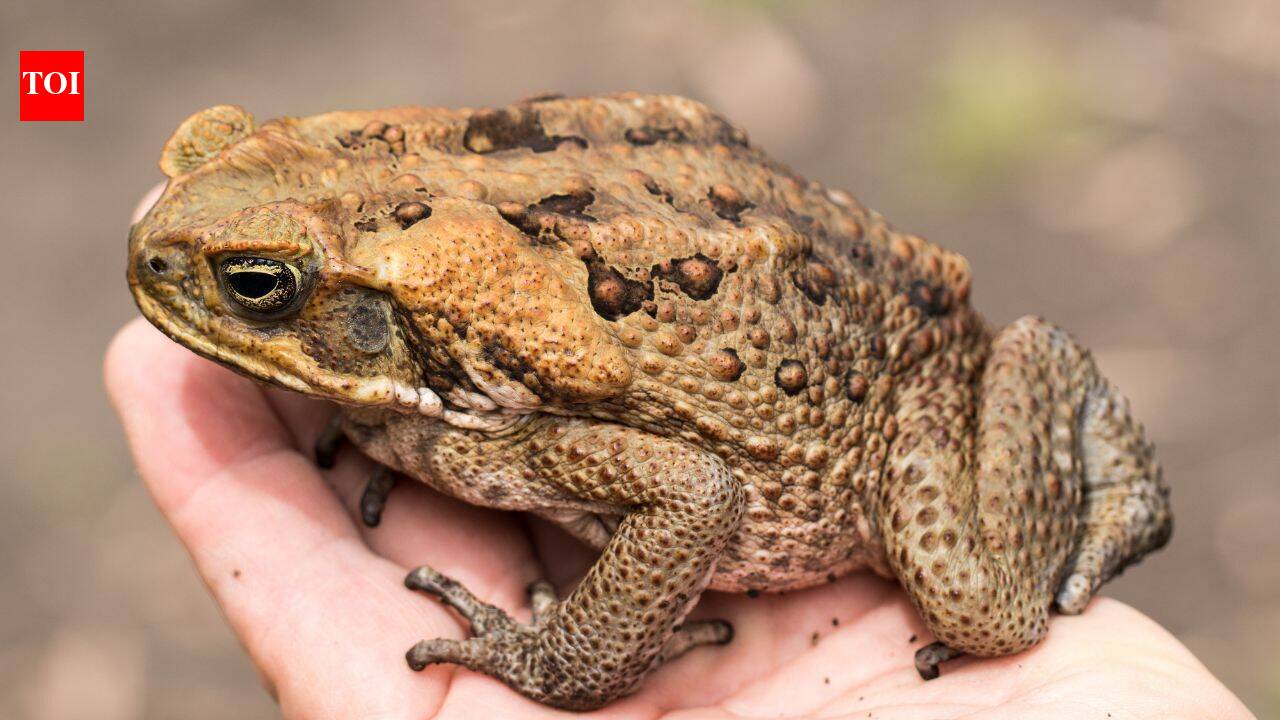
Centre · 1Toads were introduced to Australia in 1935 to control beetles in the sugar cane industry. The BBC, citing the Australian government, says they have since moved west at 40 to 60 km a year with no predators or diseases to check them. Curtin University professor Ben Phillips says that without action they would reach the Pilbara within two decades. BBC NewsN “travelling between 40 km and 60 km a year.”“Ben Phillips, a professor at Curtin University, said the toads would reach Pilbara within two decades without action.” Read at BBC News ↗ Centre · 2The toads' toxins are lethal to native wildlife. The BBC names the northern quoll, goanna and ghost bat as species at risk. The BBC says the toad is not a direct threat to Rio Tinto's business. Rio Tinto says an estimated 25 native species could be significantly affected and that the zone would help protect about 27 million hectares of habitat. BBC NewsN “While the cane toad is not a direct threat to Rio Tinto's business, it produces toxins lethal to native wildlife” Read at BBC News ↗ The Times of IndiaN “Rio Tinto says cane toads could significantly affect an estimated 25 native species if they establish there” Read at The Times of India ↗ Centre · 2The project is being developed with Nyangumarta and Karajarri Traditional Owners. Nyangumarta ranger Roberta Hunter said toads "destroy the water and animals". Karajarri Traditional Lands Association chief executive Martin Bin Rashid said Traditional Owners have been involved throughout planning, and that the water holes hold important stories and Dreamtime narratives. BBC NewsN “"Cane toads destroy the water and animals.” Read at BBC News ↗ The Times of IndiaN “Karajarri Traditional Lands Association chief executive Martin Bin Rashid said Traditional Owners have been involved throughout planning.” Read at The Times of India ↗
Centre · 1The BBC places the project against Rio Tinto's earlier destruction of two sacred Aboriginal rock shelters in the Pilbara. That decision cost the then chief executive his job, and Rio Tinto committed to rebuilding trust with Indigenous communities. The Times of India does not mention this. BBC NewsN “Rio Tinto has previously faced criticism for destroying two sacred Aboriginal rock shelters in Pilbara which sat above tonnes of iron ore.” Read at BBC News ↗
Every sentence links to the reporting it rests on. The pill in front of each says where its sources sit: Left, Centre or Right when one side supplies at least half of them, Mixed when they are evenly split. The number is how many outlets it cites.
Left0 outlets
No left outlet in our sources has covered this story yet.
Centre2 outlets
- Framing
- The BBC leads with a corporate angle: a mining giant joining the fight against a "killer toad", with Rio Tinto's past Aboriginal heritage controversy as context. The Times of India runs a science-desk explainer on the project's design, partners and Traditional Owner involvement.
- Emphasis
- The BBC stresses the threat to native species and the toad's westward spread. The Times of India stresses the engineering approach, the 685 infrastructure items, the funding breakdown and cultural heritage.
- Leaves out or plays down
- The Times of India leaves out Rio Tinto's rock shelter destruction. The BBC leaves out the Rhodes Ridge partners, the 685 items, the six stations and the Western Australian government contribution.
- Charged language
- “killer toad”“Mining giant”“waterless barrier”
- For example
-
“Mining giant joins fight to stop killer toad march across Australia” — BBC News
“The project will create a 7,500-square-kilometre “waterless barrier” south of Broome” — The Times of India
Right0 outlets
No right outlet in our sources has covered this story yet.
What every side reports
- Rio Tinto is part of a A$28m project to stop cane toads reaching the Pilbara.
- The zone covers about 7,500 sq km between the Great Sandy Desert and the Indian Ocean and works by denying toads water.
- The main project begins in 2027.
- Curtin University's Ben Phillips says toads would reach the Pilbara within two decades without action.
- Nyangumarta ranger Roberta Hunter backs the effort.
Where accounts differ
-
Who funds the A$28m
- Centre
- The BBC says Rio Tinto, Curtin University and others will spend it. The Times of India says Rio Tinto and the Rhodes Ridge Joint Venture provide it in equal partnership.
Rio Tinto organisation
Rio Tinto presents the zone as science-led conservation with Traditional Owners and pastoralists. It says the zone would protect about 27 million hectares of habitat and that an estimated 25 native species could be affected. Chris Osborn of Rio Tinto says the barrier's success depends on science combined with practical knowledge from Traditional Owners and pastoralists.
“The company says the containment zone would help protect around 27 million hectares of sensitive habitat.” — The Times of India
“solutions grounded in science, combined with practical knowledge from Traditional Owners and pastoralists” — The Times of India
Pilbara place
The Pilbara is described as a globally significant bioregion at risk if toads arrive. The Times of India says it is home to wildlife found nowhere else, and the BBC lists the northern quoll, goanna and ghost bat as at risk.
“a region that is home to wildlife found nowhere else on Earth” — The Times of India
“These include the northern quoll, whose numbers have been decreasing, the goanna lizard and the ghost bat.” — BBC News
Left0 articles
No coverage yet.
Centre2 articles
-
Mining giant joins fight to stop killer toad march across Australia
Neutral Short news report that casts Rio Tinto's funding against its past heritage controversy while explaining the barrier and the species at risk.
-
Sympathetic Detailed explainer, drawing on ABC News and Rio Tinto, that presents the waterless barrier as an innovative, collaborative conservation approach.
Right0 articles
No coverage yet.
- 3 Nov 15:05 First BBC NewsN Mining giant joins fight to stop killer toad march across Australia
- 5 Nov 08:58 +41h 53m The Times of IndiaN Australia launches A$28 million project to stop invasive cane toads from reaching Pilbara after 1935 introduction
Times are when each article was published, or when we first saw it if the outlet gave no time.
Ask about this story
Loading…