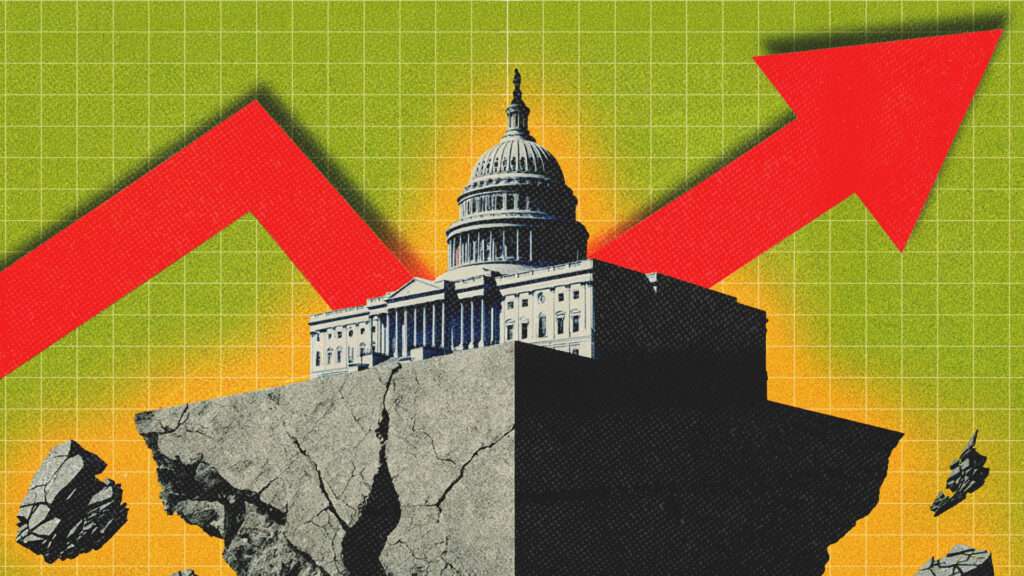
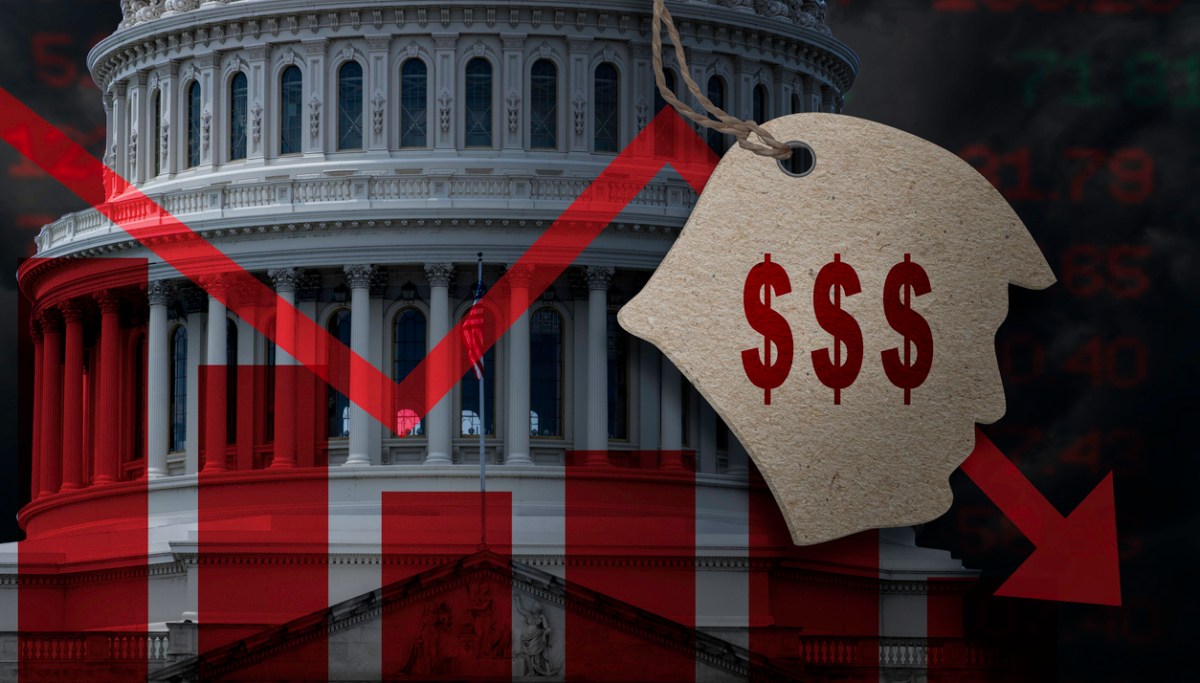
10-year Treasury yields climb toward 5.3% as commentators question bond market confidence
Ten-year Treasury yields have risen sharply since July, and two right-leaning opinion pieces say the move reflects investor doubts about deficits and fiscal credibility rather than inflation alone.
1 / 2
The story, neutrally told
Right · 1According to a Reason opinion column by Jared Dillian, 10-year Treasury yields rose from around 4.5 percent in July to nearly 5.3 percent in the week of 5 October 2026. ReasonRC “Ten-year interest rates have vaulted from around 4.5 percent in July to nearly 5.3 percent this week.” Read at Reason ↗ Right · 1Dillian called such a rapid rise almost without precedent, comparing it with 1994, when bond investors sold heavily in response to the Clinton administration's healthcare plan. ReasonRC “in the history of the bond market, such a rapid rise in rates is almost without precedent. The last time it happened was in 1994” Read at Reason ↗ Right · 1The column says inflation is not the cause: it puts CPI inflation at 3.4 percent and falling, well below the 9.1 percent peak of 2022. ReasonRC “inflation, measured by the Consumer Price Index (CPI), is currently 3.4 percent and is on a downward trajectory—much lower than it was in 2022, when it reached 9.1 percent.” Read at Reason ↗
Right · 1It also argues that deficits are only a partial explanation, noting that a deficit of about 6 percent of GDP is comparable to Ronald Reagan's first term and that deficits were larger after the financial crisis while rates fell. ReasonRC “A 6 percent deficit-to-GDP is high, but it is about where it was during Ronald Reagan's first term” Read at Reason ↗ Right · 1Dillian instead attributes the rise to a credibility problem involving Treasury Secretary Scott Bessent, Federal Reserve Chairman Kevin Warsh and President Donald Trump, saying the market doubts they will act on inflation or spending, and that bond investors reacted badly even when the Fed raised rates last month. ReasonRC “it is a crisis of credibility: Bessent's credibility, Federal Reserve Chairman Kevin Warsh's credibility, and Trump's credibility.”“When the Warsh Fed raised interest rates last month, the bond market revolted anyway.” Read at Reason ↗ Right · 1The column says Bessent announced buybacks of long-term bonds of up to $4 billion per operation about a month ago, later raised to $6 billion, and that yields rose further afterwards. Dillian calls the buybacks small relative to the market. ReasonRC “Bessent later doubled down and increased the buybacks to $6 billion per operation, which resulted in interest rates going even higher” Read at Reason ↗
Right · 1Dillian lists other possible interventions: directing Fannie Mae and Freddie Mac to buy more mortgage-backed securities, ending issuance of 20- or 30-year bonds, or yield curve control by the Fed. He judges the last unlikely given the Fed board's composition and warns that distorting the 10-year rate would cause economic damage. ReasonRC “Yield curve control is less likely because it requires the Fed's participation, and the current composition of the Fed's board makes it unlikely that they would agree to it.” Read at Reason ↗ Right · 1A Washington Examiner opinion piece by Tiana Lowe Doescher, published on 9 October, takes a related view: after the Federal Reserve's first rate hike since 2023, it says investors' main concern is the federal government's deficit rather than inflation in particular. Washington ExaminerR “their primary concern in the aftermath of the Federal Reserve’s first rate hike since 2023 isn’t inflation in particular. Rather, it’s the federal government’s deficit.” Read at Washington Examiner ↗ Right · 1That piece places the issue in the context of the midterm elections, saying the cost of living remains voters' top priority. Washington ExaminerR “with polls open for the midterm elections, the cost of living remains voters’ top priority.” Read at Washington Examiner ↗
Every sentence links to the reporting it rests on. The pill in front of each says where its sources sit: Left, Centre or Right when one side supplies at least half of them, Mixed when they are evenly split. The number is how many outlets it cites.
Left0 outlets
No left outlet in our sources has covered this story yet.
Centre0 outlets
No centre outlet in our sources has covered this story yet.
Right2 outlets
- Framing
- Both opinion pieces treat the yield rise as a market verdict on government fiscal and policy credibility rather than an inflation story.
- Emphasis
- Reason stresses the speed of the yield rise, the Treasury's buybacks and possible interventions. The Examiner stresses the deficit versus inflation and the midterm context.
- Leaves out or plays down
- No left or centre outlets are in the coverage, and neither piece quotes the administration's own account beyond Reason's mention of Bessent blaming 'Bloomberg terminal bros'.
- Charged language
- “bond vigilantes”“crisis of credibility”“junior varsity”“Bloomberg terminal bros”
- For example
-
“it is a crisis of credibility: Bessent's credibility, Federal Reserve Chairman Kevin Warsh's credibility, and Trump's credibility.” — Reason
“Rather, it’s the federal government’s deficit.” — Washington Examiner
What every side reports
- The Federal Reserve has raised interest rates, described as its first hike since 2023.
- 10-year Treasury yields have risen sharply in recent months.
- Both pieces are opinion commentary from right-leaning outlets.
Where accounts differ
-
What is driving higher long-term yields
- Right
- Reason's Dillian says it is neither inflation nor mainly the deficit but a credibility crisis around Bessent, Warsh and Trump. The Washington Examiner's Lowe Doescher says investors are more concerned about the deficit than inflation.
Donald Trump person
Reason's column says Trump and Bessent have not learned from past bond-market revolts and are looking at ways to intervene to lower rates instead of cutting spending and entitlements.
“there is no sign that Treasury Secretary Scott Bessent or President Donald Trump have learned their lesson yet.” — Reason
Federal Reserve organisation
The Fed raised rates last month, its first hike since 2023. Reason says the bond market reacted negatively regardless, and that the Fed board is unlikely to agree to yield curve control.
“When the Warsh Fed raised interest rates last month, the bond market revolted anyway.” — Reason
“the Federal Reserve’s first rate hike since 2023” — Washington Examiner
US federal budget deficit topic
Both pieces treat the deficit as a market concern. Dillian says it is a partial driver and manageable if cut to about 3 percent of GDP, while the Examiner says it is investors' primary concern.
“if we made an honest attempt at cutting spending and getting the deficit down to about 3 percent of GDP or so” — Reason
“Rather, it’s the federal government’s deficit.” — Washington Examiner
Left0 articles
No coverage yet.
Centre0 articles
No coverage yet.
Right2 articles
-
ReasonRC · · Opinion
The Bond Market Doesn't Trust the Treasury
Critical Opinion column arguing that rising 10-year yields reflect distrust of Trump, Bessent and Warsh, and criticising the Treasury's buybacks and talk of intervention.
-
Washington ExaminerR · · Opinion
Is the US bond market more scared of the government’s deficit than inflation itself?
Neutral Opinion piece asking whether investors fear the deficit more than inflation after the Fed's rate hike, set against midterm cost-of-living concerns.
- 5 Oct 20:51 First ReasonRC The Bond Market Doesn't Trust the Treasury Opinion
- 9 Oct 11:45 +86h 53m Washington ExaminerR Is the US bond market more scared of the government’s deficit than inflation itself? Opinion
Times are when each article was published, or when we first saw it if the outlet gave no time.