Roman fort found in Pembrokeshire may link to Magnus Maximus camp legend
Oxford archaeologist Mark Merrony says a Roman auxiliary fort he identified near Crymych, Pembrokeshire, with late fourth-century coins among the finds, may relate to the camp of Magnus Maximus on Frenni Fawr in the Mabinogion. The evidence is the archaeologist's own interpretation, and the link to the legend is not proven.
1 / 2
The story, neutrally told
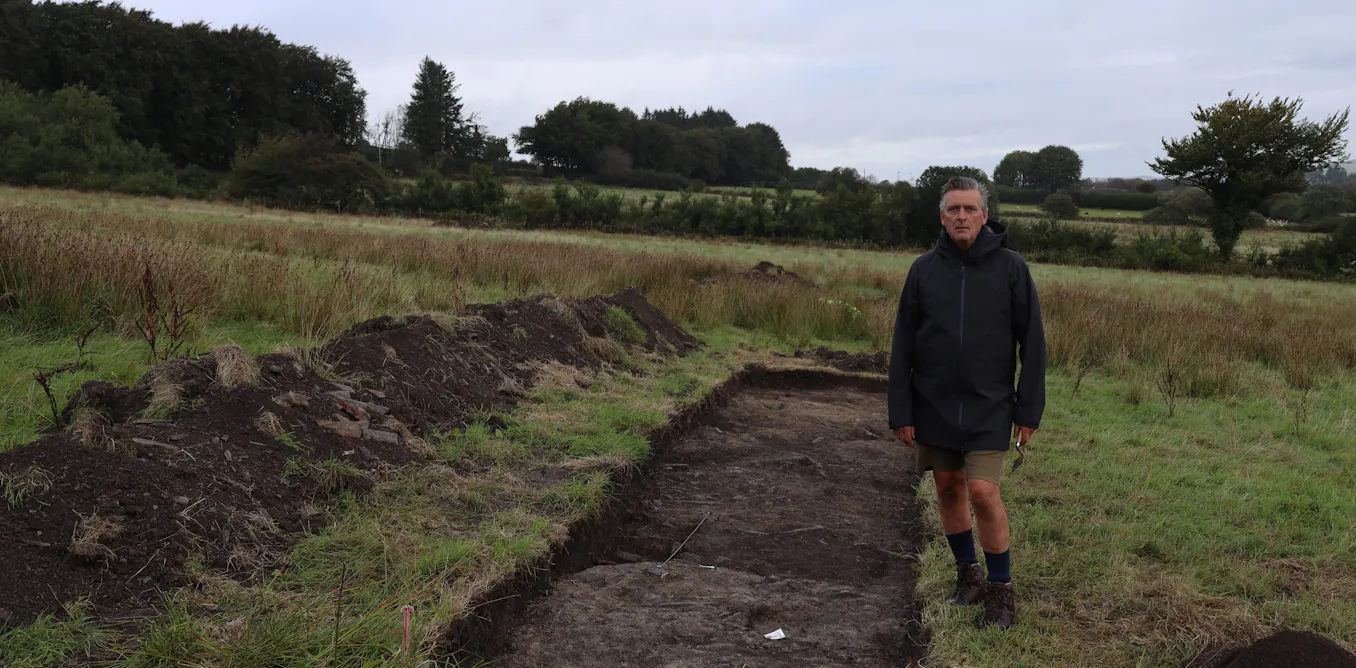
Left · 2Mark Merrony, an Oxford University archaeologist, has identified a Roman auxiliary fort in Pembrokeshire, Wales. He says it may be connected to a medieval Welsh legend about the Roman emperor Magnus Maximus. The GuardianLC “The fort was discovered by Dr Mark Merrony, a leading Roman specialist at the University of Oxford.” Read at The Guardian ↗ The ConversationLC “It does indeed suggest a connection between the camp of Magnus Maximus mentioned in the Mabinogion and the site I first identified in 2024.” Read at The Conversation ↗ Left · 2In The Dream of Macsen Wledig, a tale in the Mabinogion, Magnus Maximus (Macsen Wledig in Welsh), who ruled Britain in the fourth century, pitches his camp at Frenni Fawr, the easternmost peak of the Preseli Hills. No archaeological evidence of a Roman camp on or below the summit had been found until now. The GuardianLC “They described how on his military manoeuvres, he pitched his camp at Frenni Fawr, the 395-metre (1,300ft) easternmost peak of the Preseli Hills.” Read at The Guardian ↗ The ConversationLC “However, there are no visible remains of a Roman marching camp on the Frenni Fawr where the emperor is said to have visited.” Read at The Conversation ↗ Left · 2Merrony found the site in 2024. Satellite imagery showed an outline in an overgrown field, and he then spotted a Roman tile. The Guardian puts it about 2 miles (3.5km) south-west of the summit. Merrony, writing in The Conversation, describes it as near Crymych, north Pembrokeshire, with the Frenni Fawr a little over three kilometres to the north-east. The GuardianLC “Merrony discovered it about 2 miles (3.5km) south-west of the summit in 2024.” Read at The Guardian ↗ The ConversationLC “which dominates the site a little over three kilometres to the north-east” Read at The Conversation ↗
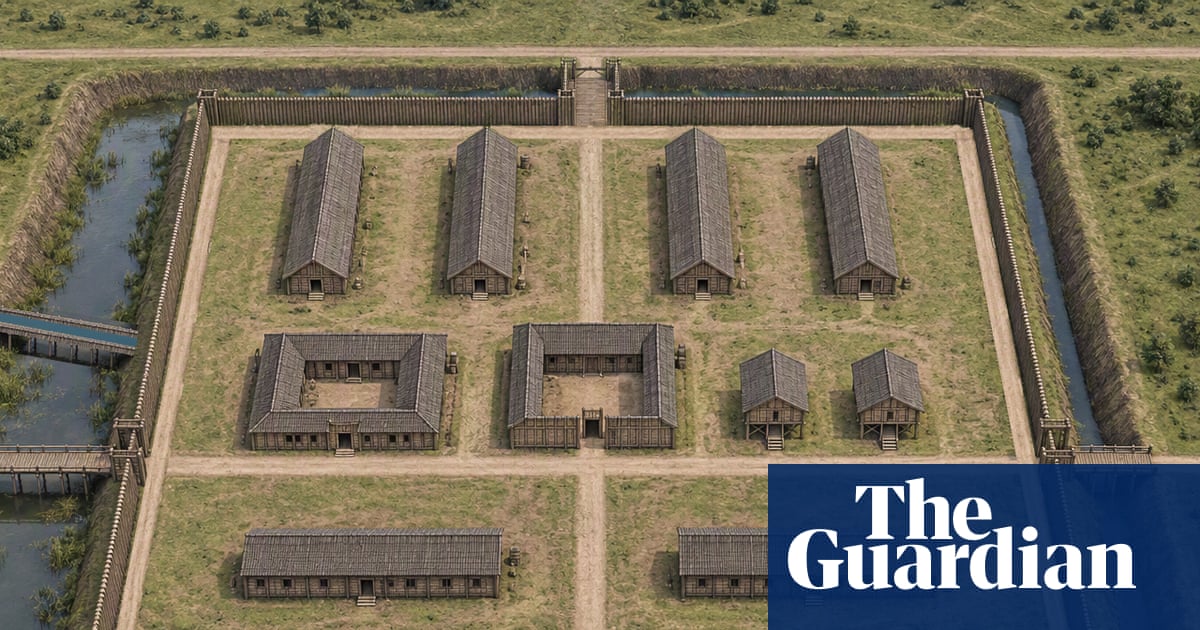
Left · 2The Guardian reports the fort measures 180 by 150 metres, sits on a slope with a commanding view and probably held about 500 troops. Merrony describes the playing-card shape with rounded corners typical of auxiliary forts, an area of about three hectares, and a water-supply leat running through the south of the enclosure. He says part of it was destroyed by the building of the village of Crymych. The GuardianLC “Measuring 180 by 150 metres, the fort is on a slope with a commanding view of the surrounding landscape. It is likely to have held about 500 troops” Read at The Guardian ↗ The ConversationLC “One corner has been destroyed by the construction of a post-medieval settlement (the village of Crymych)” Read at The Conversation ↗ Left · 2A geophysical survey indicated a rectangular building in the middle of the enclosure and a larger one to its south. Merrony says this is consistent with a headquarters building and a commander's house. The GuardianLC ““This arrangement is consistent with the placement of a headquarters building orientated east and thereby ‘facing the enemy’, and a commander’s house,” Merrony said.” Read at The Guardian ↗ The ConversationLC “which placed two rectilinear (straight-lined and right-angled) buildings in the right place” Read at The Conversation ↗ Left · 2Finds include an iron stylus, pottery, large quantities of Roman tile and clay floors. They also include preserved wagon rut marks, a lead spindle whorl, a gaming counter and a woodworking axe. The Guardian says two coins date from the late fourth century. Merrony's own account lists a third-century coin and two later fourth-century coins. The GuardianLC “Finds at the site so far include an unusual iron stylus, many pottery shards, large quantities of Roman tiles and extensive compacted clay floors” Read at The Guardian ↗ The ConversationLC “a third-century coin and two later fourth century coins” Read at The Conversation ↗
Left · 1In the Guardian's account, Merrony's brother Nick had jokingly asked him to find coins to prove the Magnus Maximus theory, then found two late fourth-century coins on the dig. Merrony says: "If Magnus Maximus was there, there must have been an army there." The GuardianLC “If Magnus Maximus was there, there must have been an army there,””“He’d found two coins dating from the late 4th century.” Read at The Guardian ↗ Left · 1Merrony's account of the origins of the fort differs from the legend's date. He says the site was probably a timber fort established during the campaign of the governor Sextus Julius Frontinus between AD74 and 78, which would predate Magnus Maximus by about three centuries. He says the later finds suggest a connection with the Maximus camp. He also believes the fort sits on a previously unidentified major Roman road linking Pembrokeshire with Ceredigion. The ConversationLC “probably established during the campaign of the governor Sextus Julius Frontinus between AD74 and 78”“It is my belief that it is part of a previously unidentified major arterial Roman road connecting modern Pembrokeshire with Ceredigion to the north.” Read at The Conversation ↗ Left · 2The Guardian says the find overturns assumptions that the local Celtic tribe was at peace with the Romans. Merrony says he faced scepticism about his earlier work tracing Roman roads in west Wales. He identified a road along the southern Preselis in 2022 and earlier found Roman villas at Ford and Cutteslowe. The GuardianLC “its discovery overturns assumptions that the area’s Indigenous Celtic tribe was on peaceful terms with the Roman invaders” Read at The Guardian ↗ The ConversationLC “my observations have attracted a good deal of scepticism” Read at The Conversation ↗
Left · 2The Guardian says one of several planned excavations has just finished, funded by Oxford University and crowdfunding, and that Merrony's research will appear in the magazine Antiqvvs. Merrony's account dates the main five-trench excavation to early September. Both pieces mention his forthcoming book, Lives of the Roman Emperors. Neither reports independent verification or peer review. The GuardianLC “His research will appear in Antiqvvs, a quarterly magazine dedicated to archaeology, ancient art and history.” Read at The Guardian ↗ The ConversationLC “Our breakthrough came in early September with the excavation of five trenches.” Read at The Conversation ↗
Every sentence links to the reporting it rests on. The pill in front of each says where its sources sit: Left, Centre or Right when one side supplies at least half of them, Mixed when they are evenly split. The number is how many outlets it cites.
Left2 outlets
- Framing
- Both left-leaning outlets present the find as an exciting discovery that gives a real basis to a folk legend. The Guardian runs it as an exclusive built around Merrony's quotes, and The Conversation is a first-person piece by Merrony himself.
- Emphasis
- The link between the Mabinogion legend and the archaeology, the late fourth-century coins, and Merrony's track record of finds in west Wales.
- Leaves out or plays down
- Neither carries comment from independent archaeologists or Welsh heritage bodies. The Guardian does not mention the early date (AD74–78) Merrony gives for the fort's foundation, and The Conversation does not repeat the Guardian's troop and size figures. The Conversation's account of when the trial digs and survey took place contains dates that do not line up with each other.
- Charged language
- “could prove myth of emperor’s camp is real”“extraordinary fusion between myth and reality”
- For example
-
“Now fourth-century coins, among other finds at a newly identified Roman fort in Pembrokeshire, suggest the medieval tale was rooted in reality, to the excitement of archaeologists.” — The Guardian
“The discovery represents an extraordinary fusion between myth and reality and demonstrates that folklore is often underpinned by fact.” — The Conversation
Centre0 outlets
No centre outlet in our sources has covered this story yet.
Right0 outlets
No right outlet in our sources has covered this story yet.
What every side reports
- Mark Merrony of the University of Oxford identified the fort near Crymych, Pembrokeshire, in 2024.
- The Mabinogion tale places Magnus Maximus's camp on Frenni Fawr, the easternmost peak of the Preseli Hills.
- No Roman remains had been found on the Frenni Fawr summit itself.
- Finds include coins from the fourth century, an iron stylus, pottery and Roman tile.
- Merrony's forthcoming book, Lives of the Roman Emperors, will feature Magnus Maximus.
Where accounts differ
-
How strong the link to Magnus Maximus is
- Left
- The Guardian says the finds suggest the tale was rooted in reality and that the fort could prove it. Merrony says the finds only 'suggest' a connection and puts it as a hypothesis.
-
Coins and date of the fort
- Left
- The Guardian cites two late fourth-century coins found by Merrony's brother. Merrony in The Conversation lists a third-century coin and two later fourth-century coins, and dates the fort's founding to AD74–78, before Maximus.
Left2 articles
-
Roman fort found in Wales could prove myth of emperor’s camp is real
Sympathetic Exclusive report that relies on Merrony's account and presents the fort as evidence that the Magnus Maximus legend was rooted in reality, with no outside experts quoted.
-
Celebratory First-person account by the discoverer, who sets out his research path, trench results and finds, and concludes that folklore is often underpinned by fact.
Centre0 articles
No coverage yet.
Right0 articles
No coverage yet.
- 12 Oct 08:00 First The GuardianLC Roman fort found in Wales could prove myth of emperor’s camp is real
- 15 Oct 14:13 +78h 13m The ConversationLC I discovered a Roman fort in Wales – it may hold the key to the ancient Welsh legend of Macsen Wledig
Times are when each article was published, or when we first saw it if the outlet gave no time.
Ask about this story
Loading…