Rubin Observatory finds possible sixth dwarf planet, 2026 ED138, beyond Pluto
Astronomers using the Vera C. Rubin Observatory in Chile announced an icy object, 2026 ED138, 600–1,500 km across and orbiting beyond Pluto. It could become the sixth recognised dwarf planet if further observations confirm it.

1 / 4
The story, neutrally told
Mixed · 2Astronomers using the Vera C. Rubin Observatory in Chile announced on 27 October 2026 a new dwarf planet candidate, designated 2026 ED138, orbiting beyond Pluto. Scientific AmericanLC “On Tuesday astronomers at the Vera C. Rubin Observatory announced the discovery of a new dwarf planet candidate” Read at Scientific American ↗ New ScientistN “Holman and Jurić presented their work at the Annual Division for Planetary Sciences meeting in Washington on 27 October.” Read at New Scientist ↗ Mixed · 2Its diameter is estimated at between 600 and 1,500 km (about 370 to 930 miles), and it orbits about 46 times farther from the sun than Earth does, compared with about 40 times for Pluto. CNAN “has a diameter estimated at between roughly 370 and 930 miles (600 and 1,500 km) and is orbiting about 46 times farther from the sun than Earth.” Read at CNA ↗ Scientific AmericanLC “The suspected dwarf planet is about 46 times as far from the sun as Earth” Read at Scientific American ↗ Mixed · 2If confirmed, it would be the sixth dwarf planet, joining Pluto, Eris, Haumea, Makemake and Ceres, the five recognised by the International Astronomical Union; on current data it would be among the largest. The Straits TimesRC “If confirmed, 2026 ED138 would join five other dwarf planets recognized by the International Astronomical Union” Read at The Straits Times ↗ New ScientistN “it is one of the largest dwarf planet candidates we’ve spotted so far from the sun” Read at New Scientist ↗
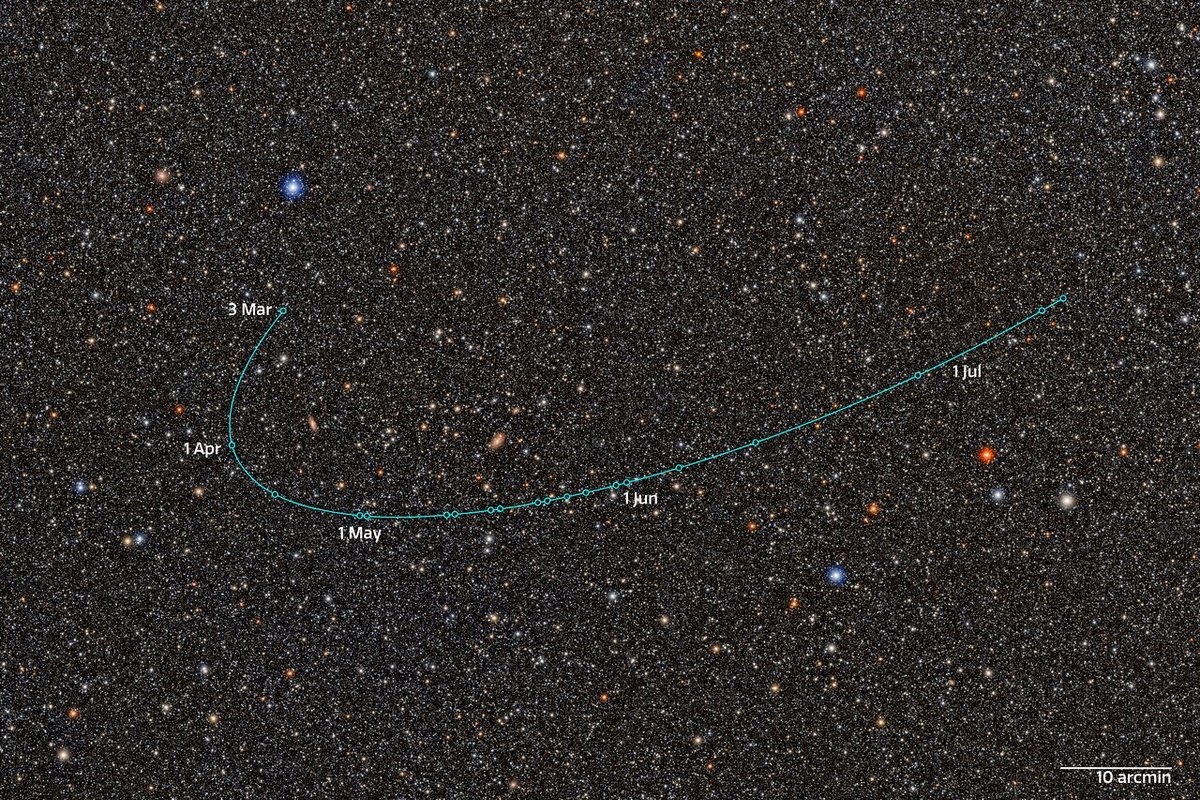
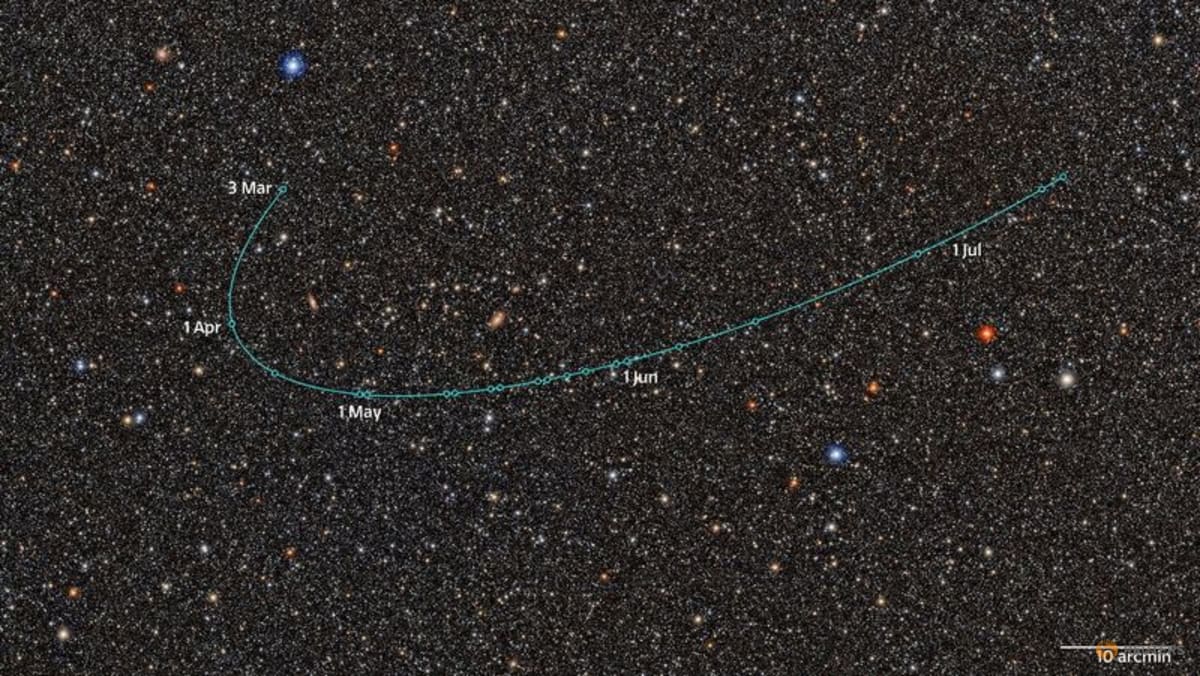
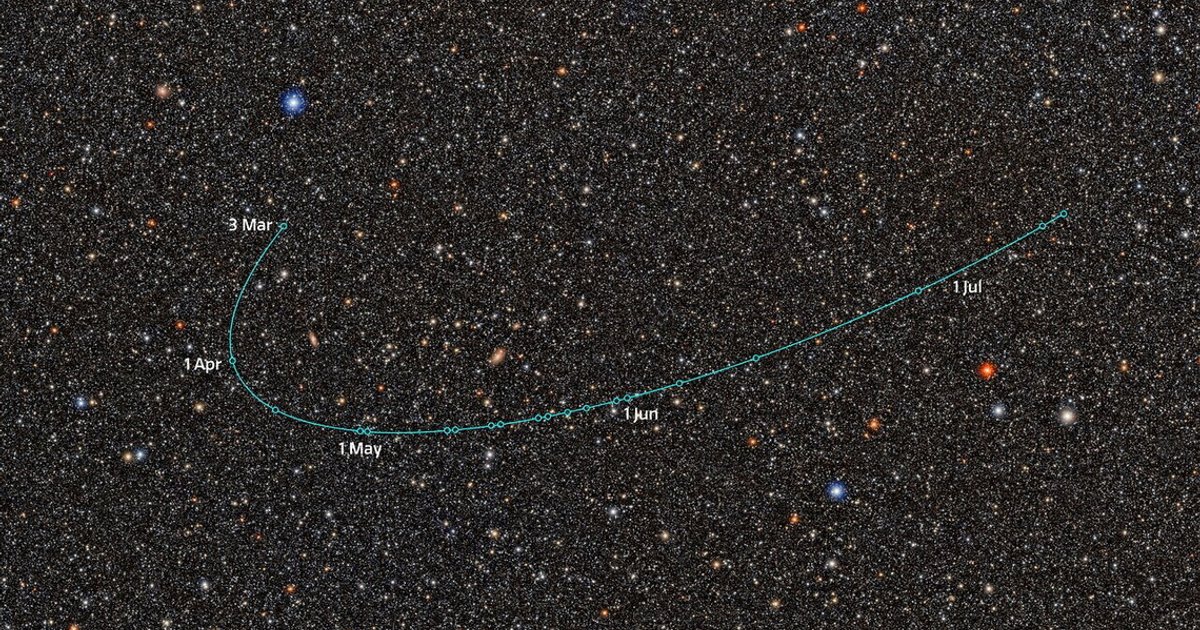
Left · 1Matthew Holman of the Center for Astrophysics | Harvard & Smithsonian found it by running Rubin data through a search code he developed with Kevin Napier, according to Scientific American. Scientific AmericanLC “search code developed by Center for Astrophysics | Harvard & Smithsonian astronomers Matthew Holman and Kevin Napier” Read at Scientific American ↗ Mixed · 2Mario Jurić of the University of Washington then found 30 more Rubin observations from March to July 2026, and archival sightings from other telescopes going back to 2016 or 2017 (the reports differ on the year). Scientific AmericanLC “they found 30 more observations of the object by Rubin that dated to between March and July 2026” Read at Scientific American ↗ New ScientistN “archival observations going back as far as 2017” Read at New Scientist ↗ Mixed · 2The data let the team reconstruct the orbit: about 281 years per circuit, tilted about 25 degrees to the plane of the solar system, which New Scientist says fits an orbit shifted by Neptune's gravity. New ScientistN “it takes about 281 years to circle the sun on a path that is tilted about 25 degrees” Read at New Scientist ↗ Scientific AmericanLC “could be linked to disruptions caused by Neptune’s gravitational pull” Read at Scientific American ↗
Mixed · 2The object had escaped earlier detection because it lies in a part of the sky crowded with Milky Way stars. Scientific AmericanLC “located in a part of the night sky that’s crowded with stars whose light drowned it out” Read at Scientific American ↗ New ScientistN “close to the plane of the Milky Way” Read at New Scientist ↗ Mixed · 3Its status is not settled. A dwarf planet must have enough mass for gravity to pull it into a round shape. Reuters says ED138 appears to have enough, while Scientific American says that still needs to be determined, and New Scientist says objects over about 600 km are generally accepted to qualify. The Straits TimesRC “2026 ED138 appears to have sufficient mass for that, but more observations are needed.” Read at The Straits Times ↗ Scientific AmericanLC “further observations are required to determine if the object has enough mass to be pulled into a round shape” Read at Scientific American ↗ New ScientistN “it is generally accepted that asteroids with a diameter greater than about 600 kilometres should be massive enough” Read at New Scientist ↗ Centre · 1Holman said the main task is to establish the object's physical size. Rubin sees reflected sunlight, so a small reflective object looks like a large dark one, and longer-wavelength observations with ALMA could measure the light the object emits itself. CNAN “"The main thing we need to do is to establish the physical size of 2026 ED138," Holman said.”“by looking at longer wavelengths, with an observatory like ALMA, we can detect the light emitted by the object itself” Read at CNA ↗
Mixed · 2Holman and Jurić said the find shows Rubin's potential. Rubin will image the southern sky repeatedly for ten years, so other hidden objects may now be within reach. Scientific AmericanLC “Rubin will image the whole southern sky again and again for ten years” Read at Scientific American ↗ New ScientistN “Rubin is giving us an unprecedented capacity to explore the sky” Read at New Scientist ↗
Every sentence links to the reporting it rests on. The pill in front of each says where its sources sit: Left, Centre or Right when one side supplies at least half of them, Mixed when they are evenly split. The number is how many outlets it cites.
Left1 outlet
- Framing
- Scientific American leads with the discovery as a welcome to a new 'sibling' in the dwarf planet family, and explains how the search code and Rubin's data made it possible.
- Emphasis
- The data-search method, Holman's 'excited disbelief', the Milky Way star-crowding that hid the object, and the open question of roundness.
- Leaves out or plays down
- Does not name the International Astronomical Union as arbiter or give the orbital period.
- Charged language
- “Congratulations to Pluto, Ceres, Eris, Haumea and Makemake”
- For example
-
“there may be a new sibling to welcome into the dwarf planet family” — Scientific American
“My first reaction was one of excited disbelief” — Scientific American
Centre2 outlets
- Framing
- CNA (carrying the same wire text as the Reuters piece) and New Scientist report the find as a candidate awaiting confirmation. CNA gives the facts and IAU context; New Scientist adds orbit and classification detail.
- Emphasis
- Confirmation steps (size via ALMA), the IAU's recognised list, and New Scientist's note on unofficial dwarf planets such as Sedna and Quaoar.
- Leaves out or plays down
- CNA does not mention the search code or the archival sightings; New Scientist omits the 46-times-Earth-distance figure.
- Charged language
- “small and exclusive club”
- For example
-
“may join our solar system's small roster of dwarf planets” — CNA
“if confirmed, it joins a small and exclusive club” — New Scientist
Right1 outlet
- Framing
- The Straits Times runs the Reuters wire report unchanged, with a caption on the orbital composite image; it is neutral and factual.
- Emphasis
- Size, distance, IAU recognition and what is needed for confirmation.
- Leaves out or plays down
- As wire copy it omits the discovery method, archival sightings and orbital period.
- For example
-
“Scientists using a Chile-based telescope have identified an icy object orbiting beyond Pluto” — The Straits Times
What every side reports
- The object is designated 2026 ED138 and was found with the Vera C. Rubin Observatory in Chile.
- Its diameter is estimated at 600–1,500 km.
- It lies beyond Pluto and is not yet confirmed as a dwarf planet.
- Matthew Holman of the Center for Astrophysics | Harvard & Smithsonian was central to the discovery.
Where accounts differ
-
Whether the object has enough mass to be round
- Left
- Scientific American: further observations are required to determine this.
- Centre
- CNA: it appears to have sufficient mass; New Scientist: objects over about 600 km are generally accepted to qualify.
- Right
- Straits Times (Reuters): it appears to have sufficient mass, but more observations are needed.
-
Where the announcement was made
- Left
- Does not say where.
- Centre
- CNA: a scientific meeting in Spokane, Washington; New Scientist: the Division for Planetary Sciences meeting in Washington.
- Right
- Straits Times (Reuters): a scientific meeting in Spokane, Washington.
-
How far back archival sightings go
- Left
- Back to 2016.
- Centre
- New Scientist: back to 2017.
- Right
- Not stated.
-
2026 ED138 has an estimated diameter of 600 to 1,500 km.
Supported- Supports 4
- Scientific American, CNA, New Scientist, The Straits Times
-
2026 ED138 is only a dwarf planet candidate and needs more observations to qualify.
Reported- Reports 4
- Scientific American, CNA, New Scientist, The Straits Times
-
2026 ED138 orbits about 46 times farther from the sun than Earth does, beyond Pluto's roughly 40.
Supported- Supports 3
- Scientific American, CNA, The Straits Times
Vera C. Rubin Observatory organisation
Rubin-based researchers present ED138 as a candidate that still needs confirmation, and as evidence that more discoveries lie ahead.
“what this demonstrates is that many exciting discoveries remain to be made with the Rubin Observatory and other telescopes” — CNA
“the discovery is just the beginning” — New Scientist
Left1 article
-
The Vera C. Rubin Observatory may have just discovered our solar system’s sixth dwarf planet
Celebratory Welcoming, explanatory piece stressing how Rubin and a search code revealed a hidden object.
Centre2 articles
-
CNAN ·
Possible new dwarf planet identified orbiting beyond Pluto
Neutral Wire-style report of the candidate, with caveats and context on dwarf planet classification.
-
There may be a new dwarf planet just beyond Pluto
Neutral Explains why the object likely qualifies and its orbit, while stressing that confirmation is needed.
Right1 article
-
The Straits TimesRC · · via Reuters
Possible new dwarf planet identified orbiting beyond Pluto
Neutral Reuters copy run by the Straits Times; factual, with the caveat that confirmation is pending.
- 27 Oct 21:00 First Scientific AmericanLC The Vera C. Rubin Observatory may have just discovered our solar system’s sixth dwarf planet
- 28 Oct 16:43 +19h 43m CNAN Possible new dwarf planet identified orbiting beyond Pluto
- 28 Oct 16:46 +19h 46m The Straits TimesRC Possible new dwarf planet identified orbiting beyond Pluto via Reuters
- 28 Oct 16:51 +19h 51m New ScientistN There may be a new dwarf planet just beyond Pluto
Times are when each article was published, or when we first saw it if the outlet gave no time.
Ask about this story
Loading…