Satellite data suggest microplastics are brightening waters around Pacific garbage patch
A study in Communications Earth & Environment found waters near the Great Pacific Garbage Patch brightened in blue and green light between 2002 and 2022. The researchers say microplastics are the likely cause but not proven.

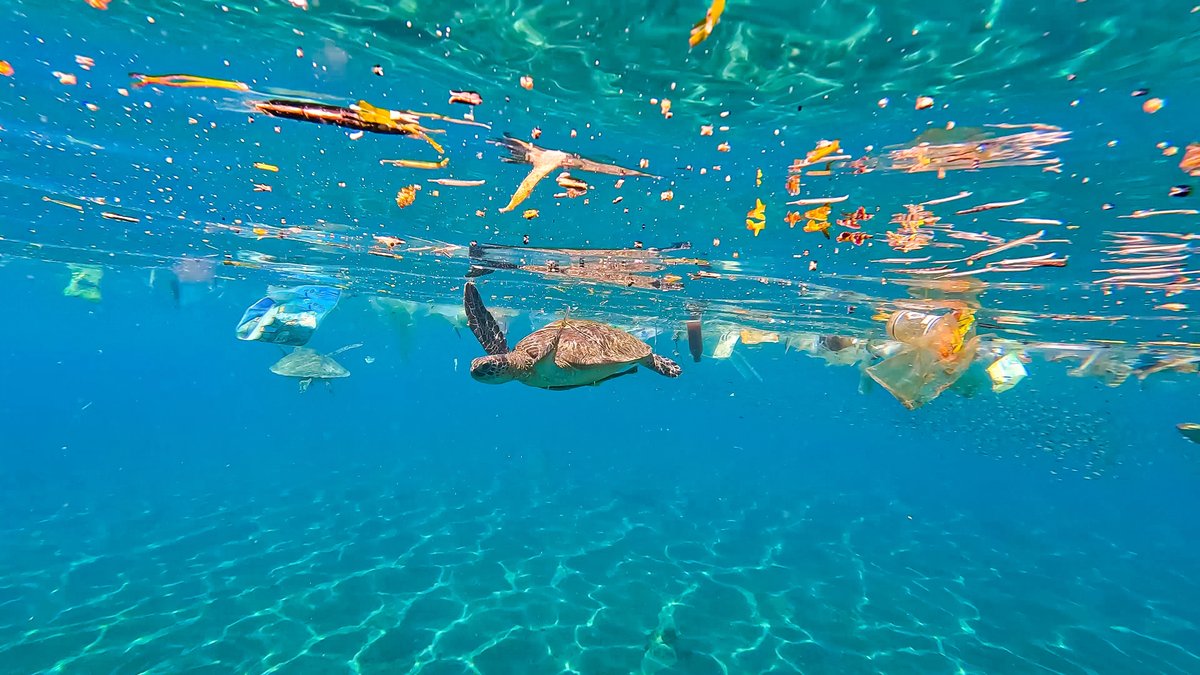
1 / 2
The story, neutrally told
Mixed · 2Satellite data show that the ocean around the Great Pacific Garbage Patch, between Hawaii and California, brightened in blue and green light between 2002 and 2022 compared with surrounding areas. Scientific AmericanLC “Between 2002 and 2022, the researchers found, waters near the garbage patch have gotten brighter in both blue and green wavelengths compared with surrounding areas.” Read at Scientific American ↗ New ScientistN “Cheatham and her colleagues analysed three satellite datasets collected between 2002 and 2022.” Read at New Scientist ↗ Centre · 1New Scientist reported that parts of the patch saw an approximately 10 per cent increase in blue light and a 2 to 4 per cent increase in green light, though the three satellites did not agree on the extent of the change and all found some brightening. New ScientistN “The data showed that parts of the GPGP saw an approximately 10 per cent increase in blue light and a 2 to 4 per cent increase in green light over the 20-year period.”“Not all of the satellites agreed on the extent of the blue and green brightening” Read at New Scientist ↗ Left · 1The work, by researchers at the University of Bergen in Norway including Shea Cheatham and Daniel Koestner, was published in the journal Communications Earth & Environment on Thursday. Scientific AmericanLC “The results, published in the journal Communications Earth & Environment on Thursday”“Daniel Koestner, a postdoctoral fellow at the University of Bergen in Norway” Read at Scientific American ↗
Centre · 1To test the cause, the team ran computer simulations of how ocean colour would change with added microplastics and with natural factors such as micro-algae. Cheatham said brightening in both blue and green light is rarely produced by natural changes, and that including microplastic particles made the observed pattern more than four times as likely. New ScientistN ““We found that brightening of the water in both blue and green light is rarely produced by natural changes,” says Cheatham.”“became more than four times as likely” Read at New Scientist ↗ Mixed · 2The researchers explain that microplastics absorb little light but scatter it strongly, unlike most natural contributors to ocean colour, so more of them brightens the water most at blue-green wavelengths. New ScientistN “Microplastic particles, in contrast to most natural contributors to ocean colour, do not absorb very much light, she says, but scatter light strongly.” Read at New Scientist ↗ Scientific AmericanLC “tend to scatter more light than organic material in the ocean” Read at Scientific American ↗ Left · 1The authors stress the link is not yet proven. Scientific American reported that the findings are backed by lab experiments with microplastics but that direct ocean samples are needed, with Cheatham saying the team is "still one step away from proving definitively" that microplastics cause the shift. Scientific AmericanLC ““We’re still one step away from proving definitively that microplastics are causing the shift in color that that we’re seeing,””“without taking direct ocean samples, it’s hard to know for sure what’s causing the ocean’s color to change” Read at Scientific American ↗
Centre · 1Tim Smyth of the Plymouth Marine Laboratory, who was not an author, told New Scientist the work is "compelling evidence for a potential satellite signature of microplastic accumulation, rather than evidence that satellites have actually detected the microplastics themselves". New ScientistN ““In short, this is compelling evidence for a potential satellite signature of microplastic accumulation, rather than evidence that satellites have actually detected the microplastics themselves,” says Smyth.” Read at New Scientist ↗ Centre · 1New Scientist described the patch as covering around 1.6 million square kilometres and thought to hold nearly 80,000 tonnes of plastic, with near-surface microplastic densities possibly reaching 17 milligrams per cubic litre. It noted that other research finds the world's oceans generally darkening for reasons including agricultural runoff and phytoplankton growth. New ScientistN “covers around 1.6 million square kilometres and is thought to contain nearly 80,000 tonnes of plastic debris”“the world’s oceans are generally darkening for a variety of reasons, including agricultural runoff and phytoplankton growth.” Read at New Scientist ↗ Left · 1Koestner hopes the approach, if verified, could identify other areas of the world where microplastics accumulate, giving a target for clean-up. Scientific AmericanLC ““That would mean that we have a target area for cleaning up,” he says.” Read at Scientific American ↗
Every sentence links to the reporting it rests on. The pill in front of each says where its sources sit: Left, Centre or Right when one side supplies at least half of them, Mixed when they are evenly split. The number is how many outlets it cites.
Left1 outlet
- Framing
- Scientific American leads with the patch changing the ocean's colour, then adds the study's caveats and the broader pollution context.
- Emphasis
- Microplastics as an omnipresent pollutant, harms to microbes, fish and seafood, and the clean-up potential.
- Leaves out or plays down
- Gives no figures for the size of the brightening, no simulation results and no outside expert comment.
- Charged language
- “infamous zone of debris”
- For example
-
“The Great Pacific Garbage Patch, an area in the Pacific Ocean where debris naturally accumulates, is full of tiny bits of plastic” — Scientific American
“Still, the findings underscore just how omnipresent these pollutants are.” — Scientific American
Centre1 outlet
- Framing
- New Scientist uses a hedged headline ("may be changing") and focuses on the evidence and its limits.
- Emphasis
- Percentage changes, simulation results, the four-times-likelier finding and an independent expert's caution.
- Leaves out or plays down
- Does not discuss harms of microplastics to marine life or the clean-up use of the method.
- For example
-
“The sea around the Great Pacific Garbage Patch is changing colour, and microplastics may be to blame.” — New Scientist
“the team has shown that the colour change might be caused by microplastics, without actually proving it.” — New Scientist
Right0 outlets
No right outlet in our sources has covered this story yet.
What every side reports
- Waters near the Great Pacific Garbage Patch brightened in blue and green light between 2002 and 2022.
- Researchers at the University of Bergen led the study, and microplastics are the likely but unproven cause.
- Microplastics scatter light strongly, which can brighten water.
Left1 article
-
The Great Pacific Garbage Patch is changing the color of the ocean
Mixed Explanatory piece that states the colour change in its headline, hedges in the body, and links it to wider microplastic harms.
Centre1 article
-
Microplastics may be changing the colour of the Pacific Ocean
Neutral Cautious, data-led report with independent expert caveat on what satellites have actually detected.
Right0 articles
No coverage yet.
- 5 Nov 16:00 First New ScientistN Microplastics may be changing the colour of the Pacific Ocean
- 5 Nov 17:15 +1h 15m Scientific AmericanLC The Great Pacific Garbage Patch is changing the color of the ocean
Times are when each article was published, or when we first saw it if the outlet gave no time.
Ask about this story
Loading…