Saudi Arabia plans to lift pipeline crude export capacity to 10 million bpd within three years
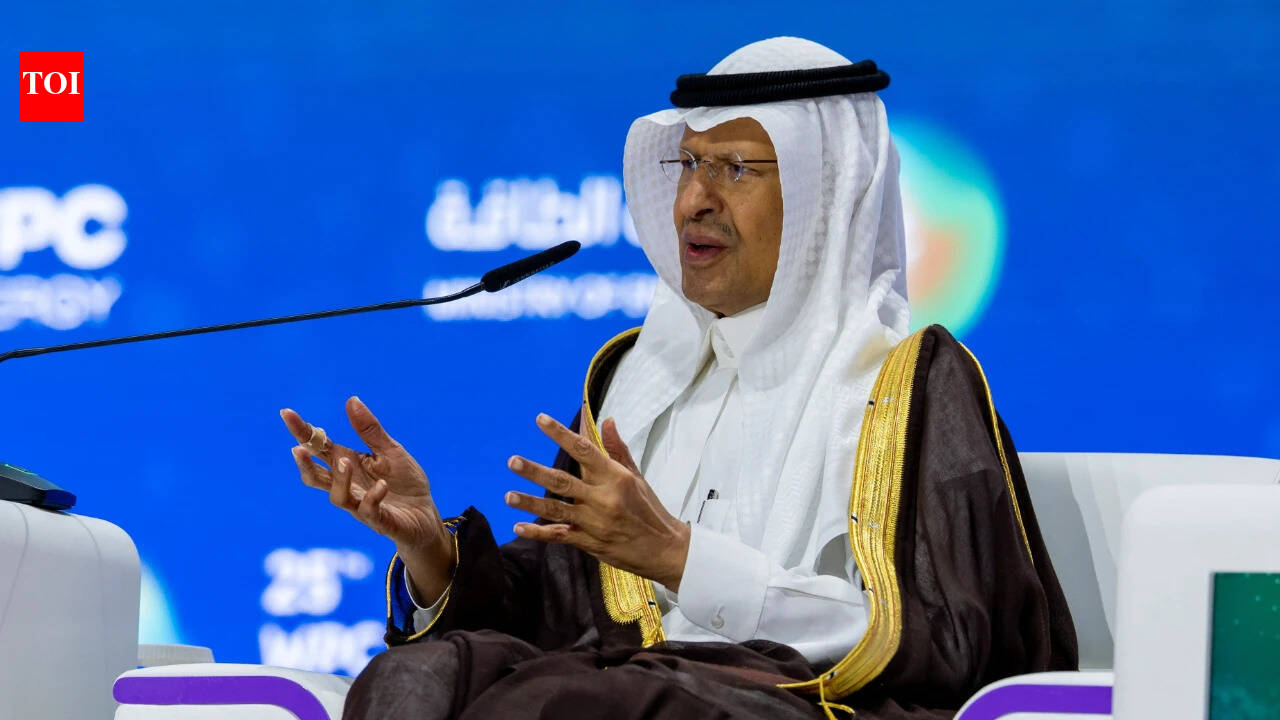
Energy Minister Prince Abdulaziz bin Salman said Saudi Arabia will convert a gas pipeline to carry crude and upgrade the East-West pipeline to raise export capacity to about 10 million barrels a day over two to three years.
Updated (version 2). New coverage since the last version from IJR.

1 / 3
The story, neutrally told
Centre · 1Saudi Arabia said on Monday 12 October 2026 that it plans to raise its crude export capacity through pipelines to up to 10 million barrels per day, by converting a domestic gas pipeline for oil and upgrading the East-West network. The Times of IndiaN “Saudi Arabia on Monday said it plans to increase its crude oil export capacity through pipelines up to 10 million barrels per day” Read at The Times of India ↗ Centre · 1Energy Minister Prince Abdulaziz bin Salman, speaking at the World Petroleum Congress in Riyadh, said the kingdom could add up to 1.2 million barrels per day of export capacity within seven to eight weeks by temporarily repurposing a gas pipeline to carry crude. The Times of IndiaN “the kingdom could add up to 1.2 million barrels per day of export capacity within seven to eight weeks” Read at The Times of India ↗ Centre · 1He said further investment could bring the additional capacity to as much as 3 million barrels per day, and that he had authorised Saudi Aramco to use the pipeline for oil until May, after which it would be cleaned and returned to gas service before summer. The Times of IndiaN “Further investments could increase the additional capacity to as much as 3 million barrels per day” Read at The Times of India ↗
Centre · 2Upgrades to pumping stations along the East-West pipeline and other infrastructure projects could raise the capacity to redirect shipments away from the main Gulf and Red Sea maritime routes to about 10 million barrels per day within two to three years; Gulf News describes this as doubling the pipeline's capacity. The Times of IndiaN “could help Saudi Arabia raise its capacity to redirect shipments from its main maritime routes in the Gulf and Red Sea to around 10 million barrels per day” Read at The Times of India ↗ Gulf NewsN “Saudi Arabia is planning to double the capacity of its strategic East-West oil pipeline to 10 million barrels a day within two to three years” Read at Gulf News ↗ Right · 1IJR presents the plan as a way to redirect exports away from the Strait of Hormuz and other vulnerable maritime routes, saying officials framed it as strengthening supply resilience amid regional conflict and attacks on energy infrastructure. IJRRC “helping it redirect exports away from the Strait of Hormuz and other vulnerable maritime routes”“Officials framed the plans as a way to strengthen supply resilience amid regional conflict and attacks on energy infrastructure.” Read at IJR ↗ Centre · 1Saudi Aramco chief executive Amin Nasser said the company was examining additional export routes and working to expand its overseas storage capacity. The Times of IndiaN “Saudi Aramco chief executive Amin Nasser said the company was examining additional routes for crude oil exports” Read at The Times of India ↗
Centre · 1The plans come after the conflict with Iran that began at the end of February. Reuters, cited by the Times of India, reported that Middle East crude exports (excluding Iran) averaged 18.11 million tonnes a week in September, against about 18.22 million before the war, while fuel exports remain below half of pre-war levels because of refinery damage. The Times of IndiaN “averaged 18.11 million tonnes a week in September”“fuel exports from the Middle East remain below half their pre-war levels because of damage to regional refineries” Read at The Times of India ↗ Centre · 1At the same congress, US Energy Secretary Chris Wright said oil flows through the Strait of Hormuz had recovered to 80–90 per cent of pre-conflict levels, with refined product flows at 25–35 per cent, and World Petroleum Council President Pedro Miras called for a balance between energy security, sustainability and affordability. Gulf NewsN “oil flows through the Strait of Hormuz had recovered to between 80 and 90 per cent of pre-conflict levels” Read at Gulf News ↗
Every sentence links to the reporting it rests on. The pill in front of each says where its sources sit: Left, Centre or Right when one side supplies at least half of them, Mixed when they are evenly split. The number is how many outlets it cites.
Left0 outlets
No left outlet in our sources has covered this story yet.
Centre2 outlets
- Framing
- Both centre outlets report the minister's announcement as an energy-infrastructure and supply-security story, set against recovery after the Iran conflict.
- For example
-
“Saudi Arabia on Monday said it plans to increase its crude oil export capacity through pipelines up to 10 million barrels per day” — The Times of India
“Saudi Arabia is planning to double the capacity of its strategic East-West oil pipeline” — Gulf News
Right1 outlet
- Framing
- IJR runs a short brief on the plan, framed around moving exports away from Hormuz and other vulnerable sea routes and strengthening supply resilience amid attacks on energy infrastructure.
- Emphasis
- The near-term 1.2 million bpd gas-pipeline conversion and the security rationale; it does not name the minister or the World Petroleum Congress.
- Leaves out or plays down
- No attribution to Prince Abdulaziz bin Salman, no Aramco authorisation until May, and none of the export data or Hormuz recovery figures the centre outlets give.
What every side reports
- Energy Minister Prince Abdulaziz bin Salman announced plans to lift pipeline export capacity to about 10 million barrels per day within two to three years.
- The plan centres on the East-West pipeline.
-
Saudi Arabia plans to raise its pipeline crude capacity to about 10 million barrels per day within two to three years.
Reported- Reports 3
- Gulf News, The Times of India, IJR
-
Upgrades to East-West pipeline pumping stations are part of Saudi Arabia's plan to expand export capacity.
Reported- Reports 3
- Gulf News, The Times of India, IJR
South Asia1 outlet
The Times of India gives the fullest detail on the temporary gas-pipeline conversion and regional export recovery.
“temporarily repurposing a gas pipeline to transport crude oil” — The Times of India
The Times of India
Middle East1 outlet
Gulf News frames it as doubling the strategic East-West pipeline and adds Hormuz flow recovery.
“within two to three years” — Gulf News
Gulf News
Left0 articles
No coverage yet.
Centre2 articles
-
Saudi to increase crude exports to 10million bpd, examine transport alternatives
Neutral Detailed factual report of the minister's plans, with Aramco comments and Reuters export data.
-
Saudi Arabia plans to double oil pipeline capacity to 10 million barrels a day within three years
Neutral Headline-led report stressing the doubling of East-West pipeline capacity, plus Hormuz recovery remarks.
Right1 article
-
IJRRC ·
Saudi Arabia plans to expand oil pipeline capacity to 10 million barrels per day
Neutral Brief factual item stressing the security rationale of rerouting exports away from Hormuz, with unrelated news items appended.
- 12 Oct 11:13 First IJRRC Saudi Arabia plans to expand oil pipeline capacity to 10 million barrels per day
- 12 Oct 14:21 +3h 7m The Times of IndiaN Saudi to increase crude exports to 10million bpd, examine transport alternatives
- 12 Oct 16:38 +5h 25m Gulf NewsN Saudi Arabia plans to double oil pipeline capacity to 10 million barrels a day within three years
Times are when each article was published, or when we first saw it if the outlet gave no time.
Ask about this story
Loading…