Seagate launches FireCuda Forge hybrid drive that pairs an HDD with a user-supplied SSD
Seagate announced the FireCuda Forge, an external drive that pairs a hard drive with a user-supplied NVMe SSD and moves data between them using its new Alkemi platform. It costs $699 for 8TB or $899 for 20TB with no SSD included, and reviewers say Seagate hasn't explained how it handles drive failure.

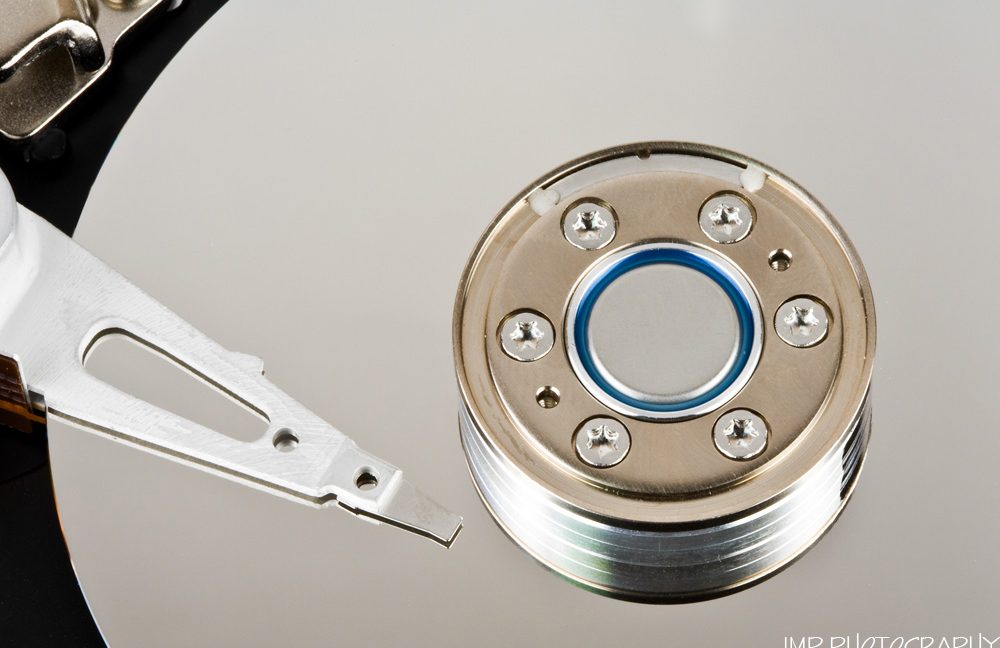
1 / 2
The story, neutrally told
Left · 2Seagate announced the FireCuda Forge, an external storage product that combines a hard drive with a solid-state drive (SSD) and presents them to the computer as a single drive. The VergeLC “Seagate announced a new external storage solution, called the FireCuda Forge, that combines the speed benefits of an SSD with the affordability of a higher-capacity hard drive.” Read at The Verge ↗ Ars TechnicaLC “On Tuesday, the company announced the launch of the new FireCuda Forge line of storage drives.” Read at Ars Technica ↗ Left · 1It is the first drive powered by Seagate's new Alkemi intelligent storage platform, which learns how data is used and moves the files in current or frequent use to the faster SSD. The VergeLC “The Forge is the first drive that’s powered by the company’s new Alkemi intelligent storage platform, which learns how your data is used and relocates the files you’re currently using, or use most frequently, to the faster SSD.” Read at The Verge ↗ Left · 2The Forge is on sale now through Seagate's online store, with an 8TB hard drive for $699 or a 20TB hard drive for $899. Neither includes the SSD, so buyers must supply their own. The VergeLC “The FireCuda Forge is now available through Seagate’s online store with an 8TB hard drive for $699, or a 20TB hard drive for $899” Read at The Verge ↗ Ars TechnicaLC “neither of which includes the required SSD. Users will have to bring their own SSD, with some specific restrictions.” Read at Ars Technica ↗
Left · 1According to Ars Technica, the SSD must be an M.2 2280 NVMe drive on PCIe Gen3 or faster, with a maximum supported capacity of 1TB. It needs minimum speeds of 2,400MB/s read and 2,000MB/s write, and a unit with a DRAM cache is recommended. Ars TechnicaLC “The FireCuda Forge is compatible with M.2 2280 NVMe drives that are PCIe Gen3 or higher. The maximum supported NVMe capacity is 1TB”“The NVMe will require minimum speeds of 2,400MB/s read and 2,000MB/s write, and a unit with DRAM cache is recommended.” Read at Ars Technica ↗ Left · 2Seagate claims read speeds up to 2,500MB/s and write speeds up to 2,000MB/s for the combined system, on computers running Windows 11 or macOS 26 or later. Ars Technica also lists USB4 support. The VergeLC “The FireCuda Forge offers read speeds up to 2,500MB/s and write speeds that top out at 2,000MB/s on computers running at least Windows 11 or macOS 26.” Read at The Verge ↗ Ars TechnicaLC “Seagate claims 2,500MB/s read and 2,000MB/s write speeds for the combined system, along with USB4 and support for Windows 11 and macOS 26+.” Read at Ars Technica ↗ Left · 1The Verge says the hard drives are user-replaceable, and that the cost of the missing SSD will add significantly to the price during a memory shortage. The VergeLC “that are both user-replaceable. However, the NVMe SSD is not included, and in the middle of a memory shortage, that will significantly add to the Forge’s price.” Read at The Verge ↗
Left · 1Hybrid drives are not new: The Verge notes Seagate has sold drives with built-in flash memory for decades, and says the Forge differs by letting users pick their own hard drive and SSD. Seagate says it also differs from NAS setups that cache frequently used data on an SSD, because Alkemi uses machine learning to move data dynamically between the two drives based on the current workload. The VergeLC “Seagate has been selling hybrid drives with flash memory built in for decades. The Forge lets users choose what hard drive and SSD they want to use together.”“The Alkemi technology uses machine learning to dynamically move data from one drive to the other based on your current workload and what data that requires.” Read at The Verge ↗ Left · 1Ars Technica compares the Forge to Apple's 2012 Fusion Drive, which tiered data in 128KB blocks and was fragile, because if one of its two drives failed, recovery was difficult. It argues the hybrid idea makes sense again because of the cost of storage: it cites Tom's Hardware data that some SSDs cost two to three times their historic lows, and PCServerParts data that a Seagate Exos 24TB drive rose from $298.99 in summer 2025 to $699.99 by August 2026. Ars TechnicaLC “The problem with Apple’s Fusion solution was its fragility. If one of the two drives failed, that was likely it.”“a Seagate Exos 24TB drive that sold for $298.99 in the summer of 2025 was priced at $699.99 by August 2026.” Read at Ars Technica ↗ Left · 1Per Seagate's press release, Alkemi manages the storage pool from the enclosure rather than through the operating system, unlike the Fusion Drive's macOS-managed tiering. Ars Technica says Seagate's data sheet calls it a two-tier system but doesn't say whether it uses caching, automated tiering or both. Ars TechnicaLC “Where Apple’s Fusion Drives used tiering managed by macOS, Alkemi manages the storage pool directly from the enclosure.”“describes the Alkemi system as a two-tier storage system, but doesn't elaborate any further on whether the system uses SSD caching, automated tiering, a combination of the two, or something else entirely.” Read at Ars Technica ↗
Left · 1Ars Technica says Seagate has not published technical documentation on how Alkemi handles drive failure or repair, or on how it places data at first boot, and expects answers to come now that the drive is on sale. Ars TechnicaLC “Seagate hasn’t published technical documentation regarding how the Alkemi system handles drive failure or repair.”“as the drives have already launched for sale, there should be answers to all of these questions coming soon.” Read at Ars Technica ↗
Every sentence links to the reporting it rests on. The pill in front of each says where its sources sit: Left, Centre or Right when one side supplies at least half of them, Mixed when they are evenly split. The number is how many outlets it cites.
Left2 outlets
- Framing
- Both outlets treat the launch as a notable revival of the hybrid-drive idea. The Verge leads with the product and what it does, while Ars Technica leads with unanswered technical questions and the history of hybrid drives.
- Emphasis
- The Verge stresses price, the missing SSD and the memory shortage. Ars Technica stresses SSD restrictions, storage price inflation, Apple's Fusion Drive and the lack of detail on failure handling.
- Leaves out or plays down
- Neither outlet reports independent testing or any Seagate response to the failure-handling questions. The Verge does not mention the 1TB SSD cap or the SSD speed requirements that Ars Technica reports.
- Charged language
- “raises some old questions”“everything old is new again”
- For example
-
“in the middle of a memory shortage, that will significantly add to the Forge’s price.” — The Verge
“Seagate seems to be keeping things mum for the moment” — Ars Technica
Centre0 outlets
No centre outlet in our sources has covered this story yet.
Right0 outlets
No right outlet in our sources has covered this story yet.
What every side reports
- Seagate announced the FireCuda Forge on Tuesday 10 November 2026 and it is on sale through Seagate's online store.
- The Forge comes in 8TB ($699) and 20TB ($899) hard-drive versions, and neither includes the SSD.
- It is the first product built on Seagate's Alkemi intelligent storage platform, which manages data across the HDD and SSD as a single drive.
- Seagate claims up to 2,500MB/s read and 2,000MB/s write, with Windows 11 and macOS 26 or later supported.
Seagate organisation
Seagate presents the Forge as combining HDD capacity with SSD speed, with Alkemi learning usage and keeping high-demand content on the SSD while appearing as a single drive. It says Alkemi works differently from caching setups. It has not explained how the system handles drive failure.
“Alkemi learns and adapts over time to keep high-demand content fast and accessible on a user’s SSD, while the HDD provides space for growing libraries.” — Ars Technica
“Seagate says its new FireCuda Forge works differently.” — The Verge
Left2 articles
-
Seagate’s FireCuda Forge moves your data between a hard drive and SSD for better performance
Mixed A short news report on the launch that sets out what the product does and its prices, and notes that the SSD cost will add to the total during a memory shortage.
-
Seagate's new hybrid drive raises some old questions
Critical An analysis that finds the concept sensible given storage costs, but faults Seagate for not explaining how Alkemi works or how it handles drive failure, by comparison with Apple's Fusion Drive.
Centre0 articles
No coverage yet.
Right0 articles
No coverage yet.
- 10 Nov 11:01 First The VergeLC Seagate’s FireCuda Forge moves your data between a hard drive and SSD for better performance
- 10 Nov 23:30 +12h 30m Ars TechnicaLC Seagate's new hybrid drive raises some old questions
Times are when each article was published, or when we first saw it if the outlet gave no time.
Ask about this story
Loading…