Sealed Pompeii cupboard yields one resident's belongings, from amulets to coins
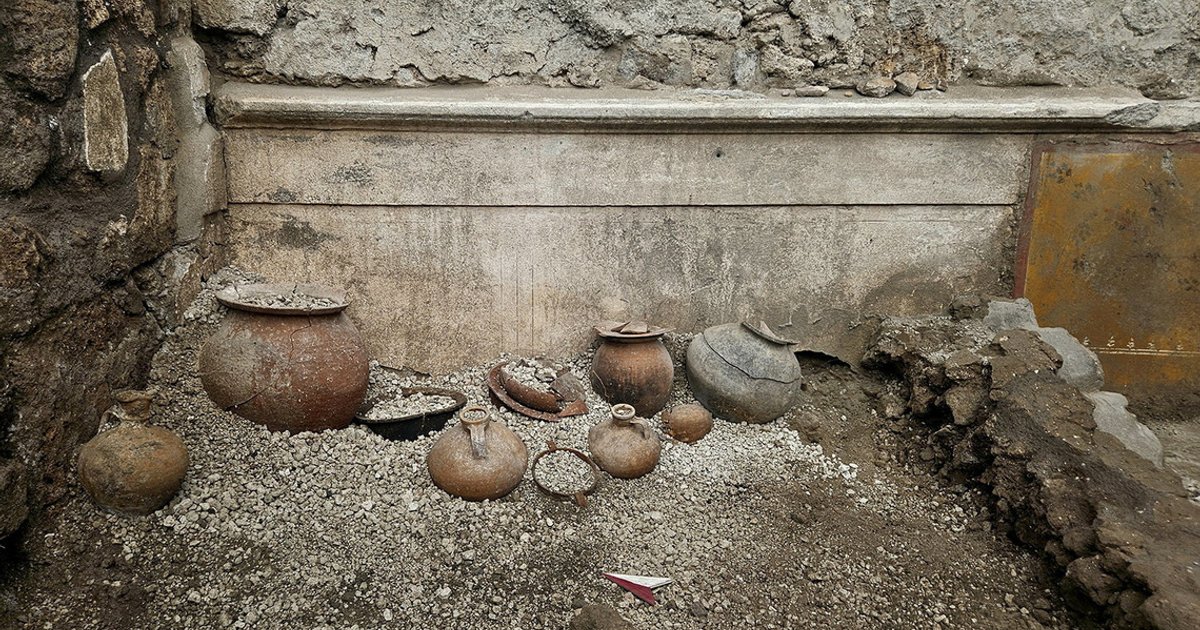
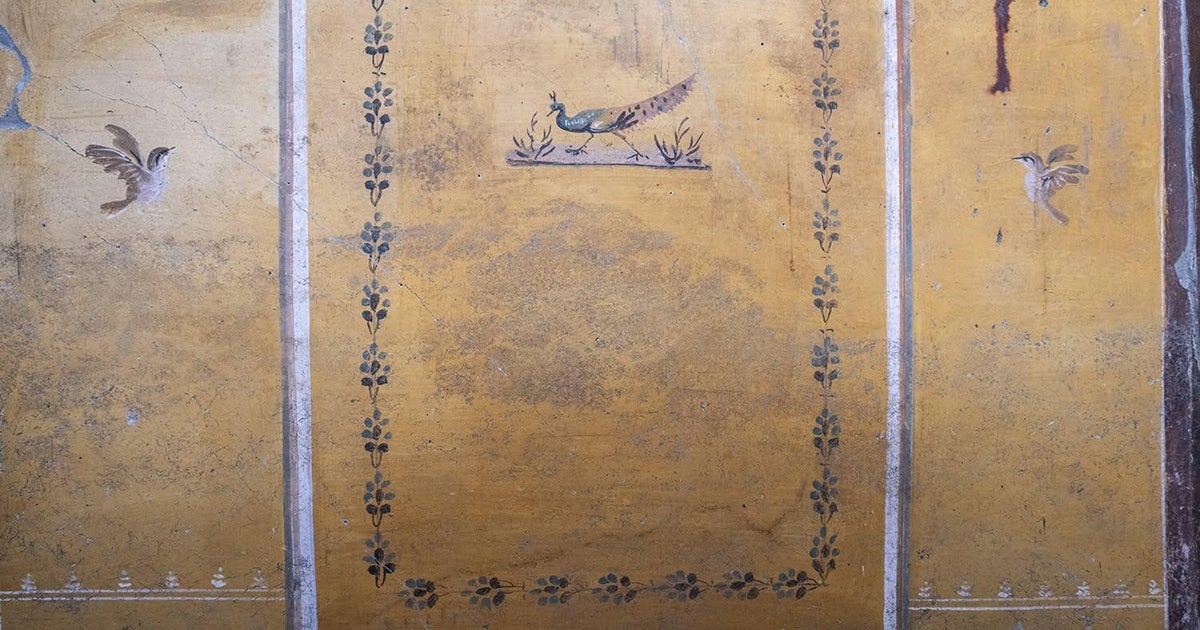
Archaeologists at Pompeii have reconstructed a wooden cupboard sealed since AD 79 in a house on Via dell'Abbondanza. It held a childhood amulet necklace, cosmetics, weights and 38 bronze coins.
1 / 2
The story, neutrally told
Mixed · 2Archaeologists at Pompeii have reconstructed a cupboard that stayed sealed for almost 2,000 years in a house in the central area of the ancient city, which Mount Vesuvius destroyed in AD 79. The Straits TimesRC “A cupboard sealed for almost 2,000 years in Pompeii has yielded an intimate snapshot of one resident's life before Mount Vesuvius destroyed the ancient Roman city” Read at The Straits Times ↗ CBS NewsLC “The closet was located in a home in the central area of the city, the Pompeii Archaeological Park said in a news release.” Read at CBS News ↗ Right · 1According to Reuters, the site said archaeologists pieced the wooden cupboard together from traces found in a house on Via dell'Abbondanza, one of the busiest streets of ancient Pompeii. The Straits TimesRC “Archaeologists pieced together bits of the wooden cupboard from traces uncovered in a house on Via dell'Abbondanza, one of the busiest streets of ancient Pompeii” Read at The Straits Times ↗ Mixed · 2The house's facade was first excavated in 1912, but the rooms behind it are only now being investigated, as part of a wider restoration project according to Reuters. The Straits TimesRC “Its facade was first excavated in 1912, but archaeologists have only now investigated some of the rooms behind it as part of a wider restoration project.” Read at The Straits Times ↗ CBS NewsLC “The house had previously been excavated in 1912, but an investigation of the surrounding areas is just now underway.” Read at CBS News ↗
Mixed · 2Among the finds was a necklace of miniature objects of bone, glass paste, earthenware and rock crystal, including images of the gods Bes and Mercury; Reuters counts at least 24 pieces, while CBS News, citing the park, says at least 20. The Straits TimesRC “a necklace comprising at least 24 tiny objects made of bone, glass paste, earthenware and rock crystal, including images of the gods Bes and Mercury” Read at The Straits Times ↗ CBS NewsLC “The necklace found in the closet contains at least 20 miniature objects and materials including bone and crystal.” Read at CBS News ↗ Mixed · 2Such necklaces are called crepundia: amulets and rattles given to Roman children for protection, which many people kept into adulthood as mementos. The Straits TimesRC “Such necklaces, known as crepundia, were traditionally given to Roman children both as protective amulets and as rattles” Read at The Straits Times ↗ CBS NewsLC “Many carried them into adulthood as mementos of childhood, the park said.” Read at CBS News ↗ Mixed · 2Other objects included cosmetics or make-up utensils, tweezers, a small perfume or ointment bottle, an incense burner, and bronze, glass and ceramic vessels and cooking pots. The Straits TimesRC “There were tweezers, a small glass perfume or ointment bottle and an incense burner, alongside bronze, glass and ceramic vessels and cooking pots.” Read at The Straits Times ↗ CBS NewsLC “Inside, archaeologists found cosmetics, an incense burner, a bronze lantern and a balsam jar.” Read at CBS News ↗
Mixed · 2Weights found in a wooden box or chest suggested to researchers that someone in the house was involved in trade or commercial activity. The Straits TimesRC “Lead weights in a wooden box suggested that someone in the house was involved in trade.” Read at The Straits Times ↗ CBS NewsLC “Weights, likely used for commercial activity, were also found inside a wooden chest of drawers.” Read at CBS News ↗ Mixed · 2A woven container of plant material held 38 bronze coins, and researchers believe the presence of money and sentimental objects means the owners had no time to retrieve them. The Straits TimesRC “A small woven container held 38 bronze coins.” Read at The Straits Times ↗ CBS NewsLC “The presence of the coins has led researchers to believe that the owner or owners didn't have time to recover valuable items.” Read at CBS News ↗ Mixed · 2The house has tentatively been linked to a man named Cornelius Maximus because of inscriptions found there, though CBS News says those inscriptions are no longer visible. Site director Gabriel Zuchtriegel said, "We cannot reconstruct with certainty the identity of whoever lived in the house, but these fragments bring us closer to their daily life." The Straits TimesRC “is tentatively associated with a man named Cornelius Maximus because of inscriptions discovered there” Read at The Straits Times ↗ CBS NewsLC “That identification was based on the discovery of inscriptions that are no longer visible.” Read at CBS News ↗
Mixed · 2Archaeologists also found the skeletons of two young mice in an amphora on a raised storage area. CBS News says the park noted that this casts some doubt on the idea of a certain standard of living suggested by the location and finds, and that such skeletons have turned up elsewhere in Pompeii. The Straits TimesRC “the fragmented skeletons of two young mice inside an amphora kept on a raised storage area” Read at The Straits Times ↗ CBS NewsLC “But mouse skeletons found inside the home cast some doubt on this belief.” Read at CBS News ↗ Left · 1CBS News adds that the park said it is impossible to know the owners' fate: they may have escaped and been unable to return, or died in the disaster, which killed about 15% to 20% of Pompeii's population, or afterwards with no heirs to claim the items. CBS NewsLC “They may have died in the disaster, along with about 15% to 20% of Pompeii's population, or afterward, without heirs who could reclaim the objects.” Read at CBS News ↗
Every sentence links to the reporting it rests on. The pill in front of each says where its sources sit: Left, Centre or Right when one side supplies at least half of them, Mixed when they are evenly split. The number is how many outlets it cites.
Left1 outlet
- Framing
- CBS News gives a fuller, park-sourced account, with context on the unknown fate of the owners, Pompeii's death toll and earlier discoveries.
- Emphasis
- Uncertainty about who lived there, the owners' possible fates, mobility in the Roman world and recent Pompeii finds.
- Leaves out or plays down
- Does not name the Via dell'Abbondanza or the specific gods on the necklace.
- Charged language
- “unwelcome guests”
- For example
-
“It's impossible to know what happened to the people who owned these items, the archaeological park said.” — CBS News
Centre0 outlets
No centre outlet in our sources has covered this story yet.
Right1 outlet
- Framing
- Reuters copy carried by the Straits Times presents the find as an intimate snapshot of one resident's daily life, led by Zuchtriegel's quotes.
- Emphasis
- Personal and ordinary objects, the necklace's gods and charms, and the director's remarks on the human dimension of the past.
- Leaves out or plays down
- Omits the park's remarks on possible fates of the owners, the death toll and earlier finds.
- Charged language
- “intimate snapshot”
- For example
-
“Pompeii is not just a place of great works of art. It is also a place where the most ordinary objects restore the human dimension of the past” — The Straits Times
What every side reports
- The cupboard or closet was found in a house in central Pompeii that was first excavated in 1912.
- It held a crepundia necklace, cosmetics, an incense burner, weights and 38 bronze coins.
- Park director Gabriel Zuchtriegel said the identity of the resident cannot be reconstructed with certainty.
- The house is linked to a man named Cornelius Maximus.
- Mouse skeletons were found in the house.
Where accounts differ
-
Number of miniature objects on the necklace
- Left
- CBS News: at least 20 miniature objects.
- Right
- Reuters via the Straits Times: at least 24 tiny objects.
Pompeii place
The Pompeii site, via director Gabriel Zuchtriegel, presents the finds as a way to read the traces of an ordinary life while admitting the resident's identity is uncertain.
“We cannot reconstruct with certainty the identity of whoever lived in the house, but these fragments bring us closer to their daily life” — The Straits Times
“We cannot reconstruct with certainty the identity of those who lived in the house, but these fragments bring us closer to their daily lives” — CBS News
Left1 article
-
Items found in Pompeii home hint at life before volcanic explosion
Neutral Explanatory account relaying the park's release, with caveats about the unknown owners and background on recent finds.
Centre0 articles
No coverage yet.
Right1 article
-
The Straits TimesRC · · via Reuters
Pompeii cupboard opens window onto life before Vesuvius erupted
Sympathetic Reuters wire copy presenting the cupboard as a personal window onto one resident's life.
- 29 Oct 12:11 First The Straits TimesRC Pompeii cupboard opens window onto life before Vesuvius erupted via Reuters
- 29 Oct 16:59 +4h 47m CBS NewsLC Items found in Pompeii home hint at life before volcanic explosion
Times are when each article was published, or when we first saw it if the outlet gave no time.
Ask about this story
Loading…