Second attempt to guide stranded shark out of Busan canal ends without success
A second effort on Friday 2 October to coax a 3.5-metre shark from a canal in Busan, South Korea, back to sea failed. Rescuers left a net in place and hope the animal leaves on its own.
1 / 2
The story, neutrally told
MixedA second attempt to guide a shark stranded in a canal in the South Korean port city of Busan back to the open sea ended without success on Friday 2 October, with the animal staying in the waterway into its third week. South China Morning PostN “A second attempt to guide a shark stranded in a canal in the South Korean port city of Busan back to the open sea ended without success on Friday” Read at South China Morning Post ↗ Arab NewsRC “with the animal staying in the waterway into a third week” Read at Arab News ↗ MixedRescuers who had been using a net to coax it out ended the operation after a two-hour chase because of the risk of the huge net getting caught on rocks. South China Morning PostN “had to end the operation after a two-hour chase due to” Read at South China Morning Post ↗ Arab NewsRC “had to end the operation after a two hour chase due to the risk of their huge net getting caught on rocks” Read at Arab News ↗ MixedThey left the net in place to limit how far back up the canal the shark can swim, which now confines it to a 100-metre stretch leading to the sea, and they hope it will eventually swim out on its own. Arab NewsRC “The net now limits the shark to swimming in a 100 meter stretch that leads to the sea.” Read at Arab News ↗ South China Morning PostN “after leaving the net in place to limit how far back up the canal it can swim” Read at South China Morning Post ↗
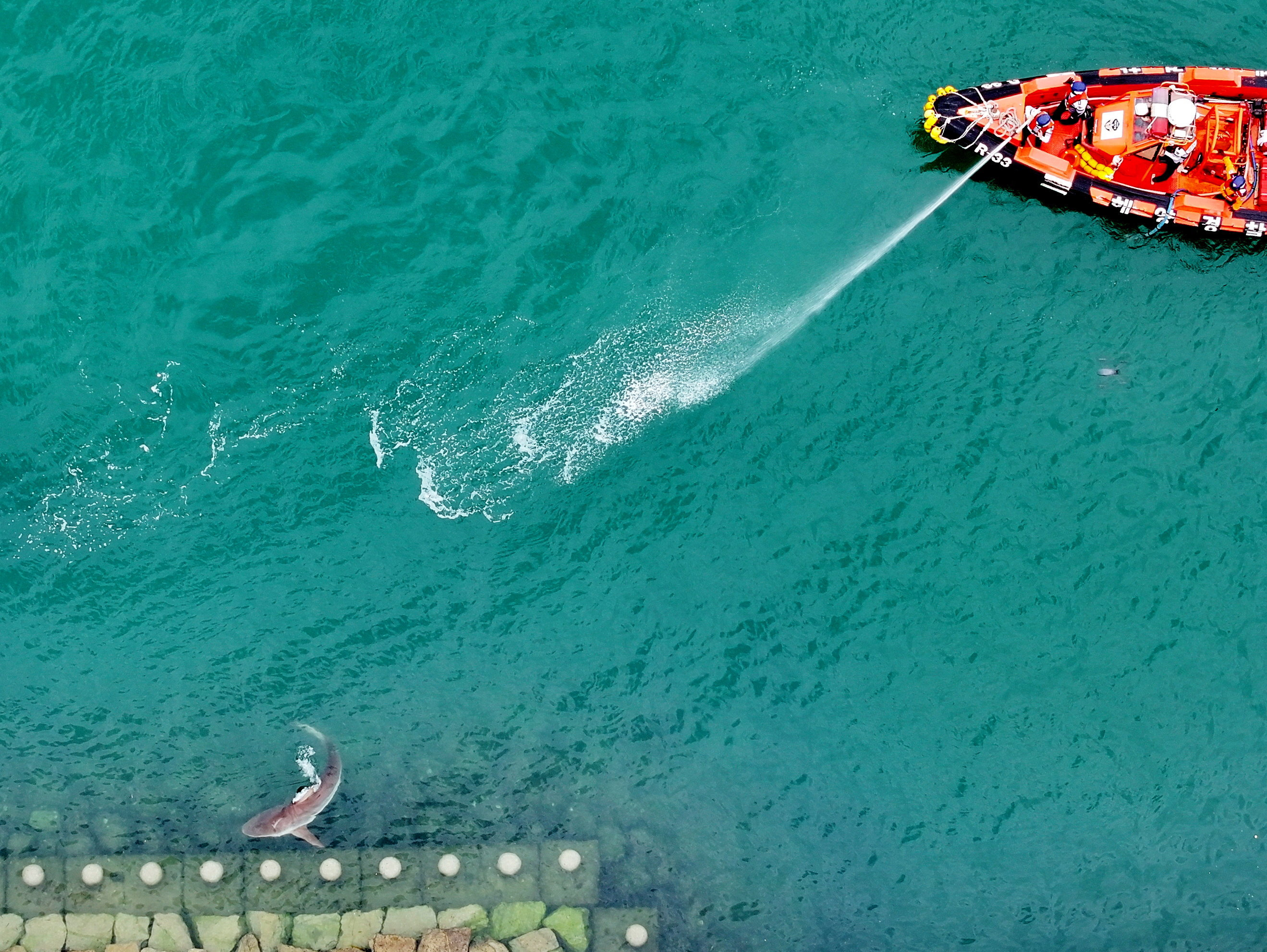
MixedThe 3.5-metre (11.48-ft) shark was first spotted in a narrow waterway at North Port on 18 September. It is nicknamed "Bukangi", from "Buk Hang", the Korean name for North Port, plus the Korean suffix "-i", and about 600,000 people have flocked to see it. South China Morning PostN “The 3.5-metre (11.48-ft) shark was first spotted in a narrow waterway at North Port on September 18.” Read at South China Morning Post ↗ Arab NewsRC “about 600,000 people have flocked to the area to see the shark” Read at Arab News ↗ MixedExperts say it could be a bronze whaler, a species typically found in warm temperate waters that has been seen off South Korea's coasts. The canal's location, near high-rise buildings and a major high-speed rail station in central Busan, drew particular attention. South China Morning PostN “Experts say it could be a bronze whaler, a species typically found in warm” Read at South China Morning Post ↗ Arab NewsRC “close to high-rise buildings and a major high-speed rail station in the heart of Busan” Read at Arab News ↗ MixedThe first attempt, on Tuesday, used vessels with water jets, but the shark swam away from them and stayed in the canal. South China Morning PostN “the shark swam away from jets and remained in the canal” Read at South China Morning Post ↗ Arab NewsRC “Authorities first attempted to guide the shark toward the sea on Tuesday using vessels equipped with water jets” Read at Arab News ↗
MixedFor the second attempt, authorities used a 50-metre-long, 6.8-metre-high net to stop the shark turning back toward the canal. A vessel pulled the centre of the net while five people on each side moved along the waterfront, coordinating their speed to steer the shark seaward. Arab NewsRC “For the second attempt, authorities used a 50-meter-long and 6.8-meter-high net to prevent the shark from turning back toward the canal.” Read at Arab News ↗ South China Morning PostN “five people on each side moved along the waterfront, coordinating their speed to guide the shark towards the sea” Read at South China Morning Post ↗ MixedKim Hyun-woo, a senior researcher at the National Institute of Fisheries Science leading the operation, said changing water levels and currents may let the shark find its own way out. He said the operation would count as a success only once the shark has completely left the canal for the open sea. Arab NewsRC “As the water level changes and the current shifts, we expect the shark may eventually be able to make its own way out” Read at Arab News ↗ South China Morning PostN “Once we confirm that it has completely left the canal and made its way out into the open sea, we can consider the operation a success.” Read at South China Morning Post ↗ RightKim said noise, lights and electrical signals may be making it hard for the shark to find the exit, with "too many external physical stimuli coming from different directions". Arab NewsRC “Noise, lights and electrical signals could have been making it difficult for the shark to find its way out, he said.” Read at Arab News ↗
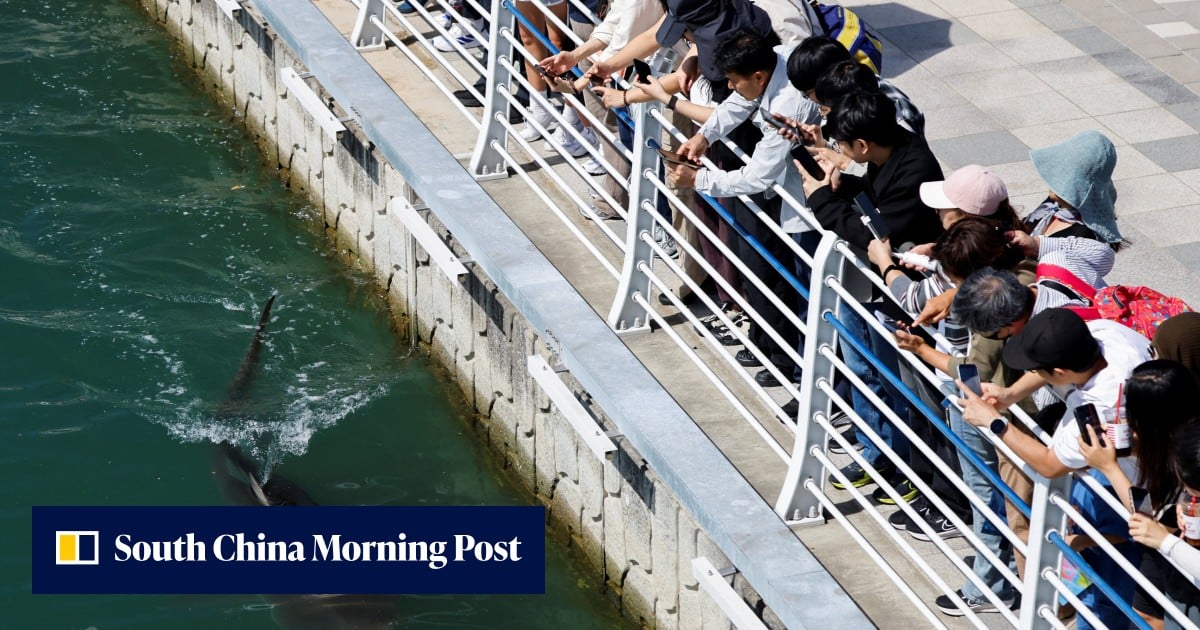
MixedHundreds gathered on Friday to watch. Some visitors said they would be sad to see it leave, while others said it should return to its natural habitat as soon as possible. Busan resident Jo Won-ho said he hopes it heads out to sea but "I guess it likes Busan, too, since it's still here". South China Morning PostN “Hundreds of people gathered along the waterway to watch the rescue on Friday.” Read at South China Morning Post ↗ Arab NewsRC “I guess it likes Busan, too, since it’s still here” Read at Arab News ↗ MixedThe shark has also drawn attention to changes in waters around South Korea. Experts point to warming seas as one possible factor in more large-shark sightings: a National Institute of Fisheries Science analysis found 46 sightings along the east coast in the first half of this year, against 12 in the same period last year. South China Morning PostN “An analysis by the National Institute of Fisheries Science found 46 sightings of large sharks along the country’s east coast during the first half of this year, compared with 12 over the same period last year.” Read at South China Morning Post ↗ Arab NewsRC “Experts have pointed to warming sea temperatures as one possible factor behind the growing number of large shark sightings.” Read at Arab News ↗
Every sentence links to the reporting it rests on. The pill in front of each says where its sources sit: Left, Centre or Right when one side supplies at least half of them, Mixed when they are evenly split.
Left0 outlets
No left outlet in our sources has covered this story yet.
Centre1 outlet
- Framing
- Reuters copy carried by the South China Morning Post, reporting the failed rescue as a straightforward news story with a human-interest tone.
- Emphasis
- The failed net operation, the researcher's hope the shark will leave on its own, crowds and the warming-seas context.
- Leaves out or plays down
- No substantive omissions relative to the other outlet; the text is essentially identical.
- For example
-
“Shark remains stranded in South Korean canal after second rescue attempt” — South China Morning Post
Right1 outlet
- Framing
- Reuters copy carried by Arab News in its offbeat section, with the same neutral wording and a Busan dateline.
- Emphasis
- Same as the centre outlet: failed attempt, net left in place, visitors' mixed feelings and the sightings increase.
- Leaves out or plays down
- None substantive; the text matches the other outlet apart from spelling and style.
- For example
-
“Shark remains stranded in South Korean canal after second rescue attempt ends” — Arab News
What every side reports
- A second attempt on Friday to guide the shark out of the Busan canal failed.
- The two-hour net operation was stopped over the risk of the net snagging on rocks, and the net was left in place.
- The shark is about 3.5 metres long, was first seen on 18 September and has drawn about 600,000 visitors.
- Kim Hyun-woo of the National Institute of Fisheries Science leads the operation and expects the shark may leave on its own.
- Large-shark sightings off South Korea's east coast rose to 46 in the first half of this year from 12 a year earlier.
Left0 articles
No coverage yet.
Centre1 article
-
South China Morning PostN · · via Reuters
Shark remains stranded in South Korean canal after second rescue attempt
Neutral Reuters wire copy carried by the SCMP: a factual account of the failed rescue with light human-interest detail.
Right1 article
-
Arab NewsRC · · via Reuters
Shark remains stranded in South Korean canal after second rescue attempt ends
Neutral Reuters wire copy carried by Arab News: the same factual account, with a Busan dateline and slightly extended headline.
- 2 Oct 14:27 First South China Morning PostN Shark remains stranded in South Korean canal after second rescue attempt via Reuters
- 2 Oct 18:34 +4h 7m Arab NewsRC Shark remains stranded in South Korean canal after second rescue attempt ends via Reuters
Times are when each article was published, or when we first saw it if the outlet gave no time.