300-metre section of Hasmonean-era Lower Aqueduct uncovered near Ramat Rachel, Jerusalem
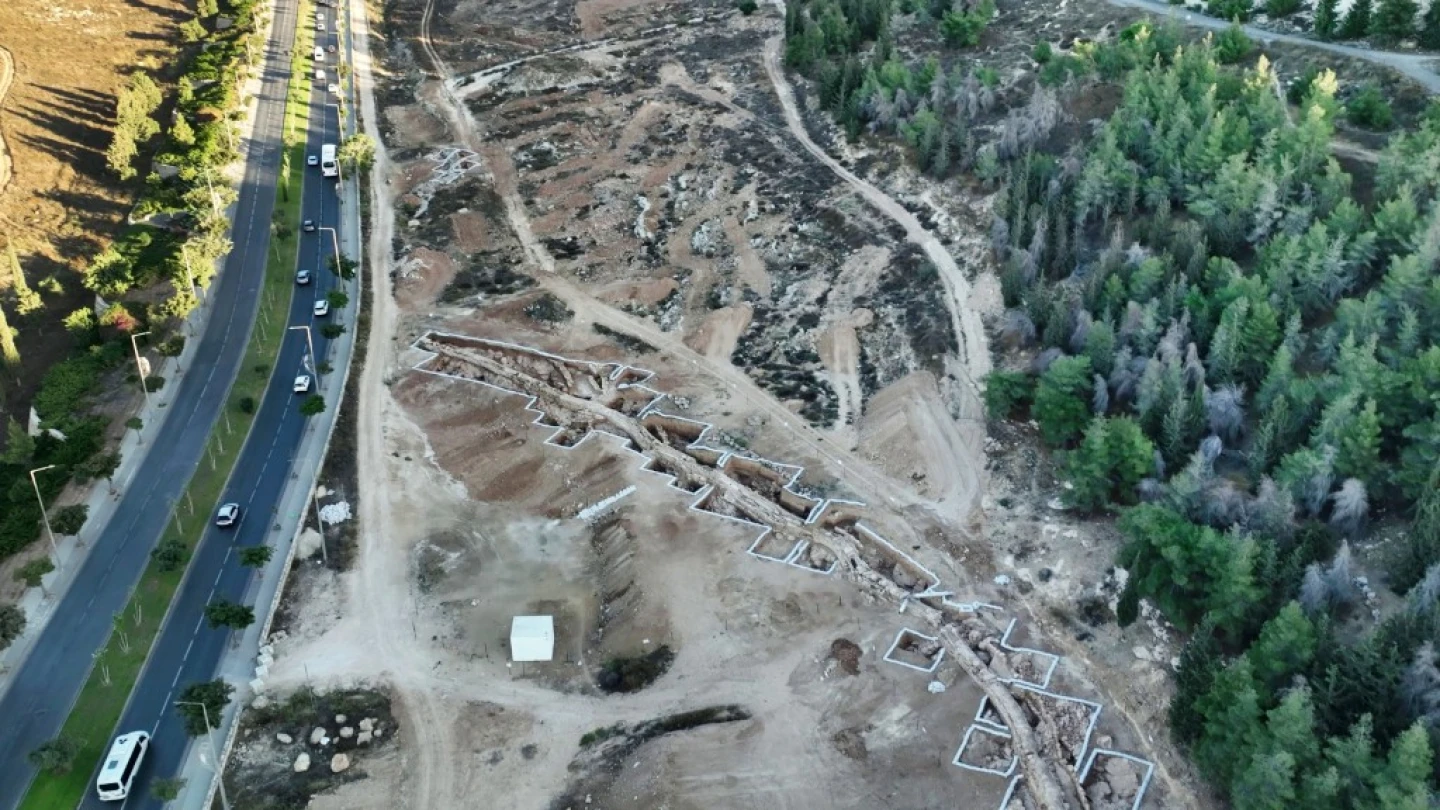
The Israel Antiquities Authority announced it has uncovered a 300-metre section of Jerusalem's 2,000-year-old Lower Aqueduct near Kibbutz Ramat Rachel, on land slated for a new neighbourhood.

1 / 2
The story, neutrally told
Right · 2The Israel Antiquities Authority (IAA) announced on Sunday that a 300-metre section of Jerusalem's roughly 2,000-year-old Lower Aqueduct has been uncovered near Kibbutz Ramat Rachel. The Jerusalem PostRC “A 300-meter-long section of Jerusalem's Lower Aqueduct, originally constructed in the Hasmonean period, was recently unearthed south of Kibbutz Ramat Rachel” Read at The Jerusalem Post ↗ JNSR “A 300-meter section of Jerusalem’s 2,000-year-old Lower Aqueduct has been uncovered near Kibbutz Ramat Rachel” Read at JNS ↗ Right · 2The excavation came ahead of construction of a new neighbourhood in southern Jerusalem on land designated by the Israel Land Authority (ILA), which funded the dig. JNSR “The Israel Antiquities Authority announced the discovery ahead of construction of a new neighborhood in southern Jerusalem. The excavations were funded by the Israel Land Authority.” Read at JNS ↗ The Jerusalem PostRC “located in an area slated by the Israel Land Authority for a new neighborhood” Read at The Jerusalem Post ↗ Right · 2The aqueduct runs about 21 km from Solomon's Pools, south of Bethlehem, to the Temple Mount in Jerusalem, and relied on gravity alone, dropping about one metre in elevation per kilometre along most of its route. JNSR “The aqueduct stretched approximately 21 kilometers from Solomon’s Pools to Jerusalem.” Read at JNS ↗ The Jerusalem PostRC “dropping just one meter in elevation per kilometer” Read at The Jerusalem Post ↗
Right · 2Excavation directors Dr Benyamin Storchan and Gil Freid said it was probably built in the time of the Hasmonean kings, who ruled Judea from the second century BCE, and that it stayed in intermittent use until about 100 years ago. JNSR ““The Lower Aqueduct was an impressive engineering project, probably built in the time of the Hasmonean kings to supply water to Jerusalem,” said excavation directors Benyamin Storchan and Gil Freid.” Read at JNS ↗ The Jerusalem PostRC ““The system was so well planned that it remained in intermittent use until about 100 years ago.”” Read at The Jerusalem Post ↗ Right · 2The section shows several phases: an original built, plastered channel, then ceramic pipes installed inside it during the Ottoman period about 500 years ago, along with an exterior plaster finish with small stones pressed into the wet surface. JNSR “During the Ottoman period, approximately 500 years ago, ceramic pipes were installed inside the original channel.” Read at JNS ↗ The Jerusalem PostRC “small stones were pressed into it while the plaster was still wet, creating a distinctive surface” Read at The Jerusalem Post ↗ Right · 2The system also had cleanout points giving access to the channel for clearing blockages and maintenance. The Jerusalem PostRC “They installed cleanout points along the system, providing access to the channel for blockages or routine maintenance.” Read at The Jerusalem Post ↗ JNSR “access points that enabled workers to clear blockages and maintain the flow of water” Read at JNS ↗
Right · 2IAA Jerusalem District Archaeologist Dr Amit Re'em called the aqueduct "an engineering marvel", saying that even with modern technology such a system would need extensive planning. JNSR “Amit Re’em, the IAA’s Jerusalem District Archaeologist, described the aqueduct as “an engineering marvel.”” Read at JNS ↗ The Jerusalem PostRC “Even today, with all our modern technology, building such a system would require extensive planning and effort” Read at The Jerusalem Post ↗ Right · 2Planners intend to preserve the aqueduct and incorporate it into the main entrance of the new neighbourhood, and the IAA hopes to create a continuous park letting people walk beside it from southern Jerusalem to the Old City, an initiative it says it is advancing with the Jerusalem Municipality and other partners. JNSR “Planners intend to incorporate the aqueduct into the main entrance of the new neighborhood and make the remains accessible to the public.” Read at JNS ↗ The Jerusalem PostRC “we are already advancing this initiative together with the Jerusalem Municipality and other partners.” Read at The Jerusalem Post ↗ Right · 1Acting ILA director Yehuda Eliyahu and Heritage Minister Amichai Eliyahu welcomed the find, the former saying it continues "a glorious chain of generations of building and development" and the latter that it reflects a leadership that planned ahead for Jerusalem's growth. The Jerusalem PostRC “reminds us that we are continuing a glorious chain of generations of building and development.”“tells of a leadership that knew how to think ahead” Read at The Jerusalem Post ↗
Right · 2The research is to be presented this week at the 19th "New Studies in the Archaeology of Jerusalem and Its Region" conference. The Jerusalem PostRC “will be presented at the 19th "New Studies in the Archaeology of Jerusalem and Its Region" conference” Read at The Jerusalem Post ↗ JNSR “scheduled to be presented this week at the annual New Studies in the Archaeology of Jerusalem and Its Region conference” Read at JNS ↗
Every sentence links to the reporting it rests on. The pill in front of each says where its sources sit: Left, Centre or Right when one side supplies at least half of them, Mixed when they are evenly split. The number is how many outlets it cites.
Left0 outlets
No left outlet in our sources has covered this story yet.
Centre0 outlets
No centre outlet in our sources has covered this story yet.
Right2 outlets
- Framing
- Both outlets present the find as an archaeological achievement and a heritage success tied to Jerusalem's development, relaying IAA statements closely.
- Emphasis
- Engineering skill, gravity flow, Ottoman modifications, and plans for public access and a park; the Jerusalem Post adds ILA and ministerial praise and links to the Temple Mount.
- Leaves out or plays down
- Neither reports independent expert views or any dispute over the dating, the development, or the land.
- Charged language
- “engineering marvel”“glorious chain of generations”“eternal capital”
- For example
-
“The aqueduct is “an engineering marvel,” said IAA Jerusalem District Archaeologist Amit Re’em.” — JNS
“continuing a glorious chain of generations of building and development” — The Jerusalem Post
What every side reports
- A 300-metre section of the Lower Aqueduct was uncovered near Kibbutz Ramat Rachel.
- The aqueduct is about 21 km long, from Solomon's Pools to Jerusalem, and was probably built in the Hasmonean period.
- Ottoman-era ceramic pipes were added about 500 years ago.
- The aqueduct is to be incorporated into a new neighbourhood's entrance.
Israel Antiquities Authority organisation
The IAA announced the find, calls the aqueduct an engineering marvel and wants a continuous walking park alongside it to the Old City.
“The dream and vision of the Israel Antiquities Authority is to create a continuous park” — The Jerusalem Post
“Re’em said the IAA hopes to develop a continuous park along the aqueduct” — JNS
Left0 articles
No coverage yet.
Centre0 articles
No coverage yet.
Right2 articles
-
JNSR ·
2,000-year-old Hasmonean aqueduct section uncovered in Jerusalem
Celebratory Relays the IAA announcement with emphasis on engineering ingenuity and plans for public access.
-
Israel unearths 2,000-year-old section of Jerusalem aqueduct that brought water to Temple Mount
Celebratory Adds official ILA and Heritage Minister statements linking the find to Jerusalem's development and the Temple Mount.
- 11 Oct 07:58 First JNSR 2,000-year-old Hasmonean aqueduct section uncovered in Jerusalem
- 11 Oct 12:56 +4h 57m The Jerusalem PostRC Israel unearths 2,000-year-old section of Jerusalem aqueduct that brought water to Temple Mount
Times are when each article was published, or when we first saw it if the outlet gave no time.