Severe drought declared in parts of southern England
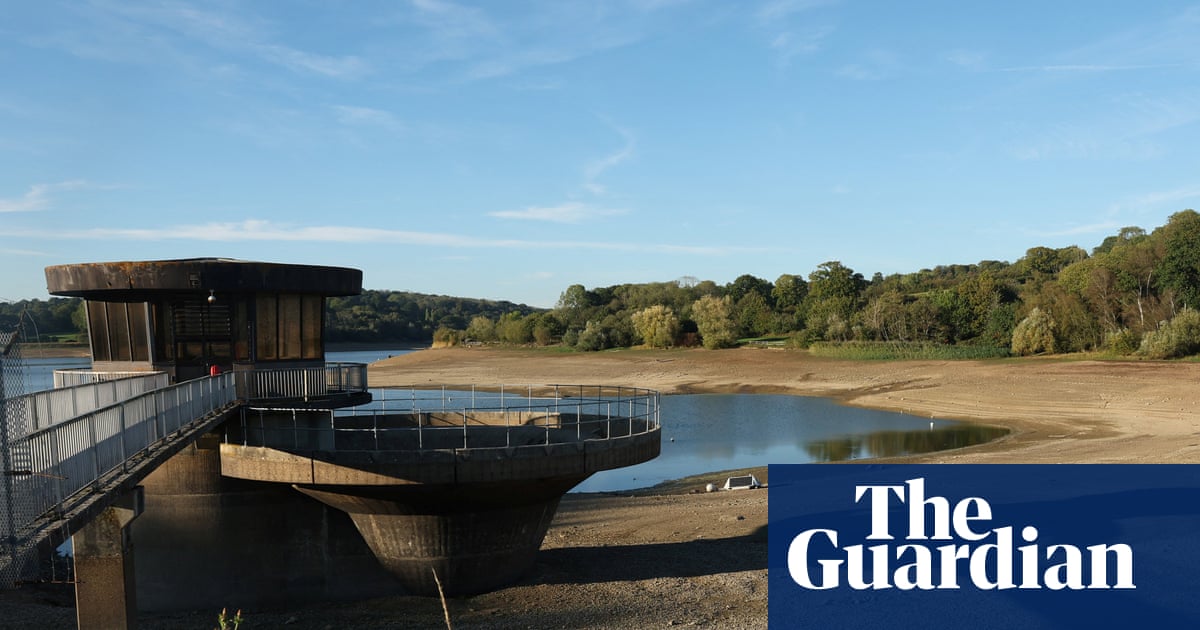
Severe drought has been declared in parts of Cornwall, Devon, Dorset, Somerset, East Sussex and West Sussex after a hot, dry summer left reservoirs low. The government says household supplies will not be interrupted.
Updated (version 2). New coverage since the last version from Daily Mirror, The Guardian.


1 / 5
The story, neutrally told
Mixed · 2Severe drought has been declared in parts of Cornwall, Devon, Dorset, Somerset, East Sussex and West Sussex. BBC NewsN “It was declared in parts of Cornwall, Devon, Dorset, Somerset, East Sussex and West Sussex.” Read at BBC News ↗ GB NewsR “Severe drought has been declared in parts of Cornwall, Devon, Dorset, Somerset, East Sussex and West Sussex, the Government has confirmed.” Read at GB News ↗ Centre · 1The Environment Agency announced the decision after a meeting of the National Drought Group, which reviewed water resources and drought conditions across England. BBC NewsN “The announcement by the Environment Agency follows a meeting of the National Drought Group, which reviewed water resources and drought conditions across England.” Read at BBC News ↗ Centre · 2The BBC attributes the pressure on supplies to high demand after the hottest summer on record, while the Evening Standard says officials reported the driest April to September for more than a century in the South East and South West. BBC NewsN “Supplies have been significantly impacted by high demand following the hottest summer on record.” Read at BBC News ↗ Evening StandardN “The South East and South West have experienced their driest April to September for more than a century, affecting reservoirs in those areas, officials said.” Read at Evening Standard ↗
Right · 1GB News says five heatwave periods between May and September, and only light October rain, failed to make up the losses, and that drought was declared in Yorkshire last week. GB NewsR “light spells of rain over October failing to recoup the losses built up over five respective heatwave periods between May and September.”“Last week, drought conditions were declared in Yorkshire due to low water levels in reservoirs and rivers.” Read at GB News ↗ Centre · 1Latest figures put Wimbleball Reservoir on Exmoor at 14.9% capacity, Roadford in Devon at 36.8%, Burrator at 33.6%, Colliford in Cornwall at 35% and Stithians at 21.9%; the Environment Agency classes Colliford and Wimbleball as exceptionally low. BBC NewsN “Other major reservoirs are also low, including Roadford in Devon at 36.8%, Burrator at 33.6%, Colliford in Cornwall at 35% and Stithians at 21.9%.”“The Environment Agency has classed Colliford and Wimbleball as having exceptionally low levels” Read at BBC News ↗ Mixed · 2The government said customer water supplies would be uninterrupted and that declaring severe drought ensures proactive steps are taken to safeguard water before any disruption occurs. BBC NewsN “The government said customer water supplies would be uninterrupted.” Read at BBC News ↗ GB NewsR “It said declaring a severe drought would allow preventative action to be taken early” Read at GB News ↗
Mixed · 2Planned measures include ministers instructing water companies to monitor reservoir and river levels daily, tougher water quality monitoring, and more Environment Agency compliance checks on businesses abstracting water to ensure they take only permitted quantities. BBC NewsN “Ministers instructing water companies to conduct daily monitoring of reservoir and river levels and tougher water quality monitoring” Read at BBC News ↗ GB NewsR “increasing Environment Agency compliance checks on businesses abstracting water from rivers and other natural sources” Read at GB News ↗ Centre · 1The Evening Standard adds that water companies have been told to step up drought planning. Evening StandardN “Water companies have been told to step up drought planning, amid efforts to protect public water supplies in the affected areas.” Read at Evening Standard ↗ Left · 1The Guardian reports that environment secretary Angela Eagle has yet to approve requests from South East Water, South West Water and Southern Water to extend restrictions to non-essential business users such as golf clubs, private schools and commercial car washes; Eagle called on companies to step up drought planning but did not announce approval. The GuardianLC “South East Water, South West Water and Southern Water want to impose non-essential user bans on businesses to protect supplies.”“she did not announce approval for the non-essential user bans.” Read at The Guardian ↗
Left · 1The Guardian also reports that water minister Emma Hardy instructed the Environment Agency to prioritise protecting public water supplies where there is an unavoidable trade-off with environmental rules, and that Ardingly reservoir, serving about 95,000 properties, is 19% full against an expected 75% for the time of year, with Wimbleball given as 16%. The GuardianLC “Hardy instructed the Environment Agency to prioritise protecting public water supplies in areas affected by severe drought”“Ardingly reservoir, which serves about 95,000 properties in Haywards Heath, Uckfield and surrounding areas, is only 19% full.”“The Environment Agency would expect reservoir storage to be about 75% for this time of year.” Read at The Guardian ↗ Left · 2Eagle said this level of drought had not been experienced for decades, and Environment Agency chief executive Philip Duffy said water companies should follow their drought plans and that everyone should use less water, as recovery depends on both rainfall and water use. The GuardianLC “This level of drought is something we have not experienced for decades” Read at The Guardian ↗ Daily MirrorL “Recovery depends on both rainfall and how much water we use.” Read at Daily Mirror ↗
Every sentence links to the reporting it rests on. The pill in front of each says where its sources sit: Left, Centre or Right when one side supplies at least half of them, Mixed when they are evenly split. The number is how many outlets it cites.
Left2 outlets
- Framing
- The Guardian leads on the threat to public supplies and the unapproved business-use bans; the Mirror runs a short breaking-news warning built around the Environment Agency's quote.
- Emphasis
- Guardian: critically low reservoirs, Ardingly at 19%, the climate crisis, and the government not yet approving bans on non-essential business use. Mirror: urgent call to use less water.
- Leaves out or plays down
- Neither mentions the Yorkshire declaration; the Mirror gives no reservoir figures.
- Charged language
- “Despite the crisis”“fuelled by the climate crisis”“Urgent water warning”
- For example
-
“Despite the crisis, the environment secretary Angela Eagle has yet to approve requests from three water companies” — The Guardian
“Brits have been warned to "use less water" in a bid to preserve falling supplies” — Daily Mirror
Centre2 outlets
- Framing
- Plain news reports of the declaration, focused on reservoir levels, the cause and the government's response.
- Emphasis
- BBC gives reservoir figures and local follow-up links; the Standard stresses the century-long dry record and pressure on supplies.
- Leaves out or plays down
- Neither mentions the Yorkshire declaration or the pending business water-use bans; the Standard gives no reservoir figures.
- For example
-
“Reservoir levels continue to drop after a hot summer and less September rain than normal.” — BBC News
“The South East and South West have experienced their driest April to September for more than a century.” — Evening Standard
Right1 outlet
- Framing
- GB News uses more vivid language about the summer's heat and failing infrastructure, in a similar report.
- Emphasis
- Record-breaking heat, five heatwaves, reservoirs and infrastructure strained, and the Yorkshire declaration.
- Leaves out or plays down
- Does not mention the Standard's driest-in-a-century finding or the pending business-use bans.
- For example
-
“Severe drought has been declared in parts of Cornwall, Devon, Dorset, Somerset, East Sussex and West Sussex, the Government has confirmed.” — GB News
What every side reports
- Severe drought has been declared in parts of Cornwall, Devon, Dorset, Somerset, East Sussex and West Sussex.
- Reservoirs are low after a hot, dry summer.
- The government says household supplies will not be interrupted.
-
Severe drought has been declared in parts of Cornwall, Devon, Dorset, Somerset, East Sussex and West Sussex.
Supported- Supports 5
- Daily Mirror, The Guardian, BBC News, Evening Standard, GB News
-
Wimbleball Reservoir on Exmoor is at 14.9% capacity and Colliford and Wimbleball have exceptionally low levels.
Reported- Reports 3
- The Guardian, BBC News, GB News
-
An exceptionally hot, dry spell this year strained reservoirs and water supplies in southern England.
Supported- Supports 5
- Daily Mirror, The Guardian, BBC News, Evening Standard, GB News
England drought topic
Officials and the government present the declaration as a precaution so action is taken before any supply disruption.
“"ensures proactive steps are taken to safeguard water before any disruption occurs"” — BBC News
“Water companies have been told to step up drought planning” — Evening Standard
Left2 articles
-
Urgent water warning as severe drought declared in 6 UK counties - full list
Alarmist Short breaking piece with an urgent warning headline, relaying the Environment Agency's call to use less water.
-
Severe drought declared in six areas of England as public water supplies under threat
Critical Detailed report stressing critically low reservoirs and the government's delay on business water-use bans, linking the dry spell to the climate crisis.
Centre2 articles
-
Severe drought declared in parts of southern England
Neutral Straightforward report of the declaration, reservoir figures and government plans.
-
Parts of England in severe drought as water supplies ‘under immense pressure’
Neutral Brief report stressing the driest April–September in over a century and supplies under pressure.
Right1 article
-
GB NewsR ·
Severe drought declared in six counties across Britain as reservoirs buckle from months of no rain
Alarmist Dramatic headline and wording on reservoirs buckling, with the same government measures and figures as the BBC.
- 15 Oct 12:20 First GB NewsR Severe drought declared in six counties across Britain as reservoirs buckle from months of no rain
- 15 Oct 12:28 +7m BBC NewsN Severe drought declared in parts of southern England
- 15 Oct 12:29 +8m Evening StandardN Parts of England in severe drought as water supplies ‘under immense pressure’
- 15 Oct 13:00 +39m Daily MirrorL Urgent water warning as severe drought declared in 6 UK counties - full list
- 15 Oct 13:18 +58m The GuardianLC Severe drought declared in six areas of England as public water supplies under threat
Times are when each article was published, or when we first saw it if the outlet gave no time.
Ask about this story
Loading…