Surfer Mel Ismail describes shark attack that cost a leg off Western Australia
In a first interview since the 14 September attack near Geraldton, surfer and firefighter Mel Ismail described fighting off a shark that severed a leg below the knee. Authorities have not yet identified the species.
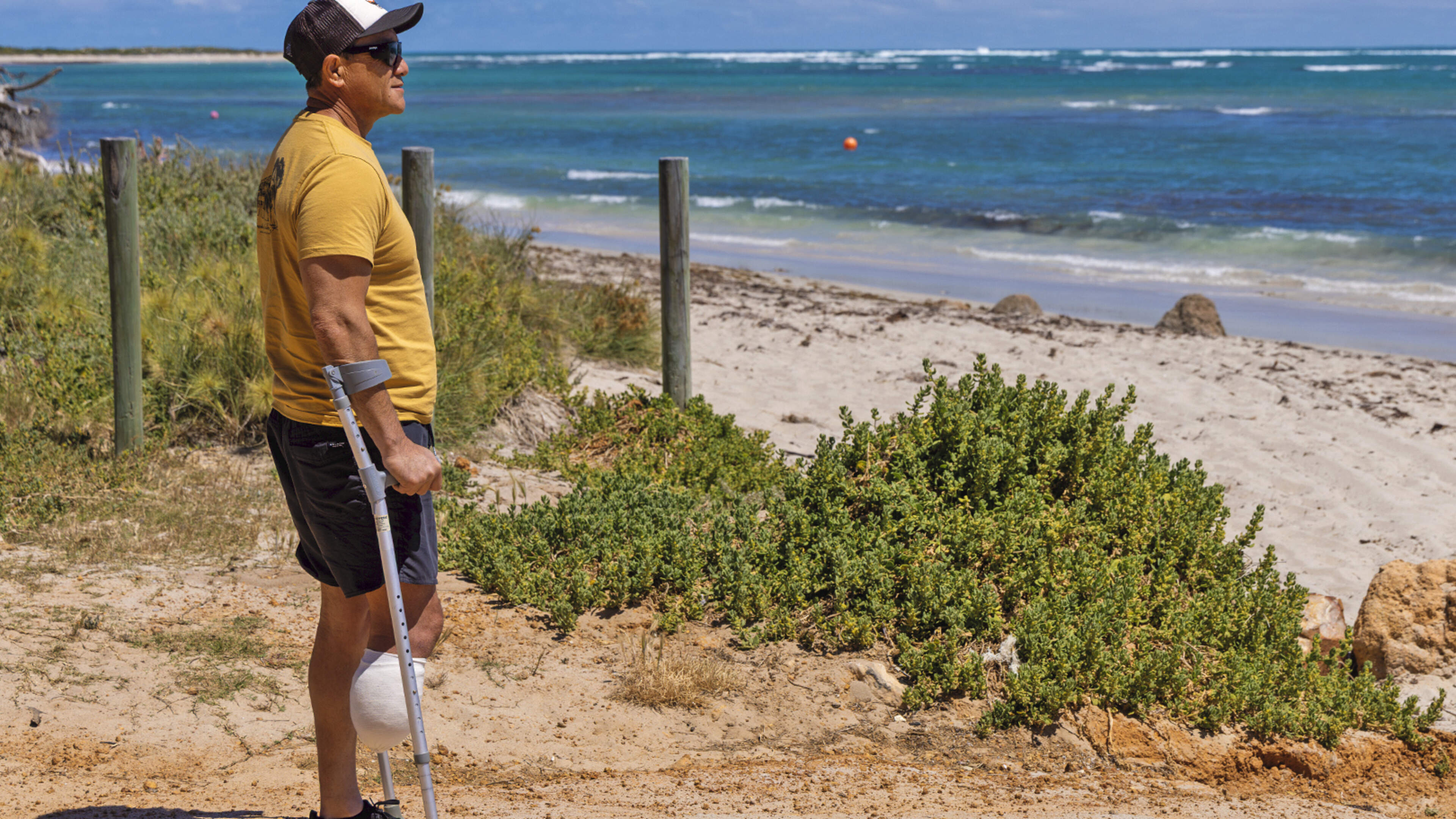
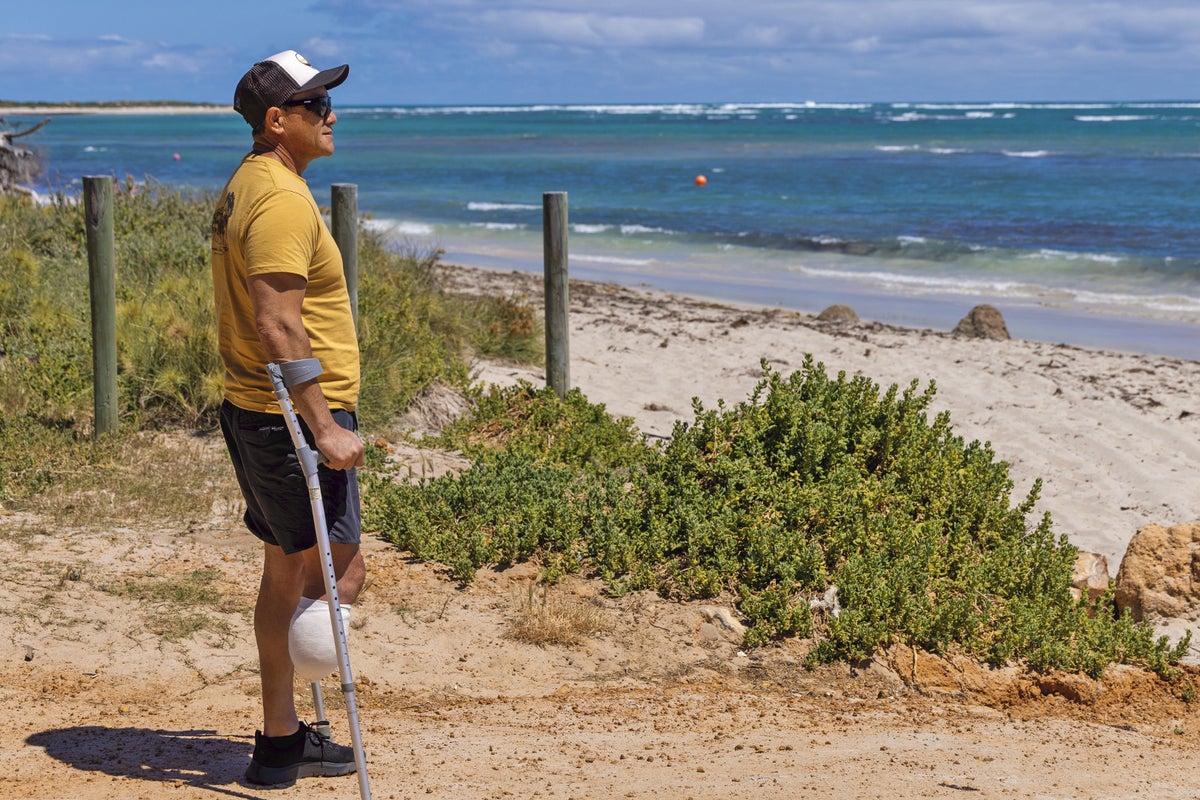
1 / 2
The story, neutrally told
Mixed · 2Mel Ismail, a surfer and professional firefighter, has given his first interview since a shark attack on Australia's west coast in which he lost a leg. The IndependentLC “In his first interview since the attack, he said he noticed something odd” Read at The Independent ↗ Irish IndependentRC “Mel Ismail spoke to broadcasters after he lost a leg in the attack on Australia’s west coast” Read at Irish Independent ↗ Left · 1The attack happened on 14 September while Ismail was surfing at Glenfield Beach near Geraldton, and Ismail lost the right leg below the knee. The IndependentLC “He said he had been surfing at Glenfield Beach near Geraldton on Australia's west coast when he was attacked on September 14. He lost his right leg below the knee.” Read at The Independent ↗ Left · 1Ismail told Australia's ABC that, after spotting a pod of about 20 dolphins, Ismail first thought a dolphin had hit the board, then felt something grab and drag Ismail underwater and knew it was a shark. The IndependentLC ““I thought I got hit by a dolphin, initially,” Ismail told Australia’s ABC.” Read at The Independent ↗
Mixed · 2Ismail said the shark's eye seemed to wink, and that Ismail tried to push a finger into the eye while being dragged; the shark then swam off. The IndependentLC “I was trying to get my fingers in its eye and just pushing its eye as I was being dragged.” Read at The Independent ↗ Irish IndependentRC “‘A wink and a smile’: Australian shark attack survivor reveals details of mauling” Read at Irish Independent ↗ Left · 1The Independent explained that many sharks, including white and mako sharks, have no eyelids but roll their eyeballs back into their sockets when attacking prey, exposing a tough layer of white cartilage. It added that authorities have yet to determine the species involved. The IndependentLC “Many sharks, including the white shark and mako shark, do not have eyelids, but when attacking prey, they roll their eyeballs backwards into their sockets as a protective measure” Read at The Independent ↗ Left · 1Ismail caught a wave that carried Ismail about 20 metres closer to shore, then was helped onto a board by surfer Shannan Dunn, who had come down the dunes. The IndependentLC “Alone and bleeding at the back of the surf break, Ismail caught a wave that took him about 20 meters (66 feet) closer to shore.”“Dunn went to Ismail’s rescue, helping the shark victim onto Dunn’s board.” Read at The Independent ↗
Left · 1On the beach an onlooker made a tourniquet from a leg rope and another phoned for an ambulance, and teenagers helped Ismail into Dunn's SUV, which drove along the beach to meet the ambulance. The IndependentLC “an onlooker crafted a tourniquet for Ismail using a leg rope and another onlooker phoned for an ambulance.”“A pair of teenagers helped Ismail climb into Dunn's SUV, and they drove along the beach to meet an ambulance.” Read at The Independent ↗ Left · 1Ismail said people in the vehicle kept Ismail positive by laughing, and that Ismail began to feel survival was likely. Ismail plans to return to the water as a bodyboarder. The IndependentLC ““I had a heap of people laughing, keeping me alive, keeping me positive in the back,” Ismail said.”“Ismail said he intends to return to the surf as a bodyboarder.” Read at The Independent ↗ Left · 1Four days later, 63-year-old swimmer Greg O'Neill was fatally mauled by a large white shark off Sorrento Beach in Perth's northern suburbs, about 400 km south of Geraldton. The IndependentLC “Four days after Ismail was attacked, 63-year-old swimmer Greg O’Neill was fatally mauled by a large white shark.” Read at The Independent ↗
Left · 1There have been five fatal shark attacks in Australia this year, including three spearfishing divers killed over four weeks in May and June and a 12-year-old boy in Sydney Harbour in January. Since 2000 the average has been two to three a year, according to the Australian Shark Incident Database. The IndependentLC “There have been five fatal shark attacks in Australia this year.”“Australia has averaged between two and three fatal shark attacks a year since 2000” Read at The Independent ↗
Every sentence links to the reporting it rests on. The pill in front of each says where its sources sit: Left, Centre or Right when one side supplies at least half of them, Mixed when they are evenly split. The number is how many outlets it cites.
Left1 outlet
- Framing
- The Independent leads with the survivor's account that the shark 'winked', then gives a detailed rescue narrative, shark-biology explanation and national fatality context.
- Emphasis
- Rescue by bystanders, the eye detail explained scientifically, and 2026 fatality statistics.
- Leaves out or plays down
- Nothing notable left out relative to the other outlet's visible headline and lede.
- Charged language
- “predator”“near-death encounter”
- For example
-
“Shark attack survivor says predator 'winked' at him as he fought it off” — The Independent
“has revealed new details of his near-death encounter” — The Independent
Centre0 outlets
No centre outlet in our sources has covered this story yet.
Right1 outlet
- Framing
- The Irish Independent frames the story around the survivor's quirky 'wink and a smile' line, describing details of a 'mauling' shared with broadcasters.
- Emphasis
- The survivor's own colourful description and the severity of the attack.
- Leaves out or plays down
- Its visible headline and lede do not show the rescue, species uncertainty or fatality context given by the Independent.
- Charged language
- “mauling”“A wink and a smile”
- For example
-
“‘A wink and a smile’: Australian shark attack survivor reveals details of mauling” — Irish Independent
“Mel Ismail spoke to broadcasters after he lost a leg in the attack on Australia’s west coast” — Irish Independent
What every side reports
- Mel Ismail lost a leg in a shark attack on Australia's west coast.
- Ismail described the shark as having 'winked' or given 'a wink and a smile'.
- Ismail spoke to broadcasters after the attack.
Mel Ismail person
Ismail describes pushing at the shark's eye to escape, credits bystanders with keeping Ismail alive, and says Ismail will return to the surf as a bodyboarder.
“Ismail said he intends to return to the surf as a bodyboarder.” — The Independent
““I had a heap of people laughing, keeping me alive, keeping me positive in the back,” Ismail said.” — The Independent
Left1 article
-
Shark attack survivor says predator 'winked' at him as he fought it off
Sympathetic Survivor-centred narrative of escape and rescue, with explanatory context on shark eyes and fatality statistics.
Centre0 articles
No coverage yet.
Right1 article
-
‘A wink and a smile’: Australian shark attack survivor reveals details of mauling
Mixed Leads with the survivor's 'wink and a smile' quote while calling the event a mauling.
- 9 Oct 08:25 First Irish IndependentRC ‘A wink and a smile’: Australian shark attack survivor reveals details of mauling
- 9 Oct 08:38 +13m The IndependentLC Shark attack survivor says predator 'winked' at him as he fought it off
Times are when each article was published, or when we first saw it if the outlet gave no time.