Rare Siberian rubythroat found dead in Cumbria after cat brought it home
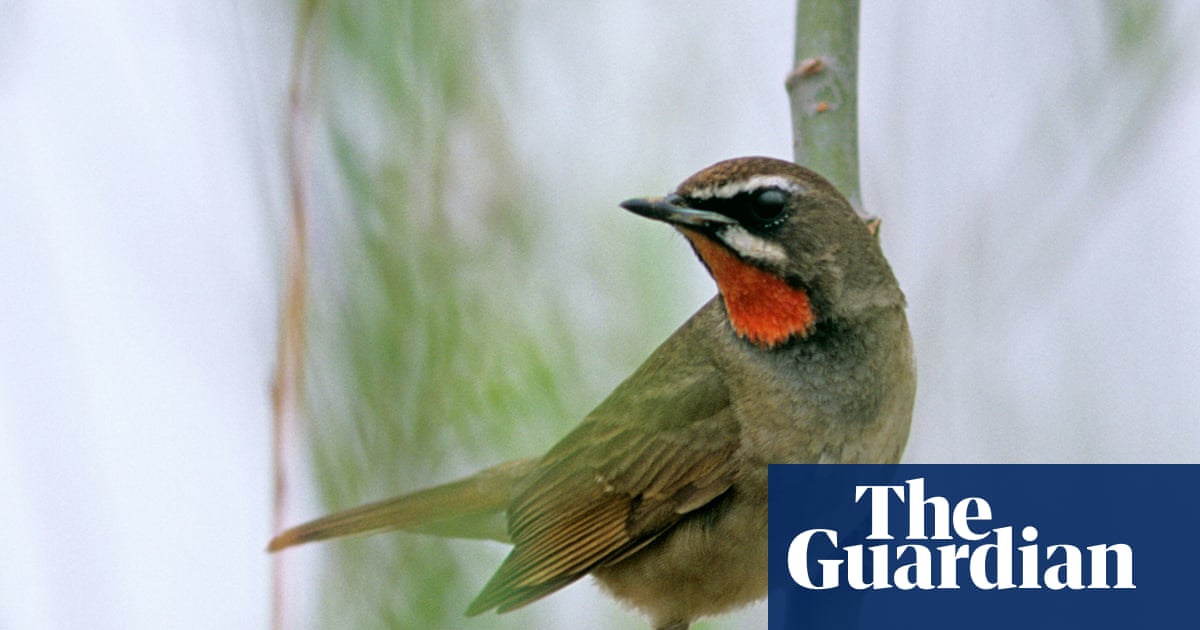
A Siberian rubythroat, a rare bird thousands of miles off its migration route, was found dead in north Cumbria after a pet cat brought it into a home. The bird is to be sampled by academics and may go on display at Tullie House museum in Carlisle.


1 / 3
The story, neutrally told
Mixed · 2A Siberian rubythroat, which normally migrates from Siberia to winter in south and south-east Asia, has been found dead in a remote north Cumbrian valley after a domestic cat brought it home. The GuardianLC “A bird that flies south from its breeding grounds in Siberia to winter in south and south-east Asia has been found thousands of miles off course in Cumbria.” Read at The Guardian ↗ GB NewsR “has been found dead in the Cumbrian town of Brampton after falling victim to a domestic cat” Read at GB News ↗ Mixed · 2Chris Hind, Cumbria's county recorder for birds, called the find "extraordinary". He said there have been only 17 recorded instances of the species in the UK, 15 of them in the northern Scottish isles, and only two accepted records from mainland Britain. The GuardianLC “There have been only 17 recorded instances of the bird in the UK, 15 of those in the northern Scottish isles.” Read at The Guardian ↗ GB NewsR “only two accepted records exist from mainland Britain” Read at GB News ↗ Mixed · 2The woman whose cat caught the bird, who wants to remain anonymous, told the BBC she "heard the cat flap go" and her heart sank when the cat "brought her a bird and trotted off". She noticed an orange-red patch under its beak but could not identify the species. The GuardianLC “had “heard the cat flap go” and her heart sank when her cat “brought her a bird and trotted off”” Read at The Guardian ↗ GB NewsR “I saw the bird's distinctive beautiful orange-red feather patch under its beak but I couldn't recognise the species.” Read at GB News ↗
Mixed · 2Realising it was unusual, she put the bird in her freezer and contacted the RSPB, which alerted Hind. The Guardian says this happened at the weekend. The GuardianLC “Hind was contacted by the RSPB at the weekend after a womanwho lives in a remote north Cumbrian valley reported the bird.” Read at The Guardian ↗ GB NewsR “She subsequently reached out to the RSPB, which in turn alerted Mr Hind to the remarkable discovery.” Read at GB News ↗ Mixed · 2The bird was very underweight at 28 grams. The Guardian says textbooks give about 73 grams for the species, while GB News says healthy birds typically reach 75g. The GuardianLC “weighing 28 grams (just under 1oz). Textbooks say it should be about 73 grams.” Read at The Guardian ↗ GB NewsR “weighing just 28g, barely a third of the 75g that healthy specimens of the species typically reach” Read at GB News ↗ Left · 1Why the bird went west rather than south is a mystery. Hind pointed to yellow-browed warblers, which have been appearing in the UK in growing numbers; he said they were once thought to be lost birds, but some academics now think their movement may be more purposeful. The GuardianLC “Quite why the bird appears to have headed west, rather than south, is a mystery although Hind pointed to the puzzle of yellow-browed warblers” Read at The Guardian ↗
Mixed · 2Hind said rubythroats are very secretive and the heavily vegetated valley made detection hard, so it was almost impossible anyone would have seen or identified it without the cat. The GuardianLC “It was likely, he said, that no one would ever have seen it had the cat not come across it.” Read at The Guardian ↗ GB NewsR “If this cat hadn't brought it in, it's almost impossible that anyone would either have seen it or identified it.” Read at GB News ↗ Mixed · 2Hind, who is keeping the bird in his freezer, said academics will take samples before it goes to Tullie House museum in Carlisle, and he hopes it can be prepared for display. The GuardianLC “the bird – currently in Hind’s freezer – will go to Tullie House museum in Carlisle” Read at The Guardian ↗ GB NewsR “He expressed hope that the specimen could be prepared for public display” Read at GB News ↗ Mixed · 2Hind described mixed emotions, saying he was sad for the bird and "quite angry with the cat" but that cats are predators and it was not the cat's fault. Josh Jones, senior editor of Bird Guides, called it "absolutely tragic" and urged owners to fit cats with bell collars. The GuardianLC “I’m very sad for the bird, quite angry with the cat, but you know cats are predators, this is what they do, it’s not the cat’s fault.” Read at The Guardian ↗ GB NewsR “Mr Jones urged cat owners to fit their pets with bell-equipped collars” Read at GB News ↗
Every sentence links to the reporting it rests on. The pill in front of each says where its sources sit: Left, Centre or Right when one side supplies at least half of them, Mixed when they are evenly split. The number is how many outlets it cites.
Left2 outlets
- Framing
- A human-interest story led by Hind's reaction, with the bird's puzzling westward route and the yellow-browed warbler comparison.
- Emphasis
- Hind's mixed emotions, the migration mystery and the plan for the specimen.
- Leaves out or plays down
- Does not name Brampton, quote Bird Guides or mention bell collars.
- Charged language
- “Regrettably”
- For example
-
“Regrettably, it was found by a cat.” — The Guardian
Centre0 outlets
No centre outlet in our sources has covered this story yet.
Right1 outlet
- Framing
- Leads on the species' rarity and the cat's kill, with a pet-owner safety message.
- Emphasis
- Rarity, the 'tragic' loss, and Bird Guides' call for bell collars.
- Leaves out or plays down
- Omits the migration-mystery discussion and the yellow-browed warbler comparison.
- Charged language
- “absolutely tragic”“falling victim”
- For example
-
“absolutely tragic that the beautiful bird has fallen victim to a pet cat” — GB News
What every side reports
- A Siberian rubythroat was found dead in north Cumbria after a pet cat brought it home.
- There are 17 recorded UK instances, 15 of them in the northern Scottish isles, and two accepted mainland records.
- The bird weighed 28g and was put in a freezer; it will be sampled and then go to Tullie House museum in Carlisle.
- Chris Hind, Cumbria's county recorder for birds, called the find extraordinary.
Where accounts differ
-
Typical healthy weight of the species
- Left
- The Guardian: textbooks say about 73 grams.
- Right
- GB News: healthy specimens typically reach 75g.
Siberian rubythroat other
The species is a secretive Siberian migrant, very rare in Britain, found far off course and underweight.
“Siberian rubythroats were also extremely secretive” — The Guardian
“notoriously hard for British birdwatchers to see” — GB News
Left2 articles
-
‘Incredibly unusual’ bird migrating from Siberia found in Cumbria – killed by cat
Sympathetic Gently wry human-interest report built around Hind's quotes and the unexplained migration.
-
Centre0 articles
No coverage yet.
Right1 article
-
GB NewsR ·
Rare Siberian songbird killed by cat after making extraordinary journey to Britain
Sympathetic Rarity-led account that ends on a call for cat owners to use bell collars.
- 13 Nov 14:00 First The GuardianLC ‘Incredibly unusual’ bird migrating from Siberia found in Cumbria – killed by cat
- 14 Nov 10:11 +20h 12m GB NewsR Rare Siberian songbird killed by cat after making extraordinary journey to Britain
- 14 Nov 18:01 +28h 1m MetroLC Expert’s plea to cat owners as rare songbird killed after epic journey from Siberia
Times are when each article was published, or when we first saw it if the outlet gave no time.
Ask about this story
Loading…