Sotomayor and Gorsuch flag double jeopardy problems in Herrera-Salazar immigration case
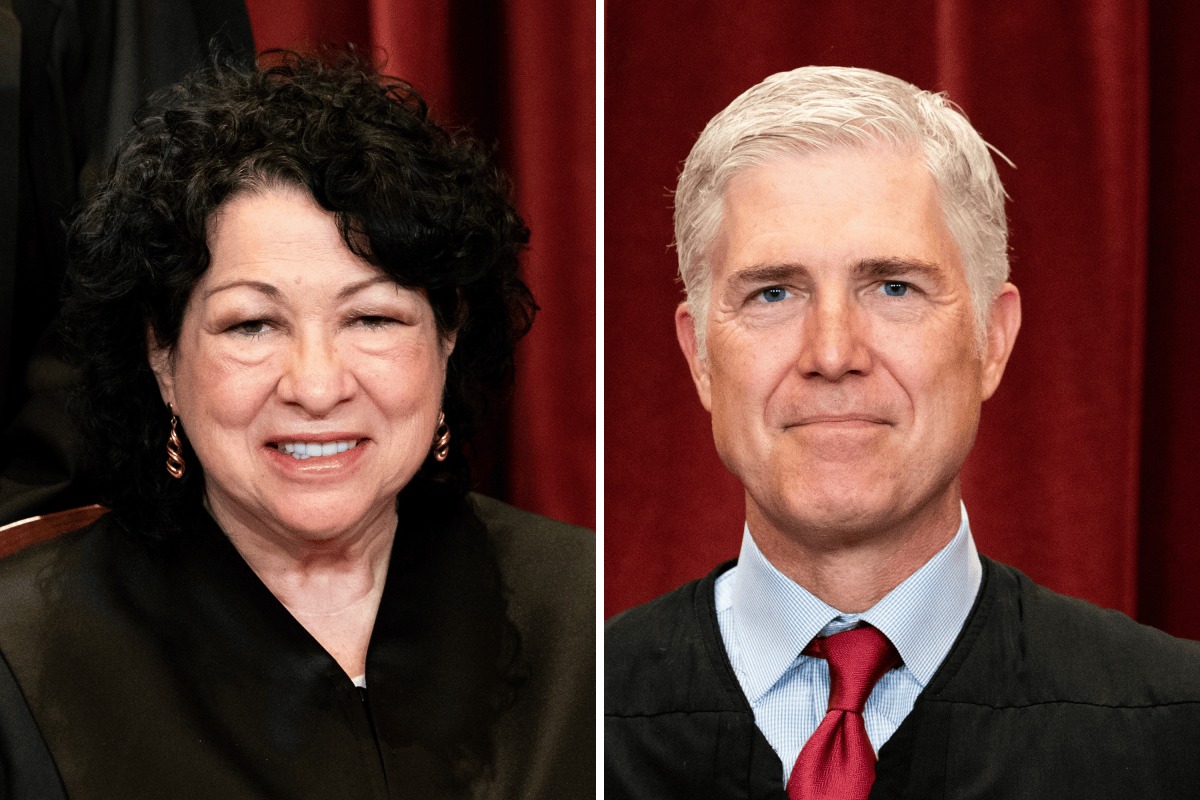
The Supreme Court declined to hear Herrera-Salazar v. United States, but Justices Sotomayor and Gorsuch wrote separately that the government's handling of the case raised serious double jeopardy concerns.
1 / 2
The story, neutrally told
Mixed · 2The Supreme Court declined to hear Jesus Herrera-Salazar v. United States, but Justices Sonia Sotomayor and Neil Gorsuch wrote a separate note citing “serious constitutional problems” in the government's treatment of him. NewsweekN “Sotomayor and Gorsuch wrote a separate note explaining the “serious constitutional problems” that “plague the government’s treatment of Herrera-Salazar,” surrounding double jeopardy.” Read at Newsweek ↗ Raw StoryL “joined Justice Sonia Sotomayor on Tuesday to flag “serious constitutional problems” in the government’s prosecution” Read at Raw Story ↗ Mixed · 2Newsweek reports the court rejected the petition on Monday because the case had become moot, as Herrera-Salazar had already been removed from the country; Raw Story dates the justices' statement to Tuesday. NewsweekN “On Monday, the Supreme Court rejected a request to hear a case because it’d become moot since the petitioner filed it” Read at Newsweek ↗ Raw StoryL “Herrera-Salazar had already been removed when his case reached the high court.” Read at Raw Story ↗ Mixed · 2Herrera-Salazar was prosecuted in 2020 for being “found in” the United States after previously being removed, pleaded guilty and served a prison sentence, which Raw Story puts at 15 months. NewsweekN “Herrera-Salazar was indicted in 2020 for being “found in” the United States after previously being removed, which is a federal crime. He pleaded guilty and served a prison sentence.” Read at Newsweek ↗ Raw StoryL “He pleaded guilty and served a 15-month prison sentence.” Read at Raw Story ↗
Mixed · 2After his release he was told to stay in the Eastern District of Oklahoma under federal supervision, and was later charged again with being “found in” the country, without having left and re-entered between the two prosecutions; a jury convicted him and he was again imprisoned and given supervised release. NewsweekN “he was told not to leave the Eastern District of Oklahoma because he remained under federal supervision”“A jury convicted him, and he was once again imprisoned and given supervised release.” Read at Newsweek ↗ Raw StoryL “In 2022, he was charged again — despite never leaving the country and unlawfully reentering between convictions.” Read at Raw Story ↗ Mixed · 2Herrera-Salazar argued the second prosecution violated the Fifth Amendment's Double Jeopardy Clause; the Tenth Circuit rejected that, treating the two prosecutions as separate offenses under the immigration statute. NewsweekN “The Tenth Circuit rejected his argument, concluding that the two prosecutions could be treated as separate offenses under the immigration statute.” Read at Newsweek ↗ Raw StoryL “The 10th Circuit rejected his argument that the second prosecution violated protections against being tried twice for the same offense.” Read at Raw Story ↗ Centre · 1The government argued he was “found in” the country in 2020 and again in Oklahoma, and that a ruling for him could leave someone staying illegally “forever immune from punishment” unless they were removed and re-entered. NewsweekN “someone who stayed in the United States illegally could be “forever immune from punishment” unless they were removed and reentered the United States” Read at Newsweek ↗
Centre · 1The two justices said the Tenth Circuit's reasoning was “difficult to square” with the double jeopardy clause and would permit limitless charges, citing Brown v. Ohio on prosecutors not dividing one crime into units; they wrote that the original offense could not have ended until he left the country. NewsweekN “The justices said this was “difficult to square” with the Constitution’s double jeopardy clause.”“the justices cited Brown v. Ohio, which found that prosecutors can’t circumvent the Constitution by dividing a single crime into a series of different units” Read at Newsweek ↗ Mixed · 2They wrote that this left him in a no-win position (“whether Herrera-Salazar remained in the Eastern District of Oklahoma or left the United States, he would be breaking the law”) and, quoting a Washington Sun report, that on the appeals court's logic he could be charged for each day he was “found in” prison. NewsweekN ““In the Government’s eyes, whether Herrera-Salazar remained in the Eastern District of Oklahoma or left the United States, he would be breaking the law,” the justices wrote.” Read at Newsweek ↗ Raw StoryL “Herrera-Salazar could have been charged with a separate violation ‘for each day that he was ‘found in’ prison while serving his sentence for the first conviction,'" according to the outlet.” Read at Raw Story ↗ Mixed · 2Both justices agreed the court should not take the case, reportedly hoping its circumstances were unusual, but urged courts to avoid “the constitutional absurdity” and give the Double Jeopardy Clause its “full weight and meaning.” NewsweekN “The justices wrote that courts should “avoid the constitutional absurdity” that occurred in the Herrera-Salazar case and give the double jeopardy clause its “full weight and meaning.”” Read at Newsweek ↗ Raw StoryL “The unlikely alliance criticized the reasoning behind the case even as both agreed the Supreme Court should decline to hear it” Read at Raw Story ↗
Every sentence links to the reporting it rests on. The pill in front of each says where its sources sit: Left, Centre or Right when one side supplies at least half of them, Mixed when they are evenly split. The number is how many outlets it cites.
Left1 outlet
- Framing
- Stresses the 'surprising' pairing of a Trump appointee with Sotomayor and casts the case as the Trump administration's, criticising its 'absurd' argument.
- Emphasis
- Gorsuch's Trump appointment, the ideological crossover, the 'absurd' quote; relies on a Washington Sun report.
- Leaves out or plays down
- Does not mention the mootness reason for denial or the government's counterargument.
- Charged language
- “Surprising Supreme Court duo”“blasts”“absurd”
Centre1 outlet
- Framing
- Procedural, detailed explainer of the denial, the facts and the justices' double jeopardy reasoning.
- Emphasis
- Mootness, the Tenth Circuit ruling, the government's argument, Brown v. Ohio.
- Leaves out or plays down
- Does not frame the case in terms of the Trump administration or the justices' ideological difference.
Right0 outlets
No right outlet in our sources has covered this story yet.
What every side reports
- The Supreme Court declined to hear Herrera-Salazar's case.
- Sotomayor and Gorsuch wrote of serious constitutional (double jeopardy) problems in the government's prosecution.
- Herrera-Salazar had been removed from the US before the case reached the court.
- The Tenth Circuit had rejected his double jeopardy argument.
Where accounts differ
-
When the justices' statement came out
- Left
- Raw Story says the justices wrote on Tuesday.
- Centre
- Newsweek says the court acted on Monday.
Sonia Sotomayor person
Joined Gorsuch in a separate writing flagging double jeopardy problems while agreeing to deny review.
“Both Sotomayor and Gorsuch agreed with the Court’s decision to not take up the case” — Newsweek
Neil Gorsuch person
Joined Sotomayor's note warning lower courts to give the Double Jeopardy Clause its full weight.
“The justices urged courts confronting similar cases to “give the Double Jeopardy Clause its full weight and meaning.”” — Raw Story
Supreme Court of the United States organisation
Denied review, reportedly because the case became moot after Herrera-Salazar's removal.
“By the time the case reached the Supreme Court, Herrera-Salazar had already been removed from the country, leading the justices to deny review.” — Newsweek
Left1 article
-
Surprising Supreme Court duo blasts Trump's admin's 'absurd' immigration case
Critical Presents the opinion as a rebuke of the Trump administration by an unlikely pairing, based on another outlet's report.
Centre1 article
-
Sotomayor, Gorsuch Warn About 'Serious' Problems With Immigration Case
Neutral Straightforward explainer of the denial and the justices' reasoning, with the government's argument included.
Right0 articles
No coverage yet.
- 13 Oct 16:18 First NewsweekN Sotomayor, Gorsuch Warn About 'Serious' Problems With Immigration Case
- 13 Oct 21:46 +5h 28m Raw StoryL Surprising Supreme Court duo blasts Trump's admin's 'absurd' immigration case
Times are when each article was published, or when we first saw it if the outlet gave no time.
Ask about this story
Loading…