SpaceX Dragon cargo ship launches to space station with final two solar arrays
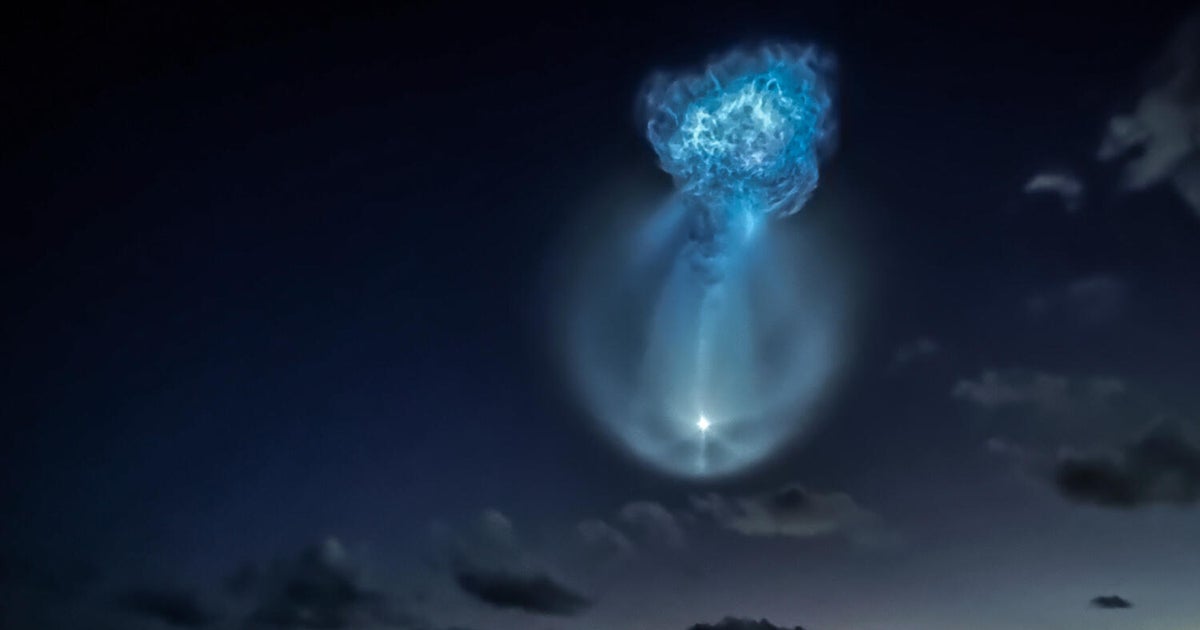
A SpaceX Falcon 9 launched an uncrewed Cargo Dragon from Cape Canaveral on Tuesday with more than 6,300 pounds of supplies, research and the last two roll-out solar arrays for the International Space Station. Docking is planned for Thursday.
1 / 2
The story, neutrally told
Mixed · 2A SpaceX Falcon 9 rocket launched an uncrewed Dragon cargo spacecraft toward the International Space Station on Tuesday 13 October from Space Launch Complex 40 at Cape Canaveral Space Force Station in Florida. Anadolu AgencyN “launched aboard a Falcon 9 rocket from Space Launch Complex 40 at Cape Canaveral Space Force Station in Florida” Read at Anadolu Agency ↗ CBS NewsLC “A SpaceX Falcon 9 rocket boosted an unpiloted Dragon cargo ship into orbit Tuesday” Read at CBS News ↗ Mixed · 2Liftoff came at about 6:33–6:34 a.m. local time (1034 GMT); Anadolu gave 6.34 am and CBS News gave 6:33 a.m. EDT. Anadolu AgencyN “The rocket lifted off at 6.34 am local time (1034GMT)” Read at Anadolu Agency ↗ CBS NewsLC “throttled up and smoothly pushed the rocket away from pad 40” Read at CBS News ↗ Mixed · 2The spacecraft carries more than 6,300 pounds (2,860 kg) of cargo; CBS News breaks this down as 844 pounds of crew supplies, 1,307 pounds of science gear, 417 pounds of spacewalk equipment and 880 pounds of vehicle hardware and computer gear. Anadolu AgencyN “Loaded with more than 6,300 pounds (2,860 kilograms) of supplies” Read at Anadolu Agency ↗ CBS NewsLC “including 844 pounds of supplies for the crew, 1,307 pounds of science gear, 417 pounds of spacewalk equipment and 880 pounds of vehicle hardware and computer gear” Read at CBS News ↗
Centre · 1Anadolu describes it as SpaceX's 35th commercial resupply mission, the fourth orbital trip for this Dragon and the eighth flight for the first-stage booster. Anadolu AgencyN “launched its 35th commercial resupply mission to the International Space Station (ISS)”“marking the fourth orbital trip for the Dragon cargo vehicle and the eighth flight for the first-stage booster” Read at Anadolu Agency ↗ Left · 1According to CBS News, the first stage returned to Cape Canaveral and landed at 6:41 a.m., within a few hundred feet of its launch pad, and the Dragon separated from the second stage shortly afterwards. CBS NewsLC “The first stage landed within a few hundred feet of its launch pad 1t at 6:41 a.m.”“A few moments after that, the Cargo Dragon separated to fly on its own.” Read at CBS News ↗ Mixed · 2The manifest includes the seventh and eighth ISS Roll Out Solar Arrays (IROSA), the final pair in an upgrade meant to offset age-related degradation of the station's original eight solar wings; six were installed during spacewalks starting in June 2021. CBS NewsLC “the final sets in a major upgrade to compensate for age-related degradation of the station's original eight solar wings”“Six "IROSA" blankets were installed during spacewalks starting in June 2021.” Read at CBS News ↗ Anadolu AgencyN “The cargo manifest includes the final pair of roll-out solar arrays” Read at Anadolu Agency ↗
Left · 1CBS News says each blanket generates 20 kilowatts and that the new arrays will be installed over the existing ones, which will keep producing power in parallel; Dana Weigel of NASA's Johnson Space Center said the newer cells are more efficient and restore output to or above original levels. CBS NewsLC “Each IROSA blanket generates 20 kilowatts of power”“The exposed portion of the old arrays will still be generating power in parallel with the new arrays.” Read at CBS News ↗ Mixed · 2The arrays are to be installed during spacewalks, which Anadolu places in late autumn and CBS News in the second half of October and early November. Anadolu AgencyN “Astronauts will install the units during spacewalks planned for late autumn.” Read at Anadolu Agency ↗ CBS NewsLC “will be installed during spacewalks later this month and in early November” Read at CBS News ↗ Centre · 1Anadolu says the arrays will support station operations, upcoming research and eventual controlled deorbit procedures. Anadolu AgencyN “designed to expand power capacity for station operations, upcoming research and eventual controlled deorbit procedures” Read at Anadolu Agency ↗
Centre · 1Science cargo includes experiments to manufacture artificial retinas in microgravity, three-dimensional heart tissue models and brain organoids for testing potential therapies for Alzheimer's and Parkinson's diseases, according to Anadolu. Anadolu AgencyN “experiments to manufacture artificial retinas in microgravity to support vision restoration on Earth”“brain organoids aimed at evaluating potential therapies for neurodegenerative conditions, including Alzheimer’s and Parkinson’s diseases” Read at Anadolu Agency ↗ Left · 1CBS News reports fresh food for the crew, listed by space station program manager Bill Spetch as oranges, apples, grapefruit, tomatoes, blueberries, baby carrots and mini sweet peppers, plus a pizza kit, cookies, candy and holiday items. CBS NewsLC “"oranges, apples, grapefruit, tomatoes, blueberries, baby carrots and mini sweet peppers," said Bill Spetch, space station program manager” Read at CBS News ↗ Mixed · 2The Dragon is due to dock autonomously at the Harmony module's space-facing port at about 11 a.m. on Thursday. Anadolu AgencyN “expected to complete an autonomous docking with the station’s Harmony module around 11 am local time (1500GMT) on Thursday” Read at Anadolu Agency ↗ CBS NewsLC “moving in for an automated docking at the forward Harmony module's space-facing port at 11 a.m.” Read at CBS News ↗
Centre · 1Anadolu adds that the station is entering its final phase of operations and is scheduled to end its orbital duties at the end of 2030. Anadolu AgencyN “scheduled to conclude its orbital duties at the end of 2030” Read at Anadolu Agency ↗
Every sentence links to the reporting it rests on. The pill in front of each says where its sources sit: Left, Centre or Right when one side supplies at least half of them, Mixed when they are evenly split. The number is how many outlets it cites.
Left1 outlet
- Framing
- CBS News gives a detailed, technical launch narrative focused on the solar array upgrade and the crew's fresh food.
- Emphasis
- Launch sequence and booster landing, cargo weight breakdown, IROSA power upgrade explained by NASA officials, crew food.
- Leaves out or plays down
- Does not mention the mission number, booster reuse count, the biomedical experiments or the station's 2030 end date.
- Charged language
- “thundered to life”“stunning view”
Centre2 outlets
- Framing
- Anadolu Agency files a short, factual brief on the launch, emphasising biomedical research and the station's approaching end of life.
- Emphasis
- Mission number, booster and capsule reuse, retina, heart tissue and brain organoid experiments, 2030 end of station operations.
- Leaves out or plays down
- Omits the cargo breakdown, booster landing, NASA officials' comments and the specific spacewalk timing, saying only 'late autumn'.
- Charged language
- “critical hardware”
- For example
-
“sending scientific research, critical hardware and operational cargo into orbit” — Anadolu Agency
“The resupply mission comes as the International Space Station prepares for its final phase of operations” — Anadolu Agency
Right0 outlets
No right outlet in our sources has covered this story yet.
What every side reports
- A Falcon 9 launched an uncrewed Dragon cargo ship from Space Launch Complex 40 at Cape Canaveral on Tuesday morning.
- The Dragon carries more than 6,300 pounds of supplies, including the final two roll-out solar arrays.
- Automated docking at the Harmony module is planned for about 11 a.m. Thursday.
Where accounts differ
-
Timing of the solar array spacewalks
- Left
- CBS News: later this month and in early November.
- Centre
- Anadolu: planned for late autumn.
-
Liftoff time
- Left
- CBS News: 6:33 a.m. EDT.
- Centre
- Anadolu: 6.34 am local time (1034 GMT).
SpaceX organisation
SpaceX provides the Falcon 9 and Dragon; coverage presents the flight as a routine reuse mission with a returning booster, not as a contested event.
“marking the fourth orbital trip for the Dragon cargo vehicle and the eighth flight for the first-stage booster” — Anadolu Agency
“headed back toward Cape Canaveral for a return-to-launch-site landing” — CBS News
International Space Station organisation
The station is presented as ageing, needing a power upgrade, and heading to the end of its operations in 2030.
“scheduled to conclude its orbital duties at the end of 2030” — Anadolu Agency
“compensate for age-related degradation of the station's original eight solar wings” — CBS News
Left1 article
-
Fresh food, science gear and equipment head to space station
Neutral Detailed, upbeat launch account centred on the solar array upgrade, with NASA officials quoted and crew food highlighted.
Centre2 articles
-
SpaceX launches resupply mission to International Space Station
Neutral Concise agency-style report stressing research payloads and the station's planned 2030 retirement.
Right0 articles
No coverage yet.
- 13 Oct 12:54 First Anadolu AgencyN SpaceX launches resupply mission to International Space Station
- 13 Oct 13:09 +15m CBS NewsLC Fresh food, science gear and equipment head to space station
- 13 Oct 13:14 +20m Hindustan TimesN SpaceX rocket launch today: Falcon 9 rocket lifts off from Florida carrying supplies to ISS
Times are when each article was published, or when we first saw it if the outlet gave no time.
Ask about this story
Loading…