Study reports two sleep stages, one REM-like, in Australian jumping spider
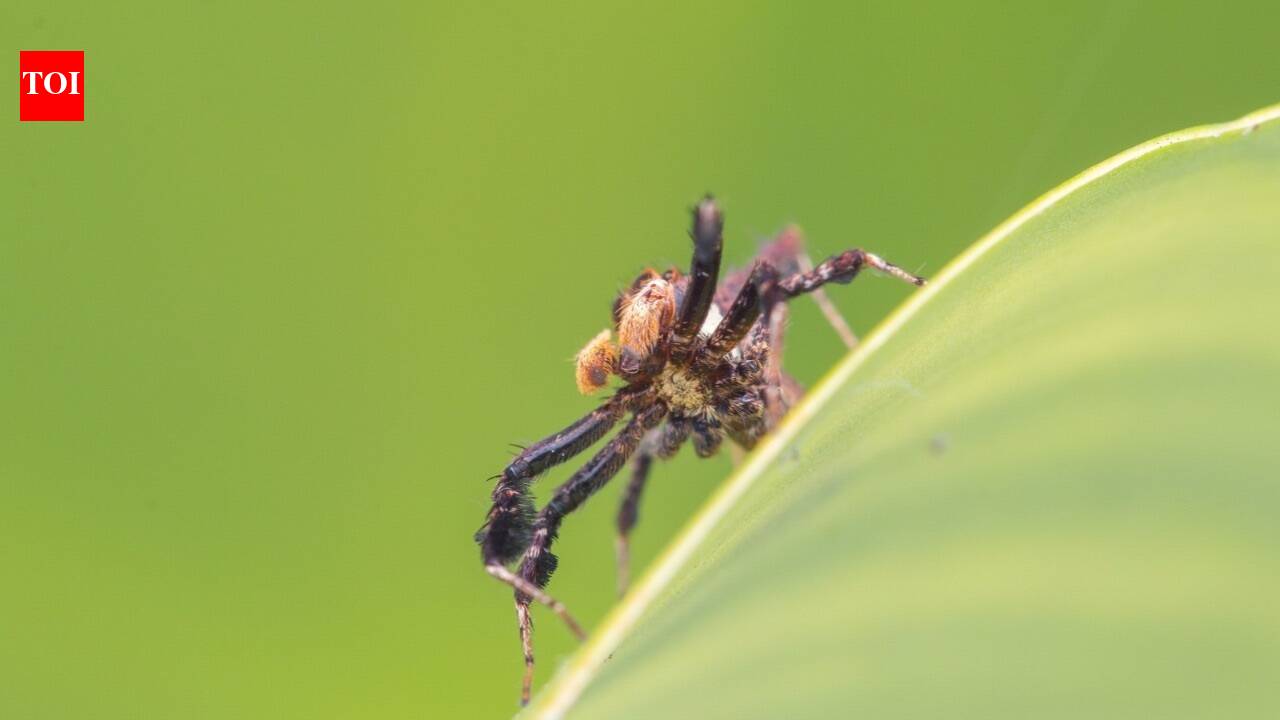
A University of Bonn-led study in PNAS video-recorded the jumping spider Portia fimbriata and found two sleep stages, one REM-like. Coverage agrees on the findings but differs on whether the spiders might dream.
1 / 2
The story, neutrally told
Mixed · 2A study published in Proceedings of the National Academy of Sciences reports that the Australian jumping spider Portia fimbriata has at least two sleep stages, including a REM-like stage. ABC News (Australia)LC “A new study has found a species of jumping spider, Portia fimbriata, experiences at least two sleep stages, including a REM-like stage.” Read at ABC News (Australia) ↗ The Times of IndiaN “The findings, published in the journal Proceedings of the National Academy of Sciences” Read at The Times of India ↗ Mixed · 2The work was led by researchers at the University of Bonn, including behavioural ecologist Daniela Rößler and co-author Nadja Geiger. ABC News (Australia)LC “Study co-author Daniela Rößler, a behavioural ecologist from the University of Bonn” Read at ABC News (Australia) ↗ The Times of IndiaN “The study, conducted by researchers at the University of Bonn in Germany” Read at The Times of India ↗ Mixed · 2The researchers recorded the spiders through the night and analysed the footage. The first stage, which they called quiescent, involved grooming and the spider slowly drooping; the second, REM-like stage involved leg curls, eye movements and twitching. ABC News (Australia)LC “The spiders groomed themselves while they snoozed and drooped down slowly over the course of the night in a phase the researchers called quiescent.” Read at ABC News (Australia) ↗ The Times of IndiaN “a period of quiet rest followed by a stage marked by eye movements and muscle twitches” Read at The Times of India ↗
Centre · 1Per the Times of India, spiders were filmed with infrared cameras over several days and nights in 12 cm plastic dishes under different lighting conditions. The Times of IndiaN “using infrared cameras to monitor them in darkness. Each individual Portia fimbriata spider was placed in the plastic dishes measuring 12 centimeters in diameter.” Read at The Times of India ↗ Mixed · 2To test whether the spiders were asleep rather than merely still, the team woke them with a loud noise; responses were slower in both sleep stages, most strongly in the REM-like phase, and some spiders did not respond at all. ABC News (Australia)LC “"This effect was particularly strong during the REM-like phase," Ms Geiger said.” Read at ABC News (Australia) ↗ The Times of IndiaN “their responses to disturbances were delayed compared with when they were awake, and some spiders did not respond at all.” Read at The Times of India ↗ Centre · 1The Times of India also says the team investigated "sleep rebound", where an animal makes up for disrupted sleep afterwards, and cites this as evidence of regulated sleep. The Times of IndiaN “Researchers additionally investigated "sleep rebound", a phenomenon in which an animal makes up for disrupted sleep afterwards.” Read at The Times of India ↗
Left · 1Thomas White, an entomologist at the University of Sydney not named as an author, called it "far and away the most complete behavioural case for sleep in any arachnid" and noted the study builds on earlier work by the same team suggesting REM-like sleep in jumping spiders. He said some may find such comparisons with distantly related animals controversial, but that scientists are becoming less hesitant. ABC News (Australia)LC “"This paper is far and away the most complete behavioural case for sleep in any arachnid."”“Dr White said that the study built on research from the same team a few years ago” Read at ABC News (Australia) ↗ Centre · 1The Times of India stresses limits: the work relied on behavioural observation rather than brain activity, so it cannot show whether spiders dream, and the movements do not necessarily mean spiders experience REM sleep as humans do. The Times of IndiaN “The researchers relied on behavioural observations rather than direct examination of their brain activity, meaning they could not determine whether the spiders experienced dreams”“however this response does not necessarily mean that these animals experience the same REM sleep like humans” Read at The Times of India ↗ Left · 1Rößler said the findings suggest the basic architecture of sleep may be older and more widespread than thought. The team is now planning to study spider sleep in the wild, including fieldwork in northern Queensland and Western Australia, to see how artificial light and habitat disturbance affect it. ABC News (Australia)LC “it suggests that the basic architecture of sleep may be far older and more widespread than we thought”“The researchers are now looking at studying sleep in spiders in the wild, including fieldwork in northern Queensland and Western Australia.” Read at ABC News (Australia) ↗
Every sentence links to the reporting it rests on. The pill in front of each says where its sources sit: Left, Centre or Right when one side supplies at least half of them, Mixed when they are evenly split. The number is how many outlets it cites.
Left1 outlet
- Framing
- Science report led by the researchers' and an outside expert's endorsement of the study as the most complete case for arachnid sleep.
- Emphasis
- Researcher quotes, expert context, evolution of sleep and planned wild fieldwork.
- Leaves out or plays down
- Does not state that the study lacked brain-activity measurements.
- Charged language
- “dream species”
- For example
-
“The most comprehensive study of its kind confirms that jumping spiders go through two phases of sleep” — ABC News (Australia)
Centre1 outlet
- Framing
- Lifestyle-desk explainer, drawing on Science Daily, built around the question of whether spiders dream, with caveats.
- Emphasis
- Method details, Portia's hunting behaviour, and limits of the evidence.
- Leaves out or plays down
- Omits outside expert comment and the planned fieldwork in Australia.
- Charged language
- “Do spiders dream?”
- For example
-
“However, the resemblance does not establish that spiders dream.” — The Times of India
Right0 outlets
No right outlet in our sources has covered this story yet.
What every side reports
- Portia fimbriata, an Australian jumping spider, was studied by University of Bonn researchers.
- The PNAS study found two sleep stages, one REM-like with eye movements and twitching.
- Spiders responded slower to noise in sleep stages, and some did not respond at all.
Where accounts differ
-
What the findings imply about dreaming
- Left
- ABC leads with the REM-like state being 'associated with human dreaming' and quotes experts arguing the inference is reasonable.
- Centre
- The Times of India asks 'Do spiders dream?' but says the study cannot show dreaming because brain activity was not examined.
Jumping spider sleep topic
Researchers say spiders show distinct, regulated sleep stages including a REM-like one, suggesting sleep's architecture is ancient; they have not shown dreaming.
“the basic architecture of sleep may be far older and more widespread than we thought” — ABC News (Australia)
“they could not determine whether the spiders experienced dreams” — The Times of India
Oceania1 outlet
ABC emphasises Australian species, local expert comment and planned fieldwork in Queensland and Western Australia.
“including fieldwork in northern Queensland and Western Australia” — ABC News (Australia)
ABC News (Australia)
South Asia1 outlet
The Times of India relays the findings via Science Daily as a general-interest piece on animal dreaming.
“As Science Daily reported on the 27th of October 2026” — The Times of India
The Times of India
Left1 article
-
Scientists video REM-like sleep in Australian jumping spider species
Sympathetic Enthusiastic science report that foregrounds researcher and expert quotes and confirms REM-like sleep.
Centre1 article
-
Do spiders dream? Researchers studying spiders have found sleep patterns resembling REM sleep
Mixed Curious explainer asking whether spiders dream, while stressing the study's limits.
Right0 articles
No coverage yet.
- 27 Oct 03:49 First ABC News (Australia)LC Scientists video REM-like sleep in Australian jumping spider species
- 28 Oct 13:39 +33h 50m The Times of IndiaN Do spiders dream? Researchers studying spiders have found sleep patterns resembling REM sleep
Times are when each article was published, or when we first saw it if the outlet gave no time.
Ask about this story
Loading…