Butterfly wing patterns create motion illusions that may confuse predators, Nature study finds
Researchers from the universities of Exeter and Essex report in Nature that stripes and spots on butterfly wings, combined with flapping, mislead birds about the insect's speed and direction.
1 / 2
The story, neutrally told
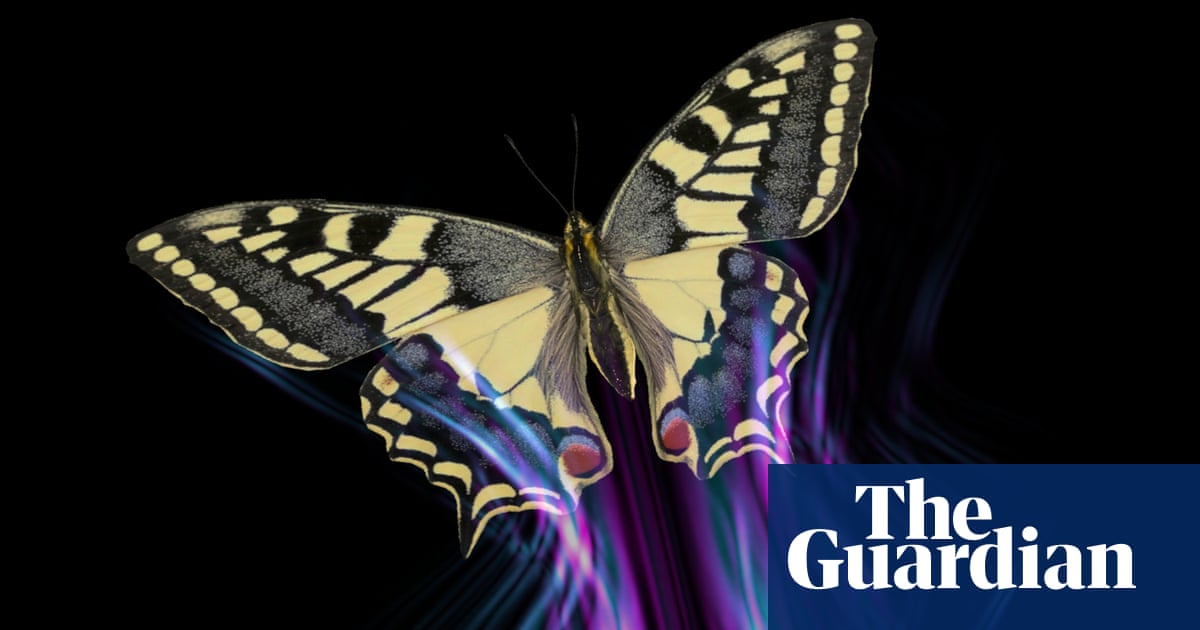
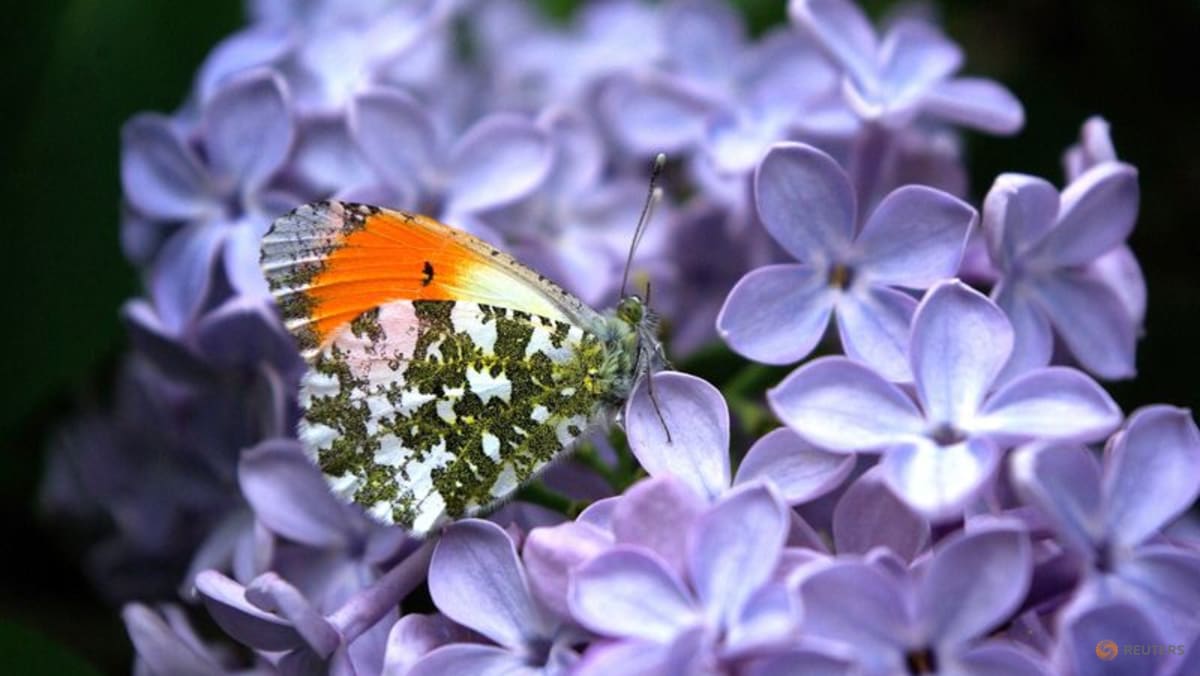
A study published in the journal Nature concludes that butterfly wing patterns, combined with the movement of flapping wings, create motion illusions that make it harder for predators to judge speed and direction. CNAN “contrasting wing patterns can work together with wing movements to create misleading motion signals” Read at CNA ↗ The GuardianLC “scramble a predator’s sense of the insects’ speed and direction” Read at The Guardian ↗ The work was carried out by researchers from the universities of Exeter and Essex. The GuardianLC “The study by researchers from the universities of Exeter and Essex” Read at The Guardian ↗ Jolyon Troscianko of the University of Exeter said the wings clap together and peel apart as they beat, so a stripe appears to move down on the downstroke but is folded away on the upstroke, making the downward motion more visible even when the butterfly flies up. CNAN “Butterfly wings are flexible surfaces that clap together and fling apart” Read at CNA ↗ The GuardianLC “clapping together on the upstroke and peeling apart on the downstroke” Read at The Guardian ↗
The mechanism was compared to the barber pole illusion, in which stripes turning in place seem to travel up or down. The GuardianLC “the red and white stripes appear to travel upwards even though the pole is only spinning in place” Read at The Guardian ↗ CNAN “stripes moving sideways can look like they're moving up or down instead” Read at CNA ↗ The team used high-speed filming of real butterflies and computer modelling of bird vision; the Guardian says the insight came when a slow-motion video of an upward-flying butterfly appeared in the model to be moving downwards. CNAN “high-speed filming of real butterflies, computer modelling, simulated evolution and touchscreen experiments” Read at CNA ↗ The GuardianLC “It seemed to indicate – wrongly – that the butterfly was moving downwards.” Read at The Guardian ↗ In touchscreen tests, 100 human volunteers tried to catch virtual butterflies; CNA reports 3,000 trials in which butterflies predicted to be more confusing made people aim farther behind them. The GuardianLC “100 human volunteers acted as “predators”” Read at The Guardian ↗ CNAN “caused people to aim farther behind them” Read at CNA ↗
Swallowtails were among the best at motion confusion, and largely white butterflies also evaded predators, possibly because they seem to move faster than they do. The GuardianLC “Swallowtail butterflies were found to be among the best at using motion confusion.”“they appear to move more quickly than they actually do” Read at The Guardian ↗ Not all species rely on the strategy: Troscianko said the least confusing butterflies are typically brown or red, which may depend on camouflage or warning colours. CNAN “The least motion-confusing butterflies are typically brown or red” Read at CNA ↗ The researchers note limits: only bird vision was modelled, and dragonflies and robber flies, which have faster vision, often hunt butterflies successfully. Live-bird experiments were judged impractical and unethical. CNAN “For now, we've only looked at bird vision”“likely impossible and unethical in practice” Read at CNA ↗
Troscianko suggested motion confusion may be widespread in nature, and CNA adds possible uses in simulators, protective patterning and road safety. The GuardianLC “far more widespread in nature than previously realised” Read at The Guardian ↗ CNAN “improving road safety and reducing discomfort and stress in the built environment” Read at CNA ↗
Every sentence links to the reporting it rests on.
Left1 outlet
- Framing
- Light, narrative feature led by the finding that wing patterns and dancing flight help butterflies escape birds, presented as a British study.
- Emphasis
- The researchers' story of discovery, swallowtails' damaged wings as evidence, and the wider implications for animal motion.
- Leaves out or plays down
- Does not mention the 3,000 trials, the limits of testing only bird vision, dragonflies and robber flies, or the least-confusing brown and red species.
- Charged language
- “All of a flutter”“The breakthrough”
- For example
-
“it is not simply a matter of good luck but instead a visual illusion created by their fluttering wings” — The Guardian
“The breakthrough came when Troscianko put a slow-motion video” — The Guardian
Centre1 outlet
- Framing
- Explanatory science report with hedged wording, leading on what a bird might perceive during an attack.
- Emphasis
- Mechanism, method, caveats about bird-only modelling and insect predators, and practical applications.
- Leaves out or plays down
- Does not mention swallowtails, the white butterflies or the Essex involvement.
- Charged language
- “motion dazzle”
Right0 outlets
No right outlet in our sources has covered this story yet.
What every side reports
- The study is published in Nature and involves University of Exeter researchers including Jolyon Troscianko.
- Wing patterns combined with wing movement create motion illusions that confuse predators.
- 100 human volunteers took part in touchscreen catching tests.
- Findings are based on modelling of bird vision.
Where accounts differ
-
Whether the findings are presented as settled or tentative
- Left
- The Guardian says the study 'concluded' the patterns scramble predators' sense of speed and direction.
- Centre
- CNA's headline says patterns 'may' trick predators and stresses limits, including that only bird vision was studied.
George Hancock person
Hancock says European butterflies are rarely toxic and easy to spot, so they need a defence; the illusions disrupt predators' final attack.
“The illusions interfere with the predator’s most basic visual targeting system and disrupt the final ballistic attack” — The Guardian
University of Exeter organisation
Exeter researchers, led by Troscianko, present motion confusion as a likely widespread and previously overlooked defence, while noting limits.
“This is likely enough to save a butterfly from the split-second moment when a bird would try to catch it.” — CNA
UK and Ireland1 outlet
Presented as new British research, with named Exeter scientists and swallowtail detail.
“New research from British ecologists” — The Guardian
The Guardian
East and Southeast Asia1 outlet
Presented as a research finding with caveats and potential technology and safety uses.
“the team's motion-vision tools could have practical applications” — CNA
CNA
Left1 article
-
All of a flutter: how butterflies avoid being a predator’s lunch
Celebratory Upbeat feature on a British discovery, stressing the researchers' account and swallowtail evidence.
Centre1 article
-
CNAN ·
Butterfly wing patterns may trick predators with motion illusions
Neutral Measured explainer that hedges findings and sets out limits and applications.
Right0 articles
No coverage yet.
- 30 Sep 16:00 First The GuardianLC All of a flutter: how butterflies avoid being a predator’s lunch
- 30 Sep 16:25 +24m CNAN Butterfly wing patterns may trick predators with motion illusions
Times are when each article was published, or when we first saw it if the outlet gave no time.