Study finds ice baths slowed strength recovery versus heat or rest after hard exercise
A study of 40 active adults led by Freya Bayne at the University of East London found cold-water immersion gave the lowest strength recovery after 72 hours, though it eased soreness most at 24 hours. The authors and outside experts say the sample is small and ice baths may still have uses.

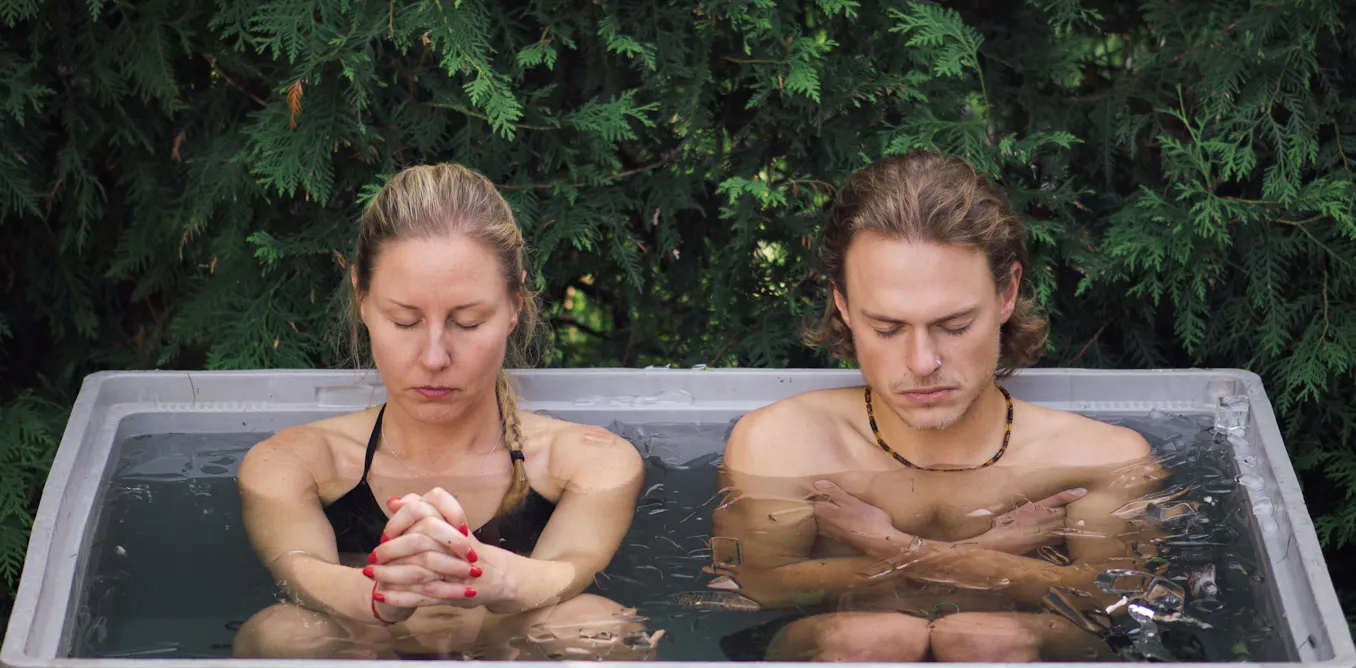
1 / 2
The story, neutrally told
Mixed · 2A study led by Freya Bayne at the University of East London compared four post-exercise recovery methods in 40 adults and found that those who used cold-water immersion recovered the least muscle strength after 72 hours. New ScientistN “adults who had ice baths after intense leg exercise showed markers of muscle damage for longer than those who just rested.” Read at New Scientist ↗ The ConversationLC “In a recent study, my colleagues and I compared ice baths against heat-based recovery methods.” Read at The Conversation ↗ Mixed · 2The participants were 40 healthy, physically active adults (31 men and nine women). They did a high-intensity quadriceps exercise on a machine that controlled the movement, in which the muscle lengthens under load, as in downhill running or lowering into a squat. The ConversationLC “we recruited 40 healthy, physically active adults (31 men and nine women)” Read at The Conversation ↗ New ScientistN “Similar movements occur when lowering into a squat or running downhill.” Read at New Scientist ↗ Mixed · 2New Scientist reported that average muscle strength fell 36 per cent straight after the exercise. Participants were then randomly assigned to cold-water immersion, hot-water immersion at 42°C, hot-air exposure, or passive rest. New ScientistN “Straight after exercising, the participants’ muscle strength was measured again, revealing a loss of 36 per cent, on average.” Read at New Scientist ↗ The ConversationLC “Participants were then randomly assigned to one of four recovery methods” Read at The Conversation ↗
Mixed · 2After 72 hours the cold-water group had regained about 82 per cent of maximum strength. The other groups had regained about 88–89 per cent, according to the two accounts. The ConversationLC “strength returning to around 82% of pre-exercise levels after 72 hours, compared with 88-89% in the other groups.” Read at The Conversation ↗ New ScientistN “The cold-water group recovered about 82 per cent of their maximum strength.” Read at New Scientist ↗ Left · 1In Bayne's own account, none of the methods restored strength significantly faster than the others, and the physiological markers showed the differences. The ConversationLC “we were surprised to find that none of them restored muscle strength significantly faster than the others.” Read at The Conversation ↗ Mixed · 2Pain and soreness rose in all groups at 24 hours. The cold-water group reported less pain at that point, but New Scientist said this had increased by 48 hours, suggesting the cold had only temporarily masked pain. Bayne wrote that cold immersion appeared most effective at reducing perceived soreness. New ScientistN “The cold-water group did report less pain at 24 hours relative to the other groups, but this had increased by 48 hours” Read at New Scientist ↗ The ConversationLC “cold-water immersion appeared more effective at reducing perceptions of muscle soreness.” Read at The Conversation ↗
Mixed · 2Blood markers favoured heat. Creatine kinase-MM, an enzyme that enters the blood when muscle is damaged, returned to normal faster in the hot-water group than in the rest and hot-air groups, but stayed 25 per cent above normal at 72 hours in the cold-water group. The hot-water group also had higher levels of heat shock protein 72, which Bayne described as a cellular maintenance and protection system. New ScientistN “In the cold-water group, levels remained 25 per cent above normal, even after 72 hours.” Read at New Scientist ↗ The ConversationLC “Participants who completed hot-water immersion were shown to have higher levels of a substance called “heat shock protein 72” (HSP72)” Read at The Conversation ↗ Left · 1Bayne wrote that cold-water immersion was not shown to improve any of the recovery markers measured. She concluded that heat may better stimulate the biological processes of recovery, while cold may suit someone mainly wanting to feel less sore. The ConversationLC “Cold-water immersion was not shown to improve any of the recovery markers measured in the study.”“If your priority is reducing how sore you feel after a workout, cold-water immersion may be the most beneficial.” Read at The Conversation ↗ Mixed · 2The researchers and outside experts urged caution. Bayne noted only ten participants per group and a sample too small to compare men and women, and that results might differ with repeated or localised applications. She said her findings do not show ice baths are completely ineffective. The ConversationLC “with just ten participants in each intervention group.”“Our findings don’t suggest that ice baths are completely ineffective.” Read at The Conversation ↗ New ScientistN “It is possible that changes to the interventions, such as repeating them or applying heat or cold therapies more locally to the affected area, would also change the results” Read at New Scientist ↗
Centre · 1Ken Nosaka of Edith Cowan University said much of the evidence for cold therapy is anecdotal and that none of the thermal strategies had negative effects. Mike Tipton of the University of Portsmouth said the findings should not stop athletes using ice baths, which may help in repeated bouts of activity in the heat or multi-day events. New ScientistN “much of the evidence supporting cold therapies is anecdotal.”“the findings shouldn’t stop athletes using ice baths altogether.” Read at New Scientist ↗
Every sentence links to the reporting it rests on. The pill in front of each says where its sources sit: Left, Centre or Right when one side supplies at least half of them, Mixed when they are evenly split. The number is how many outlets it cites.
Left1 outlet
- Framing
- First-person explainer by the study's lead author, framing recovery as more than how you feel and weighing heat against cold.
- Emphasis
- Biological markers such as HSP72, the feeling-versus-being-recovered distinction, and the study's limits.
- Leaves out or plays down
- Does not give outside expert views or the creatine kinase figure of 25 per cent above normal, and calls the differences in strength non-significant rather than saying cold was worse than rest.
- Charged language
- “beneath the surface”
- For example
-
“What our study shows is that recovery is about far more than how you feel the next day.” — The Conversation
Centre1 outlet
- Framing
- News report leading on the finding that ice baths may be worse than resting, with outside expert comment.
- Emphasis
- Strength and creatine kinase results, pain being only temporarily masked, and independent views from Nosaka and Tipton.
- Leaves out or plays down
- Does not mention heat shock protein 72 or the 31 men and nine women split, and does not note the ten-per-group limitation.
- Charged language
- “worse than doing nothing”
- For example
-
“Plunging into an ice bath after a workout may be worse for your muscle recovery than doing nothing.” — New Scientist
Right0 outlets
No right outlet in our sources has covered this story yet.
What every side reports
- The study compared cold-water immersion, hot-water immersion (42°C), hot-air exposure and passive rest in 40 adults after intense quadriceps exercise.
- Cold-water immersion had the lowest strength recovery at 72 hours, about 82 per cent of maximum.
- Cold-water immersion was associated with lower perceived soreness early on.
- The sample was small and the findings do not show ice baths are useless.
Where accounts differ
-
Whether cold immersion made recovery worse or the methods did not differ significantly on strength
- Left
- The Conversation, written by Bayne, says none of the methods restored strength significantly faster than the others, and stresses the biological markers and the gap between feeling and being recovered.
- Centre
- New Scientist's headline says cold therapy 'may be worse than doing nothing', and its text says the rest, hot-water and hot-air groups recovered strength to a similar extent while the cold group lagged.
-
Study conditions reported
- Left
- The Conversation gives cold water at 10°C and hot air at 60°C, similar to a sauna, and does not give the immersion duration.
- Centre
- New Scientist gives cold water at 9°C for 15 minutes and hot air at 30°C for 30 minutes.
Cold water immersion recovery topic
Cold-water immersion is portrayed as a popular recovery tool that eased soreness in this study but did not improve recovery markers and had the lowest strength recovery at 72 hours; both pieces say it may still have uses.
“may assist with repeated bouts of continuous activity in the heat” — New Scientist
“Ice baths were still found to help people feel better.” — The Conversation
Left1 article
-
Hot or cold? Our research explores what works best after exercise
Neutral Author's explanatory account that weighs heat against cold and stresses the study's limits and the gap between feeling and being recovered.
Centre1 article
-
Cold therapy may be worse than doing nothing for post-exercise recovery
Mixed Leads with the provocative suggestion that ice baths are worse than rest, then balances it with expert caveats.
Right0 articles
No coverage yet.
- 9 Nov 19:00 First New ScientistN Cold therapy may be worse than doing nothing for post-exercise recovery
- 11 Nov 16:00 +45h The ConversationLC Hot or cold? Our research explores what works best after exercise
Times are when each article was published, or when we first saw it if the outlet gave no time.
Ask about this story
Loading…