Study finds Manx shearwaters get jet lag on fast transatlantic flights
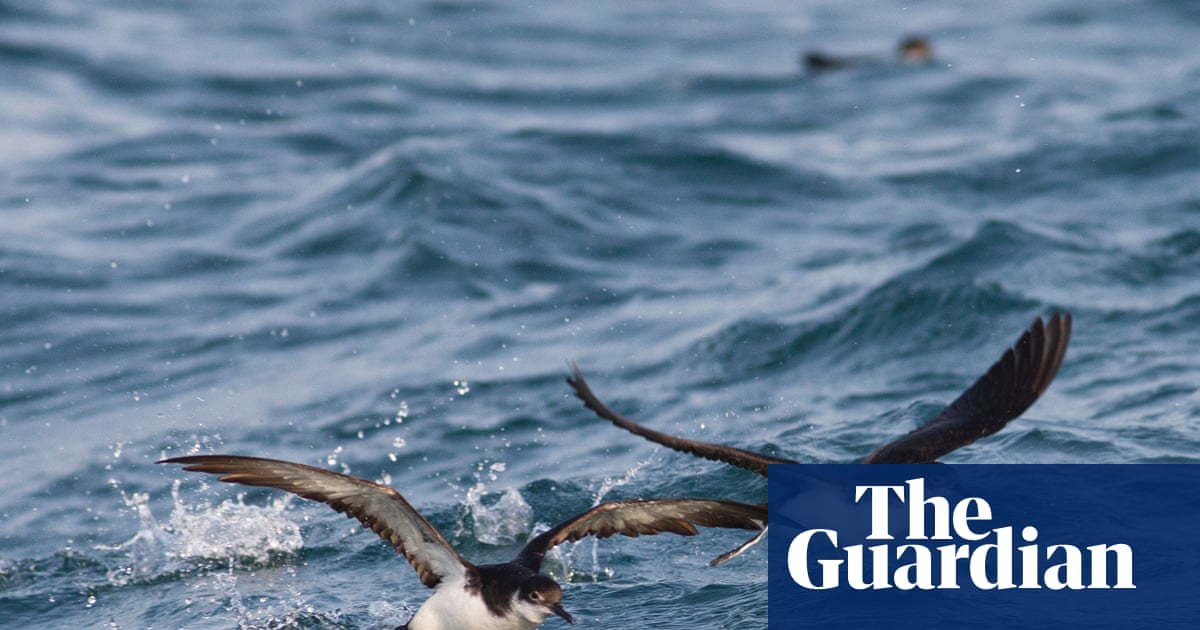
An Oxford-led study published in Science analysed GPS tracks of Manx shearwaters and found that fast eastward flights across the Atlantic put their body clocks out of step with local time, nudging them slightly off course. The effect is small for adults but could matter more for inexperienced birds.
Updated (version 2). New coverage since the last version from Ars Technica, CNA.

1 / 4
The story, neutrally told
Mixed · 2Researchers at the University of Oxford report that Manx shearwaters can experience a form of jet lag: on rapid eastward flights across the Atlantic, their internal clocks diverge from local time and they drift off their intended course. New ScientistN “its body clock can diverge from local time by more than an hour on fast flights across the Atlantic, as revealed by navigational errors.” Read at New Scientist ↗ The GuardianLC “Tracking data from Manx shearwaters on the west coast of the UK revealed that when the birds returned home to their colonies after trips over the Atlantic” Read at The Guardian ↗ Left · 1The work was led by Patrick Lewin of the University of Oxford and published in the journal Science, according to the Guardian. The GuardianLC “Writing in Science, Lewin said the mismatch between local time and the birds’ internal clocks could make them drift off course” Read at The Guardian ↗ Centre · 1Manx shearwaters breed on islands around the UK and Ireland and, while raising chicks, may fly more than 1000 kilometres west to fishing grounds in the mid-Atlantic before returning in a fairly straight line. New ScientistN “They breed on islands around the UK and Ireland. While parents are raising a chick, they may fly more than 1000 kilometres westwards to reach rich fishing grounds in the mid-Atlantic.” Read at New Scientist ↗
Centre · 1The birds appear to rely on a sun compass rather than the Earth's magnetic field: New Scientist reports that magnets attached to the birds had no effect on their navigation. New ScientistN “While some birds can sense Earth’s magnetic field, Manx shearwaters don't appear to. Lewin’s team has confirmed this by attaching small magnets to the birds” Read at New Scientist ↗ Mixed · 2A sun compass only works if the animal knows the time. A bird flying quickly east reaches a later local time than its internal clock registers, so the sun is not where it expects and the bird veers off course, clockwise in the New Scientist account. New ScientistN “This means birds flying rapidly east should veer slightly off course in a clockwise direction over the course of day, in the absence of other cues.” Read at New Scientist ↗ The GuardianLC “Like many animals, shearwaters use the sun as a compass.” Read at The Guardian ↗ Left · 1Ars Technica says the birds recalibrate their clocks at each dusk and dawn, so for every degree of longitude covered between sunrise and sunset the clock falls four minutes out of step; the time shifts observed were at most about an hour and mostly 10 to 15 minutes. Ars TechnicaLC “for every degree of longitude a bird covers between sunrise and sunset, its clock falls four minutes out of sync with local time”“About an hour is pretty much the maximum that we observed.” Read at Ars Technica ↗
Mixed · 2The team analysed GPS tracking data gathered over about 20 years, covering nearly 4000 foraging trips, and found that birds on rapid return flights tended to deviate clockwise when out of sight of land. New ScientistN “so the paths taken on nearly 4000 foraging trips are known” Read at New Scientist ↗ The GuardianLC “Their analysis of 20 years of GPS tracking data revealed a clear effect” Read at The Guardian ↗ Mixed · 2CNA and Ars Technica give more detail: the data came from 1,045 birds on 3,688 foraging trips, the researchers isolated homing flights, and 335 of these were made out of sight of land, where the birds' headings closely matched the errors predicted if their clocks stayed set to dawn time. CNAN “Across 335 homing flights made out of sight of land, the headings of the birds closely matched those predicted errors.” Read at CNA ↗ Ars TechnicaLC “the team had tracks from 3,688 foraging trips made by 1,045 birds from colonies along the UK’s western coasts” Read at Ars Technica ↗ Mixed · 2The Guardian adds that errors persisted even when birds followed the coastline, where landmarks could have guided them, which the researchers took as further support for the sun's central role. New Scientist says the team also considered alternatives such as the Coriolis effect and winds, but the sun compass effect best predicted the changes in orientation. The GuardianLC “Surprisingly, the errors remained when birds followed the coastline, where landmarks could have guided them” Read at The Guardian ↗ New ScientistN “The one thing that best predicted the observed changes in shearwaters' orientation was always this sun compass effect,” says Lewin.” Read at New Scientist ↗
Mixed · 2Lewin cautioned, per Ars Technica, that the study was not a controlled experiment, so causality needs care, though the team calculated the biases that crosswinds, the Coriolis effect or a magnetic compass would introduce and none fitted the data as well. Ars Technica and CNA say the coastline result may mean birds run a compass system and a landmark system in parallel, or use the sun to decide which way to follow the coast; Tim Guilford of Oxford, one of the study leaders, described the usual map-then-compass navigation process. Ars TechnicaLC “Because the study was not a controlled experiment, though, Lewin argues we need to be careful about causality.” Read at Ars Technica ↗ CNAN “Another possibility is that the sun compass helps the birds determine which way to go along the linear feature, Lewin said.” Read at CNA ↗ Mixed · 2For adult birds the effect is small. Lewin put the cost at about 5 km extra on a 1,000 km journey, which may explain why the species has not evolved a way to avoid it. The Guardian also reports a maximum deviation of about 15 degrees, which adults correct in flight. The GuardianLC “errors adding a calculated 5km to a 1,000km journey”“At most, the birds veered off course by about 15 degrees.” Read at The Guardian ↗ New ScientistN “This might explain why Manx shearwaters haven’t evolved some mechanism for avoiding jet lag, he says.” Read at New Scientist ↗ Left · 1The Guardian reports that less experienced birds, which lack a map sense for reorienting, could be thrown off course by hundreds of kilometres; its lede puts this as hundreds of miles. New Scientist does not discuss young birds. The GuardianLC “for first-time migrant birds, such orientation shifts due to sun compass errors could result in deviations of hundreds of kilometres as they lack a map sense” Read at The Guardian ↗
Centre · 1Lewin said the team avoided the term jet lag at first, because people associate it with health effects, but that the clock-shift process is the same as in people. Lewin thinks other long-distance travellers, such as some insects and bats, may be affected, and that species near the poles, where 15° of longitude is a short distance, may be strongly affected. New ScientistN “We've slightly shied away from using the term jet lag itself, because people associate that with the health impacts of that clock shift”“Near-polar species may be quite strongly affected,” he says.” Read at New Scientist ↗ Mixed · 2The researchers have not yet tested whether the clock mismatch affects sleep, feeding or breeding. CNA reports Lewin saying shearwaters hunt shortly after dawn and before dusk, so a mistimed rest period could cost a feeding opportunity; the team's next steps include looking at foraging timing, food brought home and breeding success. Lewin suggested the birds, which may have evolved ways to cope with repeated clock disruption, could teach researchers about treating human jet lag. CNAN “a mistimed rest period could cost them a feeding opportunity, Lewin said.”“perhaps these birds could teach us something about how to treat or avoid jet lag” Read at CNA ↗ Ars TechnicaLC “The next step for his team would be finding out whether the time shifts affect when birds forage, how much food they bring home, and their breeding success.” Read at Ars Technica ↗ Mixed · 2Independent researchers, who did not take part in the study, were positive but cautious. Ken Cheng of Macquarie University praised the large number of tracks analysed, and said jet lag is unlikely to be a big problem on mostly north-south migrations. Richard Holland of Bangor University called it a significant finding that confirms in wild animals what lab studies showed, but said the consequences of the small errors are unclear. New ScientistN “What is good about the study is that they analyse a lot of tracks, making for robust data to test different models,” says Ken Cheng at Macquarie University in Sydney.” Read at New Scientist ↗ The GuardianLC “It’s not clear from the study what the consequences of these errors are, since the birds return to their colony and the errors are small,” Holland said.” Read at The Guardian ↗
Every sentence links to the reporting it rests on. The pill in front of each says where its sources sit: Left, Centre or Right when one side supplies at least half of them, Mixed when they are evenly split. The number is how many outlets it cites.
Left2 outlets
- Framing
- The Guardian leads with the risk to navigation ('hundreds of miles off course') and the vulnerability of inexperienced birds; Ars Technica gives a long explainer on the method, the four-minutes-per-degree clock drift and the study's caveats.
- Emphasis
- Guardian: first-time birds and an outside expert's caution. Ars Technica: the dataset, the quantitative mechanism, the non-experimental caveat, and the open questions on feeding and breeding.
- Leaves out or plays down
- The Guardian does not mention the magnet experiment, other species or ruled-out alternatives; Ars Technica does not quote independent researchers or discuss inexperienced birds.
- Charged language
- “jet-lagged”
- For example
-
“Seabirds returning from foraging trips can be thrown hundreds of miles off course by a form of jet lag” — The Guardian
“A new Science study on Manx shearwaters, seabirds that can fly hundreds of kilometers a day over the North Atlantic, shows they jet-lag themselves during their excursions.” — Ars Technica
Centre2 outlets
- Framing
- New Scientist presents a curiosity-driven explainer ('you don't need a jet plane to get jet lag'); CNA opens with human jet lag, then covers the sun-compass finding and possible effects beyond navigation.
- Emphasis
- Mechanism and method, the negligible cost to adults, speculation about other species (New Scientist); possible mistimed feeding and rest, and what birds might teach about human jet lag (CNA).
- Leaves out or plays down
- New Scientist does not discuss inexperienced birds or the Science publication; CNA does not give the 5 km extra-distance figure or quote outside researchers.
- Charged language
- “You don't need a jet plane to get jet lag”
- For example
-
“You don’t need a jet plane to get jet lag – even feathers will do.” — New Scientist
“The researchers have not yet investigated whether the clock mismatch affects the birds beyond navigation.” — CNA
Right0 outlets
No right outlet in our sources has covered this story yet.
What every side reports
- Oxford researchers led by Patrick Lewin found Manx shearwaters' body clocks fall out of sync with local time on rapid eastward Atlantic flights.
- The birds use a sun compass, and the resulting navigation errors are small for adults, about 5 km extra on a 1,000 km trip.
- The finding rests on long-term GPS tracking data from shearwaters returning to UK breeding colonies.
Where accounts differ
-
How serious the navigation error can be
- Left
- The Guardian headlines that seabirds can be 'thrown hundreds of miles off course', with first-time birds at risk of deviations of hundreds of kilometres, though adults lose little.
- Centre
- New Scientist stresses the effect is small, with about 5 km extra over 1000 km, probably negligible, and does not discuss young birds.
-
Fast east-west flights put Manx shearwaters' body clocks out of step with local time, making them veer off course.
Supported- Supports 4
- Ars Technica, The Guardian, CNA, New Scientist
-
For adult shearwaters the navigational error adds only about 5 km to a 1,000 km journey.
Reported- Reports 3
- Ars Technica, The Guardian, New Scientist
-
Shearwaters following coastlines still show sun-compass errors despite available landmarks.
Reported- Reports 3
- Ars Technica, The Guardian, CNA
Manx shearwater other
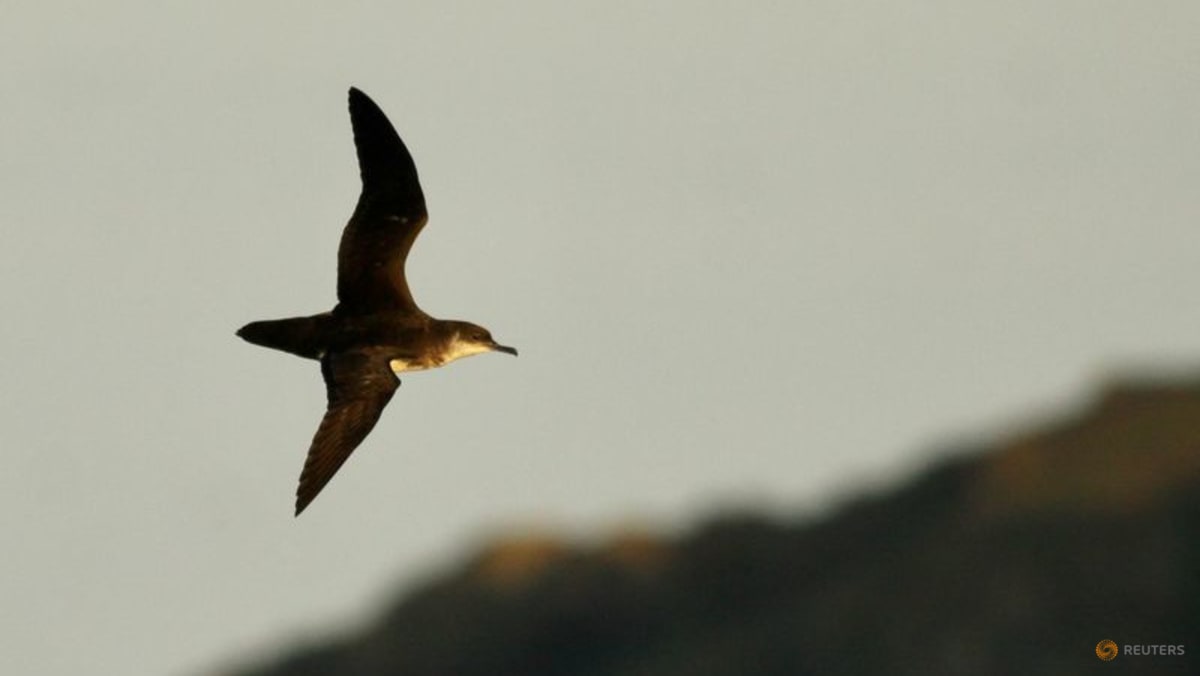
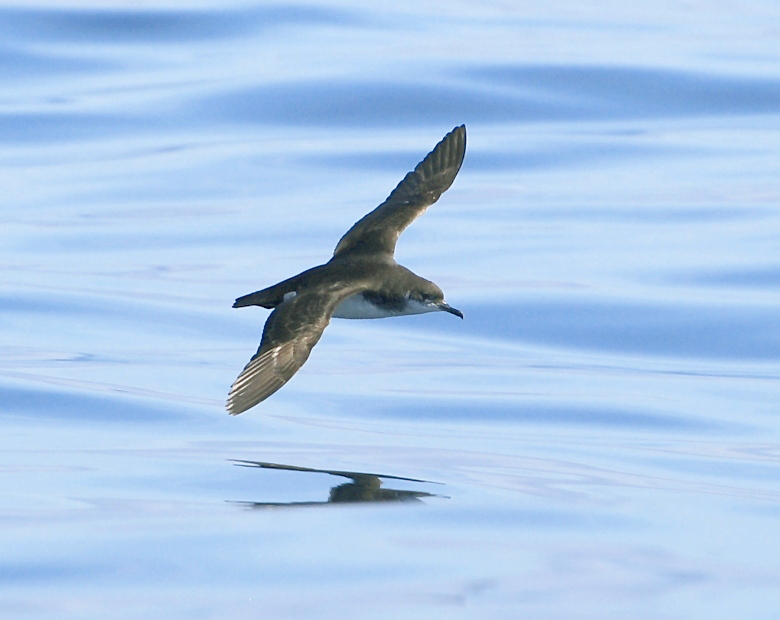
The study subject: adults travel long distances to fishing grounds in the mid-Atlantic and return to breeding colonies in a fairly straight line. Their sun-compass navigation is slightly disrupted by fast eastward travel, which they largely correct.
“Once they have food, they fly back in a fairly straight line, diverting only to skirt around landmasses such as Ireland.” — New Scientist
“The impact was limited on adult shearwaters because the birds were able to correct their bearings in flight.” — The Guardian
Left2 articles
-
Why jet lag throws even foraging seabirds off course
Mixed Leads with the risk of large navigational errors for young birds, while also reporting that adult errors are small and an outside expert's caution.
-
Seabirds racing home over the ocean can get jet-lagged
Neutral Detailed explainer by John Timmer on the dataset, clock-drift mechanism and the study's limits, ending with open questions and a link to human jet lag.
Centre2 articles
-
Birds can get jet lag on long, fast flights and then fly off course
Neutral Explanatory science piece stressing the mechanism, the strength of the tracking data and the small real-world cost, with broader speculation about other species.
-
CNAN ·
Long-distance flights can interfere with the internal clocks of seabirds
Neutral Explainer that opens with human jet lag, then reports the sun-compass findings and Lewin's and Guilford's comments, including possible effects on feeding and rest.
Right0 articles
No coverage yet.
- 29 Oct 18:00 First New ScientistN Birds can get jet lag on long, fast flights and then fly off course
- 29 Oct 18:00 First The GuardianLC Why jet lag throws even foraging seabirds off course
- 30 Oct 09:04 +15h 4m CNAN Long-distance flights can interfere with the internal clocks of seabirds
- 31 Oct 11:15 +41h 15m Ars TechnicaLC Seabirds racing home over the ocean can get jet-lagged
Times are when each article was published, or when we first saw it if the outlet gave no time.
Ask about this story
Loading…