Study finds sleeping near dogs does not disrupt human sleep, but humans may disturb dogs
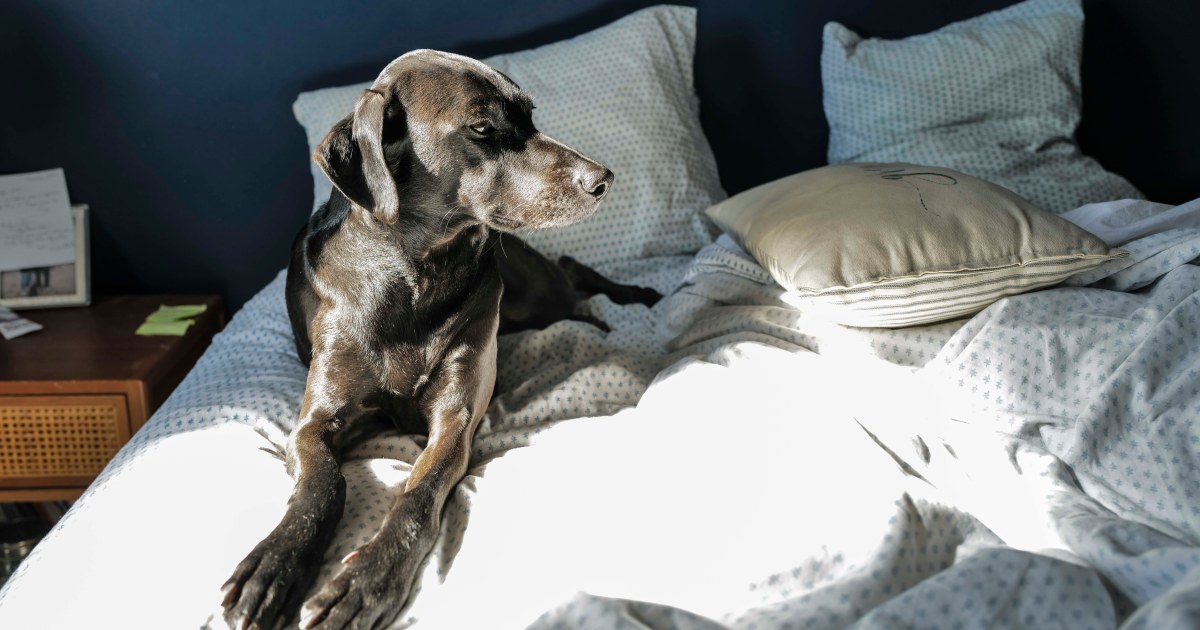
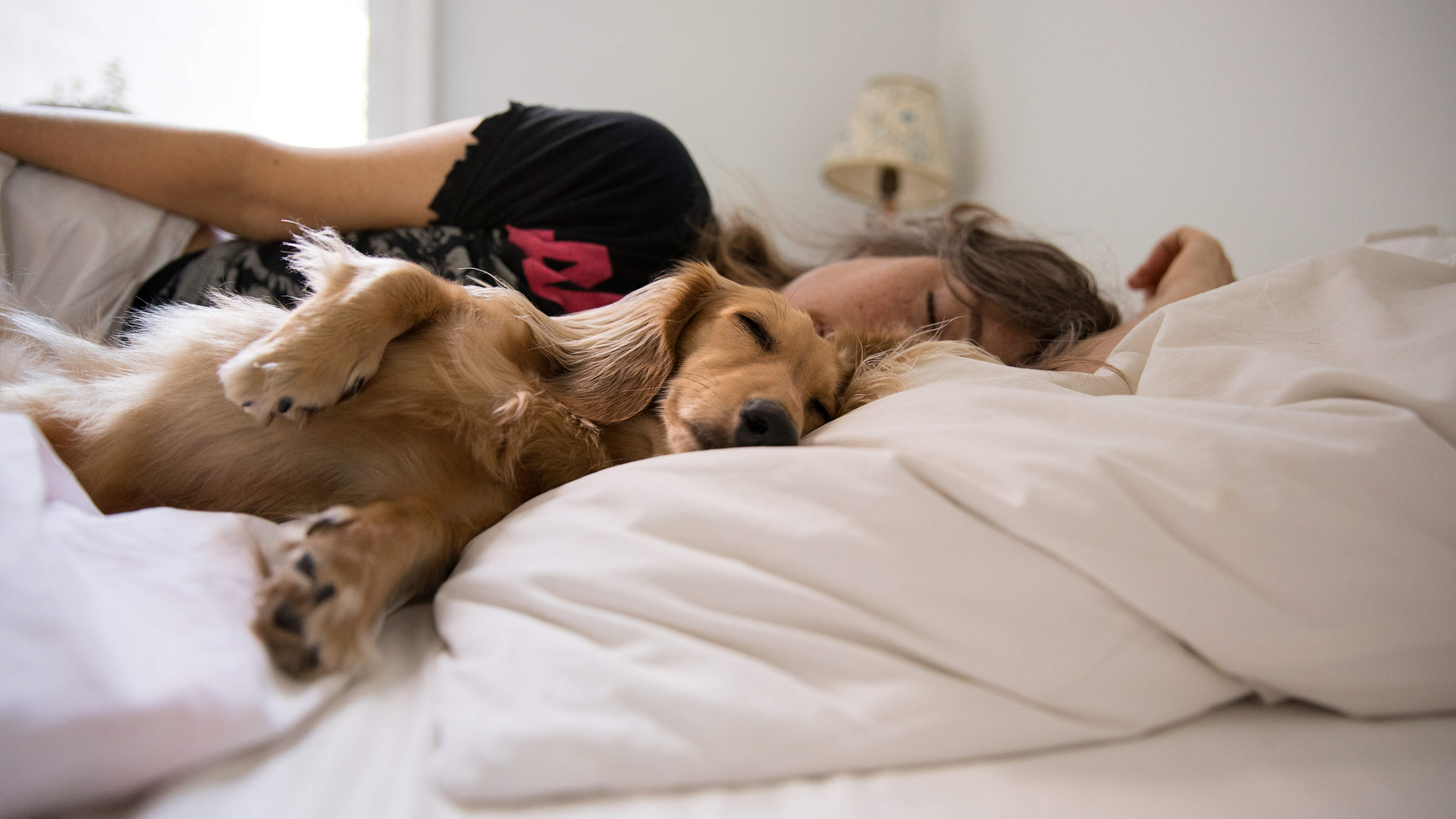
A University of Toronto study in PLOS One found people who sleep near their dogs show no tracker-measured sleep disruption, while humans tended to move first and disturb their dogs.
1 / 2
The story, neutrally told
Left · 1A University of Toronto study published Wednesday in PLOS One found that people who sleep near their dogs do not experience disrupted sleep. NBC NewsLC “A surprising new study found that people who sleep near their dogs don’t experience disrupted sleep.”“The study, which was published Wednesday in PLOS One” Read at NBC News ↗ Left · 1Activity trackers monitored 25 human volunteers and their 38 dogs in southern Ontario for four weeks, with people wearing them on their wrists and dogs on their collars; all the dogs were huskies and malamutes with no health problems. NBC NewsLC “Activity trackers similar to Fitbits monitored the nighttime activity of 25 human volunteers and their 38 dogs in southern Ontario”“all huskies and malamutes with no health problems” Read at NBC News ↗ Left · 1The work was done during the Covid pandemic as part of a larger project comparing activity patterns of socialized wolves and domestic dogs. NBC NewsLC “was conducted during the Covid pandemic as part of a larger project comparing the activity patterns of socialized wolves and domestic dogs” Read at NBC News ↗
Left · 1About half the people, particularly those sleeping with more than one dog, reported interrupted sleep in a survey, but the tracker data showed that sharing a bed with dogs affected neither the humans' nor the dogs' sleep duration or quality. NBC NewsLC “Though half of the people, particularly those who slept with more than one dog at a time, reported interrupted sleep”“sharing a bed with their dogs didn’t affect how well or how long the pups or their humans slept” Read at NBC News ↗ Mixed · 2Humans and dogs became active at around the same time during the night, but the humans tended to move first and disturb their dogs rather than the reverse, according to co-author Ming Fei Li; the Irish Independent likewise reports that humans are more likely to wake their dogs than the other way around. NBC NewsLC “it was the humans who moved first and disturbed their dogs, not the other way around, Li said” Read at NBC News ↗ Irish IndependentRC “Researchers found humans are more likely to wake up their canine pals than the other way around” Read at Irish Independent ↗ Left · 1This contradicts a 2020 study that found dogs influenced human movement more than the reverse, and it made no difference whether dogs slept on the bed or in a nearby area. NBC NewsLC “That contradicts a 2020 study that found dogs influenced human movement more than humans influenced dog movement during the night.”“it made no difference whether people’s dogs slept directly in the bed with them or in a nearby area” Read at NBC News ↗
Left · 1Li cited limitations including the small sample, which had more women than men, and little variation in dog breeds. NBC NewsLC “including the small group of volunteers, which consisted of more women than men, and a lack of variation in dog breeds, Li said” Read at NBC News ↗ Left · 1Earlier research was mixed: a 2023 study linked pet ownership to poorer sleep, and a 2017 Mayo Clinic study found people slept better with a dog nearby except when it was on the bed. NBC NewsLC “A 2023 study published in the journal Human-Animal Interactions found a link between pet ownership and poorer sleep, while a 2017 Mayo Clinic study found people slept better with a dog nearby except when the dog slept on the bed with them.” Read at NBC News ↗ Left · 1Sleep specialist W. Christopher Winter, who was not involved in the study, said dogs can help by imposing consistent routines, but large dogs may hog the bed and breeds such as pugs and French bulldogs may snore loudly. NBC NewsLC “Dogs are “zeitgebers”; that is, they provide cues about when it’s time to eat, take a walk or go to sleep”“Some dogs, particularly dogs with upper airway abnormalities like pugs, Boston terriers and French bulldogs, may snore loudly” Read at NBC News ↗
Every sentence links to the reporting it rests on. The pill in front of each says where its sources sit: Left, Centre or Right when one side supplies at least half of them, Mixed when they are evenly split. The number is how many outlets it cites.
Left1 outlet
- Framing
- NBC News presents the study as a reassuring, lighthearted surprise: sleeping with dogs is fine, and people may be the ones disturbing the dogs.
- Emphasis
- Study methods, researcher quotes, limitations, earlier studies and an outside sleep expert on dogs as routine-setters.
- Leaves out or plays down
- Does not dwell on the study's sample being drawn from a wolf-comparison project beyond a brief mention.
- Charged language
- “A surprising new study”“no feeling in the world like cuddling up”
- For example
-
“A surprising new study found that people who sleep near their dogs don’t experience disrupted sleep.” — NBC News
Centre0 outlets
No centre outlet in our sources has covered this story yet.
Right1 outlet
- Framing
- The Irish Independent leads on the flip side: bed-sharing won't disturb people but might spoil the dogs' sleep.
- Emphasis
- Dogs' sleep being disturbed by humans.
- Leaves out or plays down
- Coverage available shows no study limitations, methods or expert comment.
- Charged language
- “canine pals”
- For example
-
“Sharing a bed with your dog won’t disturb your sleep, but it might spoil theirs, new study finds” — Irish Independent
What every side reports
- A new study found sleeping near dogs does not disrupt human sleep.
- Humans are more likely to disturb their dogs' sleep than the reverse.
Left1 article
-
The secret to a good night’s rest? Let sleeping dogs lie ... next to you
Sympathetic Warm, explanatory feature on the study with expert context and caveats.
Centre0 articles
No coverage yet.
Right1 article
-
Sharing a bed with your dog won’t disturb your sleep, but it might spoil theirs, new study finds
Neutral Headline stresses the finding that humans may spoil dogs' sleep rather than the reverse.
- 7 Oct 23:11 First NBC NewsLC The secret to a good night’s rest? Let sleeping dogs lie ... next to you
- 9 Oct 05:30 +30h 18m Irish IndependentRC Sharing a bed with your dog won’t disturb your sleep, but it might spoil theirs, new study finds
Times are when each article was published, or when we first saw it if the outlet gave no time.