Study links colonisation of Australia to increased wildfire danger
A Nature study led by the University of Melbourne reconstructs 1,000 years of vegetation in south-eastern Australia. It concludes that colonisation and the end of Indigenous cultural burning led to denser eucalypt forest and hotter fires.

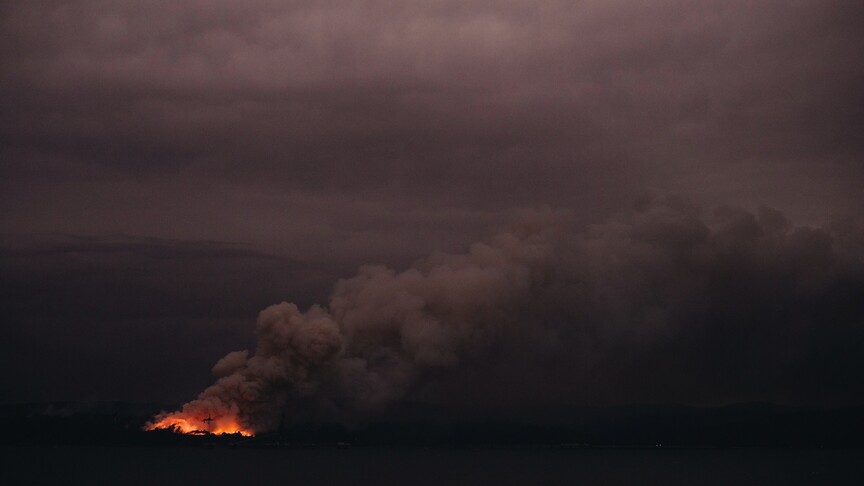
1 / 2
The story, neutrally told
Centre · 1A study published in Nature on Wednesday 7 October 2026 concludes that forest expansion and thickening after British colonisation made south-eastern Australian landscapes more prone to burning, amplifying the effect of climate change on the country's bushfire crisis. Anadolu AgencyN “Forest expansion and thickening following British colonization created landscapes more prone to burning, amplifying the influence of climate change and worsening Australia's bushfire crisis, according to a study published in Nature on Wednesday.” Read at Anadolu Agency ↗ Centre · 1The research was carried out by University of Melbourne researchers with the Gunaikurnai Land and Waters Aboriginal Corporation, and reconstructed 1,000 years of vegetation history in Croajingolong National Park, one of south-eastern Australia's most fire-prone forest regions. Anadolu AgencyN “The study was conducted by researchers from the University of Melbourne in collaboration with the Gunaikurnai Land and Waters Aboriginal Corporation.”“one of southeastern Australia's most fire-prone forest regions” Read at Anadolu Agency ↗ Centre · 1The team took a metre-long sediment core from the bed of Purghagoolah (Lake Elusive), examined it at 0.5-centimetre intervals, and found that deposition changed suddenly about 200 years ago. New ScientistN “He and his colleagues extracted a metre-long core, representing a millennium of sediment deposition, from the bed of Purghagoolah, also known as Lake Elusive”“The researchers examined the core at 0.5-centimetre intervals and found that the sediment deposition suddenly changed 200 years ago.” Read at New Scientist ↗
Centre · 1Before the British arrived, the GunaiKurnai had managed the landscape for thousands of years, mainly through cultural burning, and pollen shows open woodland with tree cover of around 10 per cent for 800 years. New ScientistN “Pollen falling into the lake was reflective of open woodland vegetation, with a tree cover of around 10 per cent for 800 years” Read at New Scientist ↗ Centre · 1New Scientist reports that between 1830 and 1860 European settlers massacred and forcibly removed the Indigenous population and cultural burning ceased. Shrubs moved in, charcoal evidence shows fires became hotter, eucalypt regeneration thickened and tree cover rose to around 40 per cent. New ScientistN “But between 1830 and 1860, European settlers massacred and forcibly removed the Indigenous population and cultural burning ceased.”“bushfires became hotter, which in turn led to thicker regeneration of eucalypt species and tree cover increased to around 40 per cent.” Read at New Scientist ↗ Centre · 2Anadolu Agency summarises the findings as increased fire temperatures, a fourfold increase in eucalypt cover, the transformation of open woodland into forest and increased soil erosion. New Scientist adds that the first evidence of soil erosion in the thousand-year record appeared at the same time, and that other sites in south-eastern Australia show up to six times as many eucalypts as in the past. Anadolu AgencyN “increased fire temperatures, a fourfold increase in eucalypt cover, the transformation of open woodland into forest, and increased soil erosion” Read at Anadolu Agency ↗ New ScientistN “with up to six times as many eucalypts in the modern period as there were in the past” Read at New Scientist ↗
Centre · 1Lead author Michael-Shawn Fletcher of the University of Melbourne says the catastrophic fires now seen are "the product of colonisation and the product of land-use change, not solely the product of climate change", and that higher temperatures and drought combined with denser eucalypt forest drove the 2019-20 "black summer" fires, which burned 24 million hectares. New ScientistN ““The catastrophic fires that we're dealing with now are the product of colonisation and the product of land-use change, not solely the product of climate change,” says Michael-Shawn Fletcher”“which burned 24 million hectares, says Fletcher” Read at New Scientist ↗ Centre · 1Fletcher says comparably dangerous fire weather, as in the Ash Wednesday and Black Saturday seasons, recurred in the region before colonisation, but the open landscape kept by cultural burning protected it from catastrophic fire; in a University of Melbourne statement he said "When Country is cared for, climate does not dictate wildfire." Anadolu AgencyN “"When Country is cared for, climate does not dictate wildfire," he said”“seasons of comparably dangerous fire weather, such as those seen during Ash Wednesday and Black Saturday, reoccurred in the region repeatedly before colonization” Read at Anadolu Agency ↗ Centre · 2Fletcher says the work supports cultural burning and the integration of Indigenous knowledge into fire management, and that a return to widespread cultural burning would reduce fire intensity and impact even though climate change will keep driving wildfires. He also argues that dense forests cannot store carbon securely because they are so prone to burning. Anadolu AgencyN “the research provides scientific evidence for the value of cultural burning and the need to integrate Indigenous knowledge into contemporary fire management strategies” Read at Anadolu Agency ↗ New ScientistN “a return to a regime of widespread cultural burning would help to reduce their intensity and impact, says Fletcher.” Read at New Scientist ↗
Centre · 1Other researchers quoted by New Scientist support the findings: David Bowman of the University of Tasmania says the study reinforces earlier research and will energise debate on sustainable fire management and Aboriginal fire groups, while Michael Bird of James Cook University calls it "probably the clearest example yet" that pre-invasion landscapes were substantially altered by the removal of Indigenous fire management. New ScientistN ““It will energise debates around sustainable fire management, the pivotal role for including Aboriginal fire groups in that journey”““It’s probably the clearest example yet that pre-invasion landscapes were substantially altered by the removal of Indigenous fire management” Read at New Scientist ↗
Every sentence links to the reporting it rests on. The pill in front of each says where its sources sit: Left, Centre or Right when one side supplies at least half of them, Mixed when they are evenly split. The number is how many outlets it cites.
Left0 outlets
No left outlet in our sources has covered this story yet.
Centre2 outlets
- Framing
- Both outlets present the study as evidence that colonisation and the end of Indigenous fire management, not climate change alone, shaped Australia's wildfire risk. New Scientist leads with the science and outside expert reaction; Anadolu leads with a short summary of findings and the University of Melbourne statement.
- Emphasis
- New Scientist stresses the sediment evidence, the 2019-20 fires and the carbon-storage argument. Anadolu stresses the fourfold increase in eucalypt cover and the case for integrating Indigenous knowledge.
- Leaves out or plays down
- Neither outlet quotes a researcher sceptical of the findings. Anadolu gives no outside expert comment, and New Scientist does not mention the Gunaikurnai corporation's role in the research.
- Charged language
- “cult of the tree”“hot, catastrophic fire loop”“massacred and forcibly removed”
- For example
-
““Fire temperature went up, fire amount went up, eucalypt cover went up, and it trapped this system into a hot, catastrophic fire loop.”” — New Scientist
“British colonization worsened Australia's bushfire risk by creating landscapes more prone to burning : Study” — Anadolu Agency
Right0 outlets
No right outlet in our sources has covered this story yet.
What every side reports
- The study was published in Nature and led by Michael-Shawn Fletcher of the University of Melbourne.
- It covers 1,000 years of vegetation history in Croajingolong National Park, south-eastern Australia.
- Colonisation ended Indigenous cultural burning and was followed by denser eucalypt forest, hotter fires and soil erosion.
- Fletcher presents the results as support for cultural burning in modern fire management.
UK and Ireland1 outlet
New Scientist gives a detailed account of the methods and quotes three Australian researchers.
“The researchers examined the core at 0.5-centimetre intervals and found that the sediment deposition suddenly changed 200 years ago.” — New Scientist
New Scientist
Middle East1 outlet
Anadolu Agency gives a brief summary built around the university statement and the colonial framing in its headline.
“according to a statement from the University of Melbourne” — Anadolu Agency
Anadolu Agency
Left0 articles
No coverage yet.
Centre2 articles
-
Colonisation of Australia led to big increase in wildfire danger
Neutral Science report built on Fletcher's account of the lake-sediment record, with supportive comments from two other Australian researchers.
-
Neutral Short news report relaying the Nature paper and a University of Melbourne statement, with an unrelated item on a Northern Territory rare earths mine appended.
Right0 articles
No coverage yet.
- 7 Oct 16:00 First New ScientistN Colonisation of Australia led to big increase in wildfire danger
- 8 Oct 15:49 +23h 49m Anadolu AgencyN British colonization worsened Australia's bushfire risk by creating landscapes more prone to burning : Study
Times are when each article was published, or when we first saw it if the outlet gave no time.