Study links larger dog size to faster molecular ageing
A study in the journal Science reports that large and male dogs show faster DNA-methylation ageing in blood, which may help explain why large breeds die younger. The lead quoted author says it adds a molecular layer to existing explanations rather than replacing them.
1 / 2
The story, neutrally told
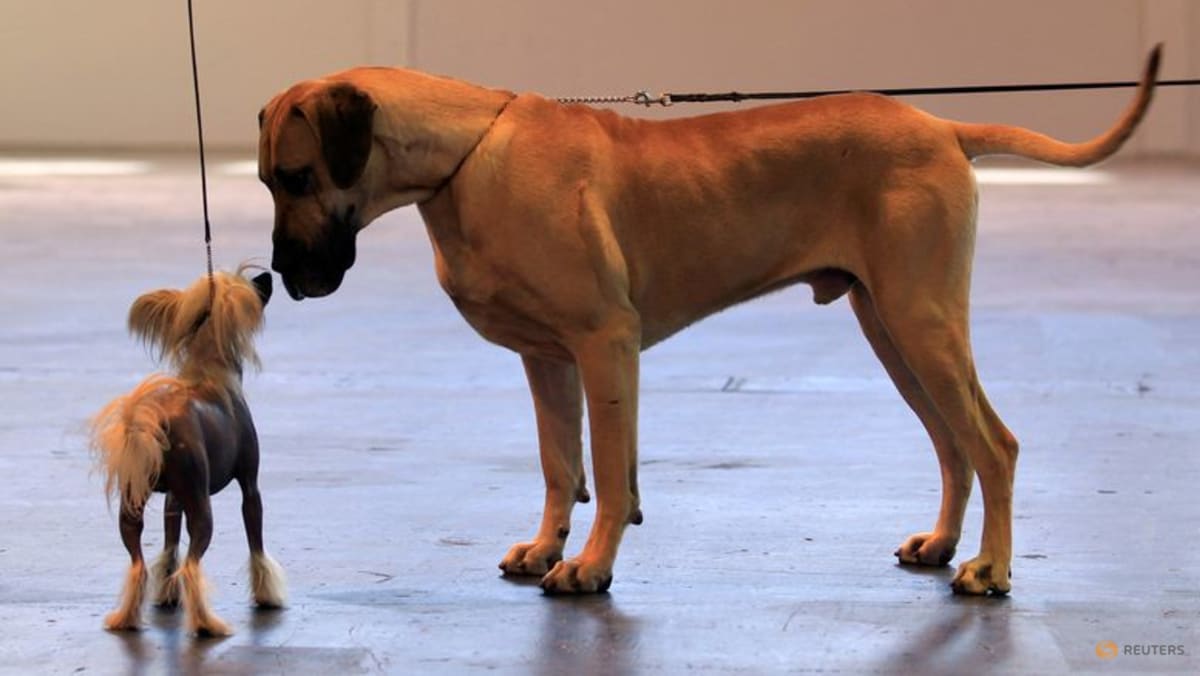
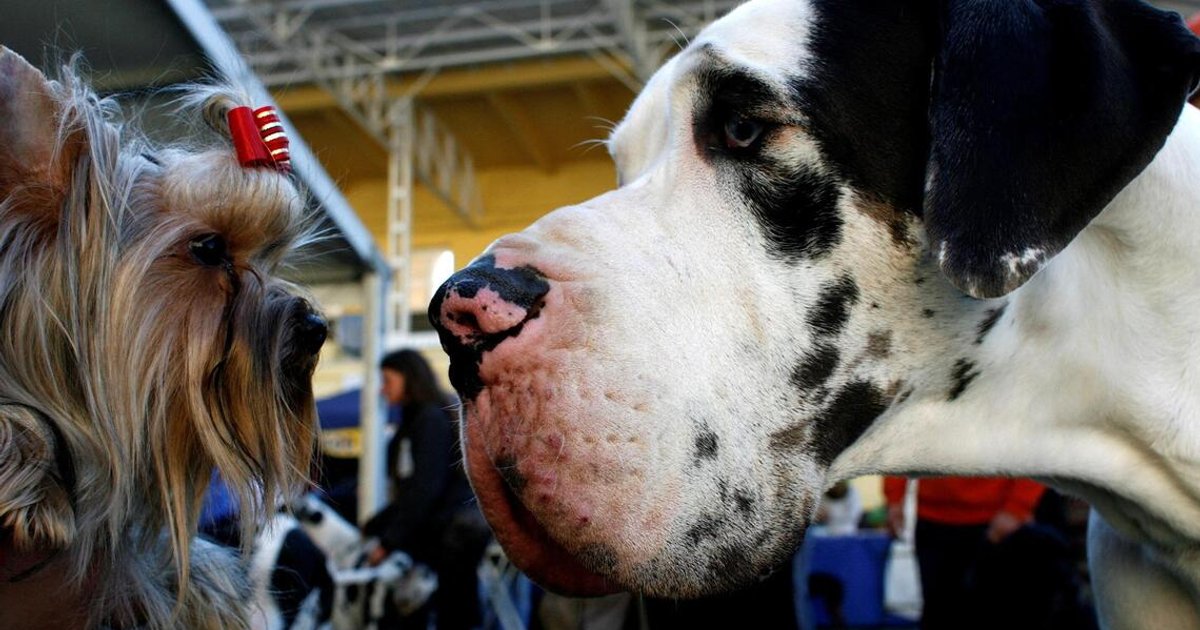
Mixed · 2A new study published in the journal Science indicates that large dogs age faster at a molecular level than small dogs, which may help explain why large breeds such as Great Danes typically die younger than small ones such as Chihuahuas. CNAN “large breeds such as Great Danes typically die younger than small ones such as Chihuahuas. A new study indicates the reason may lie in how DNA changes with age in dogs.” Read at CNA ↗ The Straits TimesRC “one of the authors of the study published in the journal Science” Read at The Straits Times ↗ Mixed · 2The researchers measured DNA methylation, chemical tags that help control which genes are switched on and off, and used age-related patterns in them to build an epigenetic clock that estimated a dog's age with a median error of less than one year. CNAN “they built an epigenetic clock that estimated a dog's age with a median error of less than one year.” Read at CNA ↗ The Straits TimesRC “chemical tags that help control which genes are switched on and off” Read at The Straits Times ↗ Mixed · 2Analysing 1,640 blood methylation profiles from 894 pet dogs of various breeds, they found that larger dogs and male dogs showed signs of accelerated molecular ageing, and that dogs whose biological age appeared older than expected faced a higher risk of early death. CNAN “Analyzing 1,640 blood methylation profiles from 894 pet canines of various breeds” Read at CNA ↗ The Straits TimesRC “dogs whose biological age appeared older than expected based on the profiles faced a higher risk of early death” Read at The Straits Times ↗
Mixed · 2Noah Snyder-Mackler, a professor at Arizona State University's School of Life Sciences and Center for Evolution and Medicine and one of the study's authors, said the acceleration in large dogs is especially strong in parts of the genome that normally keep 'jumping genes' (transposable elements) quiet. CNAN “this acceleration is especially strong in parts of the genome that normally help keep 'jumping genes' quiet” Read at CNA ↗ The Straits TimesRC “a professor at Arizona State University’s School of Life Sciences and Center for Evolution and Medicine” Read at The Straits Times ↗ Mixed · 2Jumping genes can copy themselves and insert into new spots in the genome; one type, LINE1, is normally silenced by DNA methylation, and its activation has been linked to genome instability, cancer and other age-related disease. Snyder-Mackler said methylation at those regions appears to erode more quickly with age in large dogs. CNAN “their activation has been linked to genome instability, cancer and other age-related disease” Read at CNA ↗ The Straits TimesRC “methylation at those regions appears to erode more quickly with age” Read at The Straits Times ↗ Mixed · 2The study also found differences between males and females, largely on the X chromosome, where LINE1 elements showed higher methylation in males. Snyder-Mackler said the sex signal looked distinct from the body-size signal and should be treated as separate biology needing follow-up. CNAN “There, LINE1 elements showed higher methylation in males.” Read at CNA ↗ The Straits TimesRC “the sex signal looked distinct from the body-size signal” Read at The Straits Times ↗
Mixed · 2The authors suggest the trade-off between large size and longevity may stem from selective breeding rather than natural evolution, since humans bred dogs to grow quickly and reach large sizes for guarding, hunting and herding. Snyder-Mackler said late-life costs can 'come along for the ride' when selection favours rapid growth or large adult size. CNAN “Humans bred dogs to grow quickly and reach large adult sizes for tasks such as guarding, hunting and herding.” Read at CNA ↗ The Straits TimesRC “late-life costs can come along for the ride” Read at The Straits Times ↗ Mixed · 2Earlier explanations focused on growth biology, such as more cell growth, faster development or higher cancer risk. Snyder-Mackler said the study does not replace those ideas but gives a molecular layer downstream of body size. CNAN “Our study does not replace those ideas; it gives us a molecular layer downstream of body size,” Read at CNA ↗ The Straits TimesRC “Researchers have also suggested that larger dogs may undergo more cell growth” Read at The Straits Times ↗ Mixed · 2The findings raise the possibility that slowing molecular ageing could extend healthy lifespan in larger dogs, though Snyder-Mackler cautioned that lifespan is not governed by a single clock and that slowing it would not turn a Great Dane into a Chihuahua in lifespan terms. CNAN “slowing molecular aging would not turn a Great Dane into a Chihuahua, in terms of lifespan” Read at CNA ↗ The Straits TimesRC “could help extend healthy lifespan in larger dogs” Read at The Straits Times ↗
Every sentence links to the reporting it rests on. The pill in front of each says where its sources sit: Left, Centre or Right when one side supplies at least half of them, Mixed when they are evenly split. The number is how many outlets it cites.
Left0 outlets
No left outlet in our sources has covered this story yet.
Centre1 outlet
- Framing
- Science explainer led by the size–lifespan puzzle in dogs, built almost entirely on quotes from lead author Noah Snyder-Mackler.
- Emphasis
- The mechanism (DNA methylation, LINE1 'jumping genes') and the possibility of slowing molecular ageing.
- Leaves out or plays down
- No independent experts or study limitations are given; blood-only samples are mentioned only through the authors' framing.
- For example
-
“Few animals show the link between size and lifespan as clearly as dogs.” — CNA
Right1 outlet
- Framing
- The Straits Times ran Reuters copy with the same text and structure as the centre report, adding only British spelling and a US-section placement; it shows no distinct editorial slant.
- Emphasis
- Same as the wire: mechanism and prospects for extending healthy lifespan.
- Leaves out or plays down
- As in the centre report, no outside commentary or caveats about the study.
- For example
-
“Across mammals, bigger species usually live longer lives than smaller ones like mice, but within a species that pattern can reverse.” — The Straits Times
What every side reports
- The study was published in Science and analysed 1,640 blood methylation profiles from 894 pet dogs.
- Larger and male dogs showed accelerated molecular ageing.
- The epigenetic clock estimated age with a median error under one year.
- Snyder-Mackler says the findings complement, not replace, earlier growth-based explanations.
Left0 articles
No coverage yet.
Centre1 article
-
CNAN ·
Large dogs age more quickly than small dogs at a molecular level
Neutral Straightforward science report centred on the lead author's explanations of the findings.
Right1 article
-
The Straits TimesRC · · via Reuters
Large dogs age more quickly than small dogs at a molecular level
Neutral Reuters wire copy run by the Straits Times, reporting the same findings and quotes without added commentary.
- 14 Oct 10:03 First CNAN Large dogs age more quickly than small dogs at a molecular level
- 14 Oct 10:57 +53m The Straits TimesRC Large dogs age more quickly than small dogs at a molecular level via Reuters
Times are when each article was published, or when we first saw it if the outlet gave no time.
Ask about this story
Loading…