Study links slow mantle motion and glaciers to the Great Unconformity
A Nature study by Santosh Dhungana and Nicolas Flament uses mantle-convection models to argue that slow uplift of continents, combined with Snowball Earth glaciation, produced the gap in the rock record known as the Great Unconformity.
1 / 2
The story, neutrally told
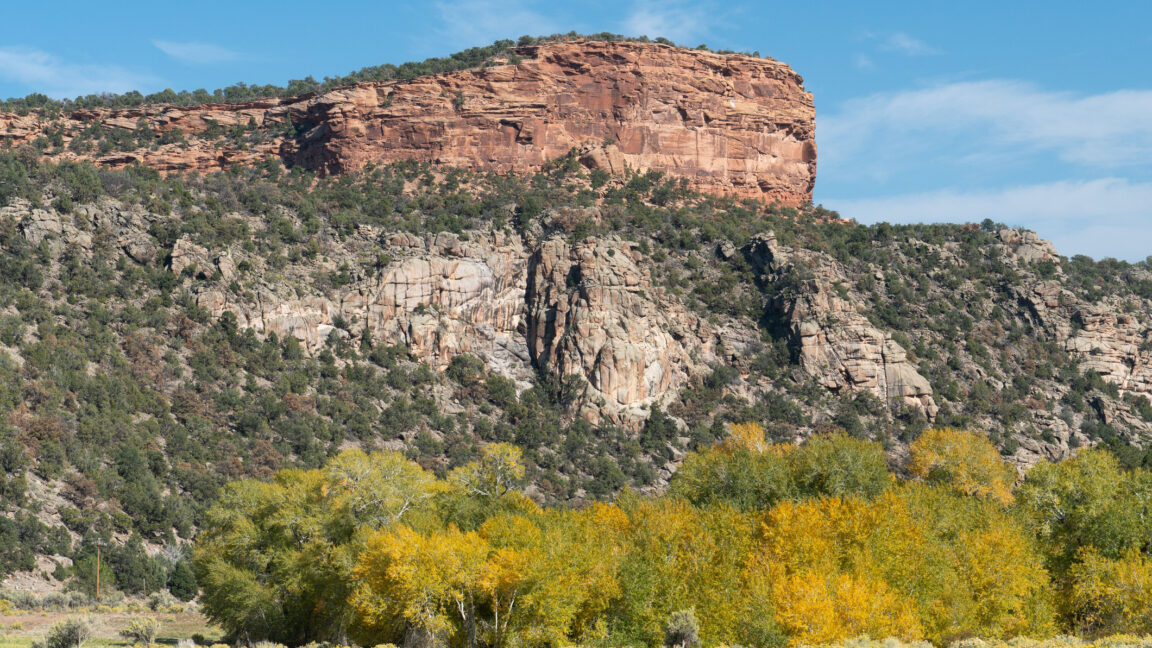
Left · 2A Nature study by geoscientists Nicolas Flament and Santosh Dhungana of the University of Wollongong, Australia, proposes that slow convection in Earth's mantle helped create the Great Unconformity, a gap in the geological record. Ars TechnicaLC “In a recent Nature study, Flament and his colleague Santosh Dhungana argue that this gap was carved with help from deep within the planet.” Read at Ars Technica ↗ Scientific AmericanLC “In new research published in Nature, we finally provide an explanation” Read at Scientific American ↗ Left · 2At sites such as the Grand Canyon, a flat layer of sedimentary rock rests directly on much older crystalline basement. Flament says the gap can span anywhere from 200 million years to more than a billion years. Ars TechnicaLC “This gap can be anywhere between 200 million years, which is not that impressive, to more than a billion years.” Read at Ars Technica ↗ Scientific AmericanLC “A flat layer of sedimentary rock, about 540 million years old or younger, rests directly atop a crystalline “basement” up to two billion years old.” Read at Scientific American ↗ Left · 2The unconformity has been found across most of North America, parts of northern China, and beneath younger rocks in northern Europe. The sediments above it appear around the time of the Cambrian explosion, the large diversification of animal life. Ars TechnicaLC “Geologists have traced it across most of North America and parts of northern Europe and northern China.” Read at Ars Technica ↗ Scientific AmericanLC “This is the so-called Cambrian explosion, which began around 540 million years ago.” Read at Scientific American ↗
Left · 2Earlier explanations included erosion by ice sheets during the Snowball Earth period (roughly 720 to 635 million years ago), rifting, and a global fall in sea level. Flament notes that global glaciation or sea-level change should have left the unconformity everywhere, and it is not found everywhere. Mantle-driven uplift and subsidence (dynamic topography) had been proposed but not tested quantitatively. Ars TechnicaLC “But if the whole planet froze, the Great Unconformity should be found everywhere. And it’s not.”““It had been proposed, but it hadn’t been quantitatively tested,” Flament says.” Read at Ars Technica ↗ Scientific AmericanLC “Some scientists have argued it was caused by erosion by massive ice sheets during the Snowball Earth period between 720 million years and 635 million years ago.” Read at Scientific American ↗ Left · 2The team ran six simulations of mantle convection going back 1 billion years, driven by reconstructions of tectonic plate motion, and used the Australian supercomputer Gadi. The mantle is about 2,900 kilometres thick, and its hot rising and cold sinking rock can raise or lower the surface by hundreds of metres. Ars TechnicaLC “Dhungana and Flament ran six simulations of mantle convection going back 1 billion years” Read at Ars Technica ↗ Scientific AmericanLC “We used the Australian supercomputer Gadi to model how the movement of the mantle had affected continents over the past billion years.”“This huge, slow movement can raise or lower the surface by hundreds of meters.” Read at Scientific American ↗ Left · 2In the models, Laurentia (the core of North America), Baltica (northern Europe) and North China were lifted for hundreds of millions of years and then sank during the Cambrian. Ars Technica reports that five of the six models showed this for Laurentia and four for northern Europe and North China. Scientific AmericanLC “Our results consistently showed that mantle convection caused ancient continental blocks Laurentia (which now makes up much of North America), Baltica (parts of northern Europe), and North China to be lifted up” Read at Scientific American ↗ Ars TechnicaLC “Five of the six models showed this pattern of Laurentia seeing long uplift followed by sinking in the Cambrian. For northern Europe and North China, this pattern showed up in four.” Read at Ars Technica ↗
Left · 2According to the authors, uplift alone was too gentle to strip away enough rock, but it coincided with Snowball Earth glaciation, and ice sheets erode even gentle slopes more efficiently than rivers. When the continents later sank, seas flooded in and buried the eroded surface under new sediment. Ars TechnicaLC “But the uplift alone, Flament’s team concluded, was too gentle to strip away enough rock to create the Great Unconformity.” Read at Ars Technica ↗ Scientific AmericanLC “Glaciers and ice sheets are more efficient than rivers at eroding continents, even on gentle slopes.” Read at Scientific American ↗ Left · 2The models also account for why the unconformity is hard to see elsewhere: Australia and South America went through two uplift-and-subsidence cycles from about 900 million years ago, which the researchers say is not conducive to forming and preserving it. Ars Technica adds that Africa's erosion was shaped by surrounding mountain belts rather than the mantle. Scientific AmericanLC “we found that Australia and South America experienced only two cycles of uplift and subsidence from 900 million years ago.” Read at Scientific American ↗ Ars TechnicaLC “Africa was a different case altogether—hemmed in by mountain belts at the time, its erosion and sediment were shaped by the mountains rather than by the mantle beneath.” Read at Ars Technica ↗ Left · 1Flament acknowledges uncertainties: the size of mantle-driven surface motion is still debated, continents' starting positions (their longitude) are uncertain, and ancient ocean floor had to be invented in the models. He also said it would be misleading to say the mantle set the pace of the Cambrian explosion, though he called it one of the forces working together. Ars TechnicaLC ““It’s possible that some continents may be in the wrong hemisphere,” Flament admits.”““I think it would be misleading to say the mantle set the pace here. But I think it was one of the forces that worked together.”” Read at Ars Technica ↗
Every sentence links to the reporting it rests on. The pill in front of each says where its sources sit: Left, Centre or Right when one side supplies at least half of them, Mixed when they are evenly split. The number is how many outlets it cites.
Left2 outlets
- Framing
- Both outlets present the study as a largely successful explanation of a long-standing puzzle. Ars Technica reports it with the researchers' caveats; Scientific American runs the authors' own first-person article, republished from The Conversation.
- Emphasis
- The deep-Earth cause, the combination of gentle mantle uplift with Snowball Earth glaciation, and the link to the Cambrian explosion.
- Leaves out or plays down
- Neither carries independent outside comment on the study. Scientific American's piece leaves out the model uncertainties that Ars Technica reports, such as the debated size of uplift and uncertain continental positions.
- Charged language
- “Scientists finally know what happened to it”“we finally provide an explanation”“fingerprint of deep Earth processes”
- For example
-
“For 150 years, nobody has known what erased those missing chapters.” — Scientific American
“The largest hole in the rock record might be a fingerprint of processes happening deep in the planet’s interior.” — Ars Technica
Centre0 outlets
No centre outlet in our sources has covered this story yet.
Right0 outlets
No right outlet in our sources has covered this story yet.
What every side reports
- The study was published in Nature and is by Santosh Dhungana and Nicolas Flament.
- The Great Unconformity is a gap in the rock record, seen at the Grand Canyon and elsewhere in North America, northern Europe and northern China.
- Mantle convection models show Laurentia, Baltica and North China uplifted for hundreds of millions of years, then sinking in the Cambrian.
- Snowball Earth glaciation coincided with the uplift and did the erosion.
Where accounts differ
-
How settled the explanation is
- Left
- Ars Technica says the mantle "may have" created the unconformity and notes model uncertainties; Scientific American's author piece says the authors "finally provide an explanation".
Left2 articles
-
Earth's churning mantle may have created the Great Unconformity
Neutral Reporter-written explainer built around Flament's quotes, hedged with the model's uncertainties and the point that the mantle was one of several forces.
-
Celebratory First-person account by the study's authors, republished from The Conversation, that presents the result as a solution to a 150-year-old mystery.
Centre0 articles
No coverage yet.
Right0 articles
No coverage yet.
- 6 Nov 20:24 First Ars TechnicaLC Earth's churning mantle may have created the Great Unconformity
- 7 Nov 13:00 +16h 36m Scientific AmericanLC Earth's rocks have a missing layer spanning up to a billion years. Scientists finally know what happened to it
Times are when each article was published, or when we first saw it if the outlet gave no time.
Ask about this story
Loading…