Study finds violent injuries in unusual Iron and Viking Age burials from Scandinavian settlements
A study in the Journal of Archaeological Method and Theory found traumatic injuries in 12 people whose remains were deposited in houses, wells and pits in Iron and Viking Age Scandinavia. Researchers suggest causes including warfare, domestic violence and ritual violence.

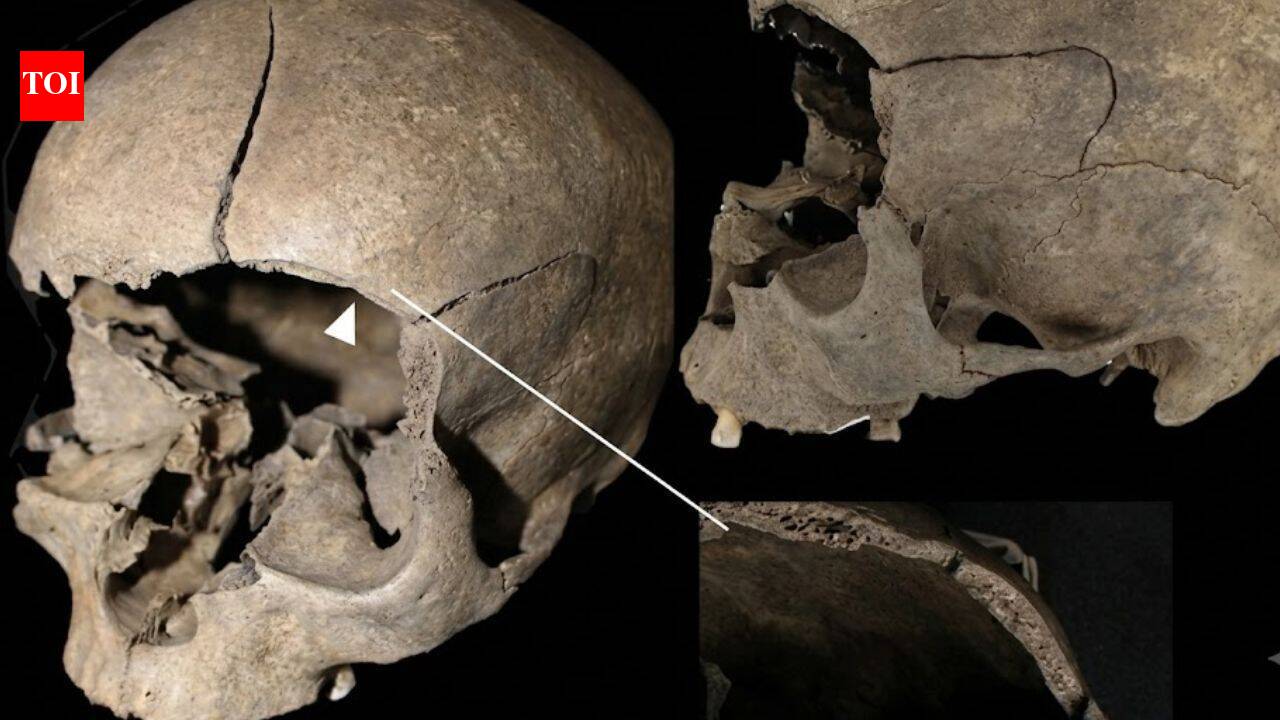
1 / 2
The story, neutrally told
Mixed · 2A study published in the Journal of Archaeological Method and Theory reports evidence of traumatic injuries in 12 people whose remains were deposited in houses, pits, wells and postholes in Iron and Viking Age Scandinavia, dated from about 500 BCE to 1050 CE. The Times of IndiaN “Archaeologists have identified evidence of traumatic injuries in 12 people whose remains were deposited in houses, pits, wells, and postholes across Iron and Viking Age Scandinavia.” Read at The Times of India ↗ Daily MailR “Archaeologists from the BODY-POLITICS Project uncovered 12 bodies with traumatic injuries spanning 1,500 years from the Iron Age and Viking Age – 500BC to 1050AD.” Read at Daily Mail ↗ Mixed · 2The 12 individuals came from a wider dataset of an estimated 192 people across 197 depositional contexts (the Daily Mail says almost 200 bodies), and their remains showed 19 injuries sustained before or around the time of death. The Times of IndiaN “The researchers identified 19 traumatic injuries among 12 individuals from a wider dataset containing remains of an estimated 192 people across 197 depositional contexts.” Read at The Times of India ↗ Daily MailR “researchers have found almost 200 bodies outside these locations.” Read at Daily Mail ↗ Centre · 1The injuries included sharp-force trauma, blunt-force trauma and fractures; six individuals had head injuries, seven had damage elsewhere in the body and four had multiple injuries. The Times of IndiaN “The injuries included sharp-force trauma, blunt-force trauma, and fractures. Six individuals had head injuries, while seven had bone damage in other parts of the body. Four had multiple injuries.” Read at The Times of India ↗
Mixed · 2Eight, possibly nine, individuals showed evidence consistent with deliberate violence, although some injuries could have had other causes. The Times of IndiaN “Eight, possibly nine, individuals showed evidence consistent with deliberate violence, although some injuries could have had other causes.” Read at The Times of India ↗ Daily MailR “Of these unusual remains, eight were the targets of deliberate and sometimes fatal violence” Read at Daily Mail ↗ Right · 1Among the cases described, a man in his early 30s found in a royal feasting hall at Gammel Lejre had suffered three major skull injuries, the latest a radiating fracture he appears to have survived for a few weeks, and forearm 'parry fractures' of the kind caused by shielding the head. Daily MailR “Incredibly, this man had suffered three major skull injuries before his death, the most recent being a massive radiating fracture that he appeared to have survived for a few weeks.”“The man also shows so-called 'parry fractures' on the forearms” Read at Daily Mail ↗ Right · 1A woman aged 17 to 25 buried in a cooking pit at Lindved, Denmark, had her left shin cut through by a sharp weapon, along with other cut and burn marks; the Daily Mail reports researchers think this could have been the fatal blow or part of extensive treatment of the body. Daily MailR “Alongside many other cut marks, her left shin was completely chopped in half by a sharp weapon.”“Scientists think this could have been the blow that killed her, or part of an extensive treatment of her body that left multiple cut and burn marks.” Read at Daily Mail ↗
Mixed · 2A child aged two to four from a Jutland village had sharp-force trauma to the skull, possibly from a sword or heavy-bladed weapon, and the skull part was placed between floor layers of a longhouse rather than cremated as was normal. Daily MailR “The skull shows evidence of trauma on the right side of the head, possibly caused by a sword or other heavy-bladed weapon.” Read at Daily Mail ↗ The Times of IndiaN “The bone was eventually placed between two floor layers inside a longhouse in Denmark.” Read at The Times of India ↗ Centre · 1The remains differ from conventional burials: they were often individual bones or fragmented body parts, and in several cases appear to have been exposed to the elements before final deposition. Injuries were also found in remains at Uppåkra in Sweden. The Times of IndiaN “The remains differed from conventional burials because they were frequently deposited as individual bones or fragmented body parts rather than complete bodies in cemeteries.”“The researchers also found evidence of injuries in remains deposited at Uppåkra in Sweden” Read at The Times of India ↗ Mixed · 2The researchers say the causes are hard to establish and could include domestic violence, community fights, warfare or ritual violence; in some cases the evidence could not show whether an injury occurred in life or during processing of the body after death. Daily MailR “the researchers suggest they could have come from domestic violence, fights in the local community, or warfare.” Read at Daily Mail ↗ The Times of IndiaN “In certain cases, the evidence could not establish whether an injury occurred during life or during the processing of a body after death.” Read at The Times of India ↗
Right · 1Co-author Dr Kevin Kay told the Daily Mail human sacrifice seems 'possible, even likely' in some cases, citing an individual from around 400 AD with two stab wounds between the ribs and wrists placed together as if bound, though he said the cases are distinctive and look more improvised than repeated ritual. Daily MailR “'In some cases, that seems possible, even likely.'”“'But every case is also highly distinctive, so if you think of ritual as something repeated or choreographed, then this seems more improvised,'” Read at Daily Mail ↗ Mixed · 2The study also considers structural violence, harm tied to social conditions, with signs of physical stress, repeated injuries and unusual burial treatment suggesting some individuals were more vulnerable; lead author Professor Marianne Hem Eriksen of the National Museum of Denmark said the findings may offer glimpses of how violence saturated the Iron Age and Viking worlds. The Times of IndiaN “Signs of physical stress, repeated injuries and unusual burial treatment may indicate that some individuals experienced greater vulnerability than others.” Read at The Times of India ↗ Daily MailR “'We may be getting glimpses of how violence saturated the Iron Age and Viking worlds” Read at Daily Mail ↗
Every sentence links to the reporting it rests on. The pill in front of each says where its sources sit: Left, Centre or Right when one side supplies at least half of them, Mixed when they are evenly split. The number is how many outlets it cites.
Left0 outlets
No left outlet in our sources has covered this story yet.
Centre1 outlet
- Framing
- Restrained, explanatory summary of the study's methods and findings, in question-style subheadings.
- Emphasis
- Counts (19 injuries, 12 people, 192 individuals), methods, structural violence and social vulnerability.
- Leaves out or plays down
- Omits named quotes from researchers and the sacrifice discussion, and has fewer individual case details such as the Lindved woman.
- For example
-
“The researchers also considered structural violence, which refers to harm linked to social conditions and inequalities that restrict people's lives.” — The Times of India
Right1 outlet
- Framing
- Vivid, graphic account led by gore and the Vikings' violent reputation, with expert quotes.
- Emphasis
- Smashed skulls, a hacked leg, a child's skull under a floor, and possible human sacrifice.
- Leaves out or plays down
- Gives less on the study's structural-violence framework, the 19-injury count and the limits on telling injuries in life from post-death processing.
- Charged language
- “terrifying reality”“smashed skulls”“shattered limbs”“hacked in half”
- For example
-
“Viking life lived up to its violent reputation on and off the battlefield, according to a new study of Scandinavian remains.” — Daily Mail
What every side reports
- The study found traumatic injuries in 12 individuals from Iron and Viking Age Scandinavia (c. 500 BCE–1050 CE).
- Eight individuals showed evidence of deliberate violence.
- The remains were deposited in houses, pits and wells rather than conventional cemeteries.
- Causes could include warfare, domestic or interpersonal violence, and ritual violence.
Where accounts differ
-
How likely ritual killing or human sacrifice is
- Centre
- The Times of India lists ritualised violence as one of several explanations, without singling out sacrifice.
- Right
- The Daily Mail highlights possible human sacrifice, quoting Dr Kay that it seems 'possible, even likely' in some cases.
Vikings topic
The Vikings are the study's subject: remains suggest violence was common in daily life and treated through unusual burial in homes, though the researchers say causes remain uncertain.
“Archaeologists still don't truly understand who these people were, or why they were singled out for such violent treatment.” — Daily Mail
Left0 articles
No coverage yet.
Centre1 article
-
Archaeologists find 19 injuries in 12 people buried in Iron and Viking Age Scandinavia
Neutral Methodical explainer of the study's data, methods and interpretations.
Right1 article
-
Alarmist Sensational lead on violence and possible human sacrifice, backed by researcher interviews.
- 12 Oct 13:51 First Daily MailR Ancient bones reveal the terrifying reality of life in a Viking village: Scientists uncover evidence of smashed skulls, shattered limbs and a woman whose leg was hacked in half
- 15 Oct 06:34 +64h 43m The Times of IndiaN Archaeologists find 19 injuries in 12 people buried in Iron and Viking Age Scandinavia
Times are when each article was published, or when we first saw it if the outlet gave no time.
Ask about this story
Loading…